Skip to content
Mercy for None
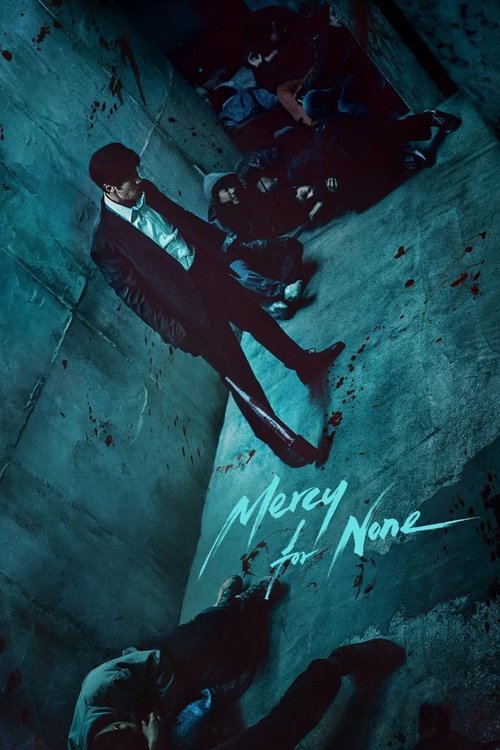
A grim, neon-drenched K-noir action thriller charging with raw grief and icy fury, cutting through Seoul's shadow world like a rusted blade through a rain-soaked concrete graveyard.
Mercy for None

Mercy for None

광장

"He is back."

06 June 2025 — 06 June 2025 South Korea 1 season 7 episode Ended 7.8 (176)

Cast: So Ji-sub, Huh Joon-ho, Gong Myoung, Choo Young-woo, An Kil-kang

Drama Action & Adventure The Destructive Cycle of Vengeance Brotherhood vs. Transactional Loyalty Generational Conflict and Sins of the Fathers Corporate Facades and Systemic Corruption The Inescapability of One's Past

Overview

Mercy for None (Original Korean Title: 광장, Gwangjang / Plaza Wars) is a seven-episode Netflix action noir series adapted from the popular Naver webtoon by Oh Se-hyung and Kim Gyun-tae. Directed by Choi Sung-eun and written by Yoo Ki-seong, the story follows Nam Gi-jun (So Ji-sub), a legendary former gang enforcer who once severed his own Achilles tendon to leave the underworld and prevent a bloody war between rival factions. Eleven years after choosing a quiet life, Gi-jun is dragged back into Seoul's criminal underbelly following the sudden, brutal murder of his younger brother, Nam Gi-seok (Lee Jun-hyuk), the high-ranking second-in-command of a dominant crime syndicate.

Determined to uncover the hidden masterminds behind his brother's death, Gi-jun re-enters a treacherous landscape ruled by two massive conglomerates—Juwoon Group and Bongsan Group. As he carves a violent path through foot soldiers, fixers, and corrupt officials, Gi-jun exposes a complex nexus of corporate succession, political bribery, and gang feuds. Spanning past grievances and present betrayals, Mercy for None presents an unyielding exploration of brotherhood, systemic corruption, and the tragic price of vengeance across its tightly paced narrative.

Core Meaning

The creators of Mercy for None use the criminal underworld as an allegory for modern corporate ambition and systemic moral decay. The series argues that when organized crime modernizes into legitimate corporate enterprises, violence does not vanish—it simply hides behind clean suits, legal shields, and institutional cover-ups. Through Nam Gi-jun's bloody journey, the narrative asserts that vengeance is an inescapable sinkhole offering no true redemption or restoration; it demonstrates that real peace cannot exist within a corrupt structure, and true closure often requires burning down the entire system from its roots.

Thematic DNA

The Destructive Cycle of Vengeance 30%
Brotherhood vs. Transactional Loyalty 25%
Generational Conflict and Sins of the Fathers 20%
Corporate Facades and Systemic Corruption 15%
The Inescapability of One's Past 10%

The Destructive Cycle of Vengeance

Gi-jun's quest begins as a search for truth but rapidly evolves into an unstoppable wave of destruction. The show illustrates how revenge consumes both the victim and the perpetrator, leaving only wreckage in its wake.

Brotherhood vs. Transactional Loyalty

Juxtaposes the genuine, self-sacrificing love between Gi-jun and Gi-seok against the superficial, transactional "loyalty" preached by mob bosses who treat human lives as expendable assets.

Generational Conflict and Sins of the Fathers

Older gang leaders build empires on blood and attempt to pass them to their sons or chosen successors. The younger generation, shaped by jealousy, greed, and toxic legacies, ultimately turns against their elders and each other.

Corporate Facades and Systemic Corruption

Highlights how modern syndicates use legal proxies, corrupt prosecutors, dirty law enforcement, and specialized cleaning services to sanitize criminal acts and maintain corporate power.

The Inescapability of One's Past

Explores the tragic reality that physical exile and symbolic sacrifices (such as slashing one's own tendon) cannot insulate a person from the lingering consequences of past violence.

Character Analysis

Nam Gi-jun

So Ji-sub

Archetype: Reluctant Antihero / Annihilator Key Trait: Overwhelming physical prowess and quiet, unyielding determination.

Motivation

Initially driven by fraternal love and grief; evolves into a relentless crusade to dismantle the corrupt apparatus that orchestrated Gi-seok's death.

Character Arc

Transitions from a former feared enforcer living quietly in voluntary exile to an unstoppable force of vengeance, ultimately realizing that burning the system down is the only way to find peace for his brother.

Lee Ju-woon

Huh Joon-ho

Archetype: Machiavellian Patriarch Key Trait: Cold, calculating authority.

Motivation

Maintaining absolute dominance over rival syndicates and preserving his corporate criminal legacy.

Character Arc

The ruthless head of Juwoon Group who treats Gi-seok as his surrogate heir over his biological son; his arrogance and toxic favoritism spark the chain of betrayals that collapse his corporate empire.

All 5 characters and cast

Symbols & Motifs

The Slashed Achilles Tendon

Meaning:

Symbolizes Gi-jun's painful sacrifice for peace and the permanent physical scar that binds him to his past.

Context:

Inflicted by Gi-jun himself 11 years ago to exit the underworld, and serves as a constant motif throughout his return to Seoul.

"Gwangjang" (The Plaza / Public Square)

Meaning:

Represents the open battleground of power and accountability.

Context:

In contrast to shadowy backroom deals, the plaza is where scores must ultimately be settled in public view.

N.Clean / "The Graveyard"

Meaning:

Symbolizes the hypocrisy of a society that sanitizes violent atrocities to preserve corporate respectability.

Context:

A trauma-cleaning company that secretly disposes of crime scenes and provides proxy convicts for syndicate cover-ups.

Blades, Machetes, and Improvised Weapons

Meaning:

Symbolizes the raw, unrefined nature of mob conflict.

Context:

Because South Korea maintains strict firearms laws, weapons in the show are intimate, close-range tools of violence.

The Camping Site / Nature

Meaning:

Represents Gi-jun's fragile, ideal dream of innocence and peaceful civilian life.

Context:

Gi-jun's quiet retreat outside the city, which urban crime inevitably shatters when his brother is killed.

Memorable Quotes

자비는 없다.
— Nam Gi-jun

Context

Spoken in Season 1, Episode 2 as Gi-jun warns foot soldiers before unleashing full violent retribution.

Meaning

Defines the core motif and title of the series, signaling absolute retribution without forgiveness.

광장은 피로 세워진 곳이다.
— Lee Ju-woon

Context

Spoken in Season 1, Episode 3 during a meeting explaining how Seoul's criminal syndicates divided territory.

Meaning

Underlines the ruthless, bloody foundation behind the syndicate's modern corporate wealth.

All 4 quotes

Episode Highlights

The Return

S1E1

Establishes the inciting incident when Nam Gi-seok is publicly insulted and later ambushed and murdered. Gi-jun receives the news, abandons his peaceful campsite, and returns to Seoul.

Significance:

Triggers the main plot as Gi-jun comes out of retirement to avenge his brother.

The Graveyard

S1E2

Gi-jun interrogates the low-level criminal who took the fall for Gi-seok's murder and discovers "The Graveyard" (N.Clean)—a service that buys proxy convicts to cover up mob hits.

Significance:

Reveals that Gi-seok's death was not a simple street brawl but a structured cover-up.

Beomyeongdong

S1E3

Flashback episode detailing the events of 11 years ago when Seoul was ruled by the Beomyeongdong syndicate.

Significance:

Explains why Gi-jun cut his Achilles tendon to save his brother and preserve peace between Juwoon and Bongsan.

Brawl in the Dark

S1E4

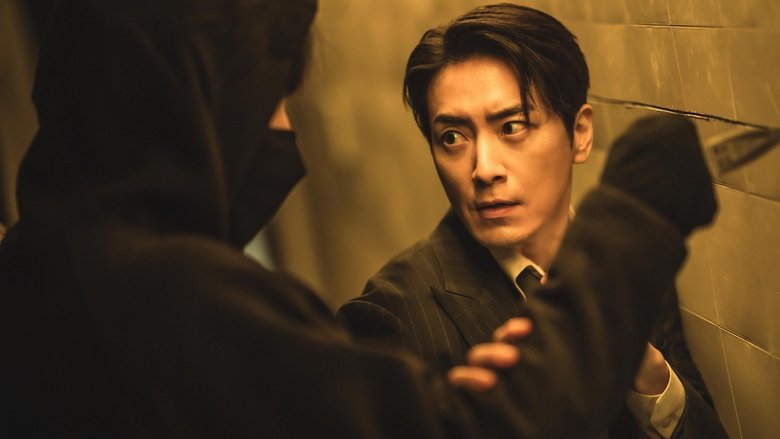
Features a massive, extended action set-piece in a parking garage and hallway where Gi-jun single-handedly fights off dozens of Bongsan hitmen.

Significance:

Forces the hidden conspirators to accelerate their plans due to Gi-jun's overwhelming threat.

The Prosecutor’s Mask

S1E5

Pivotal narrative turning point revealing that prosecutor Lee Geum-son (Lee Ju-woon's legitimate son) ordered the hit on Gi-seok using hired foreign hitman Kaneyama.

Significance:

Unveils the central mastermind and shifts the target of Gi-jun's revenge from street level to high authority.

Chain Reaction

S1E6

Escalating mob warfare breaks out across Seoul while major lieutenants on both sides fall as Cha Yeong-do plays both sides against each other.

Significance:

Sets up the complete breakdown of order leading to the final showdown.

Square of Judgment

S1E7

Gi-jun confronts Geum-son and the surviving syndicate leaders in an explosive climax, delivering final retribution and dismantling the criminal eco-system.

Significance:

Concludes the overall series arc, bringing down both crime syndicates and allowing Gi-jun to grieve in peace.

Philosophical Questions

Can physical penance wash away moral complicity?

Gi-jun cuts his own tendon to earn exit from the gang, but the show questions whether self-punishment can truly cleanse past bloodshed.

Where is the boundary between legitimate corporate governance and organized crime?

Examines how syndicate bosses use legal corporate structures, prosecutors, and PR cleanup to conduct criminal activities under a legitimate banner.

Does personal vengeance bring closure or perpetual destruction?

Traces how Gi-jun's relentless campaign dismantles an entire criminal ecosystem while forcing him to endure profound physical and emotional loss.

Alternative Interpretations

The story offers multiple thematic readings:

Full ending explanation

Cultural Impact

During the early 2000s, gangster noir was a dominant film genre in South Korea, but its popularity waned on domestic television in subsequent years. Mercy for None helped revitalize interest in gritty K-noir action on global streaming platforms. The series reflects modern Korean social commentary on how illicit crime syndicates transformed into corporate conglomerates (재벌-style entities) that use legal, financial, and political connections to hide criminal activity. Internationally, the show received strong viewership numbers, claiming top spots in non-English TV categories across Asia, Europe, and South America.

Audience Reception

Mercy for None was met with strong viewer engagement and solid ratings:

  • Positive Feedback: Audiences and critics praised So Ji-sub's physical performance, the hard-hitting action choreography, the atmospheric score by Dalpalan, and the 7-episode narrative pacing.
  • Main Criticisms: Some reviewers noted that the series relies heavily on graphic violence and gore, offers limited character development for female roles, and follows familiar revenge tropes in its middle episodes.
  • Overall Verdict: Holds an 8.3/10 average audience score on MyDramaList and positive critical ratings, widely regarded as a notable entry in Netflix's Korean action-noir catalog.

Interesting Facts

  • Mercy for None marks actor So Ji-sub’s first full-length action noir project in 13 years since the 2012 film A Company Man.
  • Director Choi Sung-eun revealed that So Ji-sub was the #1 fan-voted dream cast for the character Nam Gi-jun among readers of the original Naver webtoon.
  • Due to South Korea's strict gun control laws, the production team developed action sequences centered around raw physical combat, knives, machetes, and improvised weapons to enhance visceral realism.
  • The series assembled a notable lineup of veteran South Korean actors ("Ahjussi" heavyweights) including So Ji-sub, Huh Joon-ho, Ahn Kil-kang, Lee Beom-soo, and Cha Seung-won.
  • Released as a full-season binge drop on June 6, 2025, Mercy for None reached #1 on Netflix's Global Top 10 Non-English TV chart during its second week, trending across 75 countries.

Easter Eggs

Lee Jun-hyuk's High-Impact Special Appearance

Lee Jun-hyuk makes a crucial special appearance as Nam Gi-seok, serving as the core emotional anchor driving the story despite brief screen time.

Webtoon Visual Frame Homages

Several fight scenes, including the parking lot ambush, replicate exact comic panels and camera angles from Oh Se-hyung and Kim Gyun-tae's original webtoon Plaza Wars.

Homage to Classic Korean Noir

Incorporates narrative beats paying tribute to classic 2000s Korean gangster cinema like A Bittersweet Life and A Dirty Carnival, contrasting old-school mob codes with modern corporate ruthlessness.

Frequently Asked Questions

Explore More About This Movie

Dive deeper into specific aspects of the movie with our detailed analysis pages

Comments (0)

Leave a comment

No comments yet. Be the first to share your thoughts!

Similar Movies