
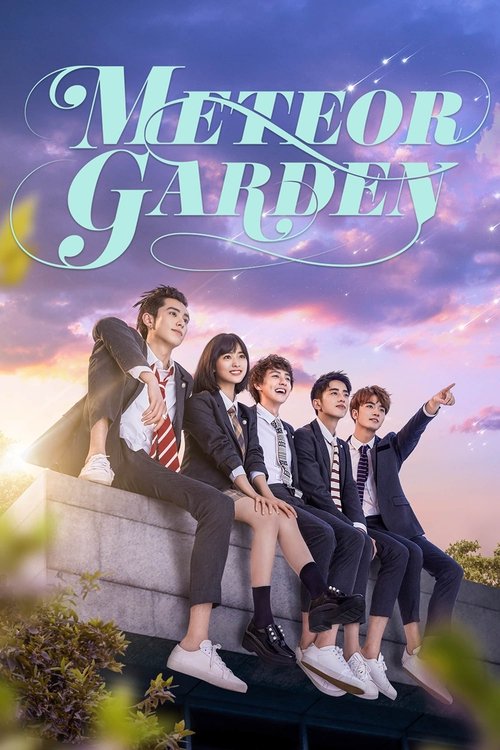
Meteor Garden
A whirlwind romance where a resilient, ordinary girl clashes with an arrogant elite, sparking a vibrant storm of love, friendship, and defiance.
Meteor Garden

Meteor Garden

流星花园

09 July 2018 — 29 August 2018 China 1 season 50 episode Ended ⭐ 8.5 (593)
Cast: Shen Yue, Dylan Wang, Darren Chen, Liang Jingkang, Caesar Wu
Drama Family
Social Class and Inequality Perseverance and Resilience The Transformative Power of Love Friendship and Loyalty

Overview

"Meteor Garden" (2018) is a modern reboot of the classic Taiwanese drama, based on the Japanese manga "Hana Yori Dango". The story follows Dong Shancai (Shen Yue), a determined young woman from a humble background who is accepted into the prestigious Ming De University. Her life takes a dramatic turn when she clashes with F4, an exclusive clique of the four wealthiest and most popular senior students: the hot-headed leader Daoming Si (Dylan Wang), the quiet musician Hua Ze Lei (Darren Chen), the charming tea expert Ximen Yan (Caesar Wu), and the playful Feng Meizuo (Connor Leong).

Shancai's refusal to bow to Daoming Si's arrogance leads to a declaration of war, but her fiery spirit and unwavering sense of justice unexpectedly capture his heart. What begins as a tense rivalry blossoms into a complex love story, fraught with challenges from Daoming Si's disapproving mother, who uses her immense power to separate them, a persistent love triangle involving the gentle Hua Ze Lei, and the vast social chasm between their worlds. The series explores their tumultuous relationship as they navigate misunderstandings, family opposition, and personal growth, all while cementing the powerful bonds of friendship within and around the F4 group.

Core Meaning

At its heart, "Meteor Garden" explores the idea that love can transcend social class and background. It champions the power of perseverance and inner strength, suggesting that a person's worth is defined by their character, not their wealth. The series posits that even the most arrogant and hardened individuals can be transformed by genuine love and compassion. Through the enduring friendship of F4 and Shancai's unwavering defiance, the show conveys a message of loyalty and the importance of fighting for one's happiness against seemingly insurmountable odds.

Thematic DNA

Social Class and Inequality 35%
Perseverance and Resilience 30%
The Transformative Power of Love 25%
Friendship and Loyalty 10%

Social Class and Inequality

The stark contrast between Shancai's working-class background and the immense wealth of F4 is the central conflict. Daoming Si's mother, Daoming Feng, embodies the theme of class prejudice, viewing Shancai as unworthy of her son due to her social status. She repeatedly uses financial power and social pressure to try and break them up. The series consistently highlights the challenges and biases that arise from socioeconomic disparities, questioning whether love and friendship can truly bridge such a divide.

Perseverance and Resilience

Shancai's character is defined by her resilience. Her name, which means "weed," symbolizes her ability to withstand any pressure and never be defeated. From standing up to F4's initial bullying to enduring the cruel machinations of Daoming Feng, Shancai's journey is a testament to fighting for one's principles and loved ones. This theme is mirrored in Daoming Si's relentless pursuit of Shancai despite his mother's opposition and numerous setbacks.

The Transformative Power of Love

Daoming Si undergoes the most significant transformation in the series. Initially introduced as a spoiled, arrogant, and short-tempered bully, his love for Shancai forces him to confront his flaws. He learns empathy, patience, and how to express his emotions constructively. Shancai's influence softens him and reveals a more sincere and caring side, demonstrating the theme that love can inspire profound personal growth and change.

Friendship and Loyalty

The bond between the members of F4 is a cornerstone of the series. Though they bicker and face internal conflicts, particularly the love triangle between Si, Lei, and Shancai, their loyalty to one another ultimately prevails. They consistently support each other through personal and family crises. Shancai, too, develops a deep friendship with the members of F4, who come to respect her tenacity and protect her, showcasing the idea of a chosen family.

Character Analysis

Dong Shancai

Shen Yue

Archetype: Heroine
Key Trait: Resilient

Motivation

Initially, her motivation is simply to survive university and protect her friends. This evolves into a powerful desire to stay true to her principles and not be intimidated by wealth or power. Ultimately, her primary motivation becomes her deep and unwavering love for Daoming Si, giving her the strength to face any obstacle put in their path.

Character Arc

Shancai begins as an ordinary, strong-willed girl determined to get through university quietly. Her clash with F4 forces her out of her shell, transforming her from a defiant victim into a proactive fighter for justice and love. Initially infatuated with the gentle Hua Ze Lei, her arc sees her slowly recognizing the sincerity beneath Daoming Si's aggressive exterior. She grows from a girl constantly reacting to F4's world to a woman who stands as Daoming Si's equal, weathering the storm of his mother's disapproval and ultimately choosing her own path with confidence.

Daoming Si

Dylan Wang

Archetype: Antihero
Key Trait: Passionate

Motivation

His initial motivation is based on pride and a desire to conquer the one girl who defies him. This quickly transforms into a genuine, all-consuming love for Shancai. Protecting her and earning her love becomes his sole focus, driving him to challenge his mother and fundamentally change who he is as a person.

Character Arc

Daoming Si starts as a quintessential arrogant and hot-headed heir who believes money can solve everything. His encounter with Shancai, who cannot be bought or intimidated, shatters his worldview. His arc is a journey of maturation, fueled by his love for her. He learns to control his temper, consider others' feelings, and understand that love requires sacrifice and effort, not just grand gestures. He evolves from a childish bully into a devoted partner willing to defy his family and forfeit his inheritance for the woman he loves.

Hua Ze Lei

Darren Chen

Archetype: The Confidant
Key Trait: Gentle

Motivation

Lei is motivated by a desire for peace and a deep-seated loyalty to his friends. While he briefly pursues his own happiness with Shancai, his core motivation is to protect the people he cares about. He often acts as a mediator and a source of comfort, particularly for Shancai when she is at odds with Si.

Character Arc

Hua Ze Lei is introduced as a quiet, gentle, and melancholic member of F4, initially pining for his childhood friend, Jing. He is the first to be kind to Shancai, and she develops a crush on him. His arc involves him learning to let go of his idealized love for Jing and developing genuine feelings for Shancai. He struggles between his loyalty to Daoming Si and his feelings for her. Ultimately, he gracefully steps aside, realizing Shancai and Si's love is true, and assumes the role of their most steadfast protector and friend, becoming a pillar of support for them both.

Ximen Yan

Caesar Wu

Archetype: The Playboy
Key Trait: Suave

Motivation

Ximen is motivated by a desire to avoid emotional pain, which manifests as his playboy persona. He seeks pleasure without commitment. His interactions with Xiaoyou challenge this motivation, forcing him to reconsider the possibility of genuine connection and confront his past regrets.

Character Arc

Ximen starts as a smooth-talking playboy, known for his expertise in tea ceremonies and his fleeting romances. He appears emotionally detached, viewing love as a game. His arc deepens when he meets Xiaoyou, Shancai's best friend. Through his connection with her, his past heartbreak is revealed, explaining his cynical view of love. While he ultimately doesn't end up with Xiaoyou, the experience forces him to confront his emotional walls and mature, showing a more vulnerable and sincere side.

Feng Meizuo

Liang Jingkang (Connor Leong)

Archetype: The Charmer
Key Trait: Jovial

Motivation

Meizuo is motivated by friendship, loyalty, and the enjoyment of life. He is often the peacemaker and the one who tries to keep the mood light. His pursuit of Caina shows a deeper desire for a meaningful connection, even if it ends in disappointment.

Character Arc

Meizuo is the fun-loving, jovial member of F4, often seen alongside Ximen. He has a talent for art and a laid-back personality. His character arc is given more depth through his storyline with Zhou Caina, a skilled chef. His unrequited love for her forces him to experience emotional vulnerability and heartbreak for the first time. Although he doesn't win her heart, the experience matures him, and he remains a loyal and supportive friend to the rest of F4, ending the series with a hopeful outlook on finding his own love.

Symbols & Motifs

Meteor Necklace

Meaning:

The meteor necklace given by Daoming Si to Shancai symbolizes their destined and cosmic connection. It represents his promise and unwavering love for her, a tangible object that ties them together even when they are physically or emotionally apart. It signifies a love that is as rare and special as a meteor shower.

Context:

Daoming Si gifts the necklace to Shancai during a date where they watch a meteor shower. The necklace becomes a significant object throughout the series, often serving as a reminder of their bond during times of separation and conflict. Its reappearance often signals a pivotal moment in their relationship.

The Joker Card

Meaning:

In this adaptation, the infamous Red Card from previous versions is replaced by a Joker card. It symbolizes a formal challenge from F4. Receiving it means the student is targeted by the group and the student body. Initially a tool of intimidation and bullying, it later represents Shancai's successful defiance of their power structure.

Context:

Shancai receives the Joker card early in the series after she confronts Daoming Si. The challenge associated with the card is a game of Contract Bridge, which F4 are masters at. This modernizes the bullying element from previous adaptations into a battle of wits rather than just physical intimidation.

The Bridge

Meaning:

The rooftop or bridge at the university is a recurring meeting spot that symbolizes a space of refuge, vulnerability, and honest conversation. It is where characters often go to be alone or to have pivotal, heartfelt discussions away from the social pressures of the university.

Context:

This is where Shancai first finds a quiet Hua Ze Lei, and where they share several important moments. It's a neutral ground where characters like Lei and Shancai, and later Si and Shancai, can express their true feelings without pretense.

Memorable Quotes

如果道歉有用的话, 要警察干嘛? (Rúguǒ dàoqiàn yǒuyòng dehuà, yào jǐngchá gàn ma?)

— Daoming Si

Context:

This is said by Daoming Si early in the series after Shancai confronts him. It establishes his character's initial worldview and sets the stage for their antagonistic relationship.

Meaning:

Translated as "If an apology was useful, what's the point of having police?" This iconic line from the original series is reprised here. It perfectly encapsulates Daoming Si's initial arrogant and uncompromising nature, showing his belief that actions have consequences that can't be simply erased by words.

只要你说你喜欢我, 我就为你做任何事。(Zhǐyào nǐ shuō nǐ xǐhuān wǒ, wǒ jiù wèi nǐ zuò rènhé shì.)

— Daoming Si

Context:

This line is spoken during one of Daoming Si's many heartfelt, albeit forceful, confessions to Shancai as he tries to win her over. It represents a turning point where his feelings for her become his primary driving force.

Meaning:

Translated to "Just say you like me, and I'll do anything for you." This quote highlights the shift in Daoming Si's motivation. It shows his desperation for Shancai's affection and his willingness to change and go to extreme lengths for her, moving from demanding submission to pleading for love.

想哭的时候就倒立, 这样眼泪就不会流出来了。(Xiǎng kū de shíhòu jiù dàolì, zhèyàng yǎnlèi jiù bù huì liú chūláile.)

— Hua Ze Lei

Context:

Hua Ze Lei says this to Shancai on the rooftop when he finds her upset early in the series. It's one of their first bonding moments and establishes his role as her initial source of comfort.

Meaning:

Translated as "When you want to cry, stand on your head. That way, your tears won't fall out." This piece of advice from Lei to Shancai reflects his own method of dealing with sadness—by suppressing it or viewing it from a different perspective. It symbolizes his gentle, quirky, and emotionally reserved nature.

Episode Highlights

Episode 2

S1E2

This episode solidifies the core conflict and character dynamics. After Shancai's public defiance, Daoming Si attempts to intimidate her with a makeover and a condescending offer to be his girlfriend, which she rejects spectacularly. It clearly establishes Shancai's unyielding personality and Daoming Si's burgeoning obsession with her, moving beyond the initial setup of Episode 1.

Significance:

This episode contains one of the most iconic scenes of the franchise and sets the true tone for the central relationship. It defines the power dynamic they will spend the rest of the series trying to overcome and showcases the spirited chemistry between the leads for the first time.

Episode 19

S1E19

Daoming Si's formidable mother, Daoming Feng, makes her grand entrance at his birthday party. She immediately targets Shancai, challenging her to prove she belongs in their high-society world. This episode marks the beginning of the central external conflict of the series: the battle between young love and parental/class opposition.

Significance:

The arrival of Daoming Feng raises the stakes of the series dramatically. It shifts the conflict from a university rivalry to a much larger battle against a powerful matriarch, testing the strength of Shancai and Daoming Si's relationship in a new and more serious way.

Episode 23

S1E23

In one of the most romantic episodes, Daoming Si arranges a spectacular meteor shower viewing for Shancai. After his mother's interference leaves Shancai temporarily homeless, she ends up working as a maid in the Daoming household, leading to a series of tense but intimate moments between them, culminating in this grand romantic gesture.

Significance:

This episode explains the title of the series and represents a peak romantic moment before new challenges arise. It solidifies their feelings for each other and gives them a shared, magical experience that they hold onto during future hardships.

Episode 42

S1E42

Shancai and Daoming Si find themselves stranded on a deserted island, which is later revealed to be an elaborate ruse orchestrated by their friends to get them back together. The episode is filled with heartfelt conversations and romantic moments as they rely on each other for survival, stripping away the external pressures of their lives.

Significance:

Often cited by fans as one of the best episodes, it forces the lead couple to reconnect on a fundamental level. The isolation allows them to resolve lingering misunderstandings and reaffirm their commitment to each other without outside interference.

Episode 50

S1E50

The finale features a surreal and elaborate event that turns out to be Shancai and Daoming Si's wedding. After a harrowing hunger strike and Daoming Feng's eventual acceptance, the episode culminates in a bizarre but joyful celebration where Daoming Si reenacts his first declaration of love. It brings the story to a conclusive and happy end.

Significance:

While confusing for some viewers, the finale provides definitive closure. It ties up the main storyline, celebrates the couple's journey, and emphasizes their personal growth by mirroring an early confrontation but with a new context of love and maturity.

Philosophical Questions

Does enduring hardship and suffering for love make it more valuable?

The series constantly places immense, almost insurmountable obstacles in the path of Shancai and Daoming Si. From class differences and extreme family opposition to misunderstandings and physical separation, their relationship is forged in adversity. The narrative seems to suggest that their love becomes stronger and more profound precisely because they have to fight so hard for it. It raises the question of whether love that comes easy can be as deep as a love that has been tested by fire.

Can a person truly change their fundamental nature for someone else?

Daoming Si's character arc is a central exploration of this question. He starts as an entitled, violent, and arrogant individual. While his love for Shancai motivates him to become kinder, more patient, and more mature, the series occasionally shows his temper flaring up, suggesting his core personality is still present. This prompts the question: Is Daoming Si's transformation a genuine change of character, or is it a sustained effort to be a better person for Shancai, with the old 'him' always lurking beneath the surface?

Where is the line between romantic persistence and toxic obsession?

Daoming Si's initial pursuit of Shancai often crosses boundaries. His behavior can be interpreted as controlling, aggressive, and obsessive. The series romanticizes his relentless pursuit as a sign of his deep passion. However, it also raises questions about consent and emotional manipulation. The narrative challenges viewers to consider at what point grand romantic gestures become acts of harassment and whether the 'enemies-to-lovers' trope can inadvertently glorify toxic relationship dynamics, a point often raised by modern critics.

Alternative Interpretations

The series finale, particularly the wedding sequence, has been subject to various interpretations due to its surreal and dreamlike quality. A significant portion of the audience found the transition from a life-threatening hunger strike to a bizarre, theatrical wedding jarring and confusing.

One interpretation is that the entire wedding sequence is a hallucination or an afterlife fantasy. Proponents of this theory argue that Shancai and Daoming Si actually succumbed to their starvation. The strange behavior of their friends and family, the absence of Shancai's parents, and the dream-like reenactment of their past all point to a symbolic union in another realm rather than a literal event.

A more straightforward interpretation sees the sequence as an elaborate surprise wedding orchestrated by F4 and Daoming Si's sister. In this view, the theatricality is simply a reflection of Daoming Si's grand, often over-the-top personality and his desire to give Shancai a unique and memorable declaration of his love. The strangeness is attributed to artistic choice, meant to be a final, playful game before they settle into their happily ever after.

Cultural Impact

As a remake of the 2001 drama that arguably launched the "idol drama" phenomenon across Asia, "Meteor Garden" (2018) was met with immense anticipation. It aimed to reintroduce the classic story to a new, younger generation of viewers while satisfying the nostalgia of original fans. The series gained massive international exposure through its distribution deal with Netflix, making it accessible to a global audience.

Critically, the reception was mixed. Many praised the high production values, stylish wardrobe, and the charismatic new cast, particularly the chemistry between Dylan Wang and Shen Yue. However, it also faced criticism for its extended 50-episode length, which some felt dragged the plot, and for toning down some of the original's edgier conflicts to meet mainland Chinese broadcasting standards. For instance, the F4's bullying was significantly reduced, and their wealth was framed more as a result of their own academic talents rather than just family inheritance. The series sparked widespread discussion on social media, with fans comparing it to the numerous other adaptations (Taiwanese, Japanese, Korean). Despite the criticisms, it was a commercial success and further solidified the careers of its young lead actors, reaffirming the enduring appeal of the "Hana Yori Dango" story in contemporary pop culture.

Audience Reception

The audience reception for "Meteor Garden" (2018) was largely polarized, often split between new viewers and long-time fans of previous adaptations. New audiences were often captivated by the modern aesthetic, the strong chemistry of the lead actors Shen Yue and Dylan Wang, and the highly romantic, albeit melodramatic, storyline. The series was a massive hit on streaming platforms like Netflix, gaining a large international following.

However, many fans of the original 2001 version and other adaptations were critical. Common criticisms included the significant increase in the number of episodes to 50, which led to complaints about slow pacing and filler subplots. Some felt the new F4 lacked the raw edge of the original, with the toned-down bullying making the initial conflict feel less intense. The acting of the young, relatively inexperienced cast was also a point of contention for some viewers. The confusing and surreal nature of the final episode was a major topic of debate, leaving many viewers unsatisfied or perplexed.

Interesting Facts

  • The 2018 series was produced by Angie Chai, who also produced the original iconic 2001 Taiwanese "Meteor Garden".
  • To modernize the story, the F4 are not just bullies but are now presented as academically gifted students with extraordinary talents, such as being masters at the card game Contract Bridge.
  • Dee Hsu (Xiao S), the actress who plays Daoming Si's assertive older sister, is the real-life younger sister of Barbie Hsu, who famously played Shancai in the 2001 version.
  • The series was filmed in various international locations, including Shanghai and London, to emphasize the global scale of the Daoming family's wealth and influence.
  • Several songs from the original 2001 soundtrack, including the iconic theme song "Qing Fei De Yi," are featured in the 2018 remake, serving as a nostalgic nod to the original.

Easter Eggs

Harlem Yu, the singer of the original 2001 opening theme song "Qing Fei De Yi," makes a cameo appearance as a musician busking on the streets of London.

This is a direct and beloved homage to the original series. His song is arguably the most recognizable piece of music from the franchise, and his appearance connects the new generation of viewers with the show's legacy, creating a moment of nostalgia for long-time fans.

The original 2001 "Meteor Garden" theme song, "Qing Fei De Yi," and F4's song "Meteor Rain" play during the wedding celebration in the final episode.

The inclusion of these iconic songs during the series' climax is a powerful tribute to the original drama. It serves as a final, heartfelt acknowledgment of the story's history and the cultural impact of the 2001 version, bringing the journey full circle for fans of the franchise.

⚠️ Spoiler Analysis

Click to reveal detailed analysis with spoilers

Frequently Asked Questions

Explore More About This Movie

Dive deeper into specific aspects of the movie with our detailed analysis pages

Comments (0)

Leave a comment

No comments yet. Be the first to share your thoughts!