Skip to content
Midnight
An unrelenting urban sensory nightmare where suffocating silence collides with raw panic, racing through labyrinthine neon alleyways against the uncaring concrete of a sleeping city.
Midnight

Midnight

미드나이트

"Silence kills."

30 June 2021 South Korea 103 min 7.2 (326)

Director: Kwon Oh-seung

Cast: Jin Ki-joo, Wi Ha-jun, Park Hoon, Kil Hae-yeon, Kim Hye-yoon

Crime Thriller Social Indifference & Bystander Effect Sensory Vulnerability vs. Empowerment Duality of Appearances vs. Reality Familial Devotion & Protective Instinct

Overview

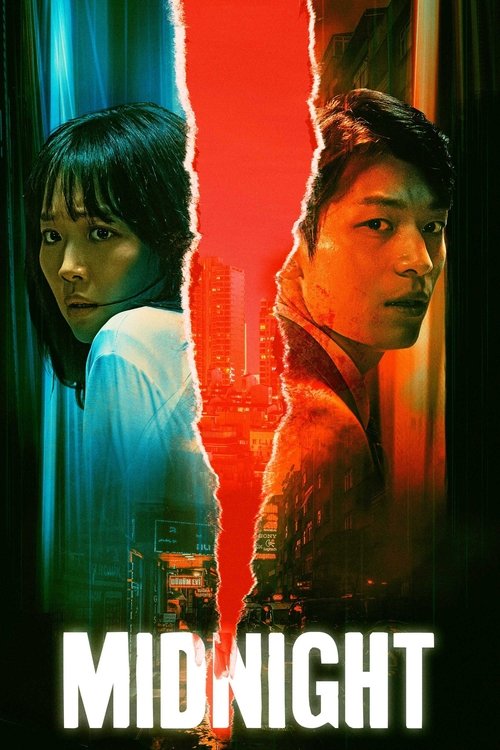
Midnight (2021), written and directed by Kwon Oh-seung in his feature directorial debut, is a high-octane South Korean psychological chase thriller that subverts conventional slasher tropes. The story centers on Kyung-mi, a deaf woman working as a sign language customer service counselor at a call center, who lives a modest, loving life with her deaf mother while navigating a society that often overlooks individuals with disabilities.

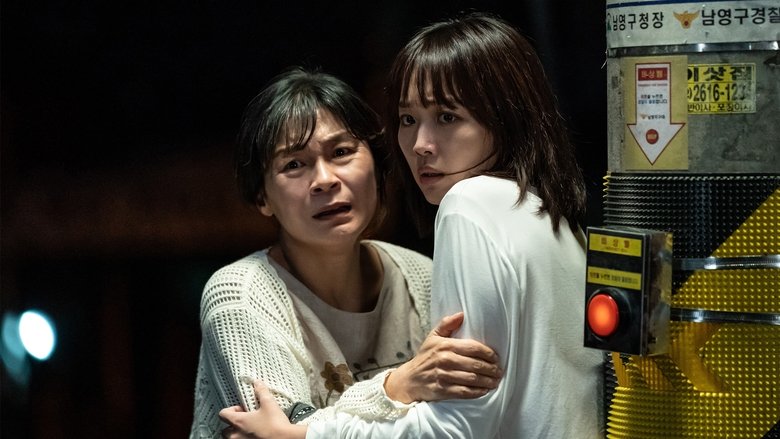
The plot kicks into high gear one evening after Kyung-mi encounters Do-sik, a psychopathic serial killer roaming the streets. While driving home, Kyung-mi spots a bleeding, injured young woman named So-jung trapped in a dark alley. By stopping to help, Kyung-mi inadvertently interrupts Do-sik's murder ritual, instantly transforming herself and her mother into the killer's primary targets while So-jung's brother, Jong-tak, an ex-marine working as a security guard, desperately scours the neighborhood for his missing sister.

What follows is an adrenaline-fueled cat-and-mouse chase spanning a single harrowing night. The film relies heavily on intense kinetic pacing, narrow alleyway sprints, and stark contrasts between total sensory deprivation and piercing auditory cues. Rather than merely being a victim, Kyung-mi uses her intellect, visual awareness, and sheer will to survive against a sadistic predator who manipulates everyday societal biases to his advantage.
Core Meaning

The core thesis of Midnight is a stinging social critique of systemic apathy and the vulnerability of marginalized communities in modern urban spaces. Director Kwon Oh-seung explores how society silences the already voiceless not merely through physical disability, but through prejudice, bureaucratic indifference, and the bystander effect.

The serial killer Do-sik represents how easily malice can hide behind a clean-cut, polite exterior in a culture where superficial social norms and verbal eloquence overshadow genuine truth. By placing a deaf protagonist at the center of the narrative, the film emphasizes that true resilience comes from moral courage, hyper-observance, and turning society's neglect into a subversive weapon for survival.

Thematic DNA

Social Indifference & Bystander Effect 35%
Sensory Vulnerability vs. Empowerment 30%
Duality of Appearances vs. Reality 20%
Familial Devotion & Protective Instinct 15%

Social Indifference & Bystander Effect

Throughout the chase, multiple opportunities for rescue are thwarted because bystanders and institutional authorities like the police dismiss Kyung-mi's frantic non-verbal pleas, uncritically accepting the charming lies of a smooth-talking killer.

Sensory Vulnerability vs. Empowerment

The narrative deconstructs how hearing impairment creates extreme physical vulnerability in a hostile world, while simultaneously showing how Kyung-mi leverages heightened visual acuity, peripheral reflexes, and tactical environmental awareness to outwit her stalker.

Duality of Appearances vs. Reality

Do-sik constantly switches costumes and demeanors—from a suit-wearing brother to a concerned citizen—exposing society's gullibility toward conventional respectability and handsome outward appearances.

Familial Devotion & Protective Instinct

The mother-daughter bond between Kyung-mi and her mother, contrasted with Jong-tak's desperation to find his sister So-jung, drives the emotional core of the film, highlighting how love compels ordinary people to endure extreme physical trauma.

Character Analysis

Kyung-mi

Jin Ki-joo

Archetype: Reluctant Hero / Resourceful Survivor Key Trait: Acute visual alertness and relentless determination

Motivation

To protect herself and her mother, and survive the night.

Character Arc

Transforms from an everyday citizen dealing with daily discrimination into an empowered survivor who exposes the killer.

Do-sik

Wi Ha-jun

Archetype: Sadistic Hunter / Psychopathic Anti-villain Key Trait: Sociopathic charm and athletic speed

Motivation

The thrill of the hunt and psychological torment of vulnerable targets.

Character Arc

Devolves from a calculating, untouchable predator into an enraged maniac as his control slips away.

All 5 characters and cast

Symbols & Motifs

Sound Decibel Meters / Visual Sound Devices

Meaning:

They symbolize the bridge between worlds and serve as tense survival mechanisms when noise levels indicate approaching danger.

Context:

Featured prominently in Kyung-mi's home and workplace, converting sound into flashing lights and decibel readouts.

The High-Heeled Shoes / Red Stilettos

Meaning:

Symbolizes the entrapment of female victims in urban spaces.

Context:

Found discarded in dark alleyways, serving as the catalyst that draws Kyung-mi into the crime scene.

Do-sik’s Car (The Mobile Toolset)

Meaning:

Symbolizes predatory mobility and premeditation, functioning as an extension of the killer's chameleon-like nature.

Context:

Packed with knives, disguises, and duct tape, roaming the streets in search of unsuspecting targets.

The Cramped Urban Alleyways

Meaning:

Represents a labyrinthine cage where victims are trapped in plain sight within a massive metropolis.

Context:

The claustrophobic hill-slopes and concrete corridors of suburban Seoul where the chases unfold.

The Whistle / Visual SOS Signals

Meaning:

Acts as visual screams in an indifferent world where sound is either unavailable or ignored.

Context:

Utilized via flashing car lights and emergency alarms throughout the nighttime pursuit.

Memorable Quotes

살려주세요... 제발 도와주세요...
— Kyung-mi

Context

Typed on her phone and voiced in desperate vocalization while trying to plead for help from passersby and police officers.

Meaning

Encapsulates the film's core tragedy: the painful gap between a victim's urgent cry and society's inability or unwillingness to listen.

사람들은 말이야, 보이는 걸 믿는 게 아니라 믿고 싶은 걸 봐.
— Do-sik

Context

Spoken with a mocking smirk while manipulating public perception against Kyung-mi.

Meaning

Directly states the villain's philosophy: that society values smooth lies over uncomfortable truths.

All 3 quotes

Philosophical Questions

How does societal prejudice silence truth?

The film demonstrates that words are easily weaponized by those with social privilege, whereas those without standard speech are frequently ignored regardless of their innocence.

What creates true moral responsibility in a crowd?

Midnight interrogates the bystander effect, questioning why modern city dwellers require extreme visual violence before showing basic human solidarity.

Is justice attainable without sacrifice for marginalized groups?

The climax raises the uncomfortable dilemma of whether systemic apathy forces vulnerable individuals to endure bodily harm simply to prove their victimization.

Alternative Interpretations

The Systematic Exposure Reading: Kyung-mi's final act in the bustling downtown market can be interpreted as an intentional martyrdom strategy. In an apathetic society, a disabled person cannot win through testimony; only unmistakable visual spectacle can compel the crowd to intervene.

Full ending explanation

Cultural Impact

Midnight fits into the lineage of South Korean revenge and cat-and-mouse thrillers (I Saw the Devil, The Chaser), yet differentiates itself by moving away from overt gore and prioritizing suspense and social commentary.

The film addresses contemporary South Korean concerns regarding street safety, the vulnerabilities of single-woman households in high-density districts, and the challenges faced by the disabled community in accessing public services. It achieved acclaim on the international genre festival circuit, winning the Silver Raven at the Brussels International Fantastic Film Festival.

Audience Reception

Critics and audiences universally commended the film's relentless pacing, clever sound design (alternating between silence and deafening tension), and the tour-de-force physical performances of Jin Ki-joo and Wi Ha-jun.

Common criticisms pointed to narrative contrivances, occasional lapses in secondary character logic (such as police incompetence bordering on caricature), and the sheer endurance of the killer surviving multiple head traumas. Overall, it is regarded as a compact, white-knuckle thriller that revitalizes the slasher genre with sharp social insight.

Interesting Facts

  • Jin Ki-joo and Wi Ha-jun sprinted barefoot and in light shoes across real asphalt streets in Seoul for weeks during night shoots, resulting in numerous bruises, minor injuries, and muscle strain.
  • Jin Ki-joo and Kil Hae-yeon attended sign language academies for months before production to ensure their non-verbal interactions, emotional pacing, and gestures were natural and authentic.
  • This project marked writer-director Kwon Oh-seung’s feature film debut, conceived after observing how vulnerable deaf individuals are in secluded urban night spaces.
  • Production completed in late 2019, but its theatrical premiere was delayed due to the COVID-19 pandemic, eventually releasing simultaneously in theaters and on the South Korean streaming platform TVING on June 30, 2021.
  • Filmed shortly before Wi Ha-jun achieved massive worldwide fame through Netflix's Squid Game (2021), Midnight demonstrated his wide acting range as a terrifying villain.

Easter Eggs

Subversion of Wait Until Dark (1967) and Hush (2016)

While classic thrillers like Hush or Wait Until Dark confine sensory-impaired protagonists to a single house, Midnight expands the tension outward into wide public urban spaces, turning the open city into an inescapable trap.

Audio-Cutting Technique

Several key chase sequences drop background Foley effects to absolute silence, directly immersing the audience into Kyung-mi's subjective auditory perspective.

Costume Transition

Do-sik's swift change from a sharp black suit to casual streetwear mirrors classic psychological thriller tropes of the invisible monster hidden within plain sight in broad daylight and crowded places.

Frequently Asked Questions

Explore More About This Movie

Dive deeper into specific aspects of the movie with our detailed analysis pages

Comments (0)

Leave a comment

No comments yet. Be the first to share your thoughts!

Similar Movies