Skip to content
Mine
Behind the gilded, suffocating glass walls of an elite dynasty, a suspenseful tale of quiet liberation unfolds, where hidden fires of female solidarity burn away patriarchal deception to reclaim lost identity.
Mine

Mine

마인

"All that was mine."

08 May 2021 — 27 June 2021 South Korea 1 season 16 episode Ended 7.6 (130)

Cast: Lee Bo-young, Kim Seo-hyung, Lee Hyun-wook, Ok Ja-yeon, Cha Hak-yeon

Drama Mystery Female Solidarity and Sisterhood over Rivalry Redefining Motherhood and Family Beyond Biology Self-Identity, LGBTQ+ Acceptance, and Freedom The Illusory Nature of Wealth and High-Society Corruption Truth, Deception, and Escape

Overview

Mine (2021) is a 16-episode South Korean mystery drama produced by tvN and distributed internationally by Netflix. Set within the sprawling, hyper-luxurious compound of Hyowon Group—one of South Korea's premier chaebol conglomerates—the narrative unfolds primarily across two architectural masterpieces: Cadenza, the command center of the family's business hierarchy, and Rubato, a sunlit sanctuary of art and warmth.

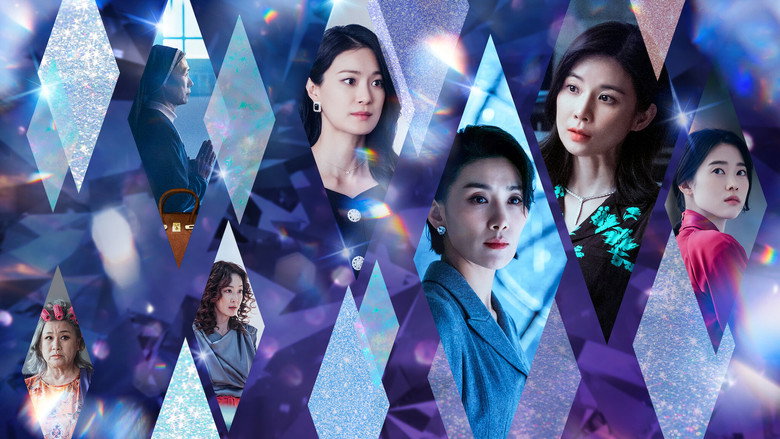
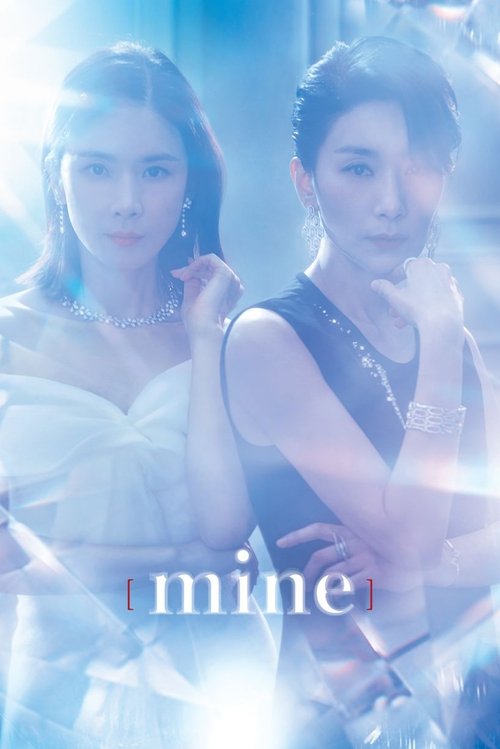
The overall story arc follows two women married into the Han family: Seo Hee-soo, a former top movie star who gave up her glittering career to marry second son Han Ji-yong and raise his son Ha-joon, and Jung Seo-hyun, a refined chaebol heiress herself who manages the family’s estate, art gallery, and corporate affairs with razor-sharp rationality. Their seemingly tranquil, enviable existence is shattered when two outsiders enter the compound: Kang Ja-kyung, a provocative private tutor hired for Ha-joon, and Kim Yu-yeon, a humble young woman hired as a housemaid.

As Ja-kyung’s boundaries cross into dangerous territory and long-buried family secrets emerge, the golden cage of Hyowon Group unravels. The story shifts from high-society family intrigue into a high-stakes psychological thriller centered around systemic power abuses, sociopathic deception, and a mysterious murder that hangs over the estate. Rather than succumbing to internal rivalry, the women at the heart of the family form an alliance, navigating betrayal and murder to break free from social constraints and claim what is genuinely theirs—their true selves.
Core Meaning

The central thesis of Mine is that true ownership ("mine") does not consist of material wealth, social status, corporate power, or conventional family structures, but of authentic selfhood, autonomy, and moral integrity. Through the downfall of Hyowon Group's toxic patriarchs and the rise of its female leads, creators Baek Mi-kyung and Lee Na-jung emphasize that the highest form of power is the courage to shatter self-imposed cages and societal prejudices. The series redefines motherhood beyond bloodlines and validates non-traditional identities—including LGBTQ+ self-acceptance—demonstrating that standing in one's truth is the ultimate victory.

Thematic DNA

Female Solidarity and Sisterhood over Rivalry 35%
Redefining Motherhood and Family Beyond Biology 25%
Self-Identity, LGBTQ+ Acceptance, and Freedom 20%
The Illusory Nature of Wealth and High-Society Corruption 12%
Truth, Deception, and Escape 8%

Female Solidarity and Sisterhood over Rivalry

Initially structured around the classic K-drama trope of women fighting over men, status, or children, Mine subverts expectations by transforming prospective rivals into fierce allies. As Hee-soo, Seo-hyun, and even former antagonist Hye-jin realize that Han Ji-yong is a common threat manipulating them, they combine their intelligence, wealth, and maternal devotion to protect one another.

Redefining Motherhood and Family Beyond Biology

The show explores what truly makes a mother. Seo Hee-soo pours unconditional love into Ha-joon despite not giving birth to him, while biological mother Lee Hye-jin (Kang Ja-kyung) fights to claim her place. Instead of engaging in a destructive custody war, both mothers put the child’s emotional well-being first and choose to co-exist and protect him together.

Self-Identity, LGBTQ+ Acceptance, and Freedom

Representing a milestone for Korean television, Jung Seo-hyun's arc addresses closeted sexuality in high society. Her journey involves confronting her past love, Suzy Choi, and shedding her emotional armor. Simultaneously, Hee-soo strips away her role as an obedient chaebol wife to rediscover her identity as an independent woman and artist.

The Illusory Nature of Wealth and High-Society Corruption

Hyowon Group's mansions are framed as opulent prisons where wealth breeds emotional atrophy, violence, and moral degradation. The contrast between the servants' quarters and the master suites exposes how high society maintains a facade of perfection built on systemic exploitation.

Truth, Deception, and Escape

Characters constantly grapple with "false peace" maintained by secrets versus the "uncomfortable truth" that brings freedom. Deception is used both as a weapon of abuse (by Han Ji-yong) and as a tactical shield of survival (by Hee-soo and Seo-hyun).

Character Analysis

Seo Hee-soo

Lee Bo-young

Archetype: Protagonist / Protective Mother / Resilient Heroine Key Trait: Unshakable emotional resilience and warmth

Motivation

To protect her stepson Ha-joon and construct an authentic life away from Hyowon's lies.

Character Arc

Starts as a compassionate, trusting former actress attempting to maintain harmony in a rigid chaebol family. Upon discovering her husband's sociopathic double life and suffering a tragic loss, she drops her naive posture, strategically feigns amnesia, and reclaims her agency.

Jung Seo-hyun

Kim Seo-hyung

Archetype: Rational Strategist / Mentor / Queer Matriarch Key Trait: Immovable composure and tactical brilliance

Motivation

Maintaining order, which shifts to protecting her sister-in-law and claiming her own right to love and lead.

Character Arc

Evolves from a guarded, hyper-rational chaebol daughter who suppresses her sexuality to maintain social position, into an empowered leader who dismantles family corruption, comes out, reconnects with her first love Suzy Choi, and becomes CEO.

All 5 characters and cast

Symbols & Motifs

The Peacock ("Cutie" / 순수)

Meaning:

Symbolizes the vanity and emotional imprisonment of the Hyowon family. Though admired for its visual magnificence, the bird is confined to a cage, mirroring how the family members sacrifice their personal freedom for luxury.

Context:

Kept in a grand courtyard at Cadenza.

The Elephant in the Narrow Door (Painting)

Meaning:

Serves as a visual metaphor for self-imposed mental barriers, social closets, and fear of judgment. The elephant only believed it was trapped because it thought surrounding walls existed.

Context:

A recurring artwork showing an elephant weeping inside a narrow doorway. Jung Seo-hyun asks how the elephant can escape, only for a young artist to point out that there are no actual surrounding walls.

The Blue Diamond

Meaning:

Symbolizes raw corporate ambition, greed, and the curse of inheritance.

Context:

Introduced in Episode 1 as Chairman Han's prized possession. Its transfer triggers betrayal, infighting, and chaos throughout the mansion.

Cadenza vs. Rubato (Architectural Names)

Meaning:

"Cadenza" (an improvised, virtuosic solo in classical music) represents Seo-hyun's highly structured, formal domain. "Rubato" (an expressive flexibility of tempo) represents Hee-soo's warm, artistic space. The contrast reflects their initial personalities before their paths converge.

Context:

The two primary architectural structures comprising the Hyowon Group compound.

The Fire Extinguisher

Meaning:

Symbolizes the breaking point of domestic violence and the sudden intervention of the lower-class staff against corporate abuse.

Context:

A mundane object that becomes the instrumental weapon of defense during the climax when Head Maid Joo strikes Han Ji-yong.

Memorable Quotes

마인(Mine). 내 거요.
— Jung Seo-hyun

Context

Episode 6 ("The Uncomfortable Truth and False Peace").

Meaning

Tearfully uttered to Mother Emma when describing her hidden first love, Suzy Choi. It marks the first time Seo-hyun verbalizes her authentic desire and establishes the emotional core of the title.

당신이 건드린 건 서희수가 아니라 하준이 엄마야.
— Seo Hee-soo

Context

Episode 3 ("The Gray Area"), during a confrontation with an arrogant parent bullying her stepson.

Meaning

Asserts her identity as a mother, establishing that maternal love is defined by commitment and care, not merely biological bonds.

All 6 quotes

Episode Highlights

The Strangers

S1E1

Introduces the opulent world of Cadenza and Rubato. Mother Emma runs to the police station to report a bloody murder, establishing the whodunnit framing device. Hires of Kang Ja-kyung and Kim Yu-yeon disrupt the estate.

Significance:

Establishes the central whodunnit mystery framing device and introduces the fundamental dynamics of Cadenza and Rubato.

Strait is the Gate

S1E4

Ja-kyung's unsettling boundary-crossing intensifies as she wears Hee-soo's clothes and bonds with Ha-joon, hinting at her real identity as Lee Hye-jin.

Significance:

Escalates tension around Kang Ja-kyung's true motives and identity within the household.

The Uncomfortable Truth and False Peace

S1E6

Hee-soo learns about Ji-yong's past relationship with Ja-kyung. Seo-hyun tearfully confesses her sexuality to Mother Emma ("Mine. It's mine").

Significance:

Marks a crucial turning point for Seo-hyun's identity confession and Hee-soo's realization of her husband's deception.

How Elephants Leave the Door

S1E8

Hee-soo suffers a heartbreaking miscarriage due to the shock of Ji-yong's sociopathic betrayals. Seo-hyun forms a pact with Hee-soo, introducing the elephant allegory.

Significance:

Catalyzes the solidarity pact between Seo-hyun and Hee-soo and introduces the central elephant metaphor for liberation.

The Real Mother

S1E10

Hee-soo and Hye-jin unite to legally strip Ji-yong of parental rights. Chairman Han’s will is read, naming Ji-yong as primary heir, triggering dangerous family backstabbing.

Significance:

Solidifies the alliance between Hee-soo and Hye-jin while accelerating succession conflicts.

They All Lie

S1E13

Ji-yong's darkest secret—his financial involvement in violent underground fight rings—is uncovered. Hee-soo feigns amnesia after a trauma incident to strategically execute her liberation strategy.

Significance:

Exposes the full extent of Ji-yong's sociopathy and initiates Hee-soo's strategic fake amnesia plan.

The Judges

S1E15

The night of Han Soo-hyuk’s engagement party arrives. Tensions peak as multiple characters converge on Cadenza with motives to stop or kill Ji-yong.

Significance:

Brings all narrative threads to a climax on the night of the central crime.

Glorious Women

S1E16

Finale reveal: Head Maid Joo killed Ji-yong with a fire extinguisher to save Hee-soo. Six months later, Seo-hyun takes over Hyowon as CEO and reaches out to Suzy Choi, while Hee-soo successfully returns to her acting career.

Significance:

Resolves the murder mystery, seals the ultimate fates of all main characters, and cements the theme of self-actualization.

Philosophical Questions

What constitutes true ownership ("Mine")?

The series asks whether "mine" refers to physical possessions, children, and spouses, or if the only true possession one can have is authentic selfhood and moral autonomy.

Does biological bloodline define motherhood?

Through the dual mothers (Hee-soo and Hye-jin), the drama explores whether motherhood is an innate biological right or an ongoing act of sacrificial love.

Can authentic happiness exist within oppressive structural institutions?

Explored through Han Soo-hyuk and Jung Seo-hyun, questioning whether one must abandon high-society systems completely or transform them from within.

Alternative Interpretations

Feminist Allegory of Structural Liberation: Critics view the entire Hyowon estate as a microcosm of patriarchal society. Han Ji-yong represents toxic patriarchy, while the women's alliance shows that real freedom requires dismantling systemic power rather than fighting over crumbs.

Full ending explanation

Cultural Impact

Mine premiered during a period of transformation in K-drama storytelling, marking a clear evolution from traditional "makjang" (trashy soap operas focusing on absurd catfights and vengeful affairs) toward sophisticated, feminist-driven thrillers. By depicting female characters who refuse to be divided by a patriarchal system, the show earned acclaim for dismantling male-centered power dynamics.

Furthermore, Kim Seo-hyung’s portrayal of a closeted lesbian corporate leader was celebrated as a milestone in South Korea, where queer themes remain largely taboo on prime-time broadcast television. The series achieved strong critical respect for balancing commercial high-society aesthetics ("wealth porn") with deep character development and progressive social commentary.

Audience Reception

Mine received strong praise from audiences and critics alike, scoring an 8.5/10 on AsianWiki, an 8.3/10 on MyDramaList, and a 100% audience rating on Rotten Tomatoes.

Praised Aspects: Masterful performances by Lee Bo-young and Kim Seo-hyung; stunning architectural cinematography and haute couture fashion; subversion of female rivalry tropes in favor of sisterhood; tasteful handling of LGBTQ+ storylines.

Main Points of Criticism: The secondary romantic plotline between young master Soo-hyuk and maid Yu-yeon was criticized by many as a cliché Cinderella trope that felt out of place compared to the main storyline; some viewers found the murder investigation pacing in the final episodes slightly drawn out.

Overall Verdict: Considered one of the standout Korean dramas of 2021, highly regarded for its visual polish, subversion of tropes, and empowering theme.

Interesting Facts

  • The exterior and interior of Cadenza were shot at Museum SAN in Wonju, Gangwon Province, designed by world-famous Japanese minimalist architect Tadao Ando.
  • Rubato was filmed at Maiim Vision Village in Yeoju, known for its appearances in Secret Garden and What's Wrong with Secretary Kim?.
  • Mine made history as the first mainstream South Korean television drama on a major broadcast network (tvN) to present a lesbian main character (Jung Seo-hyung) with dignity, respect, and a satisfying emotional arc.
  • Created by star screenwriter Baek Mi-kyung and director Lee Na-jung, making it a rare female-led blockbuster production team in the Korean TV industry.
  • The show premiered with a modest 6.5% national rating and steadily climbed, concluding its finale with a record 10.512% nationwide and 11.221% in the Seoul metropolitan area.
  • Costume designer choices deliberately contrasted the two leads: Kim Seo-hyung wore dark neutrals, strong shoulders, and suits from Alexander McQueen to project corporate power, while Lee Bo-young wore vibrant colors (Valentino, Loewe, Chloé) to project artistic individuality.
  • The role of Jung Seo-hyun was initially offered to veteran actress Ko So-young, who declined due to scheduling conflicts.

Easter Eggs

Baek Mi-kyung's Universe

Mine serves as a thematic companion to writer Baek Mi-kyung's 2017 hit Woman of Dignity. Both feature two upper-class women, a murder mystery, and maid/tutor entry into rich households, but Mine intentionally flips the rivalrous dynamic into female solidarity.

Musical Architectural Naming

The names Cadenza and Rubato reflect classical music terms that hint at character destinies. Cadenza is an isolated, virtuosic solo passage (Seo-hyun's independent reign as CEO), while Rubato refers to the expressive stealing or altering of tempo (Hee-soo breaking free of social expectations).

"The Crying Elephant" Merchandise

The popularity of the elephant painting motif led tvN to release limited-edition official jewelry (a silver/rose gold elephant and door necklace) in collaboration with Wadiz crowd-funding.

Kim Jung-hwa Cameo

Actress Kim Jung-hwa played Suzy Choi, Seo-hyun's first love. Her inclusion prompted significant discussion in domestic Korean media regarding queer representation.

Frequently Asked Questions

Explore More About This Movie

Dive deeper into specific aspects of the movie with our detailed analysis pages

Comments (0)

Leave a comment

No comments yet. Be the first to share your thoughts!

Similar Movies