Skip to content
Miss Granny
A warm, bittersweet fantasy-comedy where a lifetime of sacrifice is rewound into one dazzling second spring. Laughter and tears blossom together, like an old photograph slowly colouring back into youth.
Miss Granny

Miss Granny

수상한 그녀

"She's back... in her twenties!"

22 January 2014 South Korea 124 min 7.3 (126)

Director: Hwang Dong-hyuk

Cast: Shim Eun-kyung, Na Moon-hee, Lee Jin-uk, Jung Jinyoung, Park In-hwan

Drama Comedy Music Family and Reconciliation Maternal Sacrifice Second chances and nostalgia Aging and generational gap Music and self-expression

Overview

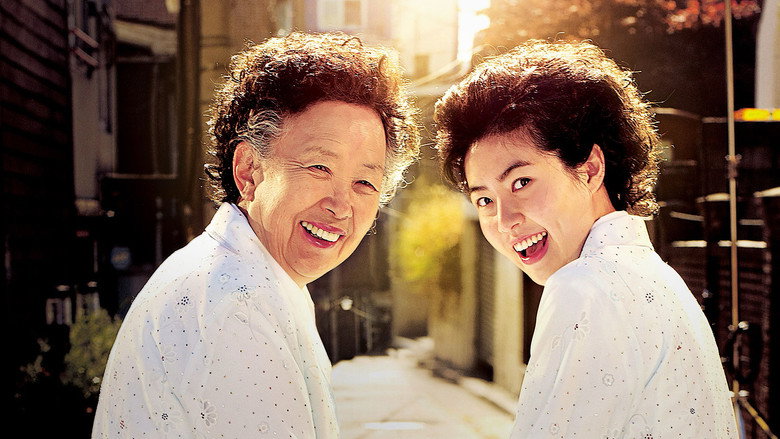
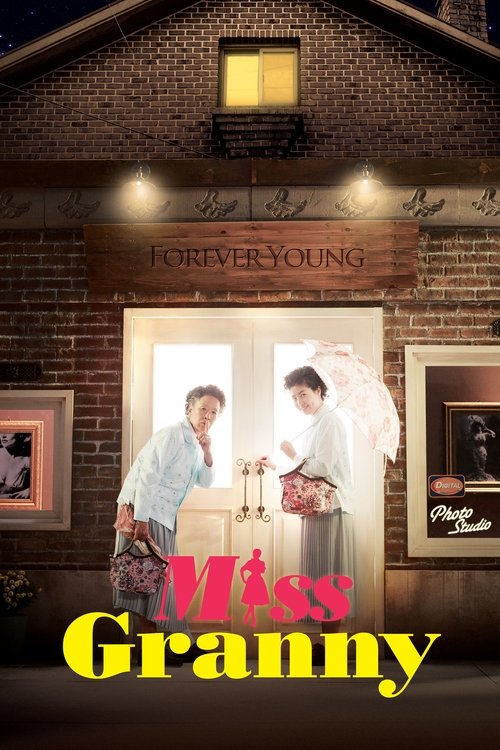
Miss Granny (수상한 그녀) is a 2014 South Korean fantasy comedy-drama directed by Hwang Dong-hyuk. Oh Mal-soon is a 74-year-old widow. She is sharp-tongued, proud, and hard on everyone around her, especially her daughter-in-law. She saves her tenderness for her only son Hyun-chul, a respected professor, and her grandson Ji-ha, who dreams of being a musician. When she overhears that her family may send her to a care home, she wanders into a photo studio to have a last portrait taken.

She walks out of the studio with the body of her 20-year-old self. She renames herself Oh Doo-ri, after her favourite actress Audrey Hepburn. She sets out to enjoy the youth she never had, with the mind, manners and rural dialect of a cranky septuagenarian. The mismatch is the film's main source of comedy. Her old habits send her to senior-centre events, and her unfiltered advice unsettles everyone she meets.

Her old talent for singing leads her into a band with her grandson and into the orbit of a music producer. Friendship, romance and a second chance at a dream follow. Each of them raises the question of what she owes her family and what she owes herself.
Core Meaning

Beneath the broad comedy, the film is a tribute to the generation of Korean mothers and grandmothers who gave up their own dreams so their children could succeed. Mal-soon is a single mother who worked herself hard to raise her son. The film lets her taste the freedom, romance and artistic fulfilment she traded away, and then asks what that sacrifice was worth.

It does not condemn her sacrifice, and it does not romanticise it. It treats it as love that deserves to be seen and thanked. Hwang Dong-hyuk said he wanted to make a happy, light film after the dark social dramas My Father and Silenced. Even so, the film carries a quiet social concern about how aging women are overlooked and sidelined within their families.

Thematic DNA

Maternal sacrifice 30%
Second chances and nostalgia 25%
Aging and generational gap 20%
Family and reconciliation 15%
Music and self-expression 10%

Maternal sacrifice

Mal-soon repeatedly asserts how much her past sacrifices contributed to her son's success and her family's happiness. The film shows her hardships as a young single mother who depended on others' kindness while raising Hyun-chul.

Second chances and nostalgia

Becoming young again lets Mal-soon chase the dreams of singing, romance and independence. This speaks to the universal wish to return to a young, mobile body.

Aging and generational gap

Her old speech, dialect and values clash with a modern, youth-oriented world. The film shows how fast Korea has developed and how wide the cultural gap has grown between generations. It also shows how the elderly become invisible.

Family and reconciliation

Her prickly relationships with her daughter-in-law, her son, and her grandson Ji-ha are tested and softened. She comes to see her family through new eyes.

Music and self-expression

Singing is her authentic voice and a lost ambition. It connects her to Ji-ha's band and to a producer tired of soulless idol acts.

Character Analysis

Oh Mal-soon / Oh Doo-ri

Shim Eun-kyung (young) / Na Moon-hee (old)

Archetype: Flawed hero Key Trait: Sharp-tongued but deeply loving

Motivation

To secure her family's happiness, and later to reclaim the youth and singing career she gave up.

Character Arc

She begins as a bitter, domineering elder. As a young woman in an old woman's mind, she softens. She rediscovers her dreams and understands the value of her life.

Ji-ha

Jung Jinyoung

Archetype: Beloved grandson Key Trait: Dreamer musician

Motivation

To pursue music and be supported by the grandmother who dotes on him.

Character Arc

He is an aspiring musician whose family disapproves of his passion. He becomes the first to share Doo-ri's musical journey.

All 4 characters and cast

Symbols & Motifs

The photo studio

Meaning:

A threshold between time periods. It also stands for the way a person is framed and remembered.

Context:

Mal-soon treats the portrait as her last photograph before death. She leaves with her 20-year-old body.

The name Oh Doo-ri

Meaning:

A self-chosen identity, free of the roles of mother and mother-in-law.

Context:

She takes the name in homage to Audrey Hepburn, her favourite actress.

Singing and the band

Meaning:

Her unfulfilled dream and her true voice.

Context:

She sings at a senior event to best a rival and is discovered. She later joins her grandson's band.

Old dialect and mannerisms in a young body

Meaning:

The persistence of memory, character and lived experience beyond appearance.

Context:

Her thick rural dialect and nosy advice provide the film's greatest comic spectacle.

Worn-out shoes

Meaning:

The material toll of her devotion to her son, and the gap between pride and neglect.

Context:

A rival at the senior centre mocks her torn shoes, which implies that her wonderful son does not look after her.

Memorable Quotes

쉿! 내가 니 할매다!
— Oh Doo-ri (Mal-soon)

Context

This is the tagline line of the main trailer. It is delivered in her role as her grandson's secret grandmother in a 20-year-old body.

Meaning

It sums up the film's premise. A young face hides a grandmother who still acts as the family's protector.

Philosophical Questions

Is identity located in the body or in memory and experience?

Mal-soon's young body carries an old mind, speech and values. Her personality persists unchanged at first, and only slowly changes through new experience.

What is a life of sacrifice worth?

The film lets her live freely and then weighs that freedom against the love and family she built through sacrifice.

Would we relive our youth if we could?

The film plays with nostalgia but notes that being young is not easy, even for someone who longs for it.

How It Ends

Alternative Interpretations

Some read the film as a celebration of maternal devotion. Others see it as a critique of a society that expects women to sacrifice and then sidelines them. One reviewer points out that much of the humour comes from the heroine's loud, abusive outbursts, which are the opposite of how society expects young women to behave. This can be read as liberating or as played for laughs. The repeated assertion of past sacrifices can be read as pride or as a plea for recognition.

Full ending explanation

Cultural Impact

The film was a major box-office success. It sold about 8.65 million tickets and ranked among the biggest films of 2014 in Korea. It spawned a wave of remakes. The Korea-China co-production 20 Once Again (2015) became a huge commercial hit, and other remakes followed in Vietnam, Japan, Thailand and Indonesia. Further adaptations include a Philippine film, India's Oh! Baby, a Mexican version, and the 2024 Korean TV series Who Is She.

The Chinese remake added more romance and adjusted the setting. In the original, Mal-soon realises she is young again at a public sauna, while the Chinese heroine discovers it while dancing in a public square. A scholarly study of audience comments found that Chinese viewers rated the original higher, 8.3 against 7.3.

Critics noted that the film is effectively packaged, slickly constructed and well cast. They also noted that it is hard to translate because of the linguistic and cultural gap between generations in a rapidly developed Korea.

Audience Reception

Audiences and critics praised Shim Eun-kyung's star-making performance as an old woman in a young body. They also praised the humour, the music and the emotional payoff. Reviews describe it as a quintessential crowd-pleaser. One review noted that it is entertainment with meaningful messages, though not pure cinema. Some critics noted that the loud, abusive humour will not appeal to everyone, and that the film is hard to translate across generational and cultural gaps. Overall verdict: a warm, popular, tearful comedy that earned its success.

Interesting Facts

  • Director Hwang Dong-hyuk previously made the dark social dramas My Father and Silenced. He said he wanted to make a happy, light film this time.
  • Filming ran from July 10 to October 13, 2013.
  • The film opened in South Korea on January 22, 2014, and drew more than 8.65 million admissions.
  • It was a mid-to-low-budget comedy without superstars. It was Shim Eun-kyung's first film as sole female lead.
  • Shim Eun-kyung and Jung Jin-young promised a free hug event if attendance passed 5 million. They held it at Times Square in Yeongdeungpo, Seoul, when it did.
  • Shim Eun-kyung won Best Actress at the 50th Baeksang Arts Awards and at the 19th Chunsa Film Festival. Shin Dong-ik won Best Screenplay at Chunsa.
  • Jung Jinyoung, who plays Ji-ha, is a member of the K-pop group B1A4.
  • Remakes followed in China (20 Once Again, 2015), Vietnam, Japan, Thailand and Indonesia, among others.

Easter Eggs

The heroine renames herself Oh Doo-ri in homage to Audrey Hepburn.

A nod to classic Hollywood glamour. It reflects the young-at-heart identity Mal-soon craves.

Frequently Asked Questions

Explore More About This Movie

Dive deeper into specific aspects of the movie with our detailed analysis pages

Comments (0)

Leave a comment

No comments yet. Be the first to share your thoughts!

Similar Movies