Skip to content
Blue Moon
A bittersweet theatrical chamber piece steeped in gin-soaked melancholy, capturing the frantic waltz of a forgotten genius clinging to his fleeting brilliance as the applause fades down the street.
Blue Moon

Blue Moon

"Forgotten but not gone."

17 October 2025 Ireland 101 min 6.6 (326)

Director: Richard Linklater

Cast: Ethan Hawke, Bobby Cannavale, Andrew Scott, Margaret Qualley, Patrick Kennedy

Drama History Comedy Music The Brutality of Artistic Obsolescence Creative Partnership as Marriage and Divorce Loneliness, Masking, and Unrequited Love Cynicism vs. Folk Sentimentality
Box Office: $3,569,263

Overview

Set against the buzzing theater district of New York City during the height of World War II, Blue Moon unfolds almost entirely in real time on the evening of March 31, 1943. Lyricist Lorenz "Larry" Hart slips away early from the opening night premiere of the musical Oklahoma! at the St. James Theatre. The smash hit marks a painful turning point: Hart’s longtime musical partner, Richard Rodgers, has moved on, partnering with Oscar Hammerstein II following years of Hart’s unreliability and spiraling alcoholism.

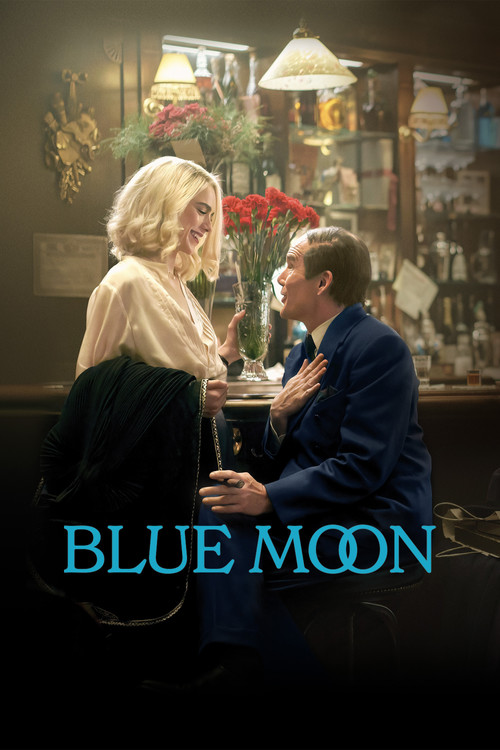
Taking refuge down the block at Broadway’s famed watering hole, Sardi’s, Hart settles in at the bar before the celebratory after-party begins. Armed with an acerbic tongue, wounded vanity, and a fragile attempt at sobriety, he holds intellectual court with the sympathetic bartender Eddie and GI lounge pianist Morty. Hart delivers non-stop commentary on show business, mocks the populist sentimentality of Oklahoma!, and eagerly awaits the arrival of Elizabeth Weiland, a 20-year-old art student with whom he has exchanged deeply affectionate letters and on whom he pins his desperate hopes for emotional salvation.

As the hours tick past and the bar slowly fills with Broadway luminaries, literary icons, and eventually the triumphant Oklahoma! entourage, Hart struggles to maintain his mask of effortless wit. Director Richard Linklater turns a single interior room into an expansive human canvas, creating an intimate portrait of an artist confronting the quiet, crushing realization that the cultural and emotional world has moved on without him.


Core Meaning

At the heart of Blue Moon is a meditation on artistic obsolescence and creative divorce. Richard Linklater explores the tragic reality that time and popular taste are ruthless: relevance does not end with a dramatic confrontation, but with indifference. By contrasting the groundbreaking birth of the modern integrated Broadway musical (Oklahoma!) with the emotional ruin of the lyricist who defined the prior era's wit, Linklater questions what happens to an artist whose cynical, sophisticated sensibility is displaced by populist optimism. The film serves as an ode to fragile creative spirits, demonstrating how an artist's greatest work can achieve cultural immortality while leaving its creator utterly unprotected against personal loneliness.

Thematic DNA

The Brutality of Artistic Obsolescence 30%
Creative Partnership as Marriage and Divorce 25%
Loneliness, Masking, and Unrequited Love 25%
Cynicism vs. Folk Sentimentality 20%

The Brutality of Artistic Obsolescence

Hart realizes that the world has quietly stopped needing him. He defined the Great American Songbook with intricate, rhymed sophistication, but the public now craves simple, accessible sincerity. His fear that his best days are behind him drives his frantic monologue throughout the evening.

Creative Partnership as Marriage and Divorce

The dissolution of Rodgers and Hart is treated not merely as a business parting, but as a traumatic, messy romantic breakup. Rodgers’ collaboration with Hammerstein stings Hart like seeing an estranged spouse flourishing with a new lover, making Hart’s bravado at Sardi’s an exercise in saving face.

Loneliness, Masking, and Unrequited Love

Hart’s rapid-fire patter, flirtations, and jokes mask deep personal pain. Struggling with closeted desires and physical self-loathing, Hart adopts a flamboyant, "omnisexual" posture and places impossible romantic expectations onto Elizabeth, desperate to prove he can still be genuinely loved.

Cynicism vs. Folk Sentimentality

The film pits Hart’s sardonic, world-weary urban intellect against the sun-drenched Americana of Oklahoma!. Hart’s critiques of the show's earnest sweetness reflect an older, bruised Broadway grappling with wartime escapism.

Character Analysis

Lorenz "Larry" Hart

Ethan Hawke

Archetype: The Tragic Clown / Wounded Artist Key Trait: Hyper-verbal, self-deprecating wit hiding bottomless melancholy.

Motivation

Desperately seeking personal affection and confirmation that his artistic genius still matters.

Character Arc

Starts with manic defiance and witty bravado, steadily collapsing into naked vulnerability and resignation as his illusions shatter.

Elizabeth Weiland

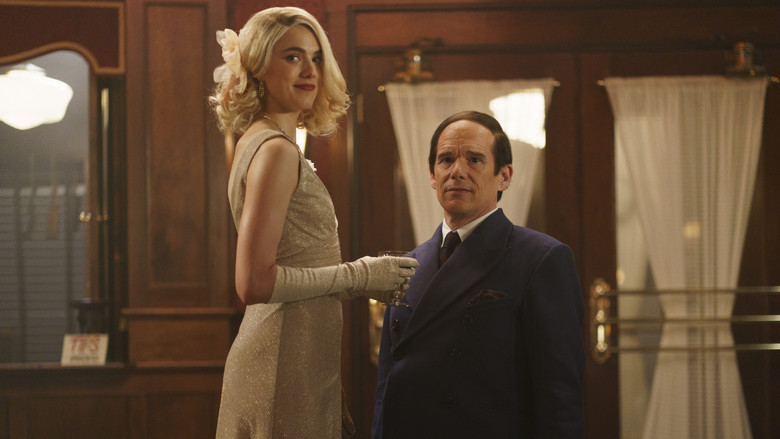
Margaret Qualley

Archetype: The Elusive Muse / Ingénue Key Trait: Quiet poise, emotional intelligence, and radiant gentleness.

Motivation

Aspiring to carve out her own future as a designer while genuinely caring for Hart as a mentor and friend.

Character Arc

Enters as the bright center of Hart's fantasy, navigating his romantic pressure with grace while firmly maintaining realistic boundaries.

All 5 characters and cast

Symbols & Motifs

Sardi’s Bar & The Barstool

Meaning:

Represents the comforting perimeter where Hart can still hold an audience captive, serving as his throne, sanctuary, and eventual pillory.

Context:

Hart anchors himself at the bar counter to hold court and protect his ego, even as the real power and celebration gradually move into the private rooms upstairs.

The Song "Blue Moon"

Meaning:

Illustrates the painful divide between immortal art and its mortal maker, embodying the bitter irony of Hart's career.

Context:

Referenced throughout as a globally beloved standard written about solitude, while the man who penned its vulnerable lyrics sits isolated in a corner booth.

The Casablanca Dialogue ("Nobody ever loved me that much")

Meaning:

Serves as Hart's emotional leitmotif and a confession that beneath his professional grievances lies a profound feeling of being unloved and emotionally starved.

Context:

Hart fixates on Michael Curtiz’s 1942 film, obsessively quoting Rick Blaine's line to Eddie multiple times across the evening.

Hart’s Physical Stature and Combover

Meaning:

Visually reflects Hart's deep inner feelings of deformity, physical inadequacy, and self-loathing.

Context:

Hart's diminutive height (barely five feet tall) and disheveled hairline stand in stark physical contrast to the composed, taller figures surrounding him.

The Exclamation Point

Meaning:

A symbol of theatrical vulgarity, unearned populist enthusiasm, and cheap earnestness that Hart believes has eclipsed genuine wit.

Context:

Hart repeatedly mocks the title of the new hit show, deliberately emphasizing it as "Oklahoma Exclamation Point!".

The Cold Rain / Pavement

Meaning:

Foreshadows Hart's impending demise, isolation, and literal succumbing to exposure.

Context:

The framing motif of rain in the dark New York alley contrasts sharply against the golden, booze-warmed lighting inside Sardi's.

Memorable Quotes

I’ve written a handful of words that are going to cheat death!
— Lorenz Hart

Context

Delivered mid-monologue at Sardi’s bar while defending his legacy.

Meaning

Encapsulates Hart’s tragic defiance—his desperate defense against obsolescence by asserting the permanence of lyric poetry.

Relevance and love don’t slam a door in your face. They just stop thinking about you.
— Lorenz Hart

Context

Hart lamenting the subtle cruelty of the entertainment world and human affection to Eddie.

Meaning

Pinpoints the film's philosophical core regarding the subtle, quiet cruelty of emotional and cultural abandonment.

All 4 quotes

Philosophical Questions

Can art outlive the artist if the artist is forgotten?

Hart takes solace in having written words that "cheat death," yet the tragedy of his final hours reveals that artistic immortality offers no comfort for personal, living loneliness.

Where does collaboration end and ownership begin?

The film questions how two minds fuse to create a shared soul, and whether an artist can ever recover their creative identity when that partnership is severed.

How does an artist survive when cultural taste leaves them behind?

The story examines the fragile psychology of relevance, exploring whether an artist should adapt to populist trends or cling to their original voice and fade into history.

Is wit a shield or a prison?

Hart uses ceaseless humor to deflect vulnerability; the narrative questions whether verbal agility protects the fragile psyche or isolates it from genuine intimacy.

Alternative Interpretations

The Disguised Romantic Breakup: Rather than viewing the film simply as a showbiz chronicle, many critics interpret Blue Moon as a classic relationship breakup story. Rodgers is the pragmatic ex who has moved into a healthy, productive marriage, while Hart is the messy, pining partner loitering outside the reception, convincing himself that his former lover will realize what they lost and return.

Full ending explanation

Cultural Impact

Historically, March 31, 1943, was an earthquake in American cultural history. Oklahoma! introduced the modern book musical, where songs, lyrics, and dances directly advanced dramatic character arcs rather than functioning as showcase revue numbers. This shift instantly rendered Lorenz Hart's cynical, European-influenced lyricism old-fashioned, inaugurating Rodgers and Hammerstein’s era of earnest Americana. In private, Hart was tortured by closeted homosexuality, severe clinical depression, and end-stage alcoholism during an era when none of these struggles could be openly discussed.

Upon release by Sony Pictures Classics, Blue Moon received widespread critical praise. Critics celebrated it as one of Linklater's most moving, talk-driven chamber films, standing alongside Before Sunset and Tape. Ethan Hawke’s transformative, heartbreaking performance was singled out as a career best. While some theater historians and reviewers critiqued the script's tendency to stage encounters between Hart and multiple historical figures in one night, general audiences and Broadway enthusiasts embraced the movie as a poignant tribute to a tragic lyrical genius.

Audience Reception

Blue Moon was hailed by audiences and critics as an intelligent, deeply affecting eulogy for an imperfect artist, solidified as one of Linklater and Hawke’s finest late-period achievements.

Key Praises:

  • Ethan Hawke’s performance was hailed as a masterclass in manic energy, sorrow, and rapid-fire dialogue delivery.
  • Robert Kaplow's literate, rhythmic screenplay was praised for its wit, historical textures, and genuine emotional resonance.
  • Richard Linklater’s minimalist, observational direction created a claustrophobic yet warm chamber piece that never feels like a filmed stage play.

Criticisms:

  • Several reviewers noted the "Zelig / Forrest Gump" contrivance of having Hart encounter E.B. White, Stephen Sondheim, Weegee, and George Roy Hill within the span of a single evening at one bar.
  • The film's talky, single-location structure was viewed by some viewers as exhausting or overly theatrical.

Interesting Facts

  • Screenwriter Robert Kaplow spent fourteen years developing the script, which originally began as a solo monologue.
  • The screenplay was sparked when Robert Kaplow purchased an authentic cache of personal correspondence between Lorenz Hart and Yale student Elizabeth Weiland at an estate sale.
  • The film marks the 9th cinematic collaboration between director Richard Linklater and star Ethan Hawke.
  • To realistically portray Hart's diminutive five-foot height, the 5'10" Ethan Hawke stood in trenches and dug-out holes during conversations, supplemented by subtle digital resizing.
  • Ethan Hawke shaved his hairline back to sport an unflattering combover and adopted a frantic, hunched posture to inhabit the sickly lyricist.
  • The film was released alongside Richard Linklater's companion piece Nouvelle Vague as part of a 2025 diptych centered on pivotal artistic revolutions.
  • Production adhered to an intensely disciplined theatrical schedule, leaning into the spatial claustrophobia of Sardi's single-room interior.
  • The film earned Academy Award nominations for Best Actor for Ethan Hawke and Best Original Screenplay for Robert Kaplow.

Easter Eggs

Stephen Sondheim Cameo

Hart crosses paths with a precocious, school-aged Stephen Sondheim (played by Cillian Sullivan), an inside nod to the future Broadway giant who was Oscar Hammerstein’s real-life protégé.

Inspiration for Stuart Little

While bantering with essayist E.B. White at the bar, Hart makes off-the-cuff remarks about a mouse that inadvertently spark the concept for White's classic children's book.

George Roy Hill Interaction

Hart dispenses early storytelling advice to a young GI and future Oscar-winning filmmaker George Roy Hill, who would go on to direct Butch Cassidy and the Sundance Kid.

Weegee in the Crowd

Iconic mid-century crime and street photographer Weegee appears clutching his Speed Graphic camera to snap photos of arriving Broadway royalty.

Great American Songbook Catalog Integration

The film seamlessly weaves melodies and lyrical snippets of Rodgers and Hart classics into the background, including "Bewitched, Bothered and Bewildered," "The Lady Is a Tramp," and "My Funny Valentine."

Frequently Asked Questions

Explore More About This Movie

Dive deeper into specific aspects of the movie with our detailed analysis pages

Comments (0)

Leave a comment

No comments yet. Be the first to share your thoughts!

Similar Movies