
Skip to content
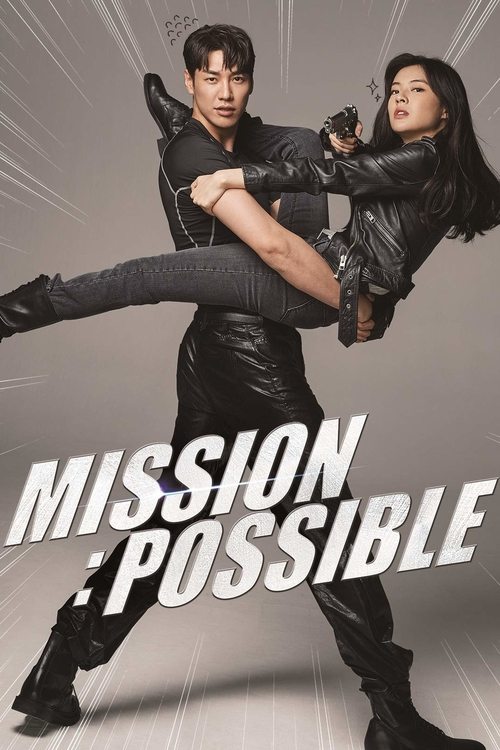
Mission: Possible
An irreverent spy caper where frantic desperation dissolves into blistering martial precision—a dancing firecracker that suddenly explodes into a razor-sharp blade.
Mission: Possible

Mission: Possible

미션 파서블

"A rookie secret agent's first mission turns into a chaos!"

17 February 2021 South Korea 105 min 7.4 (203)

Director: Kim Hyung-joo

Cast: Kim Young-kwang, Lee Sun-bin, Oh Dae-hwan, Seo Hyun-chul, Choi Byung-mo

Action Thriller Comedy Disposability and Institutional Cynicism Professional Identity vs. Mundane Survival Absurdity of Violence in a Gun-Controlled Culture Solidarity Born from Mutual Deception

Overview

Mission: Possible (2021), written and directed by Kim Hyung-joo in his feature directorial debut, is an action-comedy thriller about an ill-fated covert operation built entirely on accidental identities. When a rogue Chinese intelligence official permits a cache of 500 hijacked Tokarev handguns to slip onto the South Korean black market, China’s Ministry of State Security (MSS) dispatches rookie agent Wong Iring—operating under the alias Yoo Da-hee (Lee Sun-bin)—to Seoul to retrieve the weapons. Unbeknownst to her, she is regarded as an expendable asset sent on a political damage-control mission.

Her operational plan relies on rendezvousing with a South Korean contact codenamed "Mirage" at a low-profile Seoul office. However, when the real agent is incapacitated in a freak traffic accident, Da-hee mistakes the office tenant—Woo Soo-han (Kim Young-kwang), a clumsy, penny-pinching private eye whose usual cases involve finding missing runaway pets—for her elite intelligence liaison. Seduced by Da-hee's hefty advance cash payment, Soo-han agrees to help, assuming he has stumbled into a lucrative high-tier consulting gig.

As the mismatched duo tracks the smuggling pipeline across Gangnam dance studios, upscale hotels, and underworld dens, their bungled espionage maneuvers leave behind a trail of dead witnesses and bizarre crime scenes. Before long, they find themselves pursued by municipal homicide detectives who believe them to be serial murderers, all while the merciless syndicate behind the weapons trade closes in.
Core Meaning

At its core, Mission: Possible is a satire of institutional expendability wrapped in the kinetic machinery of a buddy-action comedy. Director Kim Hyung-joo takes the Hollywood archetype of indestructible, gadget-laden super-spies and grounds it in mundane, blue-collar survival.

The film's deeper message contrasts cynical bureaucratic exploitation with unexpected human solidarity: while state apparatuses treat young or discarded agents as disposable pawns, two flawed outcasts—bound together by misunderstanding and financial desperation—discover genuine loyalty, mutual dignity, and competence through shared adversity.

Thematic DNA

Disposability and Institutional Cynicism 30%
Professional Identity vs. Mundane Survival 25%
Absurdity of Violence in a Gun-Controlled Culture 25%
Solidarity Born from Mutual Deception 20%

Disposability and Institutional Cynicism

Da-hee is deliberately sent on an assignment expected to be fatal, merely to provide China's intelligence bureau with diplomatic plausible deniability. Similarly, Soo-han is an estranged veteran of the military’s elite special forces who walked away from service after losing comrades. The plot constantly critiques how hierarchies discard foot soldiers once their utility is exhausted.

Professional Identity vs. Mundane Survival

The narrative derives its comedy and pathos from the clash between high-minded ideals ("Serving the state") and base economic survival ("Paying next month's office rent"). Soo-han's mercenary creed—refusing to lift a finger without an advance payment—reflects the precarity of everyday civilian life, contrasting with Da-hee’s earnest, textbook patriotic dedication.

Absurdity of Violence in a Gun-Controlled Culture

Unlike Western action cinema where firearms are ubiquitous, South Korea’s stringent gun laws make a pistol on Seoul streets inherently bizarre. Gangsters, police officers, and bystanders continually react to firearms with disbelief and confusion rather than coordinated protocol. The film treats the 500 Tokarevs not just as weapons, but as alien disruptors shattering the normal order of civil society.

Solidarity Born from Mutual Deception

Soo-han and Da-hee begin their partnership entirely on false pretenses—she thinks he is an elite operative, and he thinks she is a well-paying private client. Yet their shared panic in the face of death strips away their protective illusions, culminating in a genuine bond forged through shared vulnerability.

Character Analysis

Woo Soo-han

Kim Young-kwang

Archetype: Reluctant Antihero / Dormant Warrior Key Trait: Pragmatic, playful slacker front masking terrifying close-quarters martial capability.

Motivation

Immediate financial survival, followed by a fierce protective loyalty to save Da-hee.

Character Arc

Begins as a shameless, money-obsessed private investigator scrambling to pay overdue rent. When Da-hee’s life is endangered, he casts off his bumbling persona to re-embrace his lethal training as a former 707th Special Mission Group operative.

Yoo Da-hee / Wong Iring

Lee Sun-bin

Archetype: The By-the-Book Rookie Hero Key Trait: Serious, driven, and disciplined, yet easily frustrated by domestic absurdities.

Motivation

Proving her worth as an intelligence operative and defending state security.

Character Arc

Arrives in Seoul overconfident and determined to prove herself to Beijing command, naive to the fact she has been set up as a sacrifice. Through repeated operational disasters, she sheds her textbook rigidity and learns to trust instinct and improvisation.

All 5 characters and cast

Symbols & Motifs

The Advance Payment / 10 Million Won Cash Envelope

Meaning:

Represents Soo-han’s transactional worldview and mundane survival priorities.

Context:

It functions as the catalyst that thrusts a civilian investigator into geopolitical peril.

The Tokarev TT-33 Pistols

Meaning:

Smuggled military surplus that symbolizes dangerous geopolitical spillover and a lethal disruption to everyday civil life.

Context:

Civilians in Seoul do not encounter handguns, making their illicit introduction cause bizarre confusion and terror across the city.

The Missing Pets (Dogs and Cats)

Meaning:

Emphasizes how low Soo-han has fallen from his elite military background while foreshadowing hidden espionage running under domestic facades.

Context:

Encountered through Soo-han's routine caseload as a private eye, including his investigation for his client "Dorothy."

The Tango / Ballroom Dance

Meaning:

A physical manifestation of Da-hee and Soo-han's dynamic—awkward, mismatched, constantly stepping on each other's feet, yet unexpectedly synchronized when surviving chaos.

Context:

Featured during an undercover investigation sequence at a Gangnam dance studio.

The Flip Phone

Meaning:

A symbol of technological anti-climax that humorously undercuts sleek spy thriller expectations.

Context:

Used as a recurring visual gag where Da-hee expects high-tech smartphones and encrypted hardware, but underworld targets rely on obsolete burner tech.

Memorable Quotes

선입금 후업무.
— Woo Soo-han

Context

Spoken when running his detective agency and negotiating with clients.

Meaning

Translates to "Advance payment first, work second." Soo-han’s personal mantra establishes his mercenary character before his real combat capabilities are revealed.

돈 되니까! vs. 국가를 위해!
— Woo Soo-han & Yoo Da-hee

Context

The film’s recurring battle cry and promotional tagline.

Meaning

Translates to "Because it makes money!" vs. "For the country!" It juxtaposes Soo-han’s unabashed capitalism with Da-hee’s unbending state patriotism, highlighting their comedic incompatibility.

All 4 quotes

Philosophical Questions

Is patriotism merely a romantic disguise for institutional utility?

Da-hee is willing to die for her country, unaware that her agency has calculated her death as a convenient diplomatic asset. The film prompts viewers to question where true civic duty ends and exploitation by leadership begins.

What creates a more reliable moral contract: money or conscience?

Soo-han claims he only acts when paid in advance ("선입금"). Yet when the money ceases to matter and death is imminent, his protective instinct overrides commercial interest, showing that genuine human empathy outlasts transactional motives.

Can an individual truly escape state-sanctioned violence?

Soo-han walked away from special forces to live quietly in civilian anonymity. However, violence finds him again, showing how military conditioning and geopolitical forces pull former soldiers back into combat.

Alternative Interpretations

1. Satire of the "Korean Dream" and Gig Economy: While ostensibly a spy movie, some critics read Soo-han's plight as an allegory for modern South Korea’s precarious gig economy. Soo-han is an overqualified veteran who cannot find a job in the regular corporate world. He takes underpaid freelance odd-jobs, risks his life for an envelope of cash, and operates without institutional safety nets. The absurdity of fighting gun runners for rent money reflects the economic anxieties of the youth generation.

Full ending explanation

Cultural Impact

The film was released in South Korea on February 17, 2021, during the peak of COVID-19 theater restrictions (seating caps, curfews). Despite these headwinds, it opened at #1 at the South Korean box office and maintained its top spot through its debut week, ultimately drawing over 447,000 admissions ($3.5 million USD).

Culturally, the narrative draws heavily on South Korea's real-world status as one of the world's most strictly gun-controlled societies; unlike in American cinema, the casual presence of handguns among thugs generates genuine absurdity and bafflement among local citizens and police. Furthermore, it continued a lucrative trend in South Korean commercial cinema alongside hits like Extreme Job (2019), Exit (2019), and Okay Madam (2020), which combined slapstick workplace humor with high-caliber, practical martial arts choreography.

Critics praised the comedic chemistry between Kim Young-kwang and Lee Sun-bin and highlighted the surprisingly brutal combat choreography in the final 20 minutes, while noting the narrative relied on familiar spy parody conventions.

Audience Reception

Audiences universally highlighted the banter and comedic chemistry between Kim Young-kwang's playful, laid-back investigator and Lee Sun-bin's straight-laced agent as delightful. Viewers were also caught off guard and impressed by the tonal pivot in the final reel, where goofy slapstick gives way to fast, visceral knife fighting and close-quarters choreography. The 105-minute runtime was praised for its breeziness and levity, serving as accessible comfort entertainment during the pandemic slump.

On the critical side, some viewers felt the cold open—featuring a grim, bloody shootout and execution followed immediately by lighthearted slapstick—created jarring tonal whiplash. Additionally, several reviewers noted that the reveal of the clumsy detective secretly being an elite special ops commando was a predictable, clichéd South Korean action trope. Overall, it was regarded as a crowd-pleasing action comedy that succeeds on the charisma of its leads and the quality of its stunt work.

Interesting Facts

  • Standing at 188 cm (nearly 6'2") with long limbs, Kim Young-kwang was impossible to double effectively on set, requiring him to perform all his high-impact stunts, knife fights, and falls himself.
  • Kim Young-kwang trained for over two and a half months at an action academy, practicing Kali Arnis (knife combat) and Krav Maga techniques using kitchen knives and improvised everyday props.
  • Kim Young-kwang modeled his character's fighting style after vintage Jackie Chan Hong Kong action comedies—blending chaotic prop usage and physical humor before shifting into lethal precision.
  • Mission: Possible served as the commercial feature directorial debut of Kim Hyung-joo, who explicitly wanted to revive the buoyant 1980s/90s action-adventure spirit seen in classics like Indiana Jones.
  • Kim Young-kwang frequently ad-libbed comedic banter on set, which initially worried director Kim Hyung-joo, but many ad-libs remained in the final cut due to the leads' natural chemistry.
  • The warehouse fight sequence took two consecutive weeks of night shoots, putting immense physical strain on the cast.
  • Principal photography commenced on September 5, 2019, and wrapped on December 4, 2019, well before the onset of the global COVID-19 pandemic, though its theatrical release had to be held until 2021.

Easter Eggs

Cameo by Hong Seok-cheon

The television personality and restaurateur makes a cameo appearance during a dance sequence, injecting slapstick humor into the film's early investigation arc.

The "Dorothy" KGB Reversal (Actress Hwang Jung-min)

Renowned character actress Hwang Jung-min (not to be confused with the male actor of the same name) portrays "Dorothy," the middle-aged client searching for a missing pet. In a post-credits twist, she is revealed to be a retired KGB intelligence broker who was using Soo-han's office for secret intelligence handoffs.

Kim Ho-young as a Fortune Teller

Musical theater actor and entertainer Kim Ho-young appears in a flamboyant cameo as a fortune teller visited during the investigation.

Bruce Geller and Mission: Impossible Reference

The film's title directly riffs on Bruce Geller’s iconic Mission: Impossible franchise. Rather than high-tech Tom Cruise stunts, the film humorously inverts the premise: everything that can go wrong does, and success is achieved through cheap, clumsy improvisation.

Julien Kang as Yuri

Korean-French-Canadian actor Julien Kang appears as the imposing Russian mercenary Yuri, creating a visual and physical contrast with Kim Young-kwang during the warehouse showdown.

Frequently Asked Questions

Explore More About This Movie

Dive deeper into specific aspects of the movie with our detailed analysis pages

Comments (0)

Leave a comment

No comments yet. Be the first to share your thoughts!

Similar Movies