Mob Psycho 100
A whirlwind of psychedelic psychic energy envelops a quiet boy's struggle for normalcy, blooming into a vibrant, emotional supernova of self-acceptance.
Mob Psycho 100

Mob Psycho 100

モブサイコ100

12 July 2016 — 22 December 2022 Japan 3 season 37 episode Ended ⭐ 8.5 (1,205)
Cast: Setsuo Ito, Takahiro Sakurai, Miyu Irino, Akio Otsuka, Ryunosuke Watanuki
Animation Sci-Fi & Fantasy Action & Adventure Comedy
Self-Acceptance vs. Repression The Nature of Strength and Self-Improvement Mentorship and Influence Belonging and Human Connection

Overview

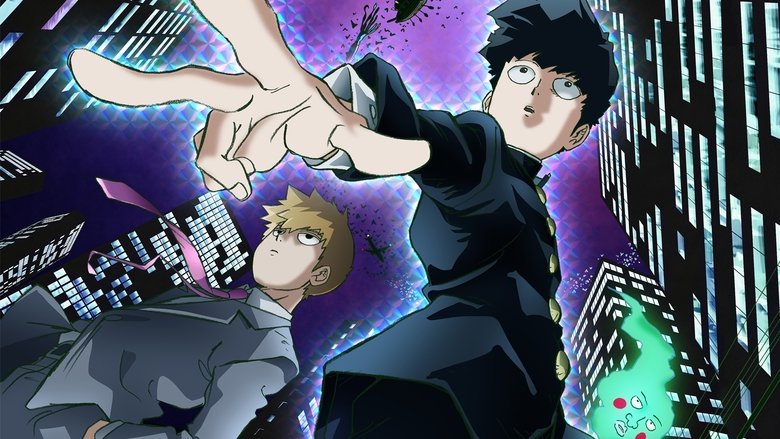
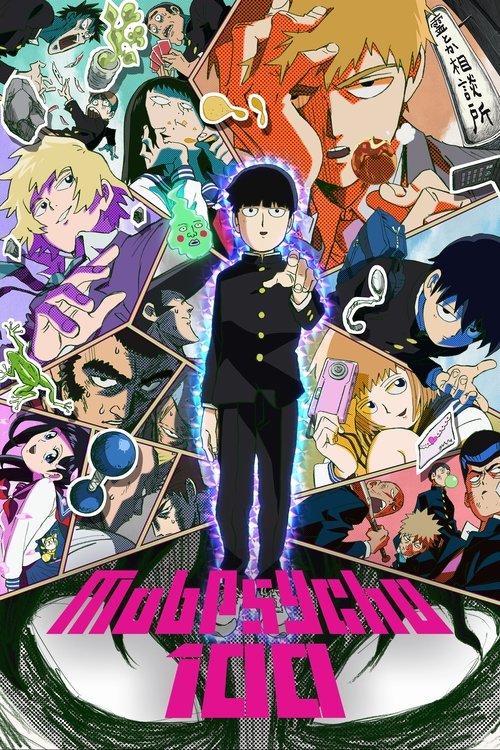
"Mob Psycho 100" follows Shigeo Kageyama, a seemingly average and emotionally reserved middle schooler nicknamed "Mob." Unbeknownst to most, Mob is an incredibly powerful psychic (an esper). Fearing the destructive potential of his powers, which are tied to his turbulent emotions, he actively suppresses them, striving to live a normal life. He works part-time for Arataka Reigen, a charismatic con man posing as a great psychic, who, despite his fraudulent nature, becomes Mob's unlikely but crucial moral guide.

Across three seasons, Mob navigates the everyday challenges of adolescence—making friends, improving his physical fitness, and dealing with crushes—while simultaneously confronting rival espers, malevolent spirits, and a world-threatening organization of psychics called Claw. The series charts Mob's journey from emotional repression to emotional expression, exploring his relationships with his mentor Reigen, his younger brother Ritsu (who develops his own psychic abilities), and the friendly spirit Dimple. Each confrontation and personal struggle pushes Mob closer to understanding that his powers are not a curse, but a part of who he is, and that true strength lies in kindness, empathy, and self-acceptance.

Core Meaning

The core meaning of "Mob Psycho 100" is a profound exploration of self-acceptance and the nature of strength. The series posits that true power doesn't come from innate special abilities, but from the hard work of self-improvement, the courage to be kind, and the connections we forge with others. It argues against the idea of entitlement based on talent, suggesting that psychic powers, much like any other skill, do not inherently make one person better than another. Through Mob's journey, the creators convey a message that everyone is the protagonist of their own life and that embracing all facets of oneself—the powerful, the mundane, the emotional—is the key to genuine growth and finding one's place in the world.

Thematic DNA

Self-Acceptance vs. Repression 35%
The Nature of Strength and Self-Improvement 30%
Mentorship and Influence 20%
Belonging and Human Connection 15%

Self-Acceptance vs. Repression

This is the central theme of the entire series. Mob begins by suppressing his emotions to keep his immense powers in check, fearing he will hurt others. His emotional state is visualized by a percentage counter that rises with stress, culminating in an explosion of power at 100%. Throughout the seasons, Mob learns that bottling up his feelings is unhealthy and unsustainable. The final arc sees him confronting his repressed self (???%), a being of pure, instinctual power. His journey culminates in the realization that he must accept this powerful, emotional side of himself as an integral part of his identity, not something to be feared or hidden.

The Nature of Strength and Self-Improvement

Mob possesses god-like psychic abilities, yet his primary goal is to improve himself through ordinary means, like joining the Body Improvement Club to gain muscle. The series consistently contrasts Mob's philosophy with that of his antagonists, who believe their psychic powers entitle them to dominate others. Reigen, his mentor, reinforces the idea that psychic powers don't make him special and shouldn't be used against people. The show champions the idea that true strength is built through effort, kindness, and helping others, not through innate talent alone.

Mentorship and Influence

The relationship between Mob and his mentor, Arataka Reigen, is a cornerstone of the series. Despite being a fraud with no psychic powers, Reigen provides Mob with invaluable life advice and a moral compass. He teaches Mob that his powers don't define him and that kindness is paramount. This dynamic subverts the typical mentor-student trope, showing that wisdom and guidance can come from the most unexpected places. Mob, in turn, influences Reigen, inspiring him to become a genuinely better person, culminating in Reigen's honest confession in the finale.

Belonging and Human Connection

At its heart, "Mob Psycho 100" is a coming-of-age story about a boy trying to connect with others. Mob's journey is marked by his efforts to form friendships with his schoolmates, his brother, and even former enemies. The series emphasizes that people need other people to grow and thrive. Villains like Teruki, Serizawa, and Toichiro Suzuki are often defined by their isolation and belief in their own superiority, while their redemption comes from forming bonds and accepting help. The finale reinforces this, showing Mob surrounded by a diverse group of friends who have all positively impacted each other's lives.

Character Analysis

Shigeo Kageyama (Mob)

Setsuo Ito

Archetype: The Reluctant Hero
Key Trait: Empathy

Motivation

Initially, Mob's motivation is simply to live a normal life and impress his childhood crush, Tsubomi, through self-improvement rather than psychic powers. As the series progresses, his motivation evolves to include protecting his friends and family and helping others understand that psychic abilities do not make them inherently special or superior. His ultimate motivation becomes the desire to accept himself for who he truly is, powers and all.

Character Arc

Mob's arc is a journey from emotional suppression to self-acceptance. In Season 1, he is deeply afraid of his powers and keeps his emotions bottled up to prevent them from exploding. He relies heavily on Reigen's guidance to navigate the world. In Season 2, he begins to form his own identity, making friends and realizing his powers can be used to help people, as seen when he connects with Serizawa. By Season 3, his growth culminates in a final, internal confrontation with his repressed powers (???%). He learns to accept every part of himself, understanding that his powers and emotions are not separate, but integral to his identity. He finally becomes a whole, emotionally expressive individual.

Arataka Reigen

Takahiro Sakurai

Archetype: The Charlatan Mentor
Key Trait: Pragmatic Wisdom

Motivation

Reigen's primary motivation at the start is money and maintaining his fraudulent business. Over time, this shifts to a powerful, almost paternal, desire to protect Mob and guide him on a righteous path. He becomes motivated by his genuine affection for Mob and a sense of responsibility for the boy's immense power and emotional well-being.

Character Arc

Reigen starts as a comedic con artist, exploiting Mob's powers for his "Spirits and Such Consultation Office." However, his relationship with Mob forces him to grow. While he lies about having powers, the advice he gives Mob is genuinely wise and forms the moral backbone of the series. His arc peaks in Season 2 when his fraudulent career is publicly exposed. This forces him to confront his loneliness and his genuine care for Mob. In the series finale, he drops all pretense and confesses his lies to a rampaging Mob, an act of vulnerability and love that ultimately saves his student, solidifying his transformation from a simple con man to a true mentor and friend.

Dimple (Ekubo)

Akio Otsuka

Archetype: The Trickster Ally
Key Trait: Ambitious

Motivation

Dimple's initial motivation is the pursuit of power and godhood. He sees Mob as the perfect vessel to achieve this goal. As he spends more time with Mob and his friends, his motivation becomes more complex. While he never fully loses his desire for influence, it becomes intertwined with a genuine desire to see Mob succeed and protect him from harm, showing that his loneliness was a core driver of his power-hungry ambitions.

Character Arc

Dimple begins as an antagonist, the narcissistic leader of a cult who wants to become a god. After being defeated by Mob, he is reduced to a harmless wisp of a spirit who follows Mob around, constantly trying to manipulate him to regain power. His arc is one of slow-burn redemption. He evolves from a purely self-interested entity to a genuine friend and protector. This is most evident in Season 3, where he achieves god-like power by merging with the Divine Tree but ultimately sacrifices himself to protect Mob, proving he has developed a deep, selfless loyalty.

Ritsu Kageyama

Miyu Irino

Archetype: The Resentful Sibling
Key Trait: Intelligent

Motivation

Ritsu's initial motivation is a desperate desire for psychic power and the recognition he believes it will bring, fueled by his envy of Mob. After he awakens his powers and confronts the consequences of his actions, his motivation shifts to protecting his brother and using his abilities responsibly. He is driven by a newfound love and respect for Mob, wanting to be a supportive brother rather than a rival.

Character Arc

Ritsu starts Season 1 living in his older brother's shadow, both admiring and deeply resenting Mob for his incredible psychic powers while Ritsu himself has none. His jealousy drives him to seek power through unethical means, leading him down a dark path. After awakening his own, weaker powers and being saved by Mob, Ritsu's arc becomes about reconciliation and respect. He moves past his inferiority complex and becomes one of Mob's most stalwart allies, fiercely protective of his brother and understanding the true meaning of strength lies in their bond, not individual power.

Symbols & Motifs

The Percentage Counter

Meaning:

The counter that appears on screen represents the accumulation of Mob's suppressed emotions. As his stress, anger, sadness, or other feelings build, the percentage climbs towards 100%, at which point his psychic powers are unleashed in an explosive, often uncontrollable way. It serves as a constant visual metaphor for the danger of emotional repression.

Context:

Used throughout all three seasons, the counter is a core mechanic of the show's tension. Each time it appears, it signals a rising conflict within Mob. Different emotions are linked to the 100% state, such as "Rage," "Sadness," "Gratitude," and "Courage," showing how different feelings can bring him to his breaking point and result in different expressions of his power.

The Divine Tree (Giant Broccoli)

Meaning:

The giant broccoli, which grows from a seed in Mob's pocket after the climactic battle of Season 2, symbolizes the massive, unintended consequences of Mob's power. Initially a gag, it becomes a major plot point in Season 3, representing a new form of power and belief (the Psycho Helmet Religion) that Mob never intended to create. It's a physical manifestation of his influence on the world, both positive and negative.

Context:

The broccoli is foreshadowed in the first season's opening sequence. It appears at the end of Season 2 after Mob defeats Toichiro Suzuki. In Season 3, it becomes the center of a cult and the source of power for the new antagonist, Dimple-as-Psycho-Helmet, forcing Mob to take responsibility for the legacy of his actions.

Milk

Meaning:

Milk is a simple, recurring motif symbolizing Mob's desire for normal growth and physical improvement. He is often seen drinking it, believing it will help him grow taller and stronger, reflecting his wish to improve himself through mundane, everyday efforts rather than relying on his psychic gifts.

Context:

Mob is frequently shown drinking cartons of milk throughout the series, especially during school lunch breaks or after training with the Body Improvement Club. This small, consistent detail reinforces his character's core desire to be a normal kid and his commitment to self-betterment through conventional means.

Memorable Quotes

Listen well, we are different from regular people because we are born with special powers. But that shouldn't give you the illusion that you're a special being.

— Arataka Reigen

Context:

This is a recurring piece of advice Reigen gives to Mob, often stated in Season 1. It serves as Mob's moral foundation for how he views his own powers and interacts with other espers.

Meaning:

This quote encapsulates the core philosophy of the series. Reigen teaches Mob that possessing a special talent does not make one superior to others. It is a lesson in humility and a warning against arrogance, which is the primary flaw of almost every antagonist Mob faces.

Psychic powers aren't needed to survive in the first place.

— Shigeo Kageyama (Mob)

Context:

Mob expresses this sentiment multiple times throughout the series, particularly when confronted by espers who believe their powers are everything. It highlights his desire for normalcy and his commitment to the Body Improvement Club.

Meaning:

This simple statement reflects Mob's deep-seated belief that his powers are irrelevant to his personal growth and what truly matters in life. He values hard work, friendship, and kindness over his innate, extraordinary abilities.

When things go south, it's okay to run away!

— Arataka Reigen

Context:

Reigen says this to Mob during their confrontation with the 7th Division of Claw at the end of Season 1 (Episode 11, "Master ~Leader~"). Mob is about to fight with the intent to seriously harm his opponents, and Reigen intervenes to protect Mob's gentle nature.

Meaning:

This quote is both humorous and profound. It subverts the typical shonen trope of heroes never backing down. Reigen teaches Mob that survival and self-preservation are valid choices and that there's no shame in avoiding a fight you can't win or that isn't worth fighting.

I've always known. What my master really is... is a genuinely good person.

— Shigeo Kageyama (Mob)

Context:

Mob says this during Season 2, Episode 7 ("Cornered ~True Identity~") after Reigen has been publicly exposed as a fraud on national television. Mob uses his powers to help Reigen escape the press conference, confirming his unwavering loyalty.

Meaning:

This is a pivotal moment in Mob and Reigen's relationship. It reveals that Mob was never fooled by Reigen's charade. He sticks with Reigen not because he believes he's a powerful psychic, but because he recognizes his mentor's inherent kindness and good heart, validating their entire relationship.

Episode Highlights

The Older Brother Bows ~Destructive Intent~

S1E8

This episode features the powerful confrontation between Mob and Koyama, a brute from the psychic organization Claw. Pushed to his limit after seeing his brother Ritsu injured, Mob's emotional counter hits 100% Rage. The resulting battle is a stunning display of animation and a crucial moment where Mob intentionally uses his powers against another person for the first time to protect someone he loves.

Significance:

This episode marks a major turning point for Mob's character. It's the first time he willingly unleashes his power on a human, challenging his own rule of not hurting others. It establishes the stakes of the conflict with Claw and deepens the bond between Mob and Ritsu.

Discord ~Choices~

S2E5

Mob is trapped in a bleak, illusory world created by the powerful evil spirit, Mogami Keiji. In this world, Mob is powerless and subjected to relentless bullying for six months. The episode is a brutal psychological deep-dive into Mob's psyche, pushing him to the brink of despair before Dimple intervenes to help him find his inner strength. The animation style shifts dramatically to reflect the grim reality.

Significance:

This episode is critically acclaimed for its dark tone and profound character exploration. It forces Mob to confront a world without friends or powers, ultimately teaching him the value of his connections and the importance of empathy, even for his enemies. It's a formative experience that deepens his emotional maturity.

Cornered ~True Identity~

S2E7

After a falling out with Mob, Reigen's fraudulent psychic business is exposed on a live TV show, leading to a national media scandal. Humiliated and alone, Reigen is forced to confront his lies. The episode climaxes with Mob coming to his rescue, telling a distraught Reigen that he's known he was a fraud all along but still sees him as a good person.

Significance:

This episode is a masterclass in character writing, focusing entirely on Reigen's vulnerability and his bond with Mob. It cements their relationship as one built on genuine care rather than deception and is considered one of the most emotional and powerful episodes of the entire series.

Boss Fight ~The Final Light~

S2E13

The season finale features the climactic battle between Mob and Toichiro Suzuki, the all-powerful leader of Claw. The fight is an animation spectacle, with both espers unleashing 100% of their power. Mob cycles through various emotions, from Rage to Compassion, ultimately choosing to absorb Suzuki's overwhelming power to save the city, showing immense kindness to his defeated foe.

Significance:

This episode concludes the Claw arc and showcases Mob's incredible growth. He no longer just defeats his enemies; he tries to understand and save them. His final act of mercy results in the creation of the Divine Tree, setting up the central conflict for the final season.

Confession ~The Future~

S3E12

The series finale. Mob, in his uncontrollable ???% state, marches to confess to his crush Tsubomi. Reigen, with help from Dimple, finally reaches him and confesses his biggest secret: that he has no psychic powers. This raw honesty breaks through to Mob, allowing him to finally integrate his repressed self. He confesses, is gently rejected, and for the first time, is able to cry and process his emotions healthily with his mentor by his side.

Significance:

This episode provides a perfect and emotionally resonant conclusion to the entire series. It resolves the central internal conflict of Mob's character, brings his relationship with Reigen to its emotional peak, and ends with a hopeful message about growth, acceptance, and the future.

Philosophical Questions

What is the true measure of a person's worth?

The series constantly explores this question by contrasting characters who define themselves by their innate psychic talent against Mob, who believes his powers are irrelevant to his value as a person. Villains from Claw believe their power gives them the right to rule, while Mob seeks to improve his physique, grades, and social skills. The show ultimately argues that worth is not determined by inherent gifts, but by one's character, actions, kindness, and the effort one puts into self-betterment.

Is it better to suppress difficult emotions or to accept and integrate them?

This is Mob's central conflict. His entire childhood is defined by the need to suppress his emotions to prevent catastrophic destruction. However, the series demonstrates that this repression is not a sustainable or healthy solution. The final season's climax is a direct answer to this question: Mob only finds peace and true control when he stops fighting his powerful, emotional inner self (???%) and accepts it as a part of him. The series concludes that wholeness comes from integration, not suppression.

Can a person with immense power live a normal life?

This question is the driving force of Mob's personal goals. Unlike many protagonists who embrace their special abilities, Mob yearns for normalcy. The series explores the difficulties this creates, as his powers constantly draw him into extraordinary situations. The ending suggests a nuanced answer: while Mob can never be truly 'normal' because of his powers, he can achieve a balanced life where his abilities are just one aspect of his identity, not the defining trait. He learns to use them when necessary but finds fulfillment in his mundane relationships and activities.

Alternative Interpretations

One alternative interpretation focuses on the series as a metaphor for navigating neurodiversity or social anxiety. Mob's emotional suppression and his fear of his powers 'exploding' can be read as a representation of managing overwhelming sensory input or intense emotions that feel alienating. His journey to control and later accept his powers mirrors the process of learning to understand and integrate aspects of one's personality that don't fit societal norms. The 'percentage' counter can be seen as a visualization of rising anxiety or stress before a meltdown or shutdown. In this reading, Reigen's advice isn't just about psychic powers, but about navigating the world as someone who feels fundamentally different.

Another perspective views the conflict between Mob and his alter-ego ???% through a Jungian lens, with ???% representing Mob's 'Shadow Self.' This interpretation sees the final arc not just as a psychic battle, but as the psycho-spiritual process of 'individuation,' where Mob must confront and integrate the repressed, instinctual, and powerful parts of his psyche to become a whole and balanced individual. The entire series, from this viewpoint, is a journey toward psychological wholeness, with the various spirits and espers representing external manifestations of internal conflicts.

Cultural Impact

"Mob Psycho 100" is widely regarded by critics and audiences as a modern anime classic and one of the best series of the 2010s. Upon its release in 2016, the first season was praised for its spectacular, experimental animation by Studio Bones, which brought a unique visual energy that few other shows could match. The series stood out for its subversion of common shonen tropes; its protagonist is an overpowered character who actively avoids fighting and seeks self-improvement through mundane means.

The show's influence lies in its masterful blend of high-octane action with deeply resonant character-driven storytelling. It has been lauded for its mature handling of themes like adolescence, social anxiety, self-acceptance, and the meaning of strength. The central relationship between Mob and his fraudulent but wise mentor, Reigen Arataka, is often cited as one of the best-written dynamics in anime, highlighting the series' emotional depth. Both seasons received critical acclaim, with the second season often considered even stronger than the first for its emotional weight and character development. The series concluded with its third season, which was praised for providing a definitive and emotionally satisfying ending to Mob's journey, a rarity in the anime industry. Its legacy is that of a series that pushed the boundaries of visual expression in television animation while telling a heartfelt, human story about finding your place in the world.

Audience Reception

"Mob Psycho 100" has received overwhelmingly positive reception from audiences throughout its run, and is consistently ranked as one of the top anime series of all time on rating sites like IMDb and MyAnimeList. The first season was praised for its unique and fluid animation, endearing characters, and perfect blend of comedy and action. The second season is often regarded by fans as a masterpiece and an improvement on the first, with particular praise aimed at the deeper emotional arcs for Mob and Reigen, especially in episodes like "Cornered ~True Identity~" and "Discord ~Choices~," which are frequently cited as series highlights. The third and final season was lauded for delivering a conclusive and emotionally satisfying finale that beautifully wrapped up Mob's character arc, a point of major satisfaction for long-time viewers. The main points of praise from audiences consistently revolve around the show's heartfelt story, meaningful themes of self-acceptance, stunningly creative visuals, and the well-developed relationship between Mob and Reigen. There are very few points of significant criticism, with the series being considered remarkably consistent in quality across all three seasons.

Interesting Facts

  • The creator of the series is the mangaka known by the pseudonym ONE, who is also famous for creating "One-Punch Man."
  • The anime was produced by Studio Bones, a highly acclaimed animation studio known for works like "Fullmetal Alchemist" and "My Hero Academia."
  • The animators were given a great deal of creative freedom because the loose, simplistic art style of ONE's original webcomic allowed for experimental and dynamic animation techniques.
  • In Crunchyroll's Anime Awards, the series has won multiple awards, including Best Action and Best Fight Scene for Season 1, and Best Animation and Best Opening Sequence for Season 2.
  • The opening theme song for the first season, "99," is performed by a musical group called Mob Choir. The song's lyrics and visuals cleverly count up from 0 to 99, mirroring Mob's emotional percentage counter.
  • The series won the 62nd Shogakukan Manga Award in the shōnen category in 2017.

Easter Eggs

Numerous references to ONE's other major work, "One-Punch Man," are hidden throughout the series.

These easter eggs serve as a fun nod for fans who are familiar with both series. Examples include:

  • Reigen having Saitama (the protagonist of One-Punch Man) as his phone's wallpaper.
  • Mob being seen reading the "One-Punch Man" manga.
  • Characters wearing shirts with Saitama's face on them.
  • A small drawing of Saitama appearing on a "Mob Donald's" soda cup.
  • The Telepathy Club reading a manga with a bald, yellow-shirted character on the cover.
These references create a fun, subtle link between the two universes created by ONE.

A brief, perfectly animated parody of the video game "Street Fighter II" appears in Season 2.

In Season 2, Episode 1, a fight scene abruptly shifts its art style to mimic the 2D graphics, character select screen, and health bars of the classic fighting game "Street Fighter II." This unexpected visual gag showcases the show's comedic versatility and willingness to play with its own animation style for humorous effect.

⚠️ Spoiler Analysis

Click to reveal detailed analysis with spoilers

Frequently Asked Questions

Explore More About This Movie

Dive deeper into specific aspects of the movie with our detailed analysis pages

Comments (0)

Leave a comment

No comments yet. Be the first to share your thoughts!