Snowdrop
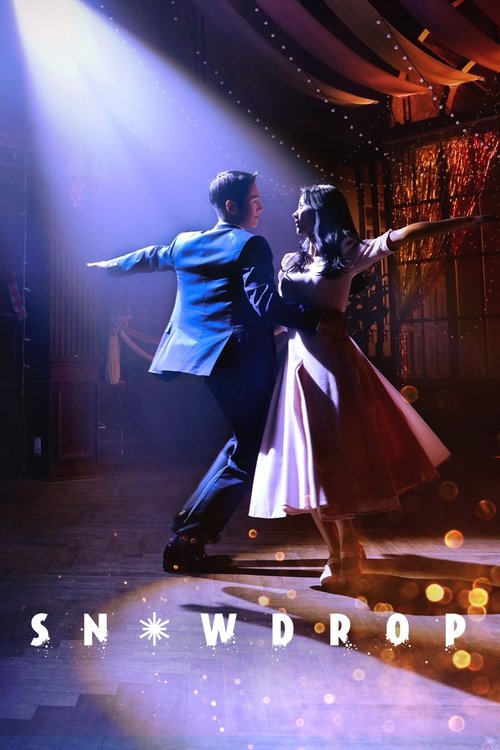
A tragic romance, shrouded in the tense political atmosphere of 1980s Seoul, blossoms like a fragile flower in a brutal winter.
Snowdrop

Snowdrop

설강화

"The blooming of radiant first love."

18 December 2021 — 30 January 2022 South Korea 1 season 16 episode Ended ⭐ 8.5 (295)
Cast: Jung Hae-in, JISOO, Yoo In-na, Jang Seung-jo, Yoon Se-a
Drama War & Politics
Forbidden Love vs. Ideology Political Corruption and Conspiracy Sacrifice and Betrayal Loss of Innocence

Overview

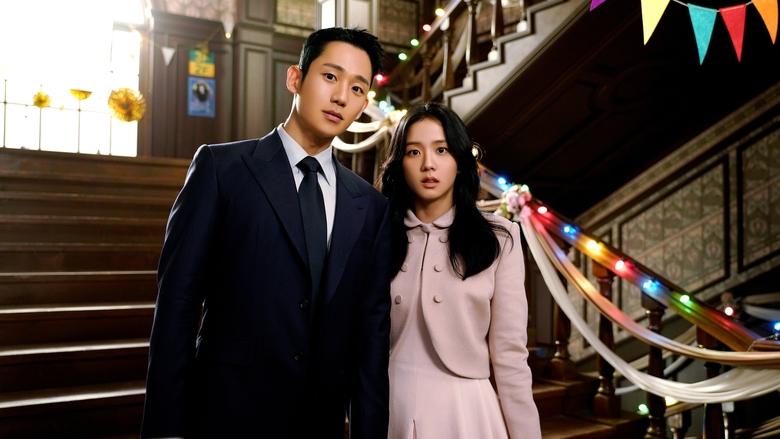
Set against the turbulent backdrop of South Korea's 1987 Democracy Movement, "Snowdrop" tells the story of Eun Yeong-ro, a cheerful student at Hosu Women’s University. Her life takes an unexpected turn when she discovers Lim Soo-ho, a graduate student, covered in blood and hides him in her dormitory, believing he is a protestor injured by the authorities.

As the narrative unfolds, Soo-ho's true identity as a North Korean spy is revealed, plunging Yeong-ro and the entire dormitory into a dangerous hostage crisis orchestrated by political powers from both North and South Korea. The university dorm becomes a microcosm of the intense political standoff, where loyalties are tested, secrets are unearthed, and the line between friend and foe blurs. The series intricately weaves a tale of forbidden love, sacrifice, and political intrigue, as Yeong-ro and Soo-ho navigate their deepening feelings amidst a conspiracy that threatens to consume them and everyone around them.


Core Meaning

"Snowdrop" explores the profound tragedy of individual lives caught in the crossfire of political ideologies and national conflict. The creators aimed to illustrate how innocent people become pawns in the larger games of power played by governments, and how personal relationships and love can be both a source of strength and a devastating vulnerability in such circumstances. The core message is a critique of how corrupt power structures victimize individuals, ultimately suggesting that love and humanity can be tragically crushed by political machinations that are beyond their control.

Thematic DNA

Forbidden Love vs. Ideology 35%
Political Corruption and Conspiracy 30%
Sacrifice and Betrayal 25%
Loss of Innocence 10%

Forbidden Love vs. Ideology

The central theme is the tragic romance between Eun Yeong-ro, the daughter of the ANSP director, and Lim Soo-ho, a North Korean spy. Their love is immediately positioned as impossible, trapped between opposing national ideologies. The series consistently questions whether personal feelings can transcend political duty and brainwashing. Their relationship evolves from innocent attraction to a deep, sacrificial love, constantly tested by the brutal reality of their affiliations. Ultimately, their love story highlights the human cost of political conflict, suggesting that ideology is a destructive force that poisons even the purest connections.

Political Corruption and Conspiracy

"Snowdrop" is a scathing critique of political corruption. The series depicts a fictional conspiracy where the ruling party of South Korea colludes with North Korea to manipulate the upcoming presidential election. The hostage crisis at the women's university is not a simple spy mission but a manufactured event to sway public opinion and secure power. This theme reveals the cynicism of politicians on both sides who are willing to sacrifice innocent lives for their own gain, portraying the Agency for National Security Planning (ANSP) and North Korean commanders as equally manipulative.

Sacrifice and Betrayal

Nearly every character experiences or perpetrates acts of sacrifice and betrayal. Soo-ho is ultimately betrayed by his own country, which marks him and his comrades for death. Yeong-ro feels betrayed by Soo-ho when his true identity is revealed, and later by her own father's willingness to sacrifice the students. Characters like Dr. Kang Cheong-ya and ANSP agent Lee Gang-mu constantly shift their allegiances, blurring the lines of trust. The series culminates in Soo-ho's ultimate sacrifice, choosing to die to protect Yeong-ro, solidifying love as the ultimate act of loyalty in a world rife with betrayal.

Loss of Innocence

The setting of a women's university dormitory serves as a symbol of youthful innocence that is violently shattered. Yeong-ro begins the story as a naive and cheerful student, but the hostage crisis forces her to confront the brutal realities of the political world and the darkness within people she trusts, including her own family. Her journey is one of profound disillusionment, as her belief in love, justice, and her country is systematically broken down by the tragic events she endures.

Character Analysis

Lim Soo-ho / Ri Tae-san

Jung Hae-in

Archetype: The Tragic Hero
Key Trait: Resilient

Motivation

Initially, his motivation is purely mission-oriented: to succeed and return to North Korea to ensure the safety of his family. As the story progresses, his motivation shifts entirely to protecting Eun Yeong-ro. Her safety becomes his paramount concern, overriding his loyalty to his country and his own survival instincts.

Character Arc

Soo-ho begins as a highly skilled and ideologically committed North Korean spy on a critical mission. His exterior is cold and disciplined, shaped by a harsh upbringing and intense training. His arc is defined by his encounter with Yeong-ro, which forces him to confront the conflict between his duty and his burgeoning love. Initially using her as a shield, he gradually develops genuine feelings and begins to question his mission and his nation's motives. His transformation is one from a loyal soldier to a man who chooses love over ideology, culminating in his decision to defy his orders and sacrifice his own life to save Yeong-ro, achieving a form of personal redemption at the cost of his life.

Eun Yeong-ro

JISOO

Archetype: The Innocent
Key Trait: Compassionate

Motivation

Her initial motivation is driven by her feelings for Soo-ho and a compassionate desire to help someone she believes is an injured protestor. As the crisis deepens, her motivation becomes twofold: to save the lives of her friends held hostage and to protect Soo-ho, the man she loves despite his identity. She is fundamentally driven by empathy and love.

Character Arc

Yeong-ro starts as a bright, optimistic, and somewhat naive university student, shielded from the harsh political realities of her time. Her arc is a tragic journey of disillusionment. After falling in love with Soo-ho, she is thrown into a terrifying hostage situation where she discovers his true identity and the corrupt nature of her own father, the ANSP director. This ordeal shatters her innocence, forcing her to become resilient and brave. She transforms from a sheltered girl into a determined woman who defies her father and fights for what she believes is right, even though she is left heartbroken and alone by the end.

Lee Gang-mu

Jang Seung-jo

Archetype: The Pragmatist
Key Trait: Principled

Motivation

His primary motivation is to be a righteous agent and avenge his fallen colleague. This evolves into a desire to uncover the truth behind the political conspiracy and expose the corrupt leaders of the ANSP, including his superior Nam Tae-il. His goal shifts from catching a spy to dismantling a corrupt system.

Character Arc

Gang-mu is introduced as a principled, by-the-book team leader at the ANSP, relentlessly pursuing Soo-ho. His arc is about the erosion of his faith in the system he serves. Initially viewing Soo-ho as a mere communist enemy, he is forced to cooperate with him inside the dormitory. Through this uneasy alliance, he discovers the deep-seated corruption within his own agency and realizes that the ANSP is complicit in a larger conspiracy. He transitions from a rigid agent into a pragmatic man who chooses to side with his enemy to expose the truth and save innocent lives, ultimately prioritizing true justice over blind loyalty to his organization.

Kang Cheong-ya / Kim Eun-hye

Yoo In-na

Archetype: The Femme Fatale
Key Trait: Charismatic

Motivation

Her motivation is rooted in her loyalty to North Korea and a sense of duty, complicated by a personal history and affection for Soo-ho. While she carries out her mission, her actions are also driven by a desire to protect Soo-ho, leading to a balancing act between her professional obligations and personal feelings.

Character Arc

Cheong-ya is presented as a skilled and charismatic surgeon who is also a cunning and high-ranking North Korean spy. Her character arc reveals layers of complexity beneath her cold exterior. While fiercely loyal to her mission and possessing a hidden past with Soo-ho, she demonstrates moments of humanity and conflict. Her interactions during the hostage crisis, particularly her complicated feelings for Soo-ho, lead her to make choices that deviate from her orders. She evolves from a seemingly ruthless agent to a more ambiguous figure who ultimately chooses to help Soo-ho's cause, escaping with the money to care for the families of her fallen comrades as promised.

Symbols & Motifs

Snowdrop Flower

Meaning:

The snowdrop flower symbolizes hope, resilience, and rebirth, as it is one of the first flowers to bloom through the snow at the end of winter. In the context of the series, it represents the pure, hopeful, yet ultimately fragile love between Soo-ho and Yeong-ro that blossoms in the harsh, cold environment of political conflict. It also carries a dual meaning of sympathy and, in some traditions, death, foreshadowing the tragic outcome of their story.

Context:

The name of the drama itself points to this central symbol. The flower's ability to thrive in adversity mirrors the characters' struggle for love and survival. The tragic ending reinforces the flower's more somber associations, where hope is ultimately met with loss.

Paper Airplane

Meaning:

The paper airplane symbolizes the initial, innocent connection and the nascent love between Yeong-ro and Soo-ho. It represents a simple, pure form of communication and a promise of meeting again, free from the complexities and dangers that later define their relationship. It's a reminder of what their love could have been in a different world.

Context:

In the first episode, Yeong-ro sees Soo-ho and folds a paper airplane, which he later finds and keeps. This motif reappears at key moments, serving as a poignant emblem of their lost innocence and the pure feelings they hold for each other amidst the chaos.

The Cassette Tape

Meaning:

The cassette tape becomes a vessel for unspoken feelings and a final confession. In a world where characters are constantly deceiving each other, the tape represents an unalterable, honest truth. It symbolizes Soo-ho's true heart and his love for Yeong-ro, delivered only when he can no longer speak for himself.

Context:

Soo-ho records a message for Yeong-ro in response to her earlier confession. He gives her the tape just before he dies. The series ends with Yeong-ro listening to his final words of love, making the tape a tragic final testament to their relationship and the life they could have had.

Memorable Quotes

너도.. 평범한 나라에서 평범한 젊은이로 살았으면 어땠을까?

— Eun Yeong-ro

Context:

This line is spoken during a quiet, vulnerable moment amidst the tense hostage situation. Yeong-ro expresses her sorrow for Soo-ho's circumstances, highlighting the theme that individuals are victims of the political systems they are born into.

Meaning:

Translation: "What if you... had lived as an ordinary young man in an ordinary country?" This quote encapsulates the core tragedy of Soo-ho's life. It reflects Yeong-ro's deep empathy for him, seeing past his identity as a spy to the man he could have been, and mourning the life of peace and normalcy that was stolen from him by ideology and conflict.

살아. 무슨 일이 있어도. 살아남아야 돼.

— Lim Soo-ho

Context:

Spoken in Episode 16, as Soo-ho is dying in Yeong-ro's arms after shielding her from gunfire. It is his final, desperate plea and the ultimate expression of his love and sacrifice.

Meaning:

Translation: "Live. No matter what happens. You have to survive." These are among Soo-ho's final words and represent his ultimate act of love for Yeong-ro. His last wish is for her to live on, even without him. It's a selfless command that underscores his complete transformation from a soldier serving a state to a man sacrificing himself for one person.

Episode Highlights

Episode 1

S1E1

The first episode masterfully sets the stage, introducing the vibrant world of the Hosu Women's University in 1987 and the charming, innocent romance that blossoms between Yeong-ro and Soo-ho during a group blind date. The episode ends with a dramatic shift in tone as a blood-soaked Soo-ho crashes into Yeong-ro's dorm, setting the entire plot in motion.

Significance:

This episode is crucial for establishing the central relationship and the stark contrast between the idyllic, romantic beginning and the violent, political reality that follows. It hooks the audience with the chemistry of the leads and the immediate life-or-death stakes.

Episode 5

S1E5

The hostage crisis is in full swing. Soo-ho has revealed himself as a spy, shattering Yeong-ro's world. This episode delves into the psychological turmoil of the characters, particularly Yeong-ro's feelings of betrayal and Soo-ho's struggle to maintain control while dealing with his feelings for her. The political conspiracy begins to unfold in earnest outside the dorm.

Significance:

This episode marks the true beginning of the central conflict, moving past the initial shock into a tense stalemate. It solidifies the new dynamic between the leads—captor and hostage who share a complicated past—and expands the political narrative that drives the plot.

Episode 11

S1E11

Considered by many viewers to be a major turning point, this episode sees Soo-ho and ANSP agent Lee Gang-mu forming an unlikely alliance. After discovering they are both pawns in a larger political scheme orchestrated by their own governments, they decide to work together to expose the conspiracy and save the hostages. This episode features a powerful confrontation where Soo-ho suppresses Dr. Kang Cheong-ya.

Significance:

This episode dramatically shifts the narrative from a simple spy-versus-agent conflict to a more complex story of rebellion against corrupt systems. The alliance between Soo-ho and Gang-mu is a pivotal development that drives the plot toward its climax.

Episode 16

S1E16

The final episode brings the tragedy to its heartbreaking conclusion. Soo-ho makes the ultimate sacrifice to ensure Yeong-ro and the other students can escape. He is fatally wounded while protecting Yeong-ro from the SWAT team. The aftermath shows the political fallout, with the corrupt officials being jailed. The series ends with Yeong-ro listening to Soo-ho's final confession of love on a cassette tape.

Significance:

The finale provides a poignant and definitive end to the love story, cementing the series as a tragedy. It resolves the political plotline while emphasizing the profound personal loss, leaving a lasting emotional impact on the audience.

Philosophical Questions

Can love transcend ideology?

The series places this question at its very core. The relationship between Soo-ho and Yeong-ro is a microcosm of the conflict between North and South Korea. Their love is constantly challenged by their duties, their ingrained beliefs, and the expectations of their respective societies. The series explores whether their personal bond can create a space of humanity outside the political conflict. The tragic ending suggests that while love can inspire incredible acts of sacrifice and change an individual's heart, it may ultimately be powerless to survive in a world defined by unyielding ideological division.

What is the true meaning of patriotism?

"Snowdrop" presents multiple, conflicting versions of patriotism. There is the blind, dogmatic loyalty of the North Korean spies and the corrupt, self-serving nationalism of the South Korean politicians. Then there is the more principled patriotism of agent Lee Gang-mu, who seeks to uphold justice even if it means defying his own agency. Soo-ho's journey forces a re-evaluation of the concept, as he learns that his country has betrayed him. The series seems to argue that true loyalty should not be to a flag or a regime, but to fundamental human values like truth, justice, and the protection of innocent life.

Alternative Interpretations

One of the main alternative readings of "Snowdrop" posits it as a political satire and black comedy, as the network itself suggested. From this perspective, the exaggerated incompetence and greed of the South Korean politicians and their wives, and the absurd premises of their conspiracy with the North, are meant to ridicule the corrupt nature of power itself, rather than make a specific historical claim. The tragic romance, in this view, serves as the humanizing element that grounds the satire, showing the real-life consequences of the leaders' farcical and dangerous games.

Another interpretation focuses on the series as a pure character drama about radicalization and deprogramming. Soo-ho's journey can be seen as a process of breaking free from decades of ideological brainwashing through the power of human connection and love. His ultimate defiance of his country is not just a romantic gesture but the final step in reclaiming his own humanity. Conversely, Yeong-ro's arc is seen as a process of forced radicalization, where her political apathy is stripped away by trauma, forcing her to take a stand against the systems of power, including her own family.

Cultural Impact

"Snowdrop" generated one of the most intense controversies in recent South Korean television history. Set during the 1987 pro-democracy movement, the series was accused of historical negationism before its first episode even aired. A leaked synopsis suggested the male lead was a North Korean spy mistaken for a student activist, and that a member of the oppressive Agency for National Security Planning (ANSP) was portrayed sympathetically. This narrative was seen by many Koreans as an insult to the memory of the real student activists who were tortured and killed by the authoritarian regime after being falsely accused of being communist spies.

A national petition to cancel the show gathered hundreds of thousands of signatures, and sponsors began pulling out. The network, JTBC, vehemently denied the accusations, stating the drama was a fictional black comedy and a romance set against the era, not a documentary about the movement itself. They even altered the female lead's name after it was found to be similar to a real-life democracy activist. Despite the fierce domestic backlash, the series gained a substantial international following, largely due to the casting of Jung Hae-in and BLACKPINK's Jisoo. The legacy of "Snowdrop" is thus twofold: in South Korea, it serves as a cautionary tale about the sensitivities of depicting recent, painful history, while internationally, it is often viewed primarily as a tragic romance, with its controversial context less understood.

Audience Reception

The audience reception for "Snowdrop" was sharply divided. Domestically, in South Korea, the series was met with significant backlash and low viewership ratings. The controversy over alleged historical distortion dominated the conversation, leading to widespread criticism, formal petitions for its cancellation, and sponsor withdrawals. Many Korean viewers felt the show was disrespectful to the victims of the pro-democracy movement.

Internationally, however, the reception was largely positive. Driven by the global fanbases of stars Jung Hae-in and BLACKPINK's Jisoo, many international viewers were less aware of or concerned with the historical context and focused on the tragic romance, high production values, and compelling performances. On platforms like MyDramaList and IMDb, the show holds high ratings, with fans praising the chemistry between the leads, the suspenseful plot, and the emotional depth of the story. For this audience, "Snowdrop" was seen as a beautifully executed, heartbreaking love story.

Interesting Facts

  • The series is set in 1987, a pivotal year in South Korean history that saw the June Democracy Movement, which led to the end of the authoritarian Fifth Republic of Korea.
  • "Snowdrop" was the subject of significant controversy in South Korea over allegations of historical distortion, with critics arguing that it glorified a North Korean spy and misrepresented the pro-democracy movement.
  • JTBC, the broadcast network, released a statement defending the drama as a fictional story about individuals victimized by those in power and denied that it disparaged the democracy movement.
  • To address the early controversy and clarify the plot, JTBC aired three consecutive episodes over one weekend (Episodes 3, 4, and 5).
  • The drama marked the debut of BLACKPINK member JISOO in a leading role, which drew significant international attention.
  • The writer Yoo Hyun-mi and director Jo Hyun-tak had previously worked together on the hit satirical drama "Sky Castle".

⚠️ Spoiler Analysis

Click to reveal detailed analysis with spoilers

Frequently Asked Questions

Explore More About This Movie

Dive deeper into specific aspects of the movie with our detailed analysis pages

Comments (0)

Leave a comment

No comments yet. Be the first to share your thoughts!