Invader ZIM
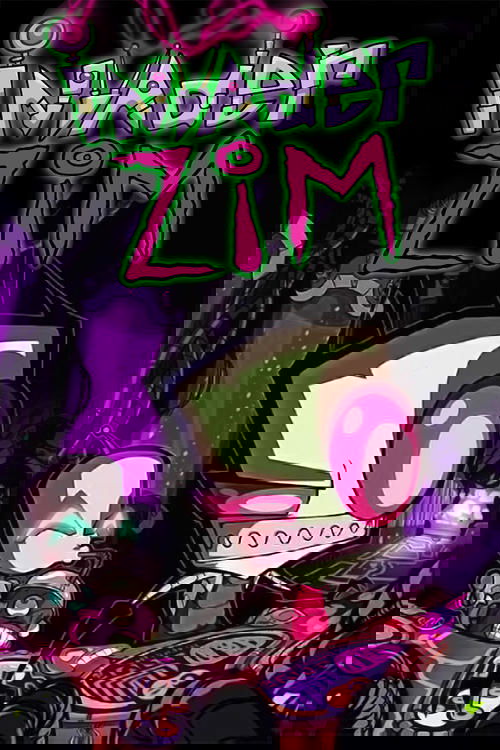
A darkly comedic sci-fi satire that plunges a megalomaniacal yet inept alien into the grotesque machinery of a dystopian human society, sparking a chaotic, neon-drenched fever dream.
Invader ZIM

Invader ZIM

"Bow down and prepare for DOOM!"

30 March 2001 — 19 August 2006 2 season 46 episode Canceled ⭐ 8.5 (432)
Cast: Richard Steven Horvitz, Andy Berman, Rosearik Rikki Simons, Melissa Fahn, Lucille Bliss
Animation Sci-Fi & Fantasy Comedy Kids
Satire of Human Society The Alienated Outsider Incompetence and Failure Appearance vs. Reality

Overview

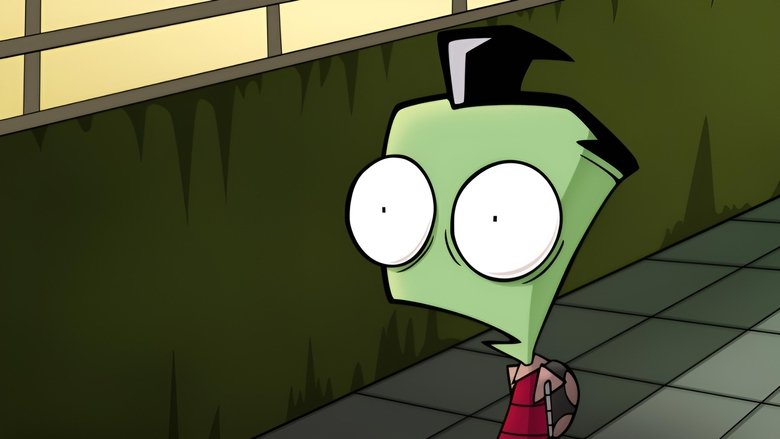
"Invader ZIM" chronicles the hilariously futile efforts of Zim, an astonishingly arrogant and hopelessly inept member of the imperialistic Irken race, to conquer Earth. Banished to the far reaches of space by his leaders, the Almighty Tallest—who merely wanted to be rid of him—Zim mistakes his exile for a top-secret mission. He establishes a base on a dark, satirical version of Earth and, with his chaotically dysfunctional robot servant GIR, attempts to blend in by attending a local elementary school, or "Skool."

Zim's only real obstacle is Dib Membrane, a young, obsessive paranormal investigator who is the sole human to see through Zim's laughably poor disguise. Shunned by his peers and neglected by his famous scientist father, Dib dedicates his life to exposing Zim and saving a world that consistently mocks him for his efforts. The series follows their relentless, absurd rivalry, as Zim's grandiose plans for world domination are perpetually thwarted by his own incompetence, GIR's randomness, or Dib's desperate interventions, all set against a backdrop of a blissfully ignorant and deeply flawed humanity.
Core Meaning

The core meaning of "Invader ZIM" is a deeply cynical and satirical critique of societal structures and human nature. Through its dystopian lens, the series argues that institutions like school, government, and family are inherently flawed and run by incompetents. It suggests that humanity is largely apathetic, unintelligent, and obsessed with mindless consumerism, making it ironically ripe for conquest yet simultaneously saved by its own obliviousness.

Ultimately, the show is a celebration of the outcast. Both Zim and Dib are pariahs among their own people, driven by a desperate need for validation that they never receive. Their endless, pointless conflict suggests that purpose is often self-created in a meaningless universe, and that the struggle of the individual against an absurd and indifferent world is both tragic and profoundly comical.

Thematic DNA

Satire of Human Society 35%
The Alienated Outsider 30%
Incompetence and Failure 20%
Appearance vs. Reality 15%

Satire of Human Society

The series relentlessly mocks contemporary life. The depiction of Earth features a polluted, grimy cityscape, a populace addicted to junk food (like "Poop" brand soda), and a complete lack of critical thinking. The school system ('Skool') is portrayed as a prison-like institution designed to crush spirits, led by the demonic Ms. Bitters who preaches about doom. Consumerism, corporate greed (Bloaty's Pizza Hog), and the incompetence of authority figures are constant targets of its dark, exaggerated humor.

The Alienated Outsider

The central conflict is driven by two characters who are profoundly alone. Zim is an outcast from his own species, literally sent on a fake mission to get him out of the way. His desperation for approval from the Tallest is a driving force of the narrative. Similarly, Dib is a pariah among humans; no one, not even his own family, believes his claims about Zim, leaving him completely isolated in his quest to save the world. The show posits that being different or seeing the truth leads to rejection and ridicule.

Incompetence and Failure

Despite access to hyper-advanced technology, Zim is his own worst enemy. His plans are overly complex, his ego blinds him to obvious flaws, and his understanding of humanity is nonexistent. His failures are epic and catastrophic, forming the comedic core of the series. This theme extends to the entire universe; the Irken leaders are petty and foolish, and the humans are too dim-witted to function effectively. The show suggests that failure is the natural state of being, regardless of ambition or power.

Appearance vs. Reality

A running gag and central theme is the failure of anyone to see things for what they are. Zim's disguise consists of contact lenses and a bad wig, yet it fools everyone except Dib. This highlights the willful ignorance and lack of perception in society. Zim himself lives in a fantasy, believing he is a respected Invader on a vital mission, when in reality he is a joke to his entire species. The series constantly plays with the idea that the perceived reality is a comforting lie, while the grotesque truth is hidden in plain sight.

Character Analysis

Zim

Richard Steven Horvitz

Archetype: Antihero / Villain Protagonist
Key Trait: Megalomania

Motivation

Zim is driven by an obsessive need for acceptance and glory from the Irken Empire and its leaders, the Almighty Tallest. He desperately wants to prove he is a worthy Invader, despite being an outcast. This motivation is rooted in delusion, as the Tallest only want him gone. After learning this truth in the movie, his motivation shifts to simply maintaining his rivalry with Dib, as it's the only purpose he has left.

Character Arc

Zim's arc is largely one of stasis, which is central to the show's comedy. He begins and ends as a delusional, egotistical failure who refuses to acknowledge his own incompetence. However, the movie "Enter the Florpus" forces a crack in his delusion. For the first time, he is confronted with the undeniable truth that his mission is a lie and the Tallest despise him, leading to a brief but genuine depression. While he quickly bounces back by inventing a new, petty purpose (annoying Dib), this moment provides a glimpse of tragic self-awareness. He doesn't grow into a better person, but his understanding of his place in the universe is irrevocably, and devastatingly, altered.

Dib Membrane

Andy Berman

Archetype: The Cassandra / Ostracized Hero
Key Trait: Obsessive

Motivation

Dib's primary motivation is twofold: to expose Zim and save the Earth from invasion, and to earn the respect and belief of his world-famous scientist father. He wants to prove that he is not crazy and that the paranormal threats he sees are real. The desire for his father's validation is the emotional core of his character.

Character Arc

Dib starts as a frantic, lonely conspiracy theorist, defined entirely by his opposition to Zim and his desperate need for his father's approval. Throughout the series, he remains an outcast, but his determination never wavers. His major development comes in "Enter the Florpus." He is forced to work with his family to save the world, and in the climax, his father, Professor Membrane, finally tells him he's proud of him, granting Dib the validation he's craved for the entire series. This resolves his primary emotional conflict, allowing him to mature from a desperate child into a vindicated (if still weird) hero.

Gaz Membrane

Melissa Fahn

Archetype: The Cynic / The Stoic
Key Trait: Apathetic

Motivation

Gaz is motivated almost exclusively by her own immediate desires, primarily consuming pizza and playing video games. Her main goal is to be left alone to enjoy her hobbies. Anything that interferes with this, whether it's Zim's schemes or Dib's obsession, is met with terrifying, quiet rage. She is the embodiment of apathy as a survival mechanism.

Character Arc

Gaz shows minimal character development, serving as a grounding, apathetic force in a world of chaos. She is fully aware of Zim's identity but doesn't care because she views him as too incompetent to succeed. Her arc is subtle; while she remains cynical and devoted to pizza and video games, "Enter the Florpus" shows her actively and effectively helping her brother and father. She bonds with Tak's alien ship, using her gaming skills to pilot it, demonstrating a deeper competence and a flicker of familial loyalty beneath her perpetually unimpressed exterior. She doesn't become cheerful, but she proves to be a powerful and reliable ally when it matters.

GIR

Rosearik Rikki Simons

Archetype: The Jester / Agent of Chaos
Key Trait: Randomness

Motivation

GIR's motivations are nonsensical and fleeting. He is driven by a desire for tacos, waffles, piggies, watching TV, and obeying whatever command Zim has given him, though he is easily distracted from any of these. He has a simple, binary view of his duty: sometimes he is a loyal servant, and other times he is just a hyperactive child in a dog suit.

Character Arc

GIR has no character arc; he is a constant. As a malfunctioning SIR (Standard-issue Information Retrieval) unit made of spare parts, his personality is a random mix of cheerful idiocy, sudden seriousness, and a love for Earth junk food. He is a pure agent of chaos whose random actions are just as likely to save the day as they are to doom Zim's plans. His lack of development is crucial to his role as a constant, unpredictable variable in the show's formula.

Symbols & Motifs

Meat and Snack Foods

Meaning:

Meat and various greasy, unhealthy snack foods symbolize the grotesque consumerism and biological foulness of humanity that Zim finds so repulsive. Food in the series is often disgusting and associated with mindless consumption, from the mountains of waffles GIR demands to the meat-based Valentine's tradition.

Context:

This motif is present in nearly every episode. Bloaty's Pizza Hog is a recurring location that represents the worst of fast-food culture. In "Tak: The Hideous New Girl," Valentine's Day is celebrated by exchanging sausages. GIR's obsession with tacos and other junk food often derails Zim's plans.

Skool

Meaning:

The elementary school, pointedly spelled "Skool," symbolizes oppressive, spirit-crushing institutions. It is a place of conformity and misery, not learning, run by a terrifying teacher who constantly reminds the children of their impending doom. It represents society's method for enforcing mediocrity and ignorance.

Context:

Skool is a primary setting for the series. It's where Zim and Dib's rivalry plays out daily. Episodes like "Career Day" and "The Voting of the Doomed" use the school setting to satirize societal pressures and political systems in microcosm.

Zim's Disguise

Meaning:

Zim's incredibly thin disguise symbolizes humanity's profound lack of awareness and critical thought. The fact that only Dib can see through it illustrates how people will accept any absurdity as normal if it fits their preconceived notions, highlighting societal blindness and apathy.

Context:

Zim's disguise is a constant presence. In the first episode, "The Nightmare Begins," the inadequacy of the disguise is immediately established, as is the world's willingness to accept it. Dib's constant, failed attempts to reveal the disguise are a central running gag.

The Dystopian City

Meaning:

The perpetually dark, rainy, and filthy city in which the series is set symbolizes the moral and physical decay of human civilization. It is a visual representation of the show's cynical worldview, where pollution, urban decay, and societal rot are the norm.

Context:

The city's grim aesthetic is the backdrop for all of Zim's Earth-based schemes. Its residents are portrayed as dim-witted and unobservant, perfectly matching their squalid environment. The visuals consistently reinforce the theme that humanity lives in a self-made garbage heap.

Memorable Quotes

I'm gonna sing the Doom Song now! Doom doom doom doom doom, doom doom doom...

— GIR

Context:

From the Season 1 episode "A Room with a Moose." While Zim has trapped his entire class on a spaceship hurtling through a wormhole, GIR passes the time by singing his annoying, repetitive, and iconic song.

Meaning:

This quote perfectly encapsulates GIR's cheerful, chaotic, and completely unhelpful nature. It's a song of impending destruction sung with the boundless energy of a happy child, highlighting the show's blend of dark themes and absurdist, silly humor.

It's not stupid, it's advanced!

— Almighty Tallest Purple

Context:

This is a recurring line used by the Almighty Tallest. One notable instance is in "The Nightmare Begins" when they are explaining the 'advanced' features of GIR, who is literally made from garbage.

Meaning:

This line is a satirical jab at the uncritical worship of technology and authority. It's used to justify something that is clearly nonsensical, reflecting the show's theme that those in power are often just as foolish as everyone else, but are never questioned.

Why was there BACON IN THE SOAP?!

— Zim

Context:

From the Season 1 episode "Germs." After GIR 'cleans' the bathroom with a variety of strange items, Zim emerges from the shower, horrified by his discovery, fueling his germaphobic paranoia.

Meaning:

A classic example of the show's random, surreal humor. This panicked shriek from Zim highlights his utter disgust and confusion with the gross, illogical nature of human existence, which he is forced to endure.

It's called life, Dib. Now sit down.

— Ms. Bitters

Context:

From the Season 1 episode "Parent-Teacher Night." Dib bursts into class late, trying to warn everyone, and is immediately shut down by his terrifyingly grim teacher.

Meaning:

This quote embodies the soul-crushing cynicism of the show. Ms. Bitters, the teacher, dismisses Dib's genuine distress ('horrible nightmare visions') as the mundane, unavoidable misery of existence, reflecting the series' bleak worldview.

The Tallest aren't coming.

— Zim

Context:

From the movie "Invader Zim: Enter the Florpus." After realizing the Irken Armada is flying away from Earth and his mission was a lie, a depressed Zim finally admits the heartbreaking reality to Dib.

Meaning:

A rare moment of genuine pathos and character development for Zim. This quiet, defeated statement is the first time he acknowledges the truth of his exile, shattering his entire worldview and sense of purpose. It's the emotional turning point of the entire franchise.

Episode Highlights

The Nightmare Begins

S1E1

The pilot episode perfectly establishes the series' premise, characters, and tone. Zim is 'assigned' to Earth, builds his base, meets GIR, and establishes his rivalry with Dib. It sets up all the core conflicts and running gags of the show.

Significance:

This episode is the foundation for the entire series. It introduces the central dynamic of the competent-but-delusional invader versus the seeing-but-disbelieved hero against a backdrop of societal idiocy.

Dark Harvest

S1E4

Perhaps the most infamous and darkest episode, Zim becomes paranoid that he lacks human organs and will be discovered. His solution is to steal the organs of his classmates and replace them with random objects. The episode is notoriously grotesque and hilarious.

Significance:

"Dark Harvest" is the ultimate example of how far the show pushed the boundaries of children's television. Its disturbing imagery and black humor solidified its cult status and contributed to the controversy that eventually led to its cancellation.

Attack of the Saucer Morons

S1E5

After his ship crashes, Zim gets amnesia and is found by a group of UFO fanatics who worship him. It's a sharp satire on conspiracy culture and blind belief, as the fanatics project all their desires onto a clearly hostile alien.

Significance:

This episode is one of the most direct satires in the series, skewering both government cover-ups (the repeated 'weather balloon' excuse) and the gullibility of conspiracy theorists. It cleverly parallels the fanatics' delusion with Zim's own.

Tak: The Hideous New Girl

S1E20

A new Irken, Tak, arrives on Earth with a genuine plan for conquest, seeking revenge on Zim for ruining her chance to be an Invader. For the first time, Zim faces a competent rival from his own species, forcing him into an uneasy alliance with Dib.

Significance:

This episode is crucial as it introduces a truly threatening antagonist and highlights just how inept Zim is by comparison. Tak represents what an actual Irken invasion would look like, raising the stakes and expanding the show's lore.

Backseat Drivers from Beyond the Stars

S2E1

Zim hijacks the Almighty Tallest's flagship, The Massive, to bring them to Earth. Unbeknownst to him, the ship is under attack by a resistance force, The Resisty. The episode is a large-scale space opera parody filled with action and humor.

Significance:

Considered by many to be the series' best episode, it demonstrates the show's potential for epic-scale storytelling and cinematic action. It expands the universe by introducing a resistance movement and is a technical high point for the animation.

The Most Horrible X-mas Ever

S2E10

In the final aired episode of the original run, Zim creates a Santa Claus-like entity to win humanity's affection and enslave them. The episode is a brilliant and cynical deconstruction of Christmas traditions and commercialism.

Significance:

As the de facto series finale for many years, this episode encapsulated the show's gleeful subversion of cultural norms. It was a fittingly dark and hilarious end to the original broadcast, leaving fans wanting more for over a decade.

Philosophical Questions

What is the nature of purpose in an absurd universe?

The series explores this through Zim's mission. His entire existence is dedicated to a goal that is ultimately revealed to be a lie, a cosmic joke played on him by leaders who despise him. When he learns the truth, he is temporarily shattered. However, he quickly creates a new, smaller purpose: tormenting his rival, Dib. The show suggests that in a universe without inherent meaning, individuals must invent their own reasons to exist, even if they are petty or delusional.

Is willful ignorance a survival mechanism?

The entire human race in "Invader ZIM" survives because of its collective stupidity and refusal to see the obvious alien in its midst. Dib, the only one who sees the truth, is ostracized and miserable. The show cynically asks whether it is better to be happy and ignorant or aware and tormented. Humanity's survival is not due to intelligence or strength, but to a profound, almost blissful, apathy.

Does conformity equal morality?

Both Zim and Dib are punished for being different. Zim is an outcast for being defective and annoying, while Dib is an outcast for being intelligent and observant. Both societies, Irken and Human, prize conformity above all else. The series critiques this by making its two non-conformist protagonists the drivers of the entire narrative, suggesting that individuality, while painful, is the only source of genuine action and change in a stagnant world.

Alternative Interpretations

One prominent fan theory suggests that the entire show is a metaphor for Dib's struggle with depression and alienation. In this reading, the dark, polluted world is a projection of his hopeless worldview. Zim is not a literal alien but a manifestation of Dib's own self-loathing and feelings of being an outsider—the part of himself he is trying to fight. GIR represents a childlike, chaotic impulse, and Gaz's apathy is a different coping mechanism for their shared dysfunctional family life.

Another interpretation posits that the distorted, idiotic portrayal of humanity is not objective reality, but rather the world as seen through Zim's alien eyes. Coming from a sterile and orderly (if fascistic) society, Zim perceives Earth's culture, food, and people as grotesque and moronic. This would explain why everyone is so oblivious and why Dib, with his oversized head and sharp intellect, is the only one Zim sees as a near-equal and a genuine threat.

A third theory focuses on GIR, suggesting his stupidity is a deliberate act. As a Garbage Information Retrieval unit, he may be secretly sabotaging Zim's plans because he enjoys his life on Earth with its pizza, television, and piggies. The episode "GIR Goes Crazy and Stuff," where GIR's personality is briefly switched to a hyper-competent duty mode, is often cited as evidence that his usual chaotic behavior is a choice to prevent Zim from succeeding.

Cultural Impact

"Invader ZIM" premiered in 2001, a time when Nickelodeon was known for more lighthearted fare. Created by indie comic artist Jhonen Vasquez, known for the graphically violent "Johnny the Homicidal Maniac," the show was an anomaly. Its dark humor, cynical tone, and grotesque imagery were groundbreaking for a mainstream children's network and directly challenged the status quo of what was considered acceptable kids' programming.

Critically, the show was well-received for its unique visual style, sharp writing, and originality, even winning an Emmy. However, it struggled with its target demographic, proving too intense for younger viewers while attracting a dedicated older audience. This, combined with declining ratings and a high production budget, led Nickelodeon to cancel the series in 2002 before the second season was even complete.

Despite its short run, "Invader ZIM"'s influence grew exponentially after its cancellation. It became a quintessential cult classic of the 2000s, thriving through DVD sales and a massive presence in Hot Topic stores, which sold extensive merchandise. The series developed an enduring and passionate fanbase that kept its memory alive through online communities and fan conventions like InvaderCON. Its legacy is its role as a pioneer of darker, more complex themes in Western animation, paving the way for later shows like "Adventure Time" and "Gravity Falls" that also blended kid-friendly formats with more mature storytelling. The series was eventually revived with a comic book series in 2015 and a critically acclaimed Netflix movie, "Invader ZIM: Enter the Florpus," in 2019, cementing its status as a beloved and influential piece of animation history.

Audience Reception

"Invader ZIM" was met with critical acclaim upon its 2001 premiere, praised for its unique and detailed animation, dark humor, and sharp writing. However, its reception from the general audience and the network was more complex. The show's mature themes and often grotesque content made it a poor fit for Nickelodeon's primary younger demographic, leading to inconsistent scheduling and eventual cancellation due to declining ratings and high costs.

After its cancellation, audience opinion evolved dramatically. The show found a fervent and loyal following among teenagers and young adults, who embraced its cynical tone and outsider characters. It became a cult phenomenon, with DVD sales and merchandise, particularly at Hot Topic, becoming extremely popular throughout the 2000s. Fans praised the very aspects that led to its cancellation—its darkness, its refusal to talk down to its audience, and its satirical edge. This groundswell of support eventually led to the creation of new comics and the 2019 Netflix movie "Enter the Florpus," which was met with overwhelmingly positive reviews from both original fans and critics, who saw it as a triumphant and faithful revival of the beloved series.

Interesting Facts

  • Creator Jhonen Vasquez was only 22 years old when he started working on the show for Nickelodeon, with no prior experience in animation.
  • The role of Zim was originally voiced by Mark Hamill in the unaired pilot, but Vasquez felt the voice wasn't right and recast the part with Richard Steven Horvitz.
  • Zim's name came from a Tamagotchi that belonged to Jhonen Vasquez's then-girlfriend.
  • The show was one of the first animated series to blend traditional 2D animation with CGI elements, particularly for spaceships and advanced technology.
  • Nickelodeon executives were concerned that Dib's trench coat was reminiscent of the Columbine High School shooters and wanted to change it, but their efforts were unsuccessful.
  • A hidden image of GIR covered in blood, known as "Bloody GIR," was snuck into single frames of later episodes by the animation director as a prank. This was only discovered after the show's cancellation and was not the reason for it.
  • The show's high production cost was a major factor in its cancellation; its detailed storyboards were often over 250 pages for an 11-minute segment, far exceeding the industry standard.
  • A fan convention called InvaderCON was started in 2011 to celebrate the show's 10th anniversary, demonstrating its enduring cult following.

Easter Eggs

In many episodes, characters from Jhonen Vasquez's other comics appear. Dib wears a shirt with the face from "Squee!", and characters resembling Johnny from "Johnny the Homicidal Maniac" can be spotted in crowd scenes.

These are nods to Vasquez's darker, pre-Zim work, which was the reason Nickelodeon approached him in the first place. They serve as inside jokes for fans of his comics.

Jhonen Vasquez and other crew members, like director Steve Ressel, make animated cameo appearances as background characters throughout the series.

A common practice for animation crews, these cameos are fun details for sharp-eyed fans to spot. Vasquez can be seen as one of the potential human disguises Zim rejects as "too ugly" in the first episode.

In the episode "Gaz, Taster of Pork," Gaz tells the Shadowhog the famous Konami Code (Up, Up, Down, Down, Left, Right, Left, Right, B, A, Start) to get unlimited lives in a video game.

This is a classic reference to old-school video game culture, fitting for Gaz's character as an obsessive gamer.

In the episode "The Wettening," a background character can be seen wearing a shirt that says "Z?", which was a recurring symbol in Vasquez's comic "Johnny the Homicidal Maniac."

Another direct reference to Vasquez's earlier comics, connecting the universes of his creations for longtime fans.

A vial of human sewage in the episode "GIR Goes Crazy and Stuff" is labeled "WARNING: DOOKIE," which are the titles of two albums by the band Green Day.

This is a subtle pop culture reference likely included by the artists and writers.

⚠️ Spoiler Analysis

Click to reveal detailed analysis with spoilers

Frequently Asked Questions

Explore More About This Movie

Dive deeper into specific aspects of the movie with our detailed analysis pages

Comments (0)

Leave a comment

No comments yet. Be the first to share your thoughts!