Skip to content
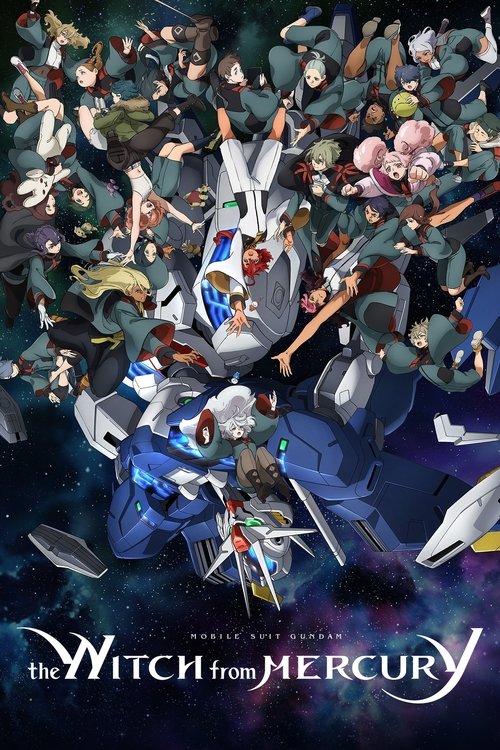
Mobile Suit Gundam: The Witch from Mercury
A vivid techno-corporate space opera wrapped in tender coming-of-age intimacy, where fragile blossoms of young love and self-discovery fight to take root within the cold, crushing steel of weaponized mechanical deities.
Mobile Suit Gundam: The Witch from Mercury

Mobile Suit Gundam: The Witch from Mercury

機動戦士ガンダム 水星の魔女

"This witch... rides a Gundam."

02 October 2022 — 02 July 2023 Japan 1 season 24 episode Ended 7.5 (102)

Cast: Kana Ichinose, Lynn, Yohei Azakami, Natsuki Hanae, Makoto Furukawa

Animation Sci-Fi & Fantasy Action & Adventure Generational Trauma and Parental Conditioning Corporate Capitalism, Systemic Inequality, and Proxy Warfare Emancipation, Self-Actualization, and Personal Agency The Dual Nature of Technology: Healing vs. Destruction Love, Queer Intimacy, and Found Family

Overview

Set in the timeline of Ad Stella (A.S.) 122, Mobile Suit Gundam: The Witch from Mercury takes place in an era where massive corporate conglomerates have established economic dominance over space, eclipsing traditional governmental authority. The wealthy space-dwelling elites ("Spacians") exploit and marginalize the inhabitants of Earth ("Earthians"), fueling systemic inequality and deep-seated political unrest. Within this corporate-dominated sphere, the Benerit Group—the leading industrial cartel in mobile suit manufacturing—runs the prestigious Asticassia School of Technology, where the heirs of corporate dynasties settle disputes and hierarchy through high-stakes mobile suit duels.

The story begins with the arrival of Suletta Mercury, an awkward and sheltered pilot who transfers from the harsh, remote frontier planet of Mercury with an advanced mobile suit named the XVX-016 Gundam Aerial. On her very first day, Suletta intervenes to protect Miorine Rembran, the rebellious daughter of Benerit Group chairman Delling Rembran. By winning a duel against Miorine’s arrogant fiancé, Suletta claims the title of school "Holder" and unexpectedly becomes Miorine’s new fiancé under Asticassia's archaic dueling customs.

As Suletta and Miorine forge an uneasy partnership—eventually establishing their own corporate venture, GUND-ARM, Inc., to pioneer peaceful biomedical applications for mobile suit technology—their school life becomes deeply entangled in adult conspiracies. The forbidden "GUND Format" interface technology, outlawed years earlier due to deadly physical tolls on pilots, reemerges as factions vie for galactic supremacy. Across its 24 episodes (plus the foundational Prologue), the series charts their journey from naive schoolgirls caught in political crossfire into decisive leaders fighting to break cycles of revenge, technological weaponization, and corporate warfare.

Core Meaning

At its core, The Witch from Mercury delivers a message about breaking cycles of generational trauma, parental exploitation, and systemic violence. The series argues that human progress and technology must be anchored in empathy, bodily preservation, and mutual understanding rather than commodification and warfare.

Through Suletta’s journey of emancipating herself from unconditional obedience to parental authority, the narrative asserts that true maturity requires making independent choices, accepting the risks of failure, and choosing communication over vengeance. It reframes the classical Gundam anti-war ethos around personal autonomy: that one must not live as a mere instrument or weapon for another’s ambitions, but must step forward on one's own terms to forge authentic bonds and build a more compassionate world.

Thematic DNA

Generational Trauma and Parental Conditioning 30%
Corporate Capitalism, Systemic Inequality, and Proxy Warfare 25%
Emancipation, Self-Actualization, and Personal Agency 20%
The Dual Nature of Technology: Healing vs. Destruction 15%
Love, Queer Intimacy, and Found Family 10%

Generational Trauma and Parental Conditioning

Parents throughout the series project their failures, revenge schemes, and corporate ambitions onto their children. Prospera conditions Suletta to be an obedient proxy; Delling treats Miorine as a transactional asset; and Vim Jeturk dictates Guel's life as a corporate tool. The thematic arc peaks when the youth reject inherited vendettas to forge reconciliation.

Corporate Capitalism, Systemic Inequality, and Proxy Warfare

The setting replaces conventional nation-states with monolithic corporations (the Benerit Group, Grassley, Peil, Jeturk) that monetize conflict and subjugate Earthians. The school's duels serve as micro-level corporate proxy wars, exposing how market incentives exploit the lives of young pilots for stock value and industrial leverage.

Emancipation, Self-Actualization, and Personal Agency

Suletta begins the story defined entirely by her mother's directives and her Gundam. Through severe heartbreak and detachment from Aerial, she learns that moving forward is meaningful only when driven by her own conscience rather than indoctrinated mantras.

The Dual Nature of Technology: Healing vs. Destruction

The GUND Format originated as a medical breakthrough intended to help human bodies survive the harsh vacuum of space. Its conversion into an instrument of slaughter encapsulates the corruption of scientific endeavor by the military-industrial complex. GUND-ARM, Inc. embodies the struggle to reclaim technological innovation for human preservation.

Love, Queer Intimacy, and Found Family

The evolving relationship between Suletta and Miorine serves as the narrative’s emotional anchor. The Earth House provides a sanctuary of solidarity and chosen kinship in contrast to the cold, transactional aristocratic houses of Asticassia.

Character Analysis

Suletta Mercury

Kana Ichinose

Archetype: Hero / Tragic Clone / Reclaimer Key Trait: Resilient kindness and naive purity.

Motivation

Evolves from seeking her mother's approval and wanting to build a school on Mercury to acting selflessly to protect Miorine, her sister, and humanity.

Character Arc

Arrives as a stammering, obedient girl reliant on her mother and Gundam. After being stripped of her title, bride, and Gundam, she rebuilds her self-worth and chooses to pilot the lethal Calibarn to save others on her own terms.

Miorine Rembran

Lynn

Archetype: Deuteragonist / Rebel Pragmatist Key Trait: Sharp intellect and fierce devotion disguised under prickly pragmatism.

Motivation

Shifts from personal escape from her father's control to safeguarding Suletta and disarming the military-industrial complex.

Character Arc

Begins as an abrasive, defiant heiress determined to escape to Earth. Evolves into an astute CEO and corporate leader who takes personal responsibility for political reconciliation and systemic reform.

All 5 characters and cast

Symbols & Motifs

The Tomato

Meaning:

Cultivated carefully by Miorine in her Asticassia greenhouse, tomatoes symbolize human connection, maternal heritage (genetically modified with her late mother's research), and organic life amid sterile machinery.

Context:

Used throughout Miorine's greenhouse scenes to represent care and growth, and later inverted as a horrifying motif of shattered innocence in the Season 1 finale when Suletta’s brutal killing splatters blood like crushed fruit.

The Motto / Mantra ("Gain One, Gain Two")

Meaning:

Represents psychological conditioning and maternal control that evolves into a conscious declaration of personal agency and self-determined courage.

Context:

Introduced as Prospera’s phrase ("If you run, you gain one. If you move forward, you gain two") and used as Suletta's psychological crutch; later deconstructed and reclaimed in Season 2 when boarding the Gundam Calibarn.

The GUND-Arm Prosthetics & Permet Scars

Meaning:

Signifies the physical and mental toll of interfacing directly with mechanical warfare, while prosthetics symbolize both bodily limitation and the original healing purpose of the GUND Format.

Context:

Permet data storms manifest physically as glowing, circuit-like patterns on pilots' skin during high-strain combat and interfacing.

The Holder Uniform and Ring

Meaning:

Charts the shifting relationship between the leads—evolving from an involuntary political arrangement into genuine, mature matrimonial commitment.

Context:

The white Holder uniform and matching rings are worn by Suletta and Miorine across their duel victories, separation, and final married life on Earth.

The Coven / Digital Ghosts (GUND-Bits)

Meaning:

Symbolizes trapped innocence and children sacrificed upon the altar of technological warfare.

Context:

Represented by the twelve weaponized bits of the Gundam Aerial, which house the digitized consciousness of Ericht Samaya fragmented across the machine.

Memorable Quotes

「逃げたら一つ、進めば二つ、手に入る。」
— Suletta Mercury

Context

Spoken by Suletta in Episode 1 before dueling Guel Jeturk.

Meaning

Represents the psychological pillar given to Suletta by her mother: running preserves what you have by avoiding pain, but stepping forward earns two things (experience, victory, pride).

「よろしくね、私の花婿さん。」
— Miorine Rembran

Context

Delivered by Miorine in Episode 1 right after Suletta decimates Guel's mobile suit.

Meaning

Subverts traditional gender dynamics and sets the foundational romantic and political engagement of the series in motion.

All 5 quotes

Episode Highlights

PROLOGUE

S0E0

Depicts the brutal purge of Folsang Research Lab on Vanadis by Cathedra, the slaughter of Elnora’s husband Nadim, and the origin of Ericht’s fusion with the GUND Format.

Significance:

Establishes the foundational tragedy and vendetta that drive the entire series plot.

The Witch and the Bride

S1E1

Establishes the Asticassia setting, introduces Suletta and Miorine, and showcases Suletta winning her first duel against Guel Jeturk.

Significance:

Grants Suletta the dueling title "Holder" and instantly establishes the betrothal between Suletta and Miorine.

A Gloomy Song

S1E6

Suletta duels Elan Ceres #4. As Aerial overpowers the Pharact, spectral child silhouettes appear in the data storm, leading Elan #4 to realize Suletta’s genuine humanity.

Significance:

Peil Technologies executes Elan #4 immediately after the duel, exposing the grim reality and lethal stakes beneath the school's facade.

Keep Marching On Instead of Running Off

S1E12

Dawn of Fold attacks Plant Quetta, leading Guel to accidentally kill his father Vim Jeturk, while Suletta violently swats an armed insurgent into paste and happily offers her bloodstained hand to Miorine.

Significance:

Shatters the peaceful school dynamic and closes Season 1 on a chilling psychological cliffhanger.

What Lies at the End of Despair

S2E14

The Rumble Ring tournament descends into terror while Belmeria Winston reveals the true nature of Aerial and Suletta.

Significance:

Reveals that Gundam Aerial contains the digitized consciousness of Ericht Samaya and that Suletta is an engineered clone created to operate the GUND-Bits.

Our Empty Selves

S2E18

Miorine and Guel stage a fixed duel to strip Suletta of the Holder title, after which Prospera and Aerial abandon her in space.

Significance:

Deliberately disconnects Suletta from the impending conflict and frees her to reconstruct her personal identity outside of her mother's control.

The End of Hope

S2E20

Shaddiq's machinations trigger a violent assault on Asticassia involving Earthian insurgents and Grassley forces, culminating in Norea unleashing Gundam Lfrith Thorn before being killed.

Significance:

Turns the school campus into a full-scale war zone, irreversibly destroying the illusion of Asticassia's safety.

The Final Final Hope

S2E24

Suletta pushes Gundam Calibarn to Permet Score 8, harmonizing all GUND-Format machines to neutralize the Space Assembly League's interplanetary laser before all Gundams dissolve into rainbow particles.

Significance:

Concludes the conflict, permanently disarms GUND-format weaponry, and culminates in a three-year flashforward showing Suletta and Miorine living happily married on Earth.

Philosophical Questions

Can a weapon ever truly be transformed into an instrument of healing?

Interrogated through GUND-ARM, Inc. and the origins of the GUND Format, questioning whether technology adapted for military destruction can genuinely escape the cycle of violence to serve human preservation.

What defines human personhood in an age of cybernetic consciousness?

Explored through Ericht Samaya’s digital survival within the Permet network and the creation of repli-child clones like Suletta, examining whether consciousness requires a biological vessel to possess personhood and rights.

Is absolute security worth the surrender of human free will?

Raised by Prospera and Delling’s Quiet Zero initiative, which aims to enforce total galactic peace by commandeering all Permet networks, stripping humanity of the ability to wage war at the expense of autonomy.

Alternative Interpretations

Critics and viewers analyze the series through several distinct lenses:

Full ending explanation

Cultural Impact

The Witch from Mercury revitalized the Gundam brand for a new generation, expanding past an aging demographic that had relied primarily on legacy Universal Century nostalgia. By integrating modern school drama, dynamic pacing, relatable vulnerability, and explicit queer romance, the show significantly broadened Gundam's global audience.

Its cultural footprint extended heavily into mainstream discussions regarding LGBTQ+ representation in Japanese commercial media. The series demonstrated that a non-heteronormative romance could successfully anchor a premier mecha franchise while achieving record-breaking Gunpla merchandise sales and social media engagement.

Audience Reception

The series received broad critical acclaim for its refreshing character dynamics, the central romance between Suletta and Miorine, Mamiko Noto's voice performance as Lady Prospera, and Takashi Ohmama's musical score alongside dynamic action choreography.

However, the second season faced criticism regarding pacing constraints, with viewers noting that complex geopolitical subplots—such as the Space Assembly League, Earthian revolts, and Peil Technologies—felt rushed in the final stretch.

The series also sparked major discussions around two events: Episode 12's graphic violence prompted viewer complaints to Japan's Broadcasting Ethics & Program Improvement Organization (BPO) regarding its afternoon timeslot; and an editorial edit in Gundam Ace attempting to label Suletta and Miorine's marriage as "open to interpretation" caused widespread international backlash until creators and canon materials reaffirmed their marriage.

Interesting Facts

  • The Witch from Mercury marked the franchise's first mainline televised series to feature a solo female protagonist across its 43-year history.
  • The series was directed by Hiroshi Kobayashi alongside co-director Ryo Ando, with series composition and scripts written by Ichiro Okouchi.
  • The opening theme 'Shukufuku' (The Blessing) by YOASOBI was directly based on an official companion short story written by Ichiro Okouchi titled Cradle Planet (Yurikago no Hoshi).
  • The series finale (Episode 24) credited an unusually high number of 94 key animators to deliver the climax.
  • The anime successfully revived MBS/TBS's prestigious 'Nichigo' 5:00 PM Sunday television animation programming block after a five-year hiatus.
  • The show's Gunpla merchandise line (particularly HG 1/144 Gundam Aerial) achieved unprecedented sellouts across Japan, driving record financial growth for Bandai Namco.

Easter Eggs

Shakespeare’s The Tempest Parallels

The overarching narrative is a structural sci-fi adaptation of The Tempest: Prospera parallels Prospero, Gundam Aerial corresponds to Ariel, Suletta serves as Miranda/Ferdinand, and Quiet Zero mirrors the engineered tempest.

Homage to Revolutionary Girl Utena

The school dueling framework for the "Holder" / bride betrothal and the greenhouse setting reference Kunihiko Ikuhara’s classic 1997 anime, on which writer Ichiro Okouchi previously worked as a novelist.

OS Version ES Reference

In Episode 1, Gundam Aerial's boot screen displays "SYS Ver. ES", subtly foreshadowing the initials of Ericht Samaya before the clone twist was revealed.

The "Tanuki" Aesthetic

Suletta's thick eyebrows and facial expressions inspired the affectionate fandom and animator nickname "Bisexual Tanuki", appearing across fan and official artwork motifs.

Classic Gundam Masked Antagonist

Lady Prospera’s headpiece and ambiguous maternal villainy explicitly pay tribute to the franchise’s iconic masked archetype pioneered by Char Aznable in 1979.

Frequently Asked Questions

Explore More About This Movie

Dive deeper into specific aspects of the movie with our detailed analysis pages

Comments (0)

Leave a comment

No comments yet. Be the first to share your thoughts!

Similar Movies