Mommy
"Loving people doesn't save them."
Overview
"Mommy" is set in a fictional near-future Canada where a controversial law, S-14, allows parents to institutionalize their troubled children. The film follows Diane "Die" Després, a resilient, forty-something widow, as she takes custody of her 15-year-old son, Steve, who has ADHD and violent behavioral issues. Steve has just been discharged from an institution for setting a fire that injured another youth.
Die struggles to manage Steve's explosive temperament and rebuild their lives on a tight budget. Their volatile, co-dependent relationship, swinging between fierce affection and violent conflict, forms the heart of the film. A glimmer of hope appears when Kyla, their shy, stuttering neighbor and a former teacher on sabbatical, enters their lives. She begins to homeschool Steve, and the three form an unlikely, supportive family unit, finding a fragile stability and moments of pure joy together.
Core Meaning
The core meaning of "Mommy" revolves around the fierce, unconditional, and often destructive nature of maternal love. Director Xavier Dolan explores the idea that love, in its purest and most intense form, is not always enough to save someone. The film poses a powerful question about the limits of a parent's responsibility and the crushing weight of societal failure to support those with mental health challenges. It's a tale of hope, freedom, and familial strength battling against a world that has no place for people like Steve, ultimately suggesting that some bonds are so intense they become both a sanctuary and a prison.
Thematic DNA
Unconditional Maternal Love
The central theme is the ferocious, all-consuming love Die has for Steve. Despite his violent outbursts and the immense difficulty of caring for him, her determination to protect and provide for him is unwavering. The film portrays their bond as both nourishing and destructive, a co-dependent relationship that is as full of genuine affection as it is of screaming matches. It pushes the boundaries of a mother's love, showing it as a powerful force that can endure almost anything, but questions if that endurance is ultimately enough.
Freedom vs. Confinement
This theme is expressed both narratively and visually. Steve is literally confined in institutions at the film's beginning and end. At home, the characters are trapped by their financial situation, Steve's condition, and their intense emotional dynamic. This feeling of claustrophobia is amplified by the 1:1 aspect ratio, which visually boxes the characters in. The moments when the screen expands to a wider ratio directly correspond with fleeting feelings of hope, liberation, and happiness, making the return to the square frame even more impactful.
Hope and Despair
The film exists in a constant state of tension between hope and despair. The arrival of Kyla brings a period of optimism and stability, suggesting that a happy, functional life is possible for the trio. However, this hope is fragile and is ultimately crushed by external pressures like the lawsuit and the internal, unmanageable reality of Steve's condition. Die's dream sequence near the end, a montage of the happy life Steve will never have, is the ultimate expression of this theme—a beautiful vision born from utter despair.
Societal Failure and Mental Health
"Mommy" serves as a critique of the societal and institutional failures in caring for individuals with severe mental health issues. The fictional S-14 law represents a society that has given up, offering parents an easy way to dispose of their "problem" children rather than providing adequate support systems. Die's struggle highlights the immense burden placed on families, who are left isolated and without resources to cope with profound psychological challenges.
Character Analysis
Diane 'Die' Després
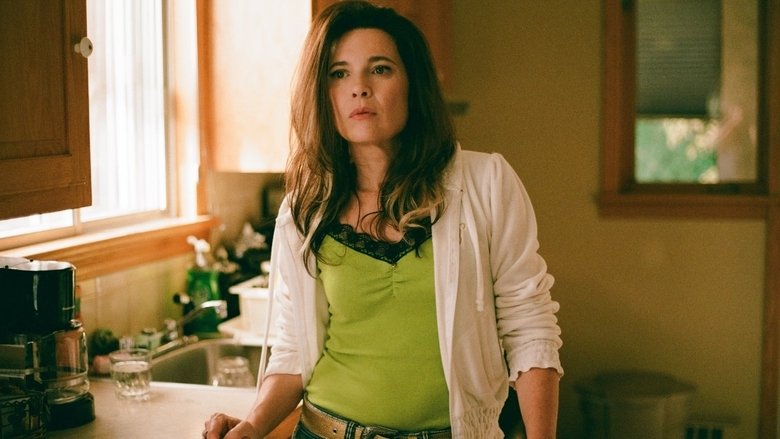
Anne Dorval
Motivation
Her primary motivation is an unconditional, albeit deeply complicated, love for her son. She is driven by a desperate hope that she can provide him with a stable life and save him from both the system and himself, clinging to the belief that a mother's love can conquer any obstacle.
Character Arc
Die begins as a fiercely optimistic fighter, determined to succeed where institutions have failed with Steve. She endures his violence and their poverty with a scrappy, loud, and unwavering resolve. The introduction of Kyla gives her a period of hope and shared responsibility. However, the escalating chaos, a lawsuit, and Steve's suicide attempt erode her resilience, forcing her to confront the reality that her love cannot cure him. Her final decision to institutionalize Steve is an act of devastating surrender, transforming her from a defiant warrior into a heartbroken survivor of a battle she could not win.
Steve Després
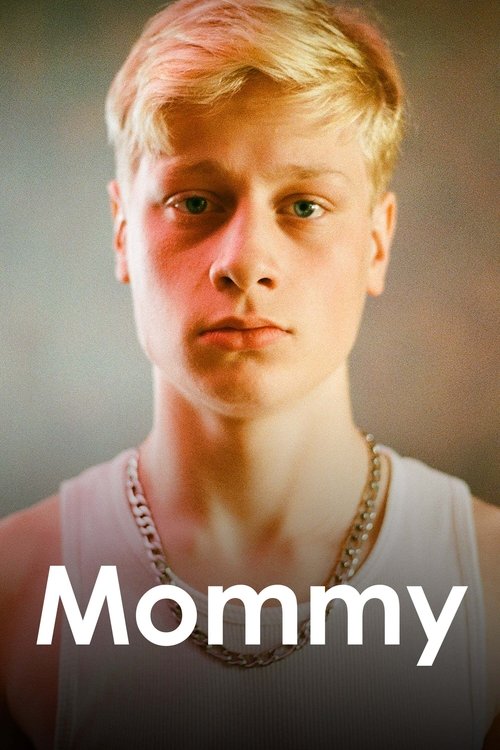
Antoine Olivier Pilon
Motivation
Steve is motivated by a desperate, almost Oedipal love for his mother and a yearning for a normal life. He craves her approval and affection above all else. His violent outbursts are often triggered by perceived threats to their bond or his own feelings of inadequacy and frustration with his inability to fit in.
Character Arc
Steve is a volatile whirlwind of extremes: charming and affectionate one moment, terrifyingly violent the next. His arc is not one of traditional development but of cyclical hope and destruction. With Kyla's help, he finds a brief period of stability where he can learn and connect with others. However, his underlying condition and inability to control his impulses always resurface, leading to self-sabotage (like the karaoke fight) and self-harm. His journey is tragic because he is aware of the pain he causes and desperately wants to be better, but is ultimately trapped by his own mind, leading to his final, ambiguous act of escape.
Kyla
Suzanne Clément
Motivation
Initially, her motivation is unclear, but it's implied she is recovering from a personal trauma (some interpretations suggest the loss of a child). She is drawn to the raw emotional honesty of Die and Steve's life, finding in them a way to reconnect with her purpose as a teacher and caregiver, which in turn helps her heal her own emotional wounds.
Character Arc
Kyla is introduced as a mysterious, withdrawn neighbor suffering from a stutter. By stepping into Die and Steve's chaotic world, she begins her own healing journey. Tutoring Steve gives her purpose, and her calm, steadying presence acts as an emotional glue for the dysfunctional family. She regains her confidence and her voice, becoming a vital support system. However, she is ultimately a temporary fixture. Her decision to move away with her own family signals the end of the trio's fragile utopia and her return to her own life, leaving Die and Steve to face their fate alone.
Symbols & Motifs
The 1:1 Aspect Ratio
The square frame symbolizes confinement, claustrophobia, and emotional intensity. It forces the viewer into the characters' personal, constricted world, eliminating distractions and focusing entirely on their raw emotions. It mirrors the psychological state of the characters, trapped by their circumstances. The two moments where the frame expands to widescreen symbolize freedom, hope, and the possibility of a different, fuller life.
The 1:1 aspect ratio is used for the vast majority of the film. The most iconic scene involving this is when Steve, riding his skateboard to Oasis's "Wonderwall," physically pushes the sides of the screen outward, expanding the frame to 1.85:1 to signify a moment of pure euphoria and freedom. The frame constricts again after the hope of their situation is shattered by a lawsuit, and widens a final time during Die's imagined future for Steve.
The "Mommy" Necklace
The gold necklace Steve gives to Die is a complicated symbol of his love, devotion, and troubled nature. It is a heartfelt, genuine gesture of affection and an acknowledgment of her central role in his life. However, because it was stolen, it also represents his impulsivity and the criminality that is intertwined with his actions, foreshadowing how his destructive behavior ultimately undermines his good intentions.
Steve presents the stolen necklace to Die as a gift. Her initial reaction is anger at his stealing, which hurts him deeply as he was trying to show his love. The object becomes a tangible representation of their fraught dynamic: his desperate need for her approval and her struggle to manage his chaotic behavior.
Pop Music / Mixtape
The pop-centric soundtrack, presented as a mixtape from Steve's deceased father titled "Die & Steve Mix 4ever," symbolizes nostalgia, emotional release, and a connection to a happier past. The songs (like Céline Dion, Dido, Oasis, Lana Del Rey) are not just background music; they are an integral part of the characters' emotional expression, often providing an outlet for feelings they cannot otherwise articulate.
Music is a constant presence. The "Wonderwall" sequence is a moment of liberation. A karaoke scene where Steve sings goes disastrously wrong, leading to a fight. Ludovico Einaudi's "Experience" scores Die's fantasy of Steve's future. The film ends with Lana Del Rey's "Born to Die" as Steve makes a final, desperate bid for freedom.
Memorable Quotes
On s'aime encore, right? ... C'est ça qu'on fait de mieux, buddy.
— Steve and Diane Després
Context:
This line is spoken during a moment of calm, reinforcing their deep bond amidst the surrounding chaos. It serves as a mantra for their relationship throughout the film.
Meaning:
Translated as, "We still love each other, right? ... That's what we're best at, buddy." This exchange encapsulates the core of their relationship. Despite the constant fighting, violence, and pain, their love for each other is the fundamental, unbreakable truth they always return to. It's their greatest strength and, in a way, the source of their intense conflict.
Les sceptiques seront confondus.
— Diane Després
Context:
This is said by Die early in the film, after she brings Steve home. It reflects her determination to make things work, despite being warned by an administrator from Steve's previous institution about the difficulties ahead.
Meaning:
Translated as, "Skeptics will be confounded." This is Die's defiant declaration of hope. It's her promise to herself and the world that she and Steve will succeed against all odds, proving wrong everyone who has given up on them. It represents her fighting spirit and initial optimism.
Loving people doesn't save them.
— Kyla
Context:
Kyla says this to Die during a conversation, offering a sobering perspective on their situation. It challenges Die's entire worldview and hints at the difficult decision she will eventually have to make.
Meaning:
This line delivers one of the film's most painful truths. It counters Die's central belief that her love is all Steve needs. Kyla, as a more objective observer, understands that love alone cannot conquer severe mental illness or systemic failure, foreshadowing the film's tragic conclusion.
I'm so fucking sad because you deserve so much better than a fucking retard like me! So.. What matters is.. I'm thinking about you here, and I love you.
— Steve Després
Context:
This is from a voicemail Steve leaves for Die from the hospital after she has committed him under the S-14 law. She misses the call while working, and he delivers this apology just before his final attempt to escape.
Meaning:
This quote from Steve's final voicemail to his mother is heartbreaking. It reveals his deep self-awareness and remorse for the pain he has caused her. It shows that beneath the rage and violence, he is a boy who loves his mother profoundly and understands the burden he has become, making his subsequent actions even more tragic.
Philosophical Questions
Is love enough to save someone?
The film relentlessly explores this question. Die operates on the conviction that her fierce, unconditional love for Steve is the one force that can save him. She sacrifices her job, her financial stability, and her personal safety for him. However, the narrative tragically concludes that love, while powerful, has its limits. It cannot cure Steve's severe behavioral disorders or protect him from a society unequipped to handle him. Kyla's line, "Loving people doesn't save them," serves as the film's heartbreaking thesis.
What is the nature of true freedom?
"Mommy" contrasts different forms of freedom. There is the literal freedom from institutional walls, which Steve constantly seeks. But the film is more interested in emotional and psychological freedom. The characters are confined by poverty, trauma, and their own intense emotions. The iconic scene where Steve pushes the screen open to a wide aspect ratio is a moment of pure, transcendent freedom—a temporary escape from their claustrophobic reality. The film suggests that true freedom might be fleeting, existing only in brief, euphoric moments rather than as a permanent state, especially for those trapped by circumstances beyond their control.
Alternative Interpretations
While the film's narrative is largely straightforward, the ending allows for some ambiguity and alternative interpretations.
The Final Scene: Suicide or Escape?
The most debated element is Steve's final action. As attendants rush toward him, he runs and leaps toward a window. The screen cuts to black before his fate is shown, accompanied by Lana Del Rey's "Born to Die." One interpretation is that this is a definitive act of suicide—a final, tragic bid for freedom from a life of confinement and mental anguish. Another reading suggests it is simply an escape attempt, consistent with his impulsive and defiant character. In this view, the outcome is irrelevant; the act itself is what matters—a final, desperate assertion of his will to be free, whether in life or death. The choice of song heavily implies a fatalistic conclusion, suggesting that no matter the outcome of the jump, his life was destined for a tragic end.
Kyla's Backstory
The film intentionally leaves Kyla's past mysterious. A common interpretation among viewers is that her trauma and stutter stem from the loss of her own son. This would explain her immediate, powerful connection to Steve and her empathy for Die's struggle. Her eventual departure, while necessary for her own family, could then be seen as an act of self-preservation, unable to endure the pain of losing another child figure.
Cultural Impact
"Mommy" was met with widespread critical acclaim upon its release, solidifying Xavier Dolan's reputation as a major international filmmaker at the young age of 25. It received a lengthy standing ovation and the Jury Prize at the 2014 Cannes Film Festival, a significant honor. The film was praised for its raw emotional power, powerhouse performances by its three leads, and its bold, innovative visual style—particularly the use of the 1:1 aspect ratio. Critics celebrated it as a more mature work than Dolan's previous films, taking the recurring theme of the mother-son relationship from his debut "I Killed My Mother" and exploring it from the mother's perspective with greater depth.
Audiences responded strongly to the film's emotional intensity, with many viewers and critics citing the aspect ratio shift during the "Wonderwall" scene as a moment of pure cinematic euphoria. The film became a box office success, especially in Quebec and France, proving that artistically challenging cinema could find a wide audience. While it did not secure an Oscar nomination, it won numerous other accolades, including nine Canadian Screen Awards and a César Award for Best Foreign Film. "Mommy" is often cited as one of the best films of its year and a landmark in modern Canadian cinema, known for its unflinching emotional honesty and stylistic bravado.
Audience Reception
Audience reception for "Mommy" was largely positive, though often polarized by its intense emotional style. Many viewers praised the film as a masterpiece, hailing its raw power, authenticity, and the breathtaking performances of the lead actors, particularly Anne Dorval and Antoine Olivier Pilon. The innovative use of the 1:1 aspect ratio was a major point of discussion, with most audiences finding it to be an effective tool for creating intimacy and claustrophobia. The moment the screen widens during the "Wonderwall" sequence was frequently cited as a highlight, earning gasps and applause in theaters.
Points of criticism often centered on the film's relentless intensity and what some perceived as melodrama. The constant shouting and emotional volatility were overwhelming for some viewers. The film's 139-minute runtime was also seen as lengthy by some. Despite these criticisms, the overall verdict from audiences was that "Mommy" is a profoundly moving, unforgettable, and visually stunning cinematic experience that provokes a strong emotional response.
Interesting Facts
- The film's distinctive 1:1 aspect ratio was a deliberate choice by director Xavier Dolan and cinematographer André Turpin. Dolan stated it creates a more intimate, portrait-like framing, forcing the audience to focus on the characters' faces without distraction.
- The idea for the film was sparked when Dolan worked with actor Antoine Olivier Pilon on a music video for the band Indochine and was inspired by his talent.
- The fantasy sequence of Steve's future was inspired by the Ludovico Einaudi track "Experience." Dolan conceived of the montage after hearing the song and built much of the film's emotional arc around that imagined scene.
- Xavier Dolan not only wrote and directed the film, but also edited it and served as a producer and costume designer.
- The film won the Jury Prize at the 2014 Cannes Film Festival, sharing the award with Jean-Luc Godard's "Goodbye to Language".
- Despite being a critical success and Canada's submission for the 87th Academy Awards, "Mommy" was not nominated for Best Foreign Language Film.
- Dolan has stated that while the mother-son dynamic is a recurring theme in his work, and his own mother is an inspiration, the character of Steve is not based on anyone he has ever known personally.
- The film was a significant box office success in its home province of Quebec, becoming the highest-grossing film there in 2014.
⚠️ Spoiler Analysis
Click to reveal detailed analysis with spoilers
Frequently Asked Questions
Explore More About This Movie
Dive deeper into specific aspects of the movie with our detailed analysis pages
Comments (0)
No comments yet. Be the first to share your thoughts!