Wolf Children
A poignant animated drama, this film tenderly explores the fierce, unconditional love of a mother raising two half-wolf children, painting a beautiful yet melancholic portrait of family, identity, and the difficult choices we make.
Wolf Children

Wolf Children

おおかみこどもの雨と雪

"Love wildly."

21 July 2012 Japan 117 min ⭐ 8.2 (2,380)
Director: Mamoru Hosoda
Cast: Haru Kuroki, Yukito Nishii, Aoi Miyazaki, Takao Osawa, Momoka Ohno
Drama Animation Family Fantasy
Motherhood and Parenthood Identity and Self-Discovery Nature vs. Civilization Family and Letting Go
Box Office: $55,262,158

Overview

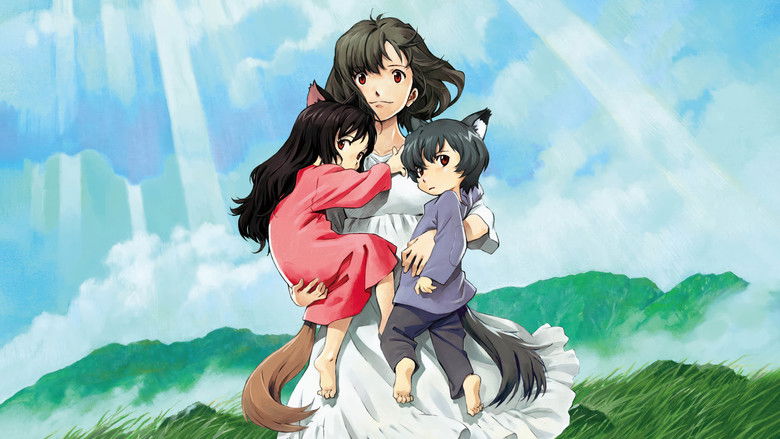
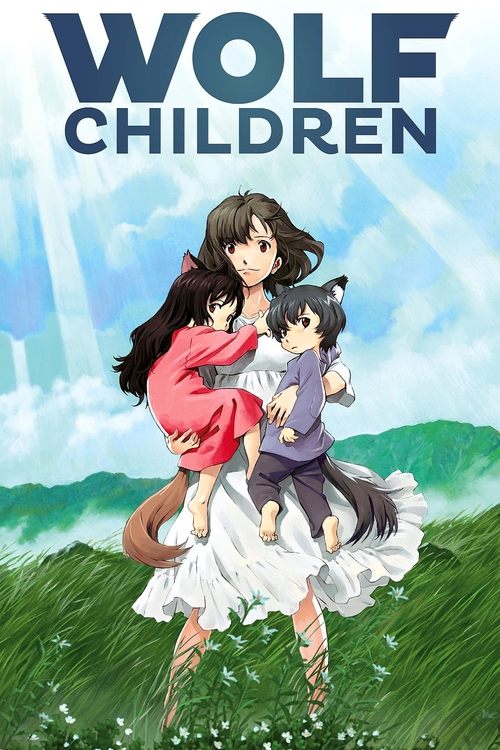
"Wolf Children" tells the story of Hana, a college student who falls in love with a mysterious man who is secretly a werewolf. They have two children, Yuki and Ame, who inherit their father's ability to transform into wolves. After the sudden death of their father, Hana is left to raise her extraordinary children alone.

Faced with the challenges of keeping her children's true nature a secret in the city, Hana decides to move to a secluded house in the countryside. There, she hopes to provide a safe and nurturing environment where Yuki and Ame can discover for themselves whether they belong to the human world or the world of wolves. The film follows the family over thirteen years as they navigate the joys and hardships of their unique situation, and as the children grow and begin to forge their own distinct paths in life.

Core Meaning

The core meaning of "Wolf Children" revolves around the profound and unconditional love of a mother and the universal journey of raising children to find their own identity. Director Mamoru Hosoda wanted to explore the theme of "parent and child," portraying the thirteen-year journey of a single mother, Hana, as she raises her half-wolf, half-human children. The film emphasizes that parenting is a challenging and often isolating experience, and by using the fantastical element of wolf children, Hosoda makes this universal struggle relatable to a wider audience. The central message is that a parent's role is to provide a loving and supportive environment that allows their children the freedom to choose their own path in life, even if it leads them away from their family. Hana's ultimate acceptance of her children's divergent choices—Yuki as a human and Ame as a wolf—underscores the idea that true love lies in letting go and respecting the individual identities of one's children.

Thematic DNA

Motherhood and Parenthood 35%
Identity and Self-Discovery 30%
Nature vs. Civilization 20%
Family and Letting Go 15%

Motherhood and Parenthood

The film is a heartfelt depiction of the challenges and rewards of motherhood, particularly single motherhood. Hana's unwavering dedication to her children, from her struggles to care for them in the city to her efforts to build a new life in the countryside, is the emotional core of the story. The narrative highlights the sacrifices she makes and the strength she finds in raising her unique children, showcasing the universal themes of maternal love and perseverance.

Identity and Self-Discovery

A central theme is the journey of Yuki and Ame as they grapple with their dual nature as both human and wolf. This internal conflict serves as a metaphor for the broader adolescent struggle of finding one's place in the world. Yuki initially embraces her wolf side but later chooses to live as a human to fit in with her peers, while Ame, who is initially timid, finds his true self in the natural world as a wolf. Their diverging paths illustrate the different ways individuals come to understand and accept their identities.

Nature vs. Civilization

The film constantly explores the tension between the human world (civilization) and the natural world. This is most evident in the choices Yuki and Ame make. Yuki chooses to integrate into human society, while Ame is drawn to the wilderness and his wolf instincts. The move from the bustling city to the serene countryside also highlights this theme, suggesting that a connection to nature is essential for the children's development and for Hana to raise them freely.

Family and Letting Go

"Wolf Children" beautifully captures the bittersweet reality of family life: that children grow up and eventually leave the nest. Hana's journey culminates in her acceptance of her children's decisions to follow their own paths, even if it means they will be separated. The film portrays this separation not as a loss, but as a natural and necessary part of life and a testament to her success as a mother in raising independent individuals.

Character Analysis

Hana

Aoi Miyazaki

Archetype: The Caregiver
Key Trait: Resilient

Motivation

Hana's primary motivation is to create a safe and loving environment for her children where they are free to choose their own identities. She is driven by the promise she made to their father to raise them well and her deep, unconditional love for them.

Character Arc

Hana begins as a young, optimistic college student who falls in love and embraces a future that is far from ordinary. After the tragic death of her partner, she is thrust into the role of a single mother to two extraordinary children. Her arc is one of incredible resilience and unwavering love. She transforms from a city girl into a self-sufficient farmer, all for the sake of her children. Her journey culminates in her ability to let her children go, accepting their individual paths with a mix of sorrow and pride, having fulfilled her promise to raise them well.

Yuki

Haru Kuroki (teen), Momoka Ohno (child)

Archetype: The Innocent
Key Trait: Adaptable

Motivation

Yuki's main motivation is the desire to belong and be accepted by her human peers. She fears being seen as different and ostracized, which drives her to hide her wolf identity and conform to societal norms.

Character Arc

As a child, Yuki is wild, energetic, and fully embraces her wolf nature. However, as she starts school and desires to make human friends, her arc shifts towards suppressing her wolf side to fit into society. She learns to be more demure and 'girly' to be accepted. Her journey is about learning to balance her dual identity and finding acceptance for who she is, which she ultimately finds in her friendship with Sohei, to whom she reveals her secret. By the end, she chooses to live as a human and moves to a dormitory for middle school.

Ame

Yukito Nishii (teen), Amon Kabe (child)

Archetype: The Loner
Key Trait: Introspective

Motivation

Ame's motivation shifts from a fear of his own nature to a deep connection with the forest and a sense of responsibility to protect it. He is driven by his instincts and the calling of the wild, finding his true self in a world away from human civilization.

Character Arc

Ame starts as a timid and fearful child, often overshadowed by his boisterous older sister. He is initially scared of his wolf nature. However, after a near-drowning experience in the river, he becomes more confident in his wolf abilities and increasingly drawn to the natural world. His arc is a journey of finding strength and purpose in his wolf identity. He finds a mentor in an old fox and learns the ways of the wild, eventually choosing to leave his family to become the guardian of the forest.

Wolf Man (Father)

Takao Osawa

Archetype: The Lover
Key Trait: Enigmatic

Motivation

His primary motivation is his love for Hana and his desire to provide for his new family. He is also driven by his wolf instincts, which ultimately lead to his demise.

Character Arc

The Wolf Man's arc is brief but pivotal. He is depicted as a gentle and mysterious man who is the last of his kind. He falls in love with Hana and starts a family with her, sharing his secret and his world. His story is one of love and tragedy, as his untimely death while hunting for his family sets the entire narrative in motion. He appears to Hana in a vision later in the film, offering her comfort and reassurance that she has raised their children well.

Symbols & Motifs

Rain and Snow

Meaning:

Rain and snow symbolize the contrasting personalities and chosen paths of the two children, Ame (rain) and Yuki (snow). Their names, given to them based on the weather at the time of their birth, foreshadow their destinies. Ame, born on a rainy day, grows to be more introspective and connected to the wild, serious nature of the world. Yuki, born during a snowfall, is initially more energetic and cheerful, but later chooses the more structured and delicate life of a human.

Context:

The children's names and the weather associated with them are a recurring motif. The final storm in the film serves as a catalyst for both Ame and Yuki to fully embrace their chosen identities, with Ame leaving to become the guardian of the forest and Yuki solidifying her bond with her human friend, Sohei.

The Forest

Meaning:

The forest represents the wild, instinctual side of the children's nature. It is a place of freedom and self-discovery, but also of danger. For Ame, the forest becomes his home and his true calling, a place where he can fully be himself. It symbolizes a world separate from human society, governed by its own laws and rhythms.

Context:

Ame's increasing fascination with the forest throughout the film marks his journey away from the human world. He learns the ways of the wild from an old fox, his mentor, and eventually takes on the responsibility of protecting the forest, signifying his complete embrace of his wolf identity.

The Dilapidated House

Meaning:

The old, rundown house in the countryside that Hana and her children move into symbolizes a new beginning and the family's resilience. It is a space where they can be themselves without fear of judgment. The process of repairing and making the house a home parallels Hana's journey of building a new life for her family and her personal growth as a mother and an individual.

Context:

Upon arriving in the countryside, Hana works tirelessly to fix up the dilapidated house, learning to farm and becoming self-sufficient. This process not only provides a safe haven for her children but also allows her to connect with the local community and find her own strength and independence.

Memorable Quotes

お父さんは、私に花の咲くように笑う子に育って欲しいって言ってた。辛い時でも、笑っていれば大抵のことは乗り越えられるって。

— Hana

Context:

Hana shares this with the Wolf Man early in their relationship, explaining the origin of her name and her outlook on life. This moment establishes her character and foreshadows the incredible strength she will need to raise her children alone.

Meaning:

This quote, which translates to "My dad wanted me to be a child who was always smiling, like the flowers. Even when things got hard, to just keep smiling, even if the smile became forced," encapsulates Hana's core philosophy and the strength she inherited from her father. It explains her resilience and positive attitude in the face of immense hardship and becomes the guiding principle for her journey as a mother.

森を知らずに生きてきたから、何も教えられない。だから、野生で生きろ。世界を知れ。

— Hana

Context:

Hana says this to Ame as he is about to leave and become the new guardian of the mountain. It is a heartbreaking yet beautiful moment of letting go, where she gives him her blessing to fully embrace his identity, even though it means their separation.

Meaning:

This translates to "I have lived knowing nothing of the forest so there is nothing I can teach you. Go into the wild. Know the world." This quote is a powerful expression of Hana's selfless love and her ultimate acceptance of Ame's choice to live as a wolf. It shows her recognition that she cannot guide him on his chosen path and that she must let him go to find his own way.

Philosophical Questions

What does it mean to find one's true identity?

The film explores this question through the contrasting journeys of Yuki and Ame. It suggests that identity is not a fixed concept but a path that one chooses. Yuki's choice to be human and Ame's to be a wolf are presented as equally valid, emphasizing that finding oneself is a personal journey that may lead to different outcomes for different individuals. The film suggests that true identity is found not in conforming to expectations but in embracing the path that feels most authentic to oneself, whether that is within society or outside of it.

What is the nature of unconditional love?

"Wolf Children" portrays unconditional love primarily through the character of Hana. Her love for her children transcends their dual nature and the immense difficulties she faces. The film demonstrates that unconditional love means supporting a child's journey of self-discovery, even when their choices are difficult to understand or lead them away from their family. Hana's ultimate acceptance of Ame's departure and Yuki's decision to move away is the ultimate expression of this love—a love that prioritizes her children's happiness and fulfillment above her own desires.

Alternative Interpretations

While the film is primarily seen as a story about motherhood and identity, some viewers and critics have offered alternative readings. One interpretation views the children's dual nature as a metaphor for the struggles of mixed-race individuals or those from bicultural backgrounds, navigating the expectations and norms of two different worlds. Their journey to choose between their human and wolf sides can be seen as representing the process of forming a cultural identity.

Another interpretation, particularly from a queer theory perspective, suggests that the experience of being a werewolf can be read as a metaphor for being queer in a heteronormative society. The need to hide their true selves, the fear of being discovered and ostracized, and the eventual choice to either assimilate (like Yuki) or live authentically outside of societal norms (like Ame) can mirror the experiences of LGBTQ+ individuals. The father's need to keep his identity a secret and his tragic death when his wolf form is exposed in the city can be seen as representing the dangers of revealing one's true self in an intolerant society.

Cultural Impact

"Wolf Children" was met with widespread critical acclaim both in Japan and internationally, praised for its emotional depth, stunning animation, and poignant storytelling. It cemented Mamoru Hosoda's reputation as a master storyteller in the world of animation, often drawing comparisons to the works of Studio Ghibli. The film resonated with audiences for its realistic and touching portrayal of motherhood and family life, despite its fantastical premise. It has been lauded for its exploration of universal themes such as identity, loss, and the challenges of parenthood, making it accessible and relatable to a global audience. The film's success helped to establish Studio Chizu as a significant force in the anime industry. "Wolf Children" has also been the subject of academic and critical analysis, with discussions focusing on its themes of nature versus civilization, its metaphors for raising children who are 'different,' and its celebration of maternal strength.

Audience Reception

Audiences have overwhelmingly praised "Wolf Children" for its emotional and heartwarming story. Many viewers connect deeply with Hana's struggles and sacrifices as a single mother, finding her journey incredibly moving and inspiring. The film's beautiful animation and poignant musical score are also frequently highlighted as major strengths. The bittersweet ending often evokes strong emotional reactions, with many viewers finding it both sad and beautiful. Some points of criticism revolve around the ending, with a minority of viewers feeling that Ame's decision to leave at such a young age is abrupt or that Hana is left too alone. However, the general consensus is that the film is a masterpiece of animated storytelling that thoughtfully explores its themes of family, identity, and love.

Interesting Facts

  • The film was the first work of Studio Chizu, an animation studio founded by director Mamoru Hosoda in 2011.
  • Yoshiyuki Sadamoto, known for his work on "Nadia: The Secret of Blue Water" and "Neon Genesis Evangelion," was the character designer for the film.
  • Hosoda was motivated to create the film after seeing people around him become parents and observing their transformation.
  • "Wolf Children" won the 2013 Japan Academy Prize for Animation of the Year.
  • The film was the second-highest-grossing film in Japan on its opening weekend, surpassing Pixar's "Brave."
  • Many of the buildings depicted in the film, including Hana's rural home, are based on real-life locations in Japan.

⚠️ Spoiler Analysis

Click to reveal detailed analysis with spoilers

Frequently Asked Questions

Explore More About This Movie

Dive deeper into specific aspects of the movie with our detailed analysis pages

Comments (0)

Leave a comment

No comments yet. Be the first to share your thoughts!