Full spoilers follow.
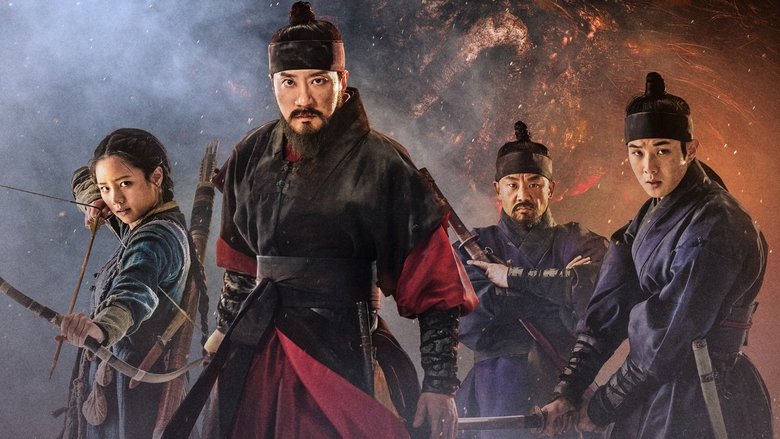
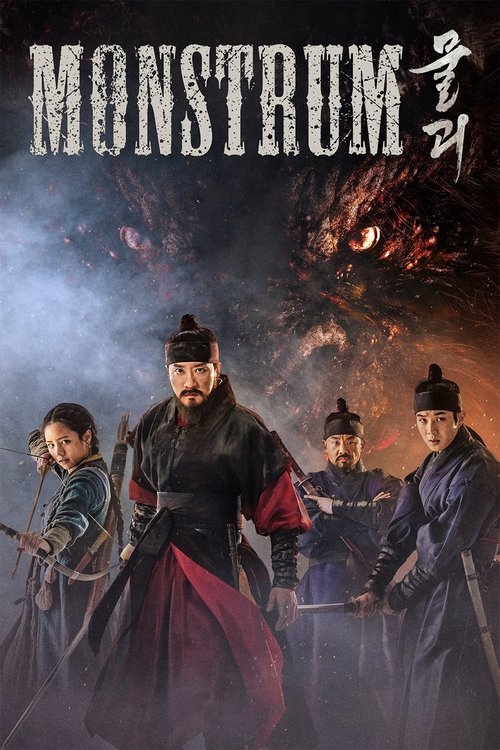
The setup. In 1527 Joseon, plague spreads and rumor holds that a beast called the Monstrum is killing people and passing the disease through its bite. King Jungjong, unable to trust his own court, recalls General Yoon Gyeom from rural retirement. Yoon arrives with his daughter Myung and his right hand Sung-han, and the young royal guard Heo joins the investigation.
The political turn. The panic is not incidental — it is being farmed. The king's adversary Sim Woon stands to benefit from the turbulence, and the film progressively reveals that the crisis is being shaped and amplified by the court faction positioning itself as the kingdom's only salvation. The monster hunt becomes a counter-conspiracy investigation: the beast is a cover story running on top of a coup, and the plague panic is the mechanism by which a population is being steered toward accepting a change of power.
The origin reveal. The trail leads to an old man who takes Yoon's group to Jojun Hall, where a former king kept his rarest beasts — and where the old man's job had been to feed the beast. This is the film's thesis made literal: the creature terrorizing the capital is a product of the palace, maintained by royal hands long before it was blamed on nature or heaven. The monster escaped from the institution that is now claiming to protect people from it.
The climax. Sung-han builds an explosive trap, and Yoon lures the Monstrum into it, detonating the charge at what plays as the cost of his own life. The creature is destroyed. Yoon, however, survives — a turn the film does not seriously attempt to justify, and the single most argued-over choice in it.
The epilogue. Three years later, Myung and Heo are married, and Yoon and Sung-han head off into the mountains together. All four principals get a happy ending. Detractors read this as the screenwriters pulling a rabbit out of a hat, breaking the film's gloomy fantasy mood for a stereotypical resolution that contradicts the logic of the scene before it.
What the ending clarifies retroactively. The film's emotional loyalty was never to the throne. Jungjong is a peripheral, faintly pitiable figure; the court is where rot lives; and the resolution restores nobody to office. Yoon does not return to service — he returns to the mountains, the same withdrawal he began the film in, now chosen freely rather than forced. The ending also recontextualizes the historical hook: the Annals record that the king ordered the monster hunted and it came to nothing. The film's answer is that the hunt did succeed, but by men acting outside the court, which is exactly why the official record would show failure. The story that survives as history is the one power was willing to write down.