Warning: full plot discussion.
The film's engine is a death that happens before most of the story: Crown Prince Lee Young takes his own life. That suicide is the hinge on which everything turns. It removes the only heir with a conscience, it summons Lee Chung home from his hostage-exile in Qing, and it retroactively reframes the outbreak — the crown prince died because he understood what was coming and what his court intended to do about it. Everything Lee Chung subsequently learns is, in effect, his brother's unfinished investigation.
The conspiracy that emerges is not really about the Night Demons. Kim Ja-joon, the Minister of War, is working to convince the royal family that Lee Chung is not the rightful heir, clearing his own path to power. The plague is his cover and his instrument: chaos in the provinces, panic at the port, and a paralyzed court all serve a man whose army is the only functioning institution left. This is the film's central reveal — the outbreak was survivable; the ministry was not. The horror plot and the succession plot are the same plot, and recognizing that is what converts the film from a monster movie into a political one.
Lee Chung's arc inverts across the runtime. He arrives as the man described in the opening — arrogant, uninterested in Joseon, planning to collect a bride and return to China. The turning point is not a single revelation but an accumulation: the archer Deok-hee and the defenders of Jemulpo fighting without orders, the ordinary dead piling up, and the discovery of what his brother knew. The prince who wanted no throne becomes the only person willing to stand between the kingdom and the night, which is precisely the qualification the film argues a ruler needs.
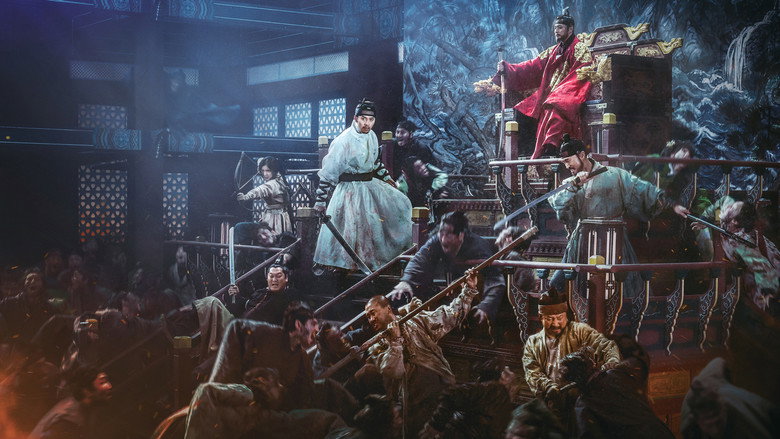
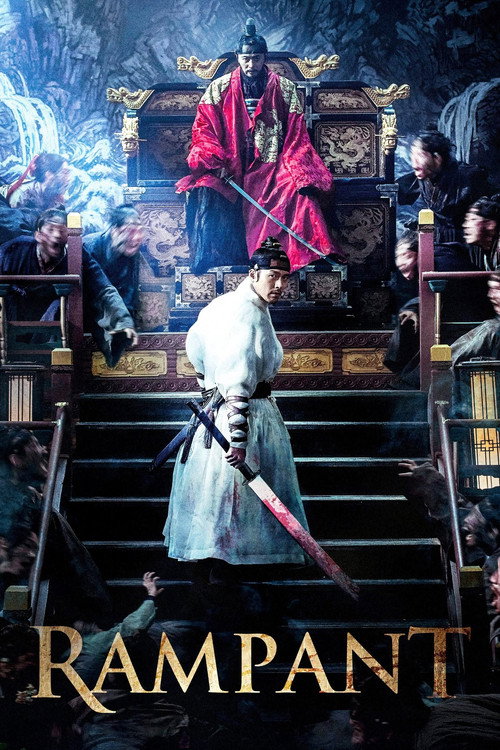
The climax delivers the confrontation the whole structure has been building toward: Lee Chung against Kim Ja-joon, swordsman against schemer, staged amid the Night Demons that the minister's ambition helped unleash. Reviewers who fault the sagging middle act generally concede that this finale lands — it is where the film's three competing modes finally resolve into one image. The victory, though, is deliberately pyrrhic in flavor: what Lee Chung wins is a devastated country and the burden he spent the entire film refusing, and the ending reads as an inheritance rather than a triumph.
What becomes clear only in retrospect: the Night Demons were never the antagonists. They are subjects — Joseon's own people, consumed by a state that had already abandoned them to Qing suzerainty and courtly self-interest. The title's "rampant" describes the corruption as much as the contagion. And Lee Young's suicide, the film's first fact, turns out to have been its thesis: in a kingdom this compromised, the honorable heir could see no way to live in it, and it takes the dishonorable one — the exile, the cynic, the killer — to fight for it.