Skip to content
Moon Embracing the Sun
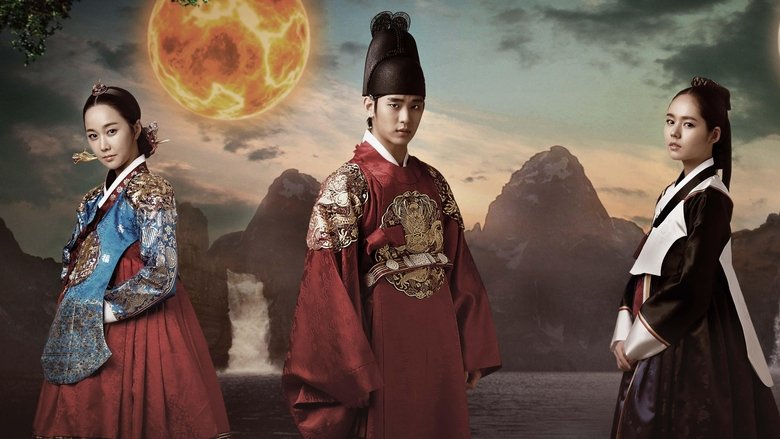
A celestial Joseon fantasy-melodrama steeped in heartbreaking yearning, where star-crossed lovers orbit like a wounded sun and a forgotten moon, veiled in royal palace shadows and illuminated by the rekindling warmth of unbreakable destiny.
Moon Embracing the Sun

Moon Embracing the Sun

해를 품은 달

"Don't come close! But don't go far..."

04 January 2012 — 15 March 2012 South Korea 1 season 20 episode Ended 7.9 (236)

Cast: Kim Soo-hyun, Yeo Jin-goo, Han Ga-in, Kim You-jung, Jung Il-woo

Drama Sci-Fi & Fantasy Destiny vs. Free Will and Political Manipulation Cosmic Balance and Duality (Sun and Moon) Grief, Memory, and Enduring Love The Burden and Isolation of Sovereign Power Familial Loyalty vs. Moral Justice

Overview

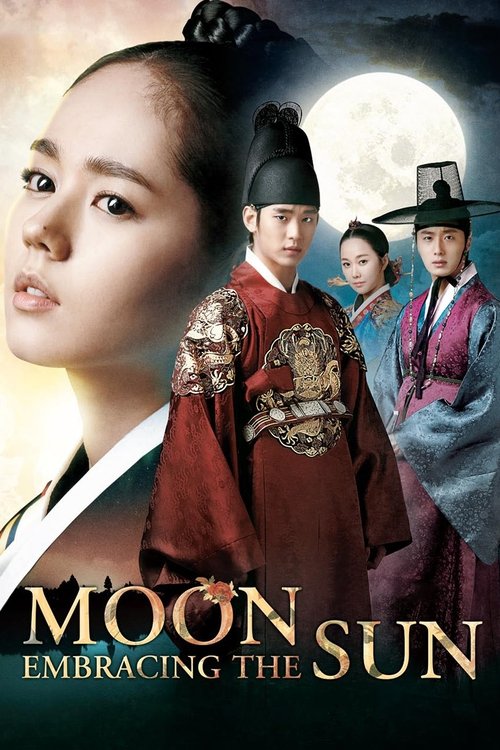
Set against the backdrop of a fictional Joseon Dynasty royal court, Moon Embracing the Sun (2012) chronicles the epic, ill-fated romance between Crown Prince Lee Hwon and the gifted noblewoman Heo Yeon-woo. Chosen as the Crown Princess after capturing Hwon's heart with her intellect and gentle grace, Yeon-woo becomes the target of a treacherous palace coup orchestrated by the ruthless Queen Dowager clan, who deploy black magic to afflict her with an incurable ailment, forcing her expulsion and apparent death.

Years later, Lee Hwon has ascended to the throne as a sharp-witted yet deeply sorrowful and bitter monarch who refuses to consummate his marriage with the politically appointed queen. Meanwhile, Yeon-woo lives without her past memories, having been secretly salvaged from her grave and raised as a female shaman named Wol ("Moon") by the court's high shaman. When royal intrigue and persistent physical ailments bring the king into contact with Wol—summoned to act as a living human talisman (Aekbaji mudang) to absorb the king’s spiritual misfortune—the two are drawn into an inexorable gravitational pull.

As Hwon investigates the strange circumstances surrounding the death of his former love, he is forced to confront dark political conspiracies within his court, the divided loyalties of his beloved half-brother Prince Yang-myung, and the hidden sacrifices made across royal bloodlines. The series weaves palace power struggles, ancient shamanism, and fated romance into a 20-episode journey about reclaiming stolen truth and identity.
Core Meaning

The central thesis of Moon Embracing the Sun is that authentic righteousness and predestined love cannot be extinguished by human tyranny, dark deceit, or systemic corruption. Through the cosmic allegory of the Sun (the King/Ruler) and the Moon (the Queen/Hidden Truth), the series asserts that earthly power is legitimate only when aligned with moral integrity, transparency, and sacrificial devotion to the people. Deceit may temporarily eclipse the light, but the moral arc of destiny inevitably forces hidden truths into the open, proving that love and cosmic balance will always conquer malevolence.

Thematic DNA

Destiny vs. Free Will and Political Manipulation 30%
Cosmic Balance and Duality (Sun and Moon) 25%
Grief, Memory, and Enduring Love 20%
The Burden and Isolation of Sovereign Power 15%
Familial Loyalty vs. Moral Justice 10%

Destiny vs. Free Will and Political Manipulation

Explores whether human contrivances such as dark shamanic spells, political murders, and dynastic schemes can alter celestial fate. While conspirators manipulate human lives, fate consistently redirects Hwon and Yeon-woo back together, demonstrating that destiny ultimately triumphs over human machinations.

Cosmic Balance and Duality (Sun and Moon)

Anchored in the Eastern cosmological lore that the Joseon kingdom cannot endure two suns (Hwon vs. Yang-myung) or two moons (Yeon-woo vs. Bo-kyung). The show examines how balance must be painfully restored through truth and sacrifice.

Grief, Memory, and Enduring Love

Hwon’s eight-year unyielding mourning and Wol’s involuntary amnesia demonstrate that genuine emotional resonance resides deeper than cognitive recall. Even without her memories, Wol instinctively weeps for Hwon and writes with the same cadence as Yeon-woo.

The Burden and Isolation of Sovereign Power

Deconstructs the palace as a golden prison. Hwon’s kingship requires constant hyper-vigilance, emotional deprivation, and strategic distrust of his ministers, demonstrating the heavy toll paid by enlightened rulers.

Familial Loyalty vs. Moral Justice

Highlighted through Princess Min-hwa’s tragic complicity in the curse on Yeon-woo out of selfish love for Yeom, forcing Hwon to choose between shielding his blood relative and executing righteous royal justice.

Character Analysis

Lee Hwon

Kim Soo-hyun (young: Yeo Jin-goo)

Archetype: The Sovereign Hero / Tragic King Key Trait: Unyielding intellectual resolve and fierce romantic devotion.

Motivation

Evolves from seeking adolescent personal happiness to pursuing political sovereignty, unearthing truth, and establishing righteous order.

Character Arc

Begins as an idealistic, rebellious Crown Prince; transforms into a sharp-tongued, melancholic, hyper-rational monarch fighting treacherous ministers and reclaiming his lost queen.

Heo Yeon-woo / Wol

Han Ga-in (young: Kim You-jung)

Archetype: The Enlightened Maiden / Resilient Innocent Key Trait: Profound empathy, philosophical wisdom, and quiet dignity.

Motivation

Shifts from seeking peaceful spiritual survival to recovering her identity and shielding Hwon from dynastic collapse.

Character Arc

From a prodigiously wise noble girl chosen as Crown Princess to an amnesiac shaman outcast, and finally restoring her crown as the rightful Joseon Queen.

All 5 characters and cast

Symbols & Motifs

The Sun and the Moon

Meaning:

The overarching mythological motif. The Sun represents the reigning king, supreme power, and daylight consciousness, while the Moon represents the legitimate queen, hidden truth, and spiritual wisdom. An eclipse reflects moral darkness and usurped positions in the palace.

Context:

Framing the cosmic and political struggle of the entire Joseon court, defining the roles of Hwon, Yang-myung, Yeon-woo, and Bo-kyung throughout the narrative.

The Phoenix Hairpin (The Moon Embracing the Sun / Bong-jam)

Meaning:

A dual-crafted hairpin featuring a white jade moon cradling a red carved sun. It serves as irrefutable physical proof of true identity and undying royal betrothal.

Context:

Gifted by Crown Prince Lee Hwon to Yeon-woo before her supposed death, preserved across the narrative to ultimately confirm Yeon-woo's survival.

The Talisman Shaman (Aekbaji Mudang)

Meaning:

A human spiritual sponge placed beside the sleeping monarch to absorb his physical pain, nightmares, and curses. It symbolizes Wol's invisible, self-sacrificing devotion and the court's exploitation of sacred powers.

Context:

Utilized when Wol is brought into King Hwon's private bedchambers at night to secretly absorb his spiritual afflictions.

Letters and Calligraphy

Meaning:

Intellectual signatures and tangible fragments of past truth that transcend physical separation and amnesia.

Context:

Yeon-woo’s exquisite literary essays and secret correspondence written before her death remain preserved, serving as physical evidence that dismantles the illusion of her demise.

Yellow Umbrellas and Enclosed Palanquins

Meaning:

Visual motifs denoting isolation, protective veils, hidden identities, and clandestine romance.

Context:

Used during secret rendezvous, transitions between the palace and outside world, and under heavy court surveillance.

Memorable Quotes

전하께서 저를 기억하지 못하듯, 저 또한 전하를 기억하지 못합니다... 허나 소인의 마음에 전하의 그림자가 깃들어 있사옵니다.
— Wol / Heo Yeon-woo

Context

Episode 8; spoken during Wol’s nightly watch as an Aekbaji talisman shaman beside the sleeping King.

Meaning

Highlights that the spiritual resonance of their souls transcends Wol's conscious amnesia and cognitive memory loss.

내 마음에 품은 세자빈은 오직 연우, 너 하나뿐이다.
— Crown Prince Lee Hwon

Context

Spoken in Episode 4 to Yeon-woo and echoed throughout the series as an indelible promise.

Meaning

Hwon's lifelong romantic vow that establishes his absolute refusal to love or consummate his marriage with Queen Bo-kyung.

All 5 quotes

Episode Highlights

Two Suns and a Moon

S1E1

Introduces the shamanic prophecy of two suns and two moons, depicts the political assassination of Prince Ui-seong, and shows the initial whimsical meeting between young Hwon and young Yeon-woo at the royal palace.

Significance:

Establishes the political factions and supernatural stakes of the entire narrative arc.

Fallen Moon

S1E5

Under a dark spell cast by Nok-young at Great Queen Dowager Yoon’s behest, Yeon-woo falls gravely ill, is stripped of her crown princess title, and supposedly dies in her father’s arms before being buried.

Significance:

Acts as the central tragedy that fractures the Joseon court and initiates the eight-year time jump.

The Shaman Who Absorbs Adversity

S1E8

Wol is placed in the King’s bedchamber as a silent human talisman to absorb evil spirits while he sleeps. Hwon wakes suddenly and pins her against the bed in shock.

Significance:

Marks the adult leads' intimate reconnection and ignites Hwon’s obsession with uncovering Wol’s true identity.

Why Am I Dead?

S1E14

Subjected to brutal torture and confinement, Wol suddenly experiences intense flashbacks triggered by royal memories and realizes that she is Heo Yeon-woo.

Significance:

Serves as the dramatic memory recovery that shifts the heroine from a passive victim to an active agent in reclaiming her fate.

The True Identity of the Moon

S1E16

King Lee Hwon uncovers the full truth regarding Yeon-woo’s fake death, her handwriting, and the phoenix hairpin, breaking down in inconsolable tears inside the secret chamber.

Significance:

Ranked among the highest-rated Korean TV broadcasts, sealing Kim Soo-hyun's status with tour-de-force dramatic acting.

Rebellion

S1E19

Lord Yoon Dae-hyung launches a military coup, seemingly aided by Prince Yang-myung, who marches into the palace courtyard and draws his sword against King Hwon.

Significance:

The thrilling climax where royal loyalties are tested before the ultimate trap is sprung on the corrupt faction.

The Moon Embracing the Sun

S1E20

The coup is crushed, Yang-myung sacrifices himself to eliminate future factional strife, Queen Bo-kyung takes her own life, and Hwon and Yeon-woo are wed at last.

Significance:

Delivers emotional catharsis, restoring cosmic and political harmony to the Joseon kingdom.

Philosophical Questions

Is human destiny preordained by celestial will, or forged through personal moral choices?

The drama continually interrogates whether Hwon and Yeon-woo were destined by cosmic design or whether their survival was earned through resilience, intellect, and active sacrifice.

Can justice truly exist when enforcing the law necessitates destroying one's own family?

Explored through Hwon's heart-wrenching realization that punishing the conspiracy requires exposing and exiling his beloved sister, Princess Min-hwa.

What constitutes the true essence of love: possession or selfless release?

Contrasted through Prince Yang-myung’s willingness to let Yeon-woo go versus Bo-kyung’s desperate, destructive clinging to an empty crown.

Alternative Interpretations

The Political Allegory of Illegitimacy vs. Rightful Rule: Some political commentators and critics read the series as a socio-political critique of structural inequality in Korean history. Prince Yang-myung’s eternal disenfranchisement due to his concubine mother's lineage critiques how rigid pedigree systems destroy exceptional talent and force virtuous leaders into tragic margins.

Full ending explanation

Cultural Impact

Broadcast in early 2012, Moon Embracing the Sun revolutionized modern Korean historical television by pioneering the Fusion Sageuk Romance subgenre at mainstream scale. Before this series, historical dramas tended to fall into either rigid, highly academic historical chronicles (traditional daehaguk) or fast-paced martial epics. By infusing Korean shamanism, romantic fantasy tropes, and idol-adjacent younger casting with high-stakes palace intrigue, it broadened the sageuk viewership base across younger and international demographics.

The drama propelled Kim Soo-hyun into superstardom throughout Asia, directly paving the way for his mega-hit My Love from the Star (2013). It was adapted into a stage musical in South Korea and licensed across dozens of international markets.

Audience Reception

Critical Acclaim: Praised unanimously for its gripping early episodes (1–6), the stellar performances of the child actors (Yeo Jin-goo and Kim You-jung), dynamic pacing, and Kim Soo-hyun's emotional performance.

Points of Criticism: Some contemporary critics and viewers noted pacing lulls in the middle act (episodes 9–13) where Yeon-woo's amnesia dragged out. A subset of viewers felt Han Ga-in’s portrayal of Wol was somewhat stiff compared to the youthful vivacity established by Kim You-jung, though others defended her quiet, melancholic restraint given the character's shamanic trauma.

Overall Verdict: Regarded as an essential, genre-defining classic of modern Korean television with an outstanding cultural footprint and an aggregate approval rating above 90% across Asian drama databases.

Interesting Facts

  • The broadcast peaked at 42.2% nationwide (and surpassed 46% in Seoul), earning the coveted title of South Korea's 'National Drama'.
  • Filming during the harsh winter of 2011–2012 forced the cast to act outdoors in temperatures dropping to -15°C; actors frequently held ice cubes in their mouths before line delivery to prevent their breath from condensing on camera.
  • The finale faced an unprecedented delay in March 2012 when director Kim Do-hoon joined the nationwide MBC labor union strike, causing the network to air two recap specials before airing the final two episodes.
  • Although he gained acclaim in Dream High, this was Kim Soo-hyun’s first historical drama leading role, earning him the Best TV Actor award at the 48th Baeksang Arts Awards.
  • The early episodes featured Yeo Jin-goo, Kim You-jung, Kim So-hyun, and Im Si-wan (ZE:A), all of whom subsequently became top-tier A-list Hallyu stars.
  • The official soundtrack featured Lyn's 'Back in Time' and Kim Soo-hyun’s 'Only You', dominating major domestic music charts for months.
  • The series was adapted from the bestselling two-volume 2005 novel by Jung Eun-gwol, who also penned the original novel for Sungkyunkwan Scandal.

Easter Eggs

Hanbok Color Foreshadowing

In early episodes, young Yeon-woo and Hwon are dressed in complementary pastels (soft pinks, sky blues), while young Bo-kyung is consistently dressed in high-contrast magentas and saturated yellows, signaling the artificial, usurped nature of Bo-kyung’s status.

Eunuch Hyung-sun’s Comedic Relief

Eunuch Hyung-sun (played by Jung Eun-pyo) repeatedly faces the wall with a dramatically folded posture whenever the King engages in romantic outbursts or childish tantrums, a recurring gag that became an iconic pop-culture meme in South Korea.

Yoon Seung-ah’s Hidden Stunt Work

The warrior-maid Seol (played by Yoon Seung-ah) performed many of her own sword-fighting sequences, wearing intentionally tailored gender-neutral Joseon garments to accentuate her hidden identity as a protector.

Poetic Symbolism of Names

"Wol" literally means Moon, given to her to symbolize her hidden role in the dark; "Yeon-woo" translates to Misty Rain (煙雨), reflecting Hwon's poetic remark that a gentle drizzle revives parched earth.

Frequently Asked Questions

Explore More About This Movie

Dive deeper into specific aspects of the movie with our detailed analysis pages

Comments (0)

Leave a comment

No comments yet. Be the first to share your thoughts!

Similar Movies