Skip to content
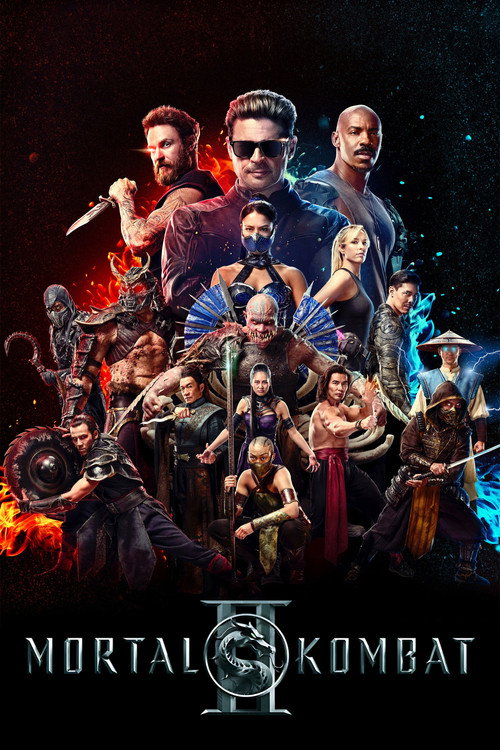
Mortal Kombat II
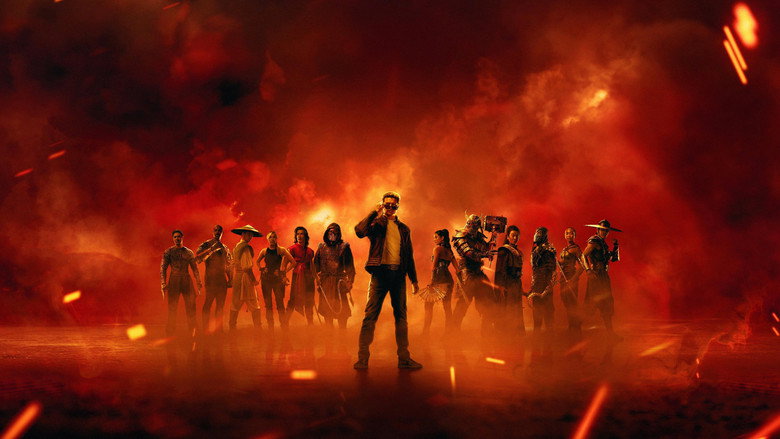
A hyper-violent martial arts fantasy that thrusts Earth's champions into a desperate fight for survival. Pulsing with arcade-era nostalgia, it paints a blood-soaked tapestry where unlikely heroes must forge their destinies in the ultimate inter-dimensional arena.
Mortal Kombat II

Mortal Kombat II

"Their fight. Our future."

06 May 2026 United States of America 116 min 8.0 (1,998)

Director: Simon McQuoid

Cast: Karl Urban, Adeline Rudolph, Ludi Lin, Jessica McNamee, Lewis Tan

Fantasy Action Adventure Reclamation of Identity and Agency True Heroism vs. Performative Bravado The Weight of Legacy and Duty Unity in the Face of Tyranny
Budget: $80,000,000
Box Office: $129,465,730

Overview

In Mortal Kombat II, the narrative delivers the legendary inter-dimensional tournament fans have eagerly awaited. Decades after the tyrannical Emperor Shao Kahn violently conquered the lush realm of Edenia, Earthrealm prepares to face Outworld's most fearsome combatants. Lord Raiden, desperate to protect Earth, recruits a new, unconventional fighter: washed-up Hollywood action star Johnny Cage, who must quickly adapt to a reality far deadlier than any movie set.

As the grueling tenth tournament commences, delicate alliances are tested and old rivalries reignite. The story expertly balances Cage's comedic journey from an arrogant skeptic to a genuine hero with the emotionally resonant arc of Princess Kitana. Adopted by the ruthless Shao Kahn after he murdered her father, Kitana secretly operates as an agent for Raiden's forces, setting the stage for a spectacular clash of realms that will determine the fate of the universe.
Core Meaning

At its core, Mortal Kombat II explores the dichotomy between manufactured bravado and true courage, using its blood-soaked tournament as a vivid backdrop for self-actualization.

Director Simon McQuoid contrasts Johnny Cage's superficial Hollywood heroism with the harrowing, real-world sacrifices required of true champions. Simultaneously, through Kitana's rebellion against her tyrannical adoptive father, the film delivers a potent message about breaking free from cycles of abuse, reclaiming one's agency, and fighting for a future untainted by the traumas of the past.

Thematic DNA

Reclamation of Identity and Agency 35%
True Heroism vs. Performative Bravado 30%
The Weight of Legacy and Duty 20%
Unity in the Face of Tyranny 15%

Reclamation of Identity and Agency

This theme is most prominently revealed through Princess Kitana. Raised by her father's murderer, she must shed the false identity forced upon her by Shao Kahn and secretly work with Raiden to reclaim her true heritage and free Edenia.

True Heroism vs. Performative Bravado

Johnny Cage embodies this conflict. Initially treating the tournament as a grand performance to inflate his fading ego, he is brutally confronted with reality and must learn what it truly means to sacrifice oneself for the greater good.

The Weight of Legacy and Duty

Returning characters like Liu Kang and Cole Young grapple with the heavy expectations placed upon them. Liu Kang must uphold the Shaolin legacy, while Cole fights to honor his bloodline and protect his family from an escalating inter-dimensional war.

Unity in the Face of Tyranny

The film emphasizes that Earthrealm can only survive if its fractured, diverse group of warriors can overcome their personal egos and differences to stand united against Shao Kahn's overwhelming forces.

Character Analysis

Johnny Cage

Karl Urban

Archetype: The Reluctant Hero / Comic Relief Key Trait: Charismatic vanity

Motivation

Initially motivated by a desperate attempt to revitalize his faded fame, his motivation shifts toward genuinely protecting his new comrades.

Character Arc

Shedding his Hollywood narcissism, Johnny confronts genuine life-or-death stakes, transitioning from an arrogant actor who relies on stunt doubles into a truly selfless champion of Earthrealm.

Princess Kitana

Adeline Rudolph

Archetype: The Defector / Vengeful Royalty Key Trait: Stoic resilience

Motivation

To avenge her murdered father, King Jerrod, and liberate her home realm of Edenia.

Character Arc

Adopted by her father's murderer, she transforms from a seemingly passive loyalist in Shao Kahn's court into a vital secret agent and revolutionary for Raiden's resistance.

Shao Kahn

Martyn Ford

Archetype: The Tyrant Key Trait: Brutal dominance

Motivation

Absolute power, submission of all realms, and the total annihilation of Raiden's champions.

Character Arc

He remains a static but overwhelmingly dominant force, using absolute brutality to maintain his grip on Outworld and aggressively push toward the conquest of Earthrealm.

Liu Kang

Ludi Lin

Archetype: The Chosen One Key Trait: Righteous discipline

Motivation

To honor the Shaolin order and ensure Earthrealm's survival against impossible odds.

Character Arc

Still grappling with the losses from the previous film, he steps up to lead the Earthrealm fighters, fully embracing his destiny as a transcendent warrior.

Sonya Blade

Jessica McNamee

Archetype: The Tactician Key Trait: Fierce determination

Motivation

To defend Earthrealm from supernatural threats and honor the legacy of the Special Forces.

Character Arc

Having unlocked her arcana, Sonya evolves from a rigid military operator into a seasoned mystical combatant who bridges the gap between Earth's military logic and otherworldly magic.

Symbols & Motifs

Johnny Cage's $500 Sunglasses

Meaning:

They symbolize Johnny's superficial vanity, wealth, and Hollywood ego. When they are inevitably destroyed in combat, it represents the shattering of his protected celebrity bubble.

Context:

Worn during his introduction and early fights, their destruction marks a turning point where Cage must face the gritty reality of Mortal Kombat without his Hollywood shield.

Shinnok's Amulet

Meaning:

A looming, ominous symbol of a much darker, apocalyptic threat lurking beyond the immediate danger of Shao Kahn, representing the corrupting power of the NetherRealm.

Context:

It appears subtly in the background of key scenes, serving as a massive easter egg and foreshadowing for future conflicts.

The Dead Pool

Meaning:

The acid-filled arena symbolizes the corrosive, inescapable brutality of Outworld's regime and the ultimate, horrific price of failure.

Context:

It serves as the setting for one of the film's most intense, visceral tournament battles, ending in a shocking stage fatality.

Memorable Quotes

Those were $500 sunglasses, asshole.
— Johnny Cage

Context

Delivered mid-fight after an Outworld opponent lands a blow that crushes his trademark eyewear.

Meaning

A hilarious, iconic callback to the video games that perfectly encapsulates Johnny's misplaced priorities and massive ego during life-threatening combat.

You're an actor. So act.
— Lord Raiden

Context

Spoken to Johnny Cage when he expresses deep doubt about his ability to survive against super-powered monsters.

Meaning

A pivotal command that forces Johnny to synthesize his superficial career skills with genuine bravery, pushing him to step up as a real hero.

Get over here!
— Scorpion (Hanzo Hasashi)

Context

Uttered as a battle cry when deploying his iconic kunai spear during a high-stakes encounter in the NetherRealm.

Meaning

The ultimate auditory staple of the franchise, signaling Scorpion's lethal engagement and promising immediate, violent retribution.

Your soul is mine!
— Shang Tsung

Context

Used as an intimidation tactic while attempting to consume the essence of a fallen fighter during the tournament.

Meaning

A menacing nod to his dark magical abilities and an homage to the classic 1995 film adaptation.

Philosophical Questions

Is true heroism an innate trait or a performed role?

Through Johnny Cage, the film questions whether acting like a hero can eventually transform someone into one. Cage begins by mimicking bravery using his acting skills, but eventually faces genuine mortal terror where a stunt double cannot save him, forcing him to actualize his performance.

Can the cycle of generational violence and tyranny be broken?

Kitana's entire arc revolves around rejecting the violent, tyrannical methods of her adoptive father, Shao Kahn. The narrative explores whether one can rise above deep-seated trauma inflicted upon them to forge a righteous, liberated path.

Alternative Interpretations

While most audiences viewed the film as a straightforward martial arts spectacle, some critics interpreted its chaotic narrative structure as a meta-commentary on the franchise itself. In this reading, Johnny Cage represents the casual audience who views Mortal Kombat purely as shallow, violent entertainment. Conversely, Kitana's complex narrative represents the deep, sprawling lore that the creators have meticulously built over 30 years, with the film constantly wrestling between these two identities.

Another alternative reading focuses on the recurring resurrections in the NetherRealm. Some viewers theorize that the film's depiction of death—where characters like Kano and Sub-Zero die only to be brought back—operates as an allegory for the endless 'insert coin' cycle of arcade gaming, where characters are perpetually forced to fight and die for the amusement of higher entities.

Cultural Impact

Arriving in May 2026, Mortal Kombat II was viewed as a massive, unapologetic course correction for the cinematic franchise. By finally showcasing the actual Mortal Kombat tournament—a glaring omission from the 2021 reboot—the film satisfied a decades-long craving from the global gaming community. It leaned heavily into its R-rating, fully embracing the hyper-violent, campy tone of the original Ed Boon and John Tobias arcade games.

Critically, the film sparked a polarized debate regarding the evolution of video game adaptations. Cinematic purists criticized its threadbare plot and exposition-heavy dialogue, while audiences championed it as a perfectly tailored, 'bloody good time.' Karl Urban's portrayal of Johnny Cage was widely likened to the charismatic energy of Star-Lord in Guardians of the Galaxy, injecting a chaotic charm that helped modernize the franchise. Ultimately, the film successfully solidified the financial viability of ultra-violent, lore-heavy video game adaptations in modern Hollywood.

Audience Reception

Audience reception for Mortal Kombat II was largely enthusiastic, particularly among the core gaming demographic. Fans universally praised the film for delivering on the promise of the actual tournament. The visceral fight choreography, graphic fatalities, and meticulous set designs—like the iconic Dead Pool—were celebrated as major achievements that elevated the source material.

Karl Urban's performance as Johnny Cage and Adeline Rudolph's turn as Kitana received widespread acclaim for carrying the film's emotional and comedic weight. However, the film faced notable criticism for its pacing. Viewers felt that introducing so many new characters resulted in a bloated, unfocused script, and the dialogue was frequently cited as cheesy. Ultimately, the consensus deemed it a flawed but highly entertaining popcorn flick that vastly improved upon its predecessor.

Interesting Facts

  • The young version of Johnny Cage seen in flashback sequences is played by Indy Urban, who is the real-life son of actor Karl Urban.
  • Director Simon McQuoid officially confirmed that the four-armed Shokan queen Sheeva was heavily considered for the film but was cut due to the massive CGI budget required to bring her to life.
  • Despite his character's apparent death in the 2021 reboot, Josh Lawson reprised his role as the fan-favorite Kano, fueled heavily by his immense popularity with audiences.
  • To capture the essence of the arcade era, fighters are briefly illuminated by subtle blue or red lighting right before a match begins, acting as a visual homage to the 'Player 1' vs. 'Player 2' selection screens.
  • The film was released theatrically in May 2026 and quickly became a topic of intense discussion for its R-rated gore ahead of its 4K and Blu-ray release in July 2026.

Easter Eggs

Shinnok's Amulet hidden in the background

It teases the existence of the fallen Elder God Shinnok, heavily hinting at the overarching villain and storyline for a potential Mortal Kombat 3.

Shao Kahn's classic shoulder throw

During a fight, Shao Kahn executes a distinct, brutal shoulder charge. This is a direct recreation of his notoriously frustrating and overpowered special move from the classic 2D arcade games.

Kano calling Quan Chi 'Pennywise'

A piece of meta-humor highlighting the film's self-awareness, playfully mocking the pale, creepy appearance of the NetherRealm sorcerer by comparing him to the horror icon.

⚠️ Spoiler Analysis

Click to reveal detailed analysis with spoilers

Frequently Asked Questions

Explore More About This Movie

Dive deeper into specific aspects of the movie with our detailed analysis pages

Comments (0)

Leave a comment

No comments yet. Be the first to share your thoughts!

Similar Movies