Skip to content
The Odyssey
A storm-battered mythological gauntlet where primal grit collides with cosmic fury, as King Odysseus braves monstrous tides across uncharted seas to reclaim his embattled home and family.
The Odyssey

The Odyssey

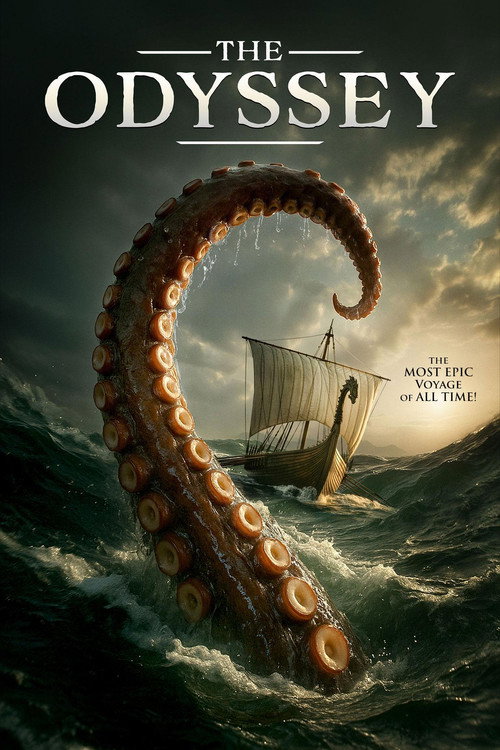
"The most epic voyage of all time!"

03 July 2026 United States of America 86 min 4.1 (216)

Director: Marcel Walz

Cast: Myrom Kingery, Morgan Flanagan, Patrick Byrnes, Dominic Keating, Llana Barron

Fantasy Action Adventure The Trials of Homecoming (Nostos) Hubris vs. Divine Retribution Loyalty and Domestic Resilience Cunning and Brains Over Brawn

Overview

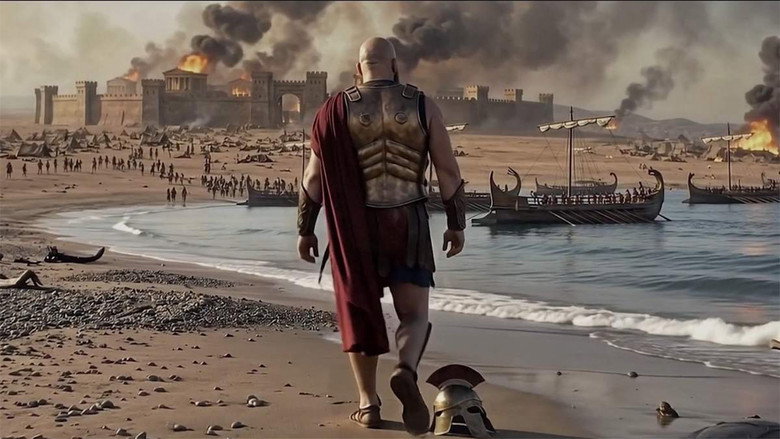
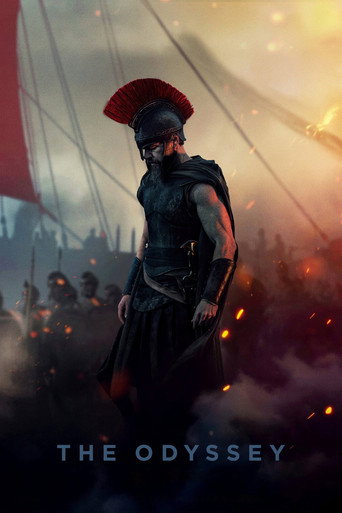
Produced by The Asylum and directed by genre veteran Marcel Walz from a screenplay by Joshua Pruett, The Odyssey (2026) is a fast-paced fantasy-action reimagining of Homer's foundational Greek epic. Set immediately in the wake of the brutal ten-year Trojan War, the narrative chronicles the turbulent voyage of King Odysseus of Ithaca as he embarks on his journey across treacherous seas, desperately seeking reunion with his queen, Penelope, and son, Telemachus.

Rather than finding smooth sailing after the fall of Troy, Odysseus and his loyal crew incur divine wrath and find themselves cast into uncharted waters. The fleet is forced to navigate deadly supernatural perils, including monstrous sea beasts, cursed lands, and enigmatic mythical enchantments engineered to ensure the Ithacan king never touches his homeland's shores alive.

Simultaneously, back in Ithaca, political treachery brews in Odysseus's prolonged absence. A ruthless cohort of aristocratic suitors—commanded by the arrogant Antinous—besieges the royal palace, pressuring Penelope to surrender the throne and imperiling Telemachus's birthright, hurtling toward a high-stakes confrontation between returning royalty and domestic usurpation.
Core Meaning

At its foundation, the film explores the enduring struggle between mortal agency and celestial fatalism. Odysseus is framed not as an untouchable demigod, but as an exhausted, fallible veteran who must balance brute warrior force with cunning intellect (metis) to overcome overwhelming odds. Through parallel struggles, the narrative emphasizes that homecoming is not merely a geographic arrival, but a spiritual and moral reclaiming of family, dignity, and duty amidst chaos.

Thematic DNA

The Trials of Homecoming (Nostos) 35%
Hubris vs. Divine Retribution 25%
Loyalty and Domestic Resilience 20%
Cunning and Brains Over Brawn 20%

The Trials of Homecoming (Nostos)

Serves as the central dramatic thrust of the film, highlighting the agonizing physical and psychological journey required to return home after enduring prolonged trauma and war.

Hubris vs. Divine Retribution

Illustrates the severe clash between human arrogance and higher cosmic powers, demonstrating how mortal overreach invites punishing supernatural intervention.

Loyalty and Domestic Resilience

Embodied by Penelope and Telemachus holding Ithaca together against corrupt domestic opportunists seeking to exploit Odysseus's absence.

Cunning and Brains Over Brawn

Demonstrates how tactical intellect, trickery, and strategic resilience ultimately surpass physical strength when contending with insurmountable mythical odds.

Character Analysis

Odysseus

Myrom Kingery

Archetype: The Returning Epic Hero / Cunning Leader Key Trait: Unbreakable willpower and tactical resourcefulness

Motivation

To survive divine wrath and return to Ithaca to protect his family and reclaim his throne.

Character Arc

Transitions from a war-weary commander relying on brute force to a humble, sharp tactician who recognizes his reliance on wisdom and divine favor.

Antinous

Dominic Keating

Archetype: The Usurper / Corrupt Aristocrat Key Trait: Arrogant ambition and treacherous entitlement

Motivation

To seize the throne of Ithaca by forcing Penelope into marriage and eliminating Telemachus.

Character Arc

Starts as a smug, scheming nobleman within the court and devolves into a ruthless tyrant willing to spill royal blood to claim absolute power.

All 5 characters and cast

Symbols & Motifs

The Sea (Poseidon's Wrath)

Meaning:

Serves as an ever-shifting crucible of divine judgment and unpredictable chaos.

Context:

Used throughout Odysseus's maritime voyage to test his endurance and systematically strip away his fleet and men.

The Ithacan Throne / Palace Great Hall

Meaning:

Represents sovereignty, cultural order, and rightful royal lineage.

Context:

Featured in the Ithacan scenes as the physical space besieged and defiled by predatory suitors.

The Bow of Odysseus

Meaning:

The ultimate symbol of rightful kingship, masculine authority, and true sovereign power.

Context:

Introduced during the final royal challenge as the decisive weapon that only the true king possesses the strength to string and wield.

Athena's Guiding Presence

Meaning:

Symbolizes divine wisdom, tactical forethought, and unseen protection.

Context:

Appears during Odysseus's lowest moments of despair to guide him through supernatural perils and counter chaotic cosmic malice.

Memorable Quotes

After ten long years of blood and iron at Troy, our truest battle is the road back home.
— Odysseus

Context

Spoken by Odysseus during the opening voyage across open waters.

Meaning

Underscores the central premise that surviving divine punishment and achieving peaceful redemption is far more arduous than physical warfare.

Ithaca does not belong to ghost stories, Queen Penelope. It belongs to the living who have the strength to take it.
— Antinous

Context

Delivered during a tense confrontation with Penelope inside the palace great hall.

Meaning

Highlights Antinous's conviction that Odysseus is deceased and demonstrates his overt disdain for traditional honor and divine laws.

All 3 quotes

Philosophical Questions

Can humanity ever truly escape the consequences of its past violence?

Explored through Odysseus's realization that departing the battlegrounds of Troy does not grant immediate peace, as trauma, guilt, and divine wrath follow him across every ocean.

What defines legitimate power—might and ruthlessness, or wisdom and duty?

Examined through the stark contrast between Antinous's rule through terror and usurpation versus Odysseus's rightful authority anchored in duty, patience, and earned wisdom.

Alternative Interpretations

The film can be viewed through two main lenses:

Full ending explanation

Cultural Impact

As an Asylum production, The Odyssey operates within the established tradition of commercial low-budget 'mockbusters' and B-movie creature features. Released directly to Video-on-Demand (VOD) platforms in July 2026, it found its cultural niche among cult cinema enthusiasts, fantasy fans, and home entertainment streamers seeking brisk, action-heavy escapism.

Audience Reception

Aggregated reception characterizes the film as an entertaining B-tier mythological fantasy:

  • Praise: Critics and viewers highlighted Dominic Keating's energetic, theatrical villainy as Antinous, alongside the brisk pacing and fun monster confrontations.
  • Criticism: Reviewers noted the apparent low budget, fast-tracked digital VFX, and narrative compression required by the sub-90-minute runtime.
  • Verdict: An unpretentious, action-heavy distillation of classic myth geared toward indie genre and B-movie enthusiasts.

Interesting Facts

  • Produced by The Asylum and fast-tracked for a July 3, 2026 release to strategically precede major summer blockbuster releases.
  • Director Marcel Walz utilized his background in indie horror and grindhouse cinema to infuse the mythological narrative with visceral combat and darker creature elements.
  • Features English actor Dominic Keating, widely recognized as Lieutenant Malcolm Reed on Star Trek: Enterprise, as the main antagonist Antinous.
  • Serves as The Asylum's second feature film adaptation of the Homeric mythos, following 2017's Troy: The Odyssey.
  • Filmed on a tight, rapid-turnaround digital pipeline combining soundstage environments, practical beachside locations, and fast VFX turnaround.

Easter Eggs

Dominic Keating Casting

Acts as an homage to sci-fi television fans who recognize Keating from his prominent early-2000s starring role on Star Trek: Enterprise.

Ray Harryhausen Creature Staging

The framing and staging during monster encounters borrow visual setups directly reminiscent of mid-20th-century sword-and-sandal classics such as The 7th Voyage of Sinbad and Jason and the Argonauts.

Asylum Repertory Casting

Lead actor Myrom Kingery previously headlined The Asylum's Thor: God of Thunder, honoring the studio's convention of recycling lead actors across their mythological fantasy catalogue.

Frequently Asked Questions

Explore More About This Movie

Dive deeper into specific aspects of the movie with our detailed analysis pages

Comments (0)

Leave a comment

No comments yet. Be the first to share your thoughts!

Similar Movies