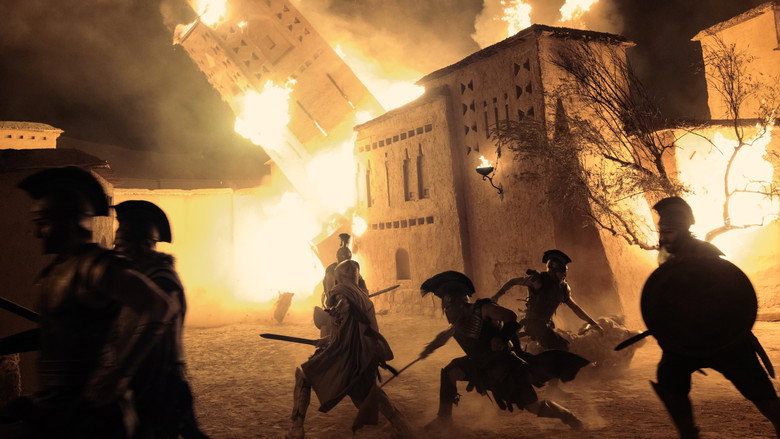
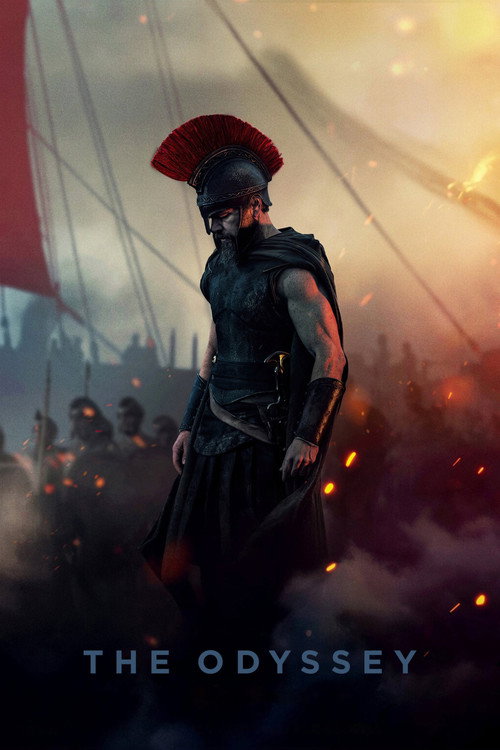
Christopher Nolan's The Odyssey (2026) adapts Homer's epic as a 173-minute action fantasy about Odysseus (Matt Damon), king of Ithaca, who survives the Trojan War only to spend years lost on a hostile sea. Monsters, gods and enchantresses stand between him and his kingdom, but the film treats each of them less as an obstacle course than as a test of what a man is willing to become in order to survive.
Back on Ithaca, the story runs on a second clock. Penelope (Anne Hathaway) holds a household under siege by suitors who have decided her husband is dead, while their son Telemachus (Tom Holland) — a young man who has never met his father — begins a search of his own. Robert Pattinson plays Antinous, the most dangerous of the men waiting in Odysseus's hall; Lupita Nyong'o appears as Helen, Charlize Theron as Calypso and Zendaya as the goddess Athena.
Nolan spans roughly eighteen years, from the departure for Troy to the return, and folds the war back into the voyage so that memory becomes the film's real narrative engine. Shot entirely on IMAX 70mm film, it was released on 17 July 2026 and became one of the year's largest commercial successes, grossing over $1.5 billion worldwide.

Comments (0)
No comments yet. Be the first to share your thoughts!