How to Train Your Dragon
"The legend is real."
Overview
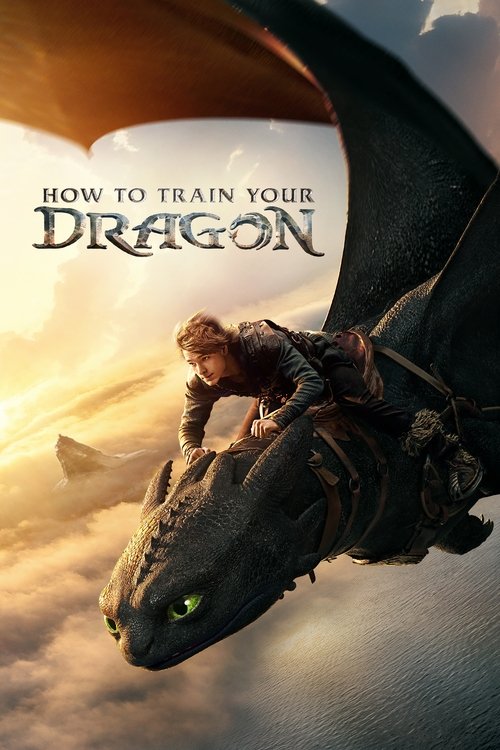
On the mythical, dragon-plagued Isle of Berk, a young, awkward Viking named Hiccup (Mason Thames) struggles to find his place. As the son of the formidable chieftain, Stoick the Vast (Gerard Butler), he is expected to be a fierce dragon slayer, yet he lacks the brawn and killer instinct of his peers. Instead, he relies on his clever inventions, one of which leads him to shoot down a mysterious and feared Night Fury dragon during a raid.
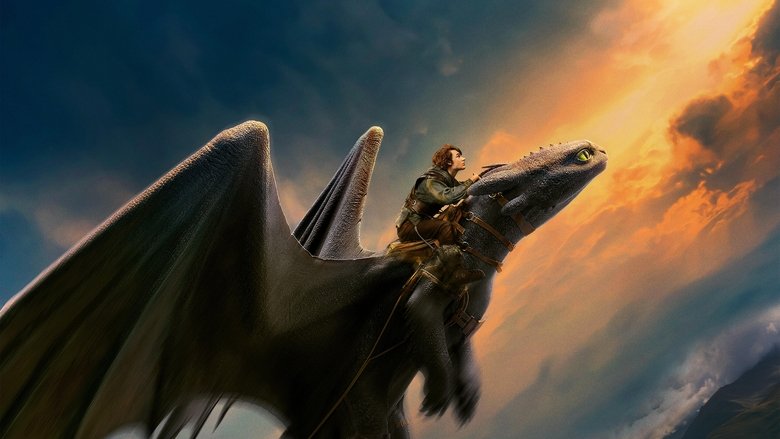
Seeking to prove his worth, Hiccup tracks the dragon, but finds he cannot bring himself to kill the wounded creature. Instead, he befriends it, naming him Toothless, and begins to learn that dragons are not the mindless beasts his tribe believes them to be. As he secretly nurtures Toothless back to health, crafting a prosthetic tail fin to help him fly again, Hiccup uses his newfound knowledge to excel in his dragon-fighting training, earning the admiration of his village but raising the suspicions of Astrid (Nico Parker), a skilled and competitive young warrior.
Hiccup's dual life becomes increasingly difficult to maintain as his bond with Toothless deepens, challenging the core beliefs of his father and his entire village. He must find the courage to bridge the gap between two worlds and prove that understanding and compassion are far greater weapons than brute force.
Core Meaning
At its heart, How to Train Your Dragon is a story about challenging dogma and embracing the 'other.' Director Dean DeBlois, returning from the animated trilogy, aims to protect the original's core message: that fear and prejudice are born from misunderstanding, and that true strength lies in empathy and the courage to forge one's own path. The film posits that generations of conflict can be undone by a single act of compassion. It explores the idea that societal norms and traditions, however deeply ingrained, should be questioned, especially when they perpetuate violence. The central relationship between Hiccup and Toothless serves as a powerful metaphor for finding connection in the most unlikely of places and discovering that our perceived enemies may, in fact, share a common soul with us.
Thematic DNA
Overcoming Prejudice and Fear
The central theme is the conflict between the Vikings' ingrained hatred of dragons and Hiccup's discovery of their true nature. The Vikings see dragons as monstrous pests to be exterminated. Hiccup's decision to spare and befriend Toothless directly challenges this worldview. His journey is one of moving past generations of inherited fear to forge a relationship based on trust and understanding, ultimately proving to his tribe that everything they thought they knew about their enemies was wrong.
Father-Son Relationships and Expectations
The dynamic between Hiccup and his father, Stoick, is a crucial emotional anchor. Stoick, a larger-than-life chieftain, is disappointed by his son's physical weakness and inventive, non-conformist nature. Hiccup's primary motivation is to gain his father's acceptance and prove he can be a true Viking. The story charts the painful, yet ultimately rewarding, journey of a father and son learning to understand and accept one another for who they are, not who they are expected to be. Gerard Butler, reprising his role, noted the live-action format allowed for a deeper exploration of this emotional complexity.
The Outcast as a Visionary
Hiccup is an outcast in his own society. His intelligence and sensitivity are seen as weaknesses in a culture that values brute strength. However, it is precisely these traits that allow him to see what no one else can: that dragons are not monsters. The film champions the idea that those who are different and think outside the established norms are often the ones who drive progress and positive change. Hiccup's journey from village screw-up to leader validates the importance of embracing individuality.
Man, Nature, and Coexistence
The film explores the relationship between humanity and the natural world, represented by the dragons. The Vikings' initial approach is one of domination and destruction, seeking to wipe out the dragons by finding their nest. Hiccup's approach is one of harmony, observation, and mutual respect. He doesn't seek to control Toothless but to work with him, creating a symbiotic partnership that allows them both to fly. This arc advocates for a more peaceful and sustainable coexistence with nature rather than a violent conquest of it.
Character Analysis
Hiccup Horrendous Haddock III
Mason Thames
Motivation
Initially, his motivation is to prove himself as a worthy Viking by killing a dragon. This quickly shifts to protecting his new friend, Toothless, and then evolves into a desire to bridge the gap between humans and dragons and create a world of peace.
Character Arc
Hiccup begins as an insecure outcast, desperate for the approval of his father and tribe. Through his relationship with Toothless, he discovers his own unique strengths—empathy, intelligence, and courage. He transforms from a boy who wants to kill a dragon into the only one who can save his people by understanding them. He learns to lead not with force, but with compassion, ultimately changing his entire society's way of life and becoming a true hero on his own terms.
Astrid Hofferson
Nico Parker
Motivation
Her primary motivation is to be the best warrior and honor her family and tribe. She is driven by a strong sense of duty and tradition. This motivation is later tempered by her loyalty to Hiccup and her newfound understanding of dragons.
Character Arc
Astrid starts as the embodiment of the perfect Viking teen: strong, skilled, and deeply committed to her culture's traditions. She is initially suspicious and resentful of Hiccup's sudden success in dragon training. However, after discovering Toothless, she is forced to confront the truth. Her arc is one of opening her mind and heart, moving from Hiccup's rival to his most loyal supporter and confidante, becoming the first to share his vision for a new world.
Stoick the Vast
Gerard Butler
Motivation
His overarching motivation is the protection of his people from the threat of dragons. On a personal level, he is motivated by a deep, if poorly expressed, love for his son and a desire to see him grow into a strong Viking leader.
Character Arc
Stoick is a powerful and respected leader, but a stubborn and uncomprehending father. His arc is about learning the true meaning of strength and leadership. Initially believing he must be hard on Hiccup to prepare him for a harsh world, he ultimately realizes his son's compassion is a greater strength than any weapon. He moves from disowning Hiccup for befriending a dragon to sacrificing himself to save him, finally reconciling with and expressing his profound pride in his son.
Gobber the Belch
Nick Frost
Motivation
Gobber is motivated by his loyalty to Stoick and a genuine affection for Hiccup and the other young trainees. He wants to see them survive and succeed, even if he doesn't always understand Hiccup's methods.
Character Arc
Gobber serves as the village blacksmith and mentor to the young Vikings. He is Stoick's closest friend and often acts as a bridge between him and Hiccup. While he adheres to Viking tradition, he has a more pragmatic and humorous outlook. His arc is less about transformation and more about support; he is one of the first adults to see Hiccup's potential and helps nurture it, providing wisdom and comic relief throughout Hiccup's journey.
Symbols & Motifs
Prosthetics (Toothless's Tail and Hiccup's Foot)
The prosthetics symbolize the deep, symbiotic bond between Hiccup and Toothless. They are both 'incomplete' without each other. The artificial tail fin requires Hiccup's guidance to function, physically linking them in flight and making their partnership a necessity. At the film's end, Hiccup loses his foot and receives a prosthetic of his own, cementing their shared experience of injury and recovery and making them equals who have both been changed by their bond.
Hiccup designs and builds the prosthetic tail for Toothless after his original is damaged by Hiccup's bolas. They must learn to fly together, with Hiccup controlling the prosthetic. Hiccup's own prosthetic foot is seen in the final scene of the film, after his battle with the Red Death, mirroring Toothless's own gear.
The Dragon's Nest
The nest represents the source of the conflict, a place of fear and misunderstanding for the Vikings. To them, it is the heart of the evil they must destroy. However, upon discovery, it is revealed to be a place of subjugation, where the smaller dragons are ruled by a tyrannical, parasitic queen (the Red Death). This reframes the dragons not as aggressors, but as victims themselves, forced to raid villages to survive. The nest symbolizes the hidden, complex truth behind a seemingly simple conflict.
Stoick leads his fleet on a desperate search for the nest to end the dragon raids once and for all. Hiccup and Astrid discover the nest during a flight with Toothless, witnessing the terrifying Red Death command the other dragons. The film's climax takes place as the Vikings attack the nest, only to unleash its monstrous ruler.
The Night Fury
The Night Fury, and Toothless specifically, symbolizes the unknown and the feared 'other.' It is a dragon no Viking has ever seen up close, spoken of only in whispers and terrified legends. Its mysterious nature makes it the ultimate prize for a dragon killer. By befriending Toothless, Hiccup is literally embracing the unknown and finding not a monster, but a kindred spirit. Toothless represents the dismantling of prejudice through personal connection.
Hiccup manages to shoot down a Night Fury during the opening raid, an unprecedented feat that no one believes. He later finds the trapped dragon in the woods and their relationship forms the core of the film's plot, transforming the ultimate symbol of fear into one of friendship.
Philosophical Questions
Can inherited hatred be unlearned within a single generation?
The film explores this question through Hiccup's defiance of centuries of Viking tradition. His entire society is built upon the war with dragons. Stoick represents the deeply ingrained, inherited worldview that dragons are implacable enemies. Hiccup's personal experience with Toothless proves this to be false, suggesting that direct, empathetic contact with a perceived 'enemy' is a powerful catalyst for breaking cycles of hatred. The film's optimistic conclusion, with Vikings and dragons living in harmony, argues that even the most profound societal prejudices can be dismantled by the courage and open-mindedness of a new generation.
What is the nature of true strength: physical power or compassionate intelligence?
Viking culture in the film unequivocally defines strength in physical terms: the ability to fight, to kill, and to dominate. Hiccup is the antithesis of this ideal. The film systematically deconstructs this notion. Hiccup's compassion allows him to befriend Toothless, his intelligence allows him to understand dragons, and his courage allows him to stand against his entire culture. Ultimately, his 'weaknesses' become the very strengths that save everyone, proposing a more nuanced definition of strength rooted in empathy, understanding, and the bravery to be different.
Cultural Impact
As DreamWorks' first foray into the popular but often criticized trend of live-action remakes of animated classics, How to Train Your Dragon carried significant expectations. Its creation comes in a cinematic landscape dominated by Disney's similar adaptations, setting it up as a major test for the studio. The decision to bring back original director Dean DeBlois was seen by many as a protective measure to preserve the 'heart' and 'soul' of the beloved original, a concern DeBlois himself voiced.
Upon release, the film received generally positive reviews from critics, with many praising its visual fidelity, stunning cinematography, and the emotional weight of the core relationships. However, it also sparked debate about its necessity, with some critics deeming it a faithful but ultimately soulless and less dynamic retread of a near-perfect animated classic. The casting of Nico Parker, a Black actress, as the traditionally white and blonde Astrid generated some online backlash but was largely defended as a choice that didn't detract from the character's core narrative. The film's success is seen as a potential blueprint for DreamWorks' other properties, continuing the franchise's legacy and introducing the story to a new generation while banking on the nostalgia of those who grew up with the 2010 original.
Audience Reception
Audience reception for the live-action How to Train Your Dragon has been largely positive, though often colored by comparisons to the beloved 2010 animated film. On Rotten Tomatoes, the film holds a 77% positive rating from critics, with a consensus that it's a lovingly crafted adaptation that doesn't surpass the original but still achieves enchanting heights. Metacritic assigned a score of 61 out of 100, indicating 'generally favorable' reviews.
Many viewers praised the stunning visuals, especially the photorealistic depiction of Toothless and the immersive IMAX flight sequences. Gerard Butler's return as Stoick was widely celebrated, with many feeling he embodied the character perfectly in live-action. The performances of Mason Thames and Nico Parker were also well-received, though some noted the difficulty of replicating the unique vocal charm of the original cast. Points of criticism often centered on the film's perceived lack of originality, with some reviewers calling it a 'soulless' or beat-for-beat remake that adds little new to the story. The climax, in particular, was criticized by some for feeling more artificial and less visually coherent than its animated counterpart.
Interesting Facts
- Gerard Butler is the only actor from the original animated films to reprise his role, playing Stoick the Vast in both versions.
- Dean DeBlois, who co-wrote and directed the animated trilogy, returned to write, direct, and produce the live-action film, a rare occurrence for such remakes.
- Filming began in January 2024 and wrapped in May 2024, taking place in Belfast, Northern Ireland.
- The film is DreamWorks Animation's first-ever live-action feature film.
- Renowned cinematographer Bill Pope, known for his work on 'The Matrix', served as the director of photography.
- To create realistic interactions, the production used a combination of advanced puppetry and motion-controlled gimbals that the actors could ride, giving them a physical dragon to perform with on set.
- Mason Thames, who plays Hiccup, is the only American actor in the main cast.
- The film's release date of June 13, 2025, is exactly eleven years after the release of the animated sequel, 'How to Train Your Dragon 2'.
⚠️ Spoiler Analysis
Click to reveal detailed analysis with spoilers
Frequently Asked Questions
Explore More About This Movie
Dive deeper into specific aspects of the movie with our detailed analysis pages
Comments (0)
No comments yet. Be the first to share your thoughts!