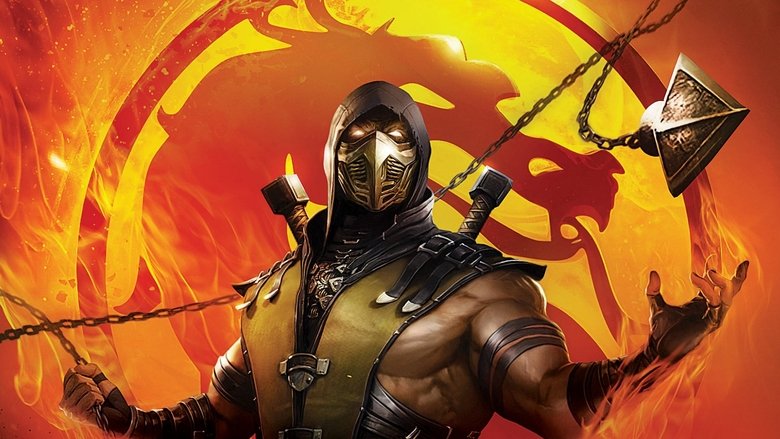
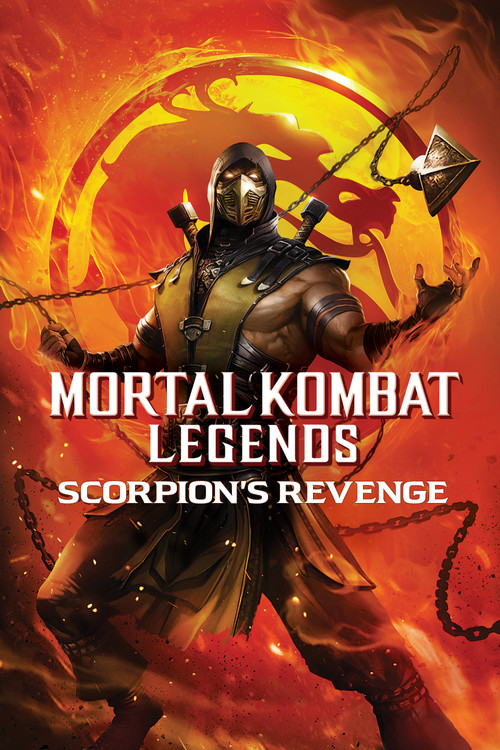
Mortal Kombat Legends: Scorpion's Revenge
A visceral animated saga of blood and vengeance, where a resurrected warrior's burning rage collides with a brutal tournament, painted in shades of fiery retribution and shadowy conspiracy.
Mortal Kombat Legends: Scorpion's Revenge

Mortal Kombat Legends: Scorpion's Revenge

"Extreme violence. Bad language. And a bloody good time."

12 April 2020 United States of America 80 min ⭐ 8.1 (1,422)
Director: Ethan Spaulding
Cast: Patrick Seitz, Jordan Rodrigues, Jennifer Carpenter, Joel McHale, Ike Amadi
Animation Fantasy Action
Revenge and its Consequences Fate vs. Free Will Deception and Manipulation The Nature of Violence

Overview

Mortal Kombat Legends: Scorpion's Revenge retells the story of the first Mortal Kombat tournament, but with a primary focus on the tragic origins of one of its most iconic characters, Scorpion. The film opens in feudal Japan, where Hanzo Hasashi, leader of the Shirai Ryu clan, lives a peaceful life with his wife and son. This peace is shattered when the rival Lin Kuei clan, led by the cryomancer Sub-Zero, brutally massacres his family and clan, and ultimately kills him.

Transported to the torturous Netherrealm, Hasashi's soul is given an opportunity for vengeance by the manipulative sorcerer Quan Chi. Reborn as the spectral ninja Scorpion, he is tasked with retrieving an ancient amulet for Quan Chi's master, Shinnok, under the guise of competing in the Mortal Kombat tournament. Simultaneously, the thunder god Raiden gathers Earthrealm's champions—the Shaolin monk Liu Kang, the Special Forces agent Sonya Blade, and the arrogant movie star Johnny Cage—to participate in the same tournament. The fate of Earthrealm hangs in the balance, as it has already lost nine consecutive tournaments to the forces of Outworld, led by the sorcerer Shang Tsung.
Core Meaning

The core meaning of Mortal Kombat Legends: Scorpion's Revenge revolves around the all-consuming and destructive nature of vengeance. It explores how the pursuit of revenge can lead to one's damnation and manipulation by darker forces, as seen through Hanzo Hasashi's transformation into Scorpion. The film posits that while vengeance can be a powerful motivator, it is ultimately a self-destructive path that blinds individuals to the larger picture and makes them pawns in a greater, more sinister game. It contrasts Scorpion's personal vendetta with the collective responsibility of the Earthrealm heroes, suggesting that fighting for a cause greater than oneself is a more noble, albeit difficult, path.

Thematic DNA

Revenge and its Consequences 40%
Fate vs. Free Will 25%
Deception and Manipulation 20%
The Nature of Violence 15%

Revenge and its Consequences

The central theme is the all-consuming nature of revenge, embodied by Hanzo Hasashi's transformation into Scorpion. His single-minded quest to avenge his family and clan leads him to make a deal with the nefarious Quan Chi, becoming a pawn in a larger conflict. The film graphically illustrates that his vengeance comes at a great cost, not only to his enemies but to his own soul, as he is twisted into a being of pure rage. His journey culminates in the tragic revelation that his revenge was manipulated from the start, highlighting the futility and destructive cycle of vengeance.

Fate vs. Free Will

The Mortal Kombat tournament itself is a construct of the Elder Gods, a seemingly predestined event to decide the fate of realms. Within this framework, characters grapple with their roles. Liu Kang is presented as Earthrealm's destined champion, trained his whole life for this purpose. Scorpion, however, chooses his path of revenge, defying his damnation in the Netherrealm to pursue his own justice. His ultimate decision to spare Liu Kang and forfeit the match demonstrates a moment of free will, choosing the preservation of Earthrealm over his manipulated role in the tournament, thereby altering the expected outcome.

Deception and Manipulation

The narrative is rife with manipulation. Quan Chi is the master manipulator, orchestrating the massacre of the Shirai Ryu to gain Scorpion as his champion. He deceives Scorpion with the promise of resurrecting his family in exchange for his servitude. Shang Tsung also manipulates the tournament's events for his emperor, Shao Kahn. This theme underscores the idea that the battles in the arena are often secondary to the political machinations and deceptions happening in the shadows.

The Nature of Violence

The film does not shy away from the brutal, gory violence that the video game series is known for. The violence is depicted as both a tool for righteous defense (by the Earthrealm heroes) and a brutal means of vengeance (by Scorpion). The inclusion of the games' signature "X-Ray" moves, showing bones shattering and organs rupturing, forces the viewer to confront the visceral and horrific consequences of each blow. It questions whether such extreme violence can ever be truly justified, even in the defense of a realm or in the name of justice for loved ones.

Character Analysis

Hanzo Hasashi / Scorpion

Patrick Seitz

Archetype: Antihero / Tragic Hero
Key Trait: Vengeful

Motivation

His primary motivation is to avenge the brutal murder of his wife, son, and clan, whom he believes were killed by Sub-Zero.

Character Arc

Hanzo Hasashi begins as a peaceful family man and clan leader. After being brutally murdered along with his family, he is reborn in the Netherrealm as Scorpion, a vengeful specter consumed by rage. Initially driven solely by the desire to kill Sub-Zero, he operates as Quan Chi's pawn. His arc sees him slowly begin to question his path, culminating in his decision to save Liu Kang and ensure Earthrealm's victory, a choice that prioritizes the greater good over his personal vendetta. He achieves his revenge but also discovers the devastating truth of his manipulation, ending his journey by killing his true tormentor, Quan Chi.

Liu Kang

Jordan Rodrigues

Archetype: The Chosen One / Hero
Key Trait: Honorable

Motivation

To fulfill his destiny as the chosen champion and protect Earthrealm from being conquered by Outworld.

Character Arc

Liu Kang is introduced as the dedicated and disciplined champion of Earthrealm, trained by the Shaolin for the sole purpose of winning Mortal Kombat. He is noble and focused, carrying the weight of his realm on his shoulders. Throughout the tournament, he proves his skill and courage, defeating opponents like Kitana. Initially, he is nearly defeated by Goro, but after being saved by Scorpion, he is declared the champion. His arc is one of fulfilling his destiny, though not entirely through his own power, setting him up for a greater confrontation with Shao Kahn.

Johnny Cage

Joel McHale

Archetype: The Reluctant Hero / Comic Relief
Key Trait: Arrogant

Motivation

Initially, his motivation is fame and reviving his career. This shifts to survival and protecting his newfound allies after he understands the true nature of the tournament.

Character Arc

Johnny Cage starts as a washed-up, egocentric Hollywood actor who believes he's been brought to the island for a movie shoot. He is initially cowardly and serves as the film's primary comic relief. His arc involves a rude awakening to the reality of the tournament and the stakes involved. He is forced to rise to the occasion, moving from a self-absorbed celebrity to a genuine, albeit still wisecracking, hero who fights alongside Sonya and helps save Jax.

Sonya Blade

Jennifer Carpenter

Archetype: The Warrior
Key Trait: Determined

Motivation

To capture the international criminal Kano and rescue her partner, Jax Briggs.

Character Arc

Sonya Blade is a tough, no-nonsense Special Forces lieutenant on a mission. She enters the tournament not to save the world, but to hunt down the Black Dragon crime boss, Kano, who is responsible for the presumed death of her partner, Jax. Her arc is one of grudgingly accepting the larger conflict while remaining focused on her personal mission. She forms a reluctant alliance with Johnny Cage and Liu Kang, eventually succeeding in her goal of confronting Kano and saving a wounded Jax.

Quan Chi

Darin De Paul

Archetype: The Manipulator / Trickster
Key Trait: Deceptive

Motivation

To retrieve the Amulet of Shinnok to free his master from imprisonment, using Scorpion as his unwilling champion and tool.

Character Arc

Quan Chi is a powerful and cunning sorcerer from the Netherrealm. He is the architect of Scorpion's pain, having orchestrated the Shirai Ryu massacre while disguised as Sub-Zero to gain a powerful pawn. He presents himself as a benefactor to Hanzo, offering him a path to revenge. His arc is one of pure villainy and manipulation, using others to achieve his goal of freeing his master, Shinnok. He succeeds in his initial manipulation but is ultimately outsmarted and killed by his own creation, Scorpion, when the truth is revealed.

Symbols & Motifs

Scorpion's Kunai (Spear)

Meaning:

Symbolizes Scorpion's inescapable vengeance and his connection to the Netherrealm. The chain represents the demonic pact that binds him, while the spear tip is the instrument of his deadly retribution. When he shouts "Get over here!", it's a literal and symbolic pulling of his victims into his world of pain and revenge.

Context:

Used throughout his fights, most notably when he impales his enemies. It's his signature weapon, a physical manifestation of his spectral power and singular, deadly purpose. He uses it to kill numerous foes, including ultimately using it against Quan Chi after learning the truth.

The Netherrealm

Meaning:

A physical and psychological representation of Hell and damnation. It is a realm of eternal torture and suffering, symbolizing the torment within Hanzo Hasashi's soul after the loss of his family. It is also a place of dark power and temptation, where despair can be forged into a weapon, as shown by Quan Chi's manipulation of Scorpion.

Context:

Hanzo Hasashi awakens in the Netherrealm after his murder. The film depicts it as a fiery, hellish landscape where he is tormented by demons. It is here that he makes his fateful deal with Quan Chi, trading his soul for the power to exact revenge.

The Mortal Kombat Tournament

Meaning:

Represents a brutal, yet structured, form of cosmic law and order. It is a system created by the Elder Gods to prevent all-out war between the realms, channeling conflict into a series of one-on-one battles. However, it also symbolizes how even divine laws can be corrupted and manipulated for evil ends by characters like Shang Tsung and Shao Kahn.

Context:

The entire second half of the film is set during the tournament on Shang Tsung's island. It provides the backdrop for the clashes between Earthrealm's champions and Outworld's warriors, with the fate of worlds resting on its outcome.

Memorable Quotes

GET OVER HERE!

— Scorpion

Context:

Scorpion shouts this line multiple times throughout the film when he uses his kunai spear to impale an enemy and pull them towards him for a fatal blow.

Meaning:

This is Scorpion's most iconic line from the video game franchise. Its inclusion is a direct nod to the fans and signifies the moment Scorpion unleashes his signature weapon and vengeful power upon an opponent. It represents his inescapable wrath.

My god will avenge me.

— Quan Chi

Context:

Quan Chi says this to Scorpion just before Scorpion kills him in the film's climax, after revealing his betrayal. Scorpion's response, "Damn your god," signifies his ultimate rejection of all higher powers and his focus on personal justice.

Meaning:

This quote reveals Quan Chi's fanatical devotion to his master, Shinnok, even in the face of his own demise. It underscores his role as a mere servant to a greater evil and hints at a future threat beyond himself.

This better not go straight to video...

— Johnny Cage

Context:

Johnny Cage mutters this line as he and the other fighters arrive on Shang Tsung's mysterious and ominous island, still believing he is part of a film production.

Meaning:

A meta-joke that plays on Johnny Cage's vanity and his profession as a movie star. It also serves as a humorous wink to the audience, as the film itself is a direct-to-video release. It perfectly encapsulates his initial ignorance of the tournament's lethality.

Hanzo is dead. Call me Scorpion.

— Scorpion

Context:

Spoken to Quan Chi in the Netherrealm after Hanzo agrees to fight in the tournament in exchange for the chance at revenge. It marks the moment he is reborn as Scorpion.

Meaning:

This line signifies Hanzo Hasashi's complete transformation. He sheds his former identity and fully embraces the persona of Scorpion, a being defined not by his life but by his quest for vengeance.

Philosophical Questions

Can vengeance ever lead to true justice or peace?

The film relentlessly explores this question through Scorpion's journey. His entire existence is fueled by the need for revenge. When he finally kills Sub-Zero, there is no satisfaction, only the continuation of his torment. The subsequent revelation that he was manipulated by Quan Chi proves that his vengeance was misdirected and ultimately hollow. The film suggests that the pursuit of vengeance is a self-perpetuating cycle of violence that offers no real closure, only more suffering and the potential for one's own corruption.

Does the greater good justify sacrificing one's personal morality?

This question is posed to the Earthrealm heroes. They are forced to engage in brutal, lethal combat—to kill—in order to save their world. While characters like Liu Kang are trained for this, Sonya Blade and Johnny Cage are thrown into a situation where killing becomes a necessity for survival and the protection of billions of lives. The film contrasts their reluctant violence for a greater cause with Scorpion's deeply personal and hateful violence, asking the audience to consider the moral lines that are crossed in the name of both personal justice and collective security.

Alternative Interpretations

One alternative interpretation of the film centers on the idea of the tournament as a futile exercise. While presented as a mechanism to maintain cosmic order, the events of the film suggest it is easily subverted by the ambitions of individuals like Quan Chi and Shang Tsung. The eventual victory of Earthrealm feels less like a triumph of skill and more a result of Scorpion's chaotic, self-serving intervention. This reading suggests that the supposed 'rules' of the universe are ultimately meaningless in the face of personal trauma and the machinations of powerful, evil beings, and that true change or victory comes not from adhering to destiny, but from breaking the game itself.

Another perspective views Scorpion not as an antihero, but as a tragic villain. From this viewpoint, his quest for revenge, while understandable, unleashes a force of pure destruction that threatens the stability of the tournament. He kills not just his target but also anyone who gets in his way. His eventual, last-minute decision to help Liu Kang does not fully redeem him but rather highlights the depth of his tragedy: even in his moment of clarity, he is still a damned soul, forever bound to the violence that created him. He saves the day almost incidentally to his primary goal of vengeance, suggesting that heroism was never his true intent.

Cultural Impact

Mortal Kombat Legends: Scorpion's Revenge was released in 2020 to a generally positive reception from both critics and fans of the franchise. It was praised for its faithfulness to the source material, particularly its embrace of the series' signature ultra-violence and gory fatalities, something often toned down in previous adaptations. The decision to make the film R-rated was seen as a major step in the right direction for the franchise's cinematic outings, setting a new standard for future *Mortal Kombat* projects, including the 2021 live-action reboot.

The film's focus on Scorpion's tragic backstory resonated with audiences, providing an emotional core to the relentless action. By retelling the classic tournament story through his vengeful eyes, the movie offered a fresh perspective on a familiar narrative. Its success helped launch a new series of direct-to-video animated films under the "Mortal Kombat Legends" banner, including the sequel *Battle of the Realms* (2021). For many, *Scorpion's Revenge* is considered one of the best screen adaptations of *Mortal Kombat*, successfully capturing the tone, characters, and violent spectacle that has made the game series a pop culture phenomenon for decades.

Audience Reception

Audience reception for Mortal Kombat Legends: Scorpion's Revenge was largely positive, particularly among fans of the video game series. Viewers overwhelmingly praised the film's brutal, R-rated action and its faithful depiction of the games' iconic fatalities and special moves. The animation style and fight choreography were frequently highlighted as strengths. The focus on Scorpion's tragic backstory was also well-received, providing a strong emotional anchor for the narrative. Joel McHale's performance as the comic-relief character Johnny Cage was another common point of praise. Criticism tended to focus on the pacing, with some feeling that the film tried to cram too much of the tournament's story into its short runtime, leaving some characters and plotlines feeling underdeveloped. Some viewers also felt that after a strong focus on Scorpion in the beginning, he was sidelined for a significant portion of the middle of the film. Overall, however, the verdict from the target audience was that it was a bloody, entertaining, and satisfying adaptation of the beloved franchise.

Interesting Facts

  • The film is the first R-rated Mortal Kombat animated feature, allowing it to fully embrace the graphic violence and fatalities the video game series is known for.
  • Patrick Seitz reprises his role as the voice of Scorpion from several of the Mortal Kombat video games.
  • Kevin Michael Richardson, who voices Goro in this film, also voiced the character in the 1995 live-action *Mortal Kombat* movie.
  • The animation was handled by Studio Mir, a South Korean studio known for its work on acclaimed series like *The Legend of Korra* and *Voltron: Legendary Defender*.
  • Writer Jeremy Adams and producer Rick Morales intentionally included homages to classic 1980s martial arts and action films, such as *Bloodsport* and *Big Trouble in Little China*.
  • The film's plot combines the storyline of the original 1992 *Mortal Kombat* game with the detailed backstory for Scorpion that was developed in later games.

Easter Eggs

X-Ray Moves

During many of the fight scenes, the film uses a special visual effect that shows an X-ray view of bones shattering and internal organs being damaged upon impact. This is a direct visual reference to the "X-Ray Moves" feature introduced in the *Mortal Kombat* (2011) video game and its sequels.

The Pit Stage Fatality

During the final confrontation between Scorpion and Sub-Zero, Scorpion tackles his rival off a bridge into a pit of spikes below. This is a direct homage to "The Pit," one of the most famous stages from the original *Mortal Kombat* game, and its associated Stage Fatality where the loser is knocked into the spikes.

Johnny Cage's Signature Moves

Johnny Cage performs his signature "Shadow Kick" and his infamous groin-punch move during his fights. These are some of his most well-known special moves from the video game series.

"Toasty!" Reference

While not a direct quote, Scorpion's use of his fire breath fatality, which reduces an opponent to a skeleton, is a visual nod to the origins of the famous "Toasty!" Easter egg from the games, which would often appear after Scorpion performed this move.

⚠️ Spoiler Analysis

Click to reveal detailed analysis with spoilers

Frequently Asked Questions

Explore More About This Movie

Dive deeper into specific aspects of the movie with our detailed analysis pages

Comments (0)

Leave a comment

No comments yet. Be the first to share your thoughts!