Doctor Who: The Time of the Doctor
A bittersweet science fiction fable where the weight of time crashes against the boundless energy of a dying star, culminating in a poignant and explosive farewell.
Doctor Who: The Time of the Doctor

Doctor Who: The Time of the Doctor

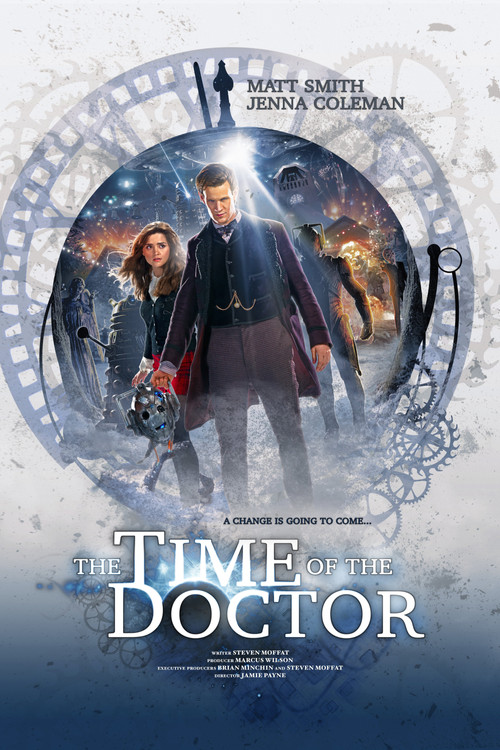
"A change is going to come..."

25 December 2013 United Kingdom 60 min ⭐ 8.1 (300)
Director: Jamie Payne
Cast: Matt Smith, Jenna Coleman, Peter Capaldi, Karen Gillan, Orla Brady
Drama Science Fiction TV Movie
Mortality and Acceptance of Endings Legacy and Remembrance Sacrifice and Duty The Power of a Name

Overview

"Doctor Who: The Time of the Doctor" serves as the climactic finale for the Eleventh Doctor, portrayed by Matt Smith. The episode sees the Doctor and his companion, Clara Oswald (Jenna Coleman), drawn to the planet Trenzalore, where a mysterious message echoes across the stars, attracting a congregation of the Doctor's most formidable enemies.

Forced to protect the inhabitants of a town called Christmas from the impending alien siege, the Doctor makes a momentous decision to stay, leading to a centuries-long vigil. The story weaves together numerous unresolved plot threads from Matt Smith's era, including the cracks in the universe, the Silence, and the ultimate question: "Doctor who?". As the Doctor ages and his final regeneration approaches, he must confront his own mortality and the consequences of his long life.

Core Meaning

"The Time of the Doctor" is fundamentally a meditation on mortality, legacy, and the significance of a single life, even one that spans millennia. The director and writer, Steven Moffat, use the Doctor's final stand to explore the idea that every life is a story that must eventually end, but the impact of that story can resonate through time. The episode's core message is one of acceptance and the beauty of change. It emphasizes that while endings are inevitable and often painful, they also bring renewal and the promise of a new beginning. It also serves as a definitive capstone to the Eleventh Doctor's era, tying up complex narrative arcs and celebrating his unique, childlike yet ancient, personality before his heroic sacrifice and subsequent regeneration.

Thematic DNA

Mortality and Acceptance of Endings 40%
Legacy and Remembrance 30%
Sacrifice and Duty 20%
The Power of a Name 10%

Mortality and Acceptance of Endings

The central theme is the Doctor's confrontation with his own finite existence. Having exhausted all his regenerations, he faces a true death. He spends centuries growing old, a process rarely depicted for the character, which forces him to accept the end of his life. His final monologue, where he states that "times change and so must I," encapsulates this theme of gracefully accepting the inevitable cycle of death and rebirth.

Legacy and Remembrance

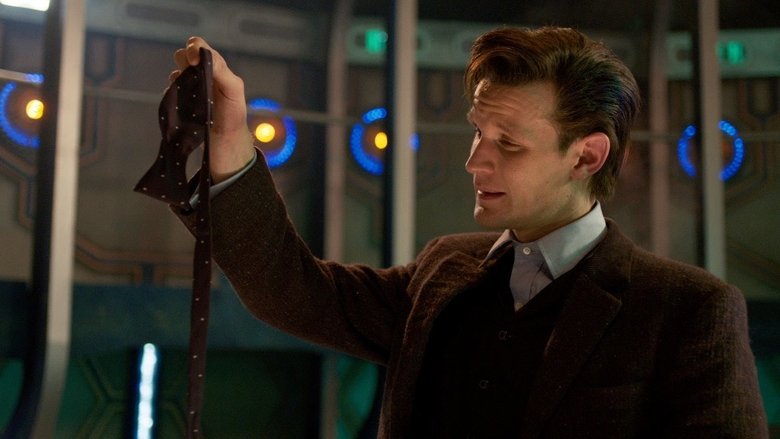
As the Doctor nears his end, the episode reflects on his legacy. The town of Christmas becomes a living testament to his protection, with generations of children creating drawings of his adventures. His final moments are marked by a hallucination of his first companion in this incarnation, Amy Pond, and the poignant dropping of his bowtie, symbolizing the end of an era and the memories he leaves behind.

Sacrifice and Duty

The Doctor sacrifices the remainder of his life, hundreds of years, to protect the people of Christmas and prevent the Time Lords' return from sparking another Time War. This long, quiet act of heroism, defending a single town, is portrayed as one of his most significant sacrifices, undertaken not with grand gestures but with quiet endurance.

The Power of a Name

The episode revolves around the question "Doctor who?", which is revealed to be a signal from the Time Lords seeking to return. The Doctor's refusal to speak his name is what holds back a new Time War. This theme highlights the immense power and danger tied to identity and knowledge, a recurring motif in the Doctor's adventures.

Character Analysis

The Eleventh Doctor

Matt Smith

Archetype: The Sage / The Hero
Key Trait: Childlike Wisdom

Motivation

His primary motivation is to protect the innocent people of the town of Christmas and to prevent the question "Doctor who?" from being answered, which would trigger the return of the Time Lords and a new Time War. He is driven by his fundamental sense of duty and his promise to defend the helpless.

Character Arc

The Eleventh Doctor begins the episode as his usual energetic, flippant self but is forced into a situation that requires immense patience and endurance. Over centuries, he transforms from a 'mad man in a box' into an old, weary protector. His arc is about coming to terms with his own mortality, accepting the end of his life cycle, and finding peace in his final heroic act. His regeneration is not one of panic, but of quiet, reflective acceptance.

Clara Oswald

Jenna Coleman

Archetype: The Loyalist / The Companion
Key Trait: Resourceful Tenacity

Motivation

Clara is motivated by her deep affection and loyalty to the Doctor. She refuses to abandon him, even when he tries to push her away for her own safety. Her ultimate goal is to save her friend from his impending death.

Character Arc

Clara's arc in this episode solidifies her role as the Doctor's devoted friend. Initially, she struggles with the Doctor's decision to stay on Trenzalore and is tricked into leaving multiple times. However, she ultimately demonstrates her courage and loyalty by returning to him at the very end. Her plea to the Time Lords is the pivotal act that saves the Doctor, moving her from a passive 'Impossible Girl' to an active agent in his story.

Tasha Lem

Orla Brady

Archetype: The Ally / The Guardian
Key Trait: Pragmatic Authority

Motivation

Tasha Lem is initially motivated by the need to maintain peace and prevent the Time War from restarting. This aligns with the Doctor's goals, but her methods are more rigid. Her personal history with the Doctor also motivates her to help him directly when the situation becomes dire.

Character Arc

Tasha Lem is introduced as an old acquaintance of the Doctor and the Mother Superior of the Papal Mainframe. She begins as a powerful, authoritative figure who enforces the blockade of Trenzalore. Her arc involves her being temporarily converted by the Daleks and then fighting back, ultimately proving to be a crucial ally who brings Clara back to the Doctor for his final moments.

The Twelfth Doctor

Peter Capaldi

Archetype: The Successor
Key Trait: Abrupt Intensity

Motivation

His immediate motivation is to figure out who he now is and to control the crashing TARDIS. His introduction is chaotic and forward-looking, concerned with the immediate present rather than the past his predecessor just left behind.

Character Arc

Appearing only in the final moments, the Twelfth Doctor's arc is just beginning. His abrupt and energetic arrival, marked by confusion over his new kidneys and how to fly the TARDIS, immediately establishes a starkly different personality from his predecessor, setting the stage for a new era.

Symbols & Motifs

The Clock Tower

Meaning:

The clock tower on Trenzalore symbolizes the passage of time and the Doctor's impending, final hour. It is the focal point of the town of Christmas and the location of the crack in reality. The clock striking twelve is a direct reference to the Eleventh Doctor's time being over and the arrival of the Twelfth.

Context:

The Doctor spends most of his final centuries in and around the clock tower, which visibly ages along with him. It is from the top of this tower that he faces his final battle and where he ultimately regenerates.

The Crack in the Wall

Meaning:

Originally a major plot point from the Eleventh Doctor's first season, the crack reappears as the source of the Time Lords' message. It symbolizes both a dangerous opening to the past (the Time War) and a source of hope and renewal, as it is through this crack that the Time Lords grant the Doctor a new regeneration cycle.

Context:

The crack is located in the clock tower on Trenzalore. Clara pleads with the Time Lords through the crack, convincing them to save the Doctor. It ultimately closes after bestowing the new life cycle upon him.

The Bowtie

Meaning:

The Eleventh Doctor's signature bowtie represents his quirky, youthful, and eccentric personality. His statement "Bowties are cool" became a defining catchphrase. The final, poignant act of him removing it and letting it drop to the TARDIS floor symbolizes the definitive end of his incarnation.

Context:

In his final moments within the TARDIS, just before his explosive regeneration into the Twelfth Doctor, the Doctor removes his bowtie, signifying his acceptance of the change to come.

Handles

Meaning:

Handles, the disembodied Cyberman head, becomes the Doctor's steadfast companion for centuries on Trenzalore. He symbolizes loyalty and the Doctor's deep-seated need for companionship, even in his long isolation. The Doctor's grief at Handles' eventual 'death' from old age underscores the immense amount of time that has passed and the emotional toll of the Doctor's vigil.

Context:

Handles accompanies the Doctor in his workshop in the clock tower, helping him analyze information and providing a form of friendship. His demise is a quiet, sad moment that highlights the Doctor's own loneliness and impending end.

Memorable Quotes

I'm not running. This is a siege. This is a long, slow siege, and I'm not running.

— The Eleventh Doctor

Context:

The Doctor says this to Clara after she returns to Trenzalore and finds him hundreds of years older. He is explaining his new reality as the steadfast protector of the town of Christmas.

Meaning:

This quote signifies a major shift in the Doctor's usual modus operandi. He is known for running from danger or finding a quick, clever solution. Here, he accepts a long, drawn-out fate, emphasizing the gravity of the situation on Trenzalore and his commitment to protecting it.

I will not forget one line of this. Not one day. I swear. I will always remember when The Doctor was me.

— The Eleventh Doctor

Context:

Spoken in the TARDIS just before he regenerates. He sees a vision of Amy Pond, says his goodbyes, and prepares for the violent change into the Twelfth Doctor.

Meaning:

This poignant line is part of the Doctor's final monologue. It's a moment of self-reflection where he acknowledges the unique identity and experiences of his eleventh incarnation. It's both a farewell from the character and a meta-commentary from actor Matt Smith on his time in the role.

Times change, and so must I... We all change, when you think about it. We're all different people all through our lives. And that's okay, that's good. You've got to keep moving, so long as you remember all the people that you used to be.

— The Eleventh Doctor

Context:

This is part of the Doctor's final speech to Clara in the TARDIS before his regeneration begins in earnest.

Meaning:

This is the philosophical core of the Doctor's acceptance of regeneration. He reframes the terrifying process of change as a natural and positive part of life. It’s a message of hope and reassurance to both his companion and the audience, asserting that identity is fluid but memory provides continuity.

Eleven's hour is over now; the clock is striking Twelve's.

— Clara Oswald (reading a Christmas cracker motto)

Context:

Clara reads this from a Christmas cracker during a meal with the aged Doctor in the clock tower on Trenzalore, shortly before the final Dalek attack.

Meaning:

A direct and poetic piece of foreshadowing, this line explicitly signals that the Eleventh Doctor's time is up and the Twelfth Doctor is about to arrive. It reinforces the symbolism of the clock and the theme of time running out.

Philosophical Questions

What defines a life's worth?

The film explores this by contrasting the Doctor's universe-saving adventures with his final act: spending centuries protecting a single, small town. It suggests that a life's value isn't measured solely by grand, epic deeds but also by quiet, steadfast dedication and the impact one has on a small community. The Doctor's long, slow sacrifice on Trenzalore is presented as equally, if not more, heroic than his more bombastic victories.

Is change a form of death or a form of survival?

Regeneration has always been a core concept of Doctor Who, and this episode tackles it head-on. The Doctor is faced with his final, true death, but is granted a new cycle. His final speech posits that change is not only necessary for survival but is a positive, natural state of being. He argues that we are all different people throughout our lives, and embracing this constant evolution is key to a meaningful existence. The episode frames regeneration not as the death of a character, but as a fundamental and hopeful aspect of his identity.

Alternative Interpretations

One alternative reading of the episode focuses on its nature as a meta-commentary on the show's own longevity and the role of the showrunner. Steven Moffat, in tying up all the complex threads of the Matt Smith era (the cracks, the Silence, Trenzalore), can be seen as engaging in a form of 'narrative housekeeping.' Some critics viewed this as either a brilliant culmination or a convoluted attempt to retroactively make sense of disparate plot points. The resolution to the regeneration limit, in particular, can be interpreted as a commentary on the franchise's need to perpetually renew itself to survive, with the Time Lords acting as a stand-in for the writers or the BBC itself, bestowing the gift of continuation.

Another interpretation revolves around the psychological impact of the Doctor's long vigil. Rather than a purely heroic sacrifice, his centuries on Trenzalore could be seen as a form of self-imposed penance or a retreat from the universe. Having spent so long running, the act of staying put becomes his ultimate challenge, forcing him to confront the one thing he always avoids: a quiet, static life and the slow, undramatic process of aging.

Cultural Impact

"The Time of the Doctor" served as a major event in the Doctor Who canon, broadcast on Christmas Day 2013 as part of the show's 50th-anniversary celebrations, which also included "The Day of the Doctor." Its primary cultural impact was twofold. Firstly, it provided a poignant and highly anticipated farewell to Matt Smith, whose portrayal of the Eleventh Doctor had been immensely popular, defining the show for a new generation of fans. His final monologue was widely praised and became an iconic moment for the character.

Secondly, the episode tackled a significant piece of long-standing lore: the regeneration limit. By having the Time Lords grant the Doctor a new life cycle, writer Steven Moffat resolved a 37-year-old narrative problem, ensuring the show's continuation indefinitely and generating widespread discussion among fans. Critically, the episode received generally positive reviews, with most praise directed at Smith's performance, though some critics found the plot rushed and overly complicated, attempting to tie up too many loose ends in its 60-minute runtime. For audiences, it was an emotional climax that successfully blended festive sentimentality with high-stakes science fiction, cementing its place as a memorable regeneration story.

Audience Reception

Audience reception for "The Time of the Doctor" was largely positive, though often with caveats. Viewers and critics widely praised Matt Smith's performance, considering it one of his finest and a powerful, emotional send-off. The regeneration scene itself, including the surprise cameo from Karen Gillan and the final monologue, was frequently cited as a highlight and a tear-jerking moment. The introduction of Peter Capaldi was also met with excitement.

However, a common point of criticism was the episode's frantic pacing and convoluted plot. Many felt that showrunner Steven Moffat tried to resolve too many long-running plot arcs from Smith's era in a single hour, leading to a rushed and sometimes confusing narrative. Some viewers found the explanations for mysteries like the Silence and the TARDIS's explosion to be delivered too quickly and without enough dramatic weight. Despite these criticisms, the overall verdict was that the episode served as a fitting, if flawed, finale for the Eleventh Doctor, carried by the strength of its central performance and its emotional climax.

Interesting Facts

  • This episode is Matt Smith's final regular appearance as the Eleventh Doctor and features the first full appearance of Peter Capaldi as the Twelfth Doctor.
  • The episode resolves the long-running mystery of the Doctor being on his final life, a plot point established in the 1976 serial "The Deadly Assassin." It clarifies that due to the War Doctor and the Tenth Doctor's aborted regeneration, the Eleventh Doctor was indeed the thirteenth and final incarnation.
  • Karen Gillan makes a surprise cameo as Amy Pond, appearing as a hallucination to the Doctor in his final moments. She was required to wear a wig made from her own hair, which she had cut for her role in the film "Guardians of the Galaxy."
  • The episode features a multitude of the Doctor's enemies, including the Daleks, Cybermen, Weeping Angels, and the Silence.
  • The concept of the Papal Mainframe was introduced here, with Tasha Lem being an old friend (and implied former romantic interest) of the Doctor's.
  • The wooden Cyberman seen in the episode was a callback to a brief mention in the earlier Neil Gaiman-penned episode "The Nightmare in Silver."
  • The episode was the most-watched of the show in the United States at the time of its broadcast.

Easter Eggs

A brief reference to the Doctor having an 'android boyfriend.'

During a phone call with Clara, the Doctor mentions an 'android boyfriend.' This is seen by some fans as a nod to the non-canon animated web series "Scream of the Shalka," where the Doctor's companion was an android version of the Master.

The children's drawings in the Doctor's room.

The drawings on the wall of the Doctor's home in the clock tower depict his various adventures and companions, specifically recalling the drawings made by a young Amelia Pond in "The Eleventh Hour," bringing his story full circle.

The Doctor mentions his 'vanity issues' regarding a past regeneration.

When explaining why he has no regenerations left, the Doctor refers to the Tenth Doctor's regeneration into himself in "Journey's End" as being due to "vanity issues." This is a direct reference to David Tennant's Doctor using regeneration energy to heal himself without changing his appearance.

The Twelfth Doctor's first lines reference his new kidneys and his inability to fly the TARDIS.

The focus on a specific body part (kidneys) is a humorous callback to the Tenth Doctor's obsession with his "new teeth." His immediate struggle with flying the TARDIS harks back to the very beginning of the show, positioning the new, older Doctor as a fresh start, almost like the First Doctor all over again.

⚠️ Spoiler Analysis

Click to reveal detailed analysis with spoilers

Frequently Asked Questions

Explore More About This Movie

Dive deeper into specific aspects of the movie with our detailed analysis pages

Comments (0)

Leave a comment

No comments yet. Be the first to share your thoughts!