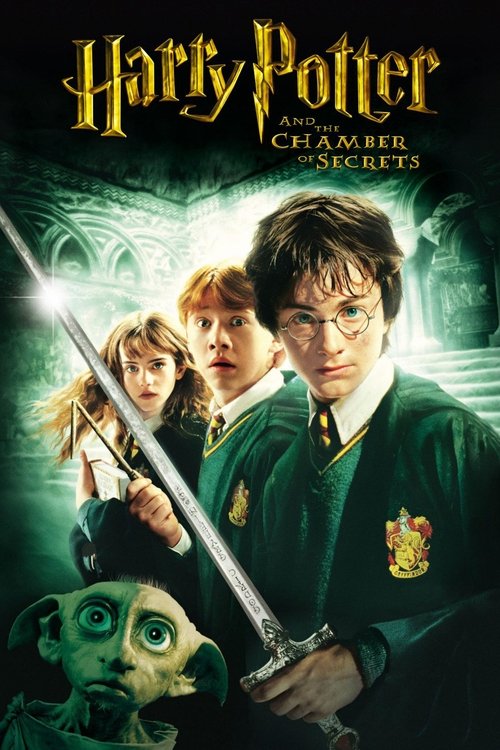
Harry Potter and the Chamber of Secrets
"Something evil has returned to Hogwarts!"
Overview
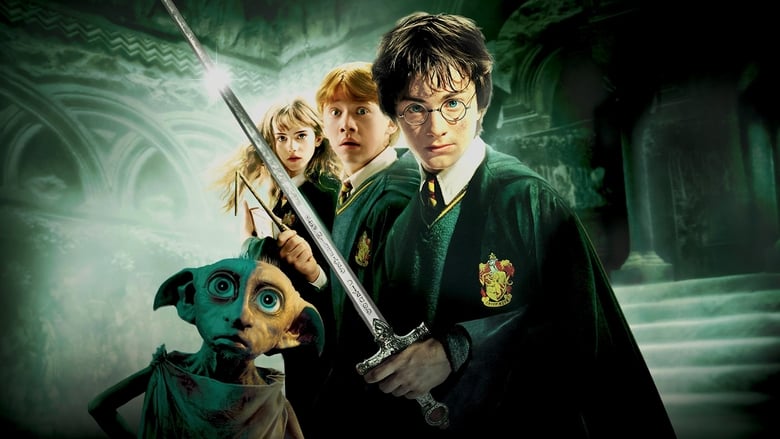
Harry Potter returns for his second year at Hogwarts School of Witchcraft and Wizardry, despite the frantic warnings of a house-elf named Dobby who insists that mortal danger awaits him. After a chaotic arrival via a flying car, Harry finds the school gripped by fear as a mysterious force begins attacking students, leaving them petrified like statues. Bloody messages on the walls proclaim that the "Chamber of Secrets" has been opened and that the "Heir of Slytherin" has returned to purge the school of those deemed unworthy.
As paranoia spreads, Harry finds himself at the center of the suspicion due to his rare ability to speak Parseltongue, the language of snakes. With his friends Ron and Hermione, he investigates the dark history of the school, uncovering a fifty-year-old mystery involving a student named Tom Riddle. The trio must brave giant spiders, incompetent teachers, and ancient magic to find the entrance to the Chamber and defeat the monster within before the school is closed forever.
Core Meaning
Choices Define Us
The central message of the film is articulated by Albus Dumbledore: "It is our choices, Harry, that show what we truly are, far more than our abilities." The film explores the anxiety of nature versus nurture. Harry fears he shares too many traits with the villainous Voldemort (like Parseltongue and the Sorting Hat's initial hesitation), but the narrative proves that one's lineage or inherent talents do not dictate one's morality—active decisions to be brave, loyal, and good do.
Thematic DNA
Prejudice and Blood Purity
The film introduces the derogatory term "Mudblood" and the wizarding world's systemic racism. The central conflict is driven by Salazar Slytherin's ideology that only "Pure-bloods" deserve magical education, mirroring real-world ethnic cleansing and class discrimination.
Identity and Self-Doubt
Harry struggles with his identity throughout the film, fearing he might be the Heir of Slytherin because of his similarities to Tom Riddle. The narrative is a journey of self-discovery where he learns to trust his own character over his fears.
Truth vs. Deception
Appearances are deceiving: the handsome and celebrated Gilderoy Lockhart is a fraud, the ragged diary is a deadly weapon, and the terrifying Hagrid is innocent. The trio must look past surface-level reputation to find the truth.
Loyalty
Loyalty is the magic that saves the day. Harry's loyalty to Dumbledore summons Fawkes the Phoenix, and Ron's loyalty to Harry leads him into his worst nightmare (spiders). The film rewards those who stand by their friends and mentors.
Character Analysis
Harry Potter
Daniel Radcliffe
Motivation
To belong and to protect his home (Hogwarts) from being closed.
Character Arc
Harry starts the film insecure and isolated. He faces a crisis of identity, fearing he is becoming like his enemy. By choosing to save Ginny and fight the Basilisk, he affirms his identity as a Gryffindor and rejects the dark path.
Ron Weasley
Rupert Grint
Motivation
To support Harry and protect his family (Ginny).
Character Arc
Ron faces his greatest phobia (spiders) to help Harry. He steps up from being just a sidekick to an active participant in solving the mystery, despite his broken wand rendering him magically impotent for much of the film.
Gilderoy Lockhart
Kenneth Branagh
Motivation
Fame and adoration.
Character Arc
He begins as an idolized celebrity teacher but is slowly revealed to be an incompetent narcissist and a liar. His arc ends with poetic justice when his own memory-wiping spell backfires, erasing his identity.
Tom Riddle
Christian Coulson
Motivation
To purge the school of Mudbloods and return to life.
Character Arc
He acts as a foil to Harry, showing what Harry could become. He is revealed not as a separate entity but as a memory of Voldemort, bridging the past and present threats.
Symbols & Motifs
Tom Riddle's Diary
Symbolizes the dangers of the past and the seductive power of memory. It represents how unresolved history can manipulate and poison the present.
Harry communicates with the diary, which shows him a biased version of history. It eventually physically manifests the memory of Tom Riddle to threaten Ginny's life.
Fawkes the Phoenix
Represents undying loyalty, rebirth, and hope. Its tears heal fatal wounds, symbolizing that love and loyalty are antidotes to the poison of hatred.
Fawkes appears in the Chamber of Secrets at Harry's moment of greatest need, delivering the Sorting Hat (and Sword) and blinding the Basilisk.
The Flying Car (Ford Anglia)
A symbol of adolescent rebellion and freedom. It represents the chaotic transition from childhood to independence, literally breaking the barrier to the magical world when the gate is closed.
Used by Ron and Harry to get to Hogwarts when they miss the train; it later goes "feral" in the Forbidden Forest, saving them from the spiders.
The Sword of Gryffindor
Symbolizes true bravery and merit. It presents itself only to a "true Gryffindor," validating Harry's place in his house despite his doubts.
Harry pulls the sword from the Sorting Hat inside the Chamber to slay the Basilisk.
Memorable Quotes
It is our choices, Harry, that show what we truly are, far more than our abilities.
— Albus Dumbledore
Context:
Spoken in Dumbledore's office at the end of the film when Harry questions why the Sorting Hat wanted to put him in Slytherin.
Meaning:
The thematic thesis of the movie. It reassures Harry that his similarity to Voldemort (Parseltongue) doesn't make him evil; his decision to be good does.
Dobby is free.
— Dobby
Context:
After Harry tricks Lucius Malfoy into giving Dobby a sock (hidden in the diary), freeing the elf from servitude.
Meaning:
A powerful moment of liberation from slavery and abuse. It highlights the film's stance against the mistreatment of "lesser" magical beings.
Why is it always you three?
— Professor McGonagall
Context:
When Harry, Ron, and Hermione are caught after the trio is involved in yet another mysterious incident.
Meaning:
A meta-commentary on the plot formula involving the main trio, providing a moment of levity amidst the danger.
Follow the spiders! Why couldn't it be 'follow the butterflies'?
— Ron Weasley
Context:
Spoken as they leave Hagrid's hut to head into the Dark Forest to find Aragog.
Meaning:
Highlights Ron's fear and reluctance, contrasting with his bravery in actually following through with the terrifying instruction.
Philosophical Questions
Does our nature dictate our destiny?
The film asks whether we are born good or evil. Harry has innate "dark" qualities (Parseltongue, ambitious sorting), but the film argues through Dumbledore that moral agency (choices) overrides biological or magical inheritance.
What is the ethics of memory?
Through Gilderoy Lockhart, the film explores the violation of stealing and erasing memories. It posits that building an identity on stolen valor and lies is fragile and ultimately self-destructive, as one's true self is erased along with the lies.
Alternative Interpretations
The Political Allegory: Critics and scholars often analyze the film as a direct allegory for racism and ethnic cleansing. The "Pure-blood" ideology mirrors Nazi Aryan supremacy, with the Chamber representing the violent purging of the "unclean" from society.
The Loss of Innocence: The film can be read as a metaphor for puberty and the end of childhood innocence. The characters deal with changing bodies (Polyjuice potion), darker emotional impulses, and the realization that authority figures (Lockhart, the Ministry) can be incompetent or corrupt.
The Jungian Shadow: Harry's confrontation with Tom Riddle is a confrontation with his own "Shadow" self. Riddle represents Harry's potential for darkness, and slaying the Basilisk is the symbolic conquering of his own inner demons to integrate his true self.
Cultural Impact
Harry Potter and the Chamber of Secrets solidified the franchise as a cinematic juggernaut. Released in 2002, it proved that the success of the first film was not a fluke. It was pivotal in establishing the darker, more mature tone that would define the series' evolution, moving away from pure whimsy toward genuine horror elements and complex themes of racism and corruption. The film deepened the lore of the Wizarding World, introducing key concepts like Parseltongue and the history of the Founders, which hooked audiences on the serialized mystery aspect of the saga.
Critically, it was received as an improvement over the first film in terms of visual effects and acting, particularly for the child stars. However, it sparked debates about runtime (161 minutes) in children's cinema. Culturally, the film fueled the global "Pottermania," influencing a generation's understanding of prejudice through the "Mudblood" allegory.
Audience Reception
Praised: Audiences loved the darker atmosphere, the improved CGI (especially Dobby and the Basilisk), and the deeper mystery. Kenneth Branagh's performance as Lockhart is universally cited as a highlight. Fans appreciated the faithfulness to the book.
Criticized: The runtime was a major point of contention, with some feeling the movie dragged in the middle. Some parents felt the spider scene and the finale were too frightening for very young children. A few critics felt the movie was a bit repetitive in structure compared to the first one.
Interesting Facts
- Hugh Grant was originally cast as Gilderoy Lockhart but had to drop out due to scheduling conflicts; Kenneth Branagh took the role.
- The Chamber of Secrets set was the largest created for the franchise at the time, measuring 76 meters long and 37 meters wide.
- Jason Isaacs (Lucius Malfoy) improvised the line "Let us hope that Mr. Potter will always be around to save the day," prompting Daniel Radcliffe to improvise the defiant response, "Don't worry. I will be."
- The spiders in the Forbidden Forest scene were not all CGI; an 18-foot animatronic Aragog was built, which weighed three quarters of a ton.
- Rupert Grint (Ron) has a severe real-life fear of spiders, so his terrified reaction in the spider scene was genuine.
- Shirley Henderson, who played the ghost of the student Moaning Myrtle, was actually 37 years old at the time of filming—the oldest actor to play a Hogwarts student.
- During the end credits, there is a scene showing a moving picture of Gilderoy Lockhart in a straitjacket, revealing his fate after the memory spell backfired.
Easter Eggs
Lucius Malfoy's Sleight of Hand
In the bookstore scene, viewers can clearly see Lucius Malfoy pick up a book from Ginny's cauldron and slip two books back in. One is hers, and the other is Tom Riddle's diary, setting the entire plot in motion.
The Vanishing Cabinet
When Harry accidentally travels to Borgin and Burkes, he hides in a large black cabinet. This is the Vanishing Cabinet that becomes a crucial plot device for Death Eaters entering Hogwarts in the sixth film, The Half-Blood Prince.
Sherbet Lemon Password
The password to Dumbledore's office is "Sherbet Lemon," a reference to the very first chapter of the first book where Dumbledore offers Professor McGonagall this Muggle sweet.
Hand of Glory
In Borgin and Burkes, Draco examines a withered hand on a cushion. This is the Hand of Glory, a dark artifact mentioned in the books that gives light only to the holder, though not used in this film's plot.
No Nose Voldemort
In the flashback scene where Harry sees Tom Riddle, there is a brief shot where Riddle's face is distorted, and his nose appears to be missing, foreshadowing his future serpentine appearance as Voldemort.
⚠️ Spoiler Analysis
Click to reveal detailed analysis with spoilers
Frequently Asked Questions
Explore More About This Movie
Dive deeper into specific aspects of the movie with our detailed analysis pages
Comments (0)
No comments yet. Be the first to share your thoughts!