
Skip to content
Mr. Plankton
A bittersweet black-comedy road trip across sun-bleached coastlines and freezing snowfields, where two wandering, fractured souls collide like adrift sea glass, discovering warm human connection at the edge of inevitable goodbye.
Mr. Plankton

Mr. Plankton

Mr. 플랑크톤

"A drifting soul, a stole bride, and one last ride. Seriously, what could go wrong?"

08 November 2024 — 08 November 2024 South Korea 1 season 10 episode Ended 8.1 (128)

Cast: Woo Do-hwan, Lee You-mi, Oh Jung-se, Kim Hae-sook, Kim Min-seok

Drama Comedy Rootlessness, Identity, and Belonging Mortality, Acceptance, and Living Fully Self-Worth Beyond Social and Biological Expectations Unconditional Love vs. Duty and Obligation Reconciliation with Childhood Trauma and Abandonment

Overview

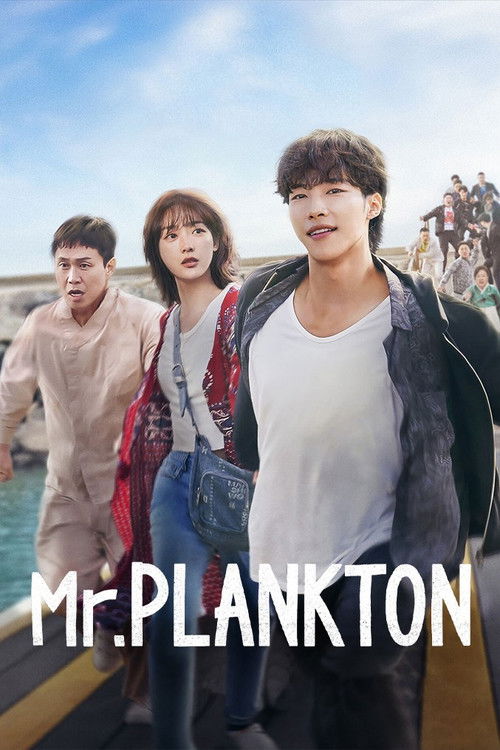
Mr. Plankton (Korean: Mr. 플랑크톤) is a 10-episode Netflix original romantic dark comedy-drama series released on November 8, 2024. Directed by Hong Jong-chan and written by Jo Yong, the series follows the chaotic, deeply emotional odyssey of two societal misfits who have always felt unloved, unwanted, and adrift.

The story centers on Hae-jo, an eccentric "fixer" who runs an illegal errand service taking on absurd tasks for paying clients. Having learned early in life that he was born as a result of an artificial insemination medical error—leading his family to reject and abandon him—Hae-jo lives a detached, reckless life without roots. His world is upended when he receives a sudden diagnosis of a terminal brain tumor with only months to live, driving him to embark on a nationwide road trip across South Korea to locate his biological father.

Along for this unexpected journey is Jo Jae-mi, Hae-jo's fiery ex-girlfriend who is facing her own crushing life crisis right before her high-profile wedding to Eo Heung, the gentle heir of a traditional 500-year-old clan. As they traverse South Korea pursued by a frantic fiancé, angry mobsters, and strict clan matriarchs, Hae-jo and Jae-mi clash, heal, and reignite their unresolved love, confronting their deepest childhood traumas and discovering what it truly means to belong.

Core Meaning

The overarching message of Mr. Plankton is rooted in its title: plankton are microscopic organisms that drift aimlessly through vast oceans unable to swim against currents, yet they are essential to sustaining all marine and terrestrial ecosystems on Earth. The series asserts that no human life is an "accident" or useless, regardless of how one was born or how society views them.

Addressing those who feel rejected, abandoned, or flawed, the show demonstrates that every individual carries inherent dignity, beauty, and purpose. Through Hae-jo's journey and Jae-mi's struggle with identity and loss, it highlights that true family is built not on biological bloodlines or rigid lineage, but on sincere, selfless love and emotional presence.

Thematic DNA

Rootlessness, Identity, and Belonging 30%
Mortality, Acceptance, and Living Fully 25%
Self-Worth Beyond Social and Biological Expectations 20%
Unconditional Love vs. Duty and Obligation 15%
Reconciliation with Childhood Trauma and Abandonment 10%

Rootlessness, Identity, and Belonging

Hae-jo's existence is defined by feeling like an "impure substance" or an unwanted error due to an IVF mix-up. His quest to find his biological father represents a search for identity, ultimately realizing that true identity lies not in genetic heritage, but in the memories and love created with those who genuinely cherish him.

Mortality, Acceptance, and Living Fully

Confronted with a terminal brain tumor, Hae-jo's initial cynicism shifts to embracing the present moment with Jae-mi. The series demonstrates that accepting mortality allows one to shed fears and live with authenticity, love, and joy.

Self-Worth Beyond Social and Biological Expectations

Jae-mi's identity is shattered by a diagnosis of premature menopause at age 28, feeling she failed her dream of becoming a mother. The narrative dismantles societal pressures placed on women regarding fertility and traditional lineage, showing her value is complete in herself.

Unconditional Love vs. Duty and Obligation

The show contrasts Eo Heung's gentle, duty-bound devotion bound by familial expectations with Hae-jo's raw, unvarnished connection with Jae-mi, exploring how love must allow individuals to be entirely truthful rather than hiding behind facades.

Reconciliation with Childhood Trauma and Abandonment

Both lead characters carry profound wounds from childhood neglect and abandonment. Their shared journey acts as a therapeutic process allowing them to forgive the past, release resentment, and hold space for each other's grief.

Character Analysis

Hae-Jo / Chae Seung-hyeok

Woo Do-hwan

Archetype: Tragic Antihero / Vagabond Wanderer Key Trait: Free-spirited unpredictability masking intense vulnerability and sadness

Motivation

Initially seeks biological answers to justify his existence; evolves into wanting to experience true happiness and love with Jae-mi in his final days.

Character Arc

Begins as a cynical, reckless fixer hiding loneliness behind bravado. After learning he is terminally ill, he kidnaps Jae-mi to hunt for his biological father. By the end, he lets go of resentment toward his origins, accepts his non-biological father, and admits his deep desire to live and love fully before dying in peace.

Jo Jae-mi

Lee You-mi

Archetype: Reluctant Heroine / Emotionally Raw Survivor Key Trait: Fierce emotional expression, honesty, and loyalty

Motivation

Driven by a lifelong dream to become a mother and build a home; evolves into recognizing her own intrinsic worth without needing to fulfill traditional maternal roles.

Character Arc

Raised in orphanages and starved for familial belonging, Jae-mi tries to secure stability by pretending to be pregnant to marry into the traditional Eo family. After being jilted by Hae-jo, she gradually drops her defensive screaming and lies, confronting her diagnosis of premature menopause and embracing her true self.

All 5 characters and cast

Symbols & Motifs

Plankton (Microscopic Drifters)

Meaning:

Symbolizes people who drift aimlessly without clear roots or destination, yet possess vital value to the world.

Context:

Used as the overarching central motif and title concept framing the main characters' identities and existential worth.

The Four-Leaf Clover in the Snow

Meaning:

Symbolizes rare luck, hope, and miraculous love amidst cold, harsh reality.

Context:

Appears in the series finale as Jae-mi searches for it in the snowy field while Hae-jo collapses.

The Vintage Red Jeep

Meaning:

Represents freedom, wandering, and an unconventional shelter where Hae-jo and Jae-mi reconnect away from societal rules.

Context:

Hae-jo's vehicle throughout the nationwide road trip across South Korea.

Flower Shoes (Kkot-sin)

Meaning:

Represents traditional expectations, duty, and gentle care, contrasting with Hae-jo's wilder life.

Context:

Traditional floral shoes purchased by Eo Heung for Jae-mi.

The Errand Center & Fun-Rating Scale

Meaning:

Symbolizes Hae-jo's coping mechanism to avoid genuine emotional vulnerability or long-term attachments.

Context:

Hae-jo's business criteria of accepting jobs purely based on how "fun" or chaotic they are.

Nosebleeds & Brain Tumor Scans

Meaning:

Serves as a constant visual ticking clock, contrasting lighthearted comedic moments with mortal stakes.

Context:

Physical manifestations showing Hae-jo's declining health throughout the journey.

Memorable Quotes

Made jjampong by mistake. Not entirely wrong. That's me.
— Hae-jo

Context

Spoken in Episode 2 as Hae-jo self-deprecatingly describes his existence after explaining his origin story.

Meaning

Highlights his deep sense of being a flawed "mix-up" created by an IVF mistake.

Why do tragedies keep happening to people whose lives are already pathetic?
— Hae-jo

Context

Uttered in Episode 1 when Hae-jo receives his terminal brain tumor diagnosis.

Meaning

Captures the absurd unfairness felt by marginalized individuals facing relentless hardship.

All 5 quotes

Episode Highlights

A Man Born by Mistake

S1E1

Hae-jo runs his errand business and kidnaps a runaway bride; he receives a diagnosis of a terminal brain tumor with 3 months to live. Simultaneously, Jae-mi learns of her premature menopause on the eve of her wedding to Eo Heung.

Significance:

Establishes the central ticking clock, dark comedy tone, and tragic underlying stakes.

Crashing the Wedding

S1E2

Hae-jo crashes Jae-mi's high-society wedding and forcibly takes her away in his red Jeep, kicking off their road trip to find his potential biological fathers.

Significance:

Triggers the pursuit plot with Eo Heung and mobsters following them, inciting the main narrative momentum.

Hard Choices and Chases

S1E4

Eo Heung and mob leader Wang Chil-seong close in. Jae-mi is forced to choose between safety with her devoted fiancé and the dangerous, chaotic road with Hae-jo.

Significance:

Highlights Jae-mi's internal struggle and deeper connection to Hae-jo.

Stranded on the Deserted Island

S1E6

After stealing a boat to escape mobsters, Hae-jo and Jae-mi end up stranded on an isolated island.

Significance:

Stripped of outside distractions, the two leads confront their past romance, unresolved breakup, and raw feelings for each other.

Confronting the Paternal Roots

S1E8

Hae-jo meets potential fathers and eventually visits the father who raised him (Chae Yeong-jo). Looking at all the people he loves, Hae-jo realizes blood ties do not define love.

Significance:

Resolves Hae-jo's psychological need for a biological father, shifting his focus to making peace with those he leaves behind.

The Final Journey in the Snow

S1E10

Hae-jo's health rapidly declines during winter. While Jae-mi searches for a four-leaf clover in the snow, Hae-jo collapses and confesses his love and desire to live, passing away in her arms under the blue sky.

Significance:

Delivers the poignant, bittersweet finale, fulfilling the title's message of finding meaning in an imperfect life.

Philosophical Questions

What gives human life intrinsic value?

The series asks whether worth is determined by societal accomplishments, biological heritage, or simply existing and caring for others.

How does confronting death alter how we love?

Through Hae-jo's diagnosis, the show explores whether mortality strips away superficial pride and forces authentic emotional connection.

Is family defined by blood or choice?

By examining Hae-jo's search for his biological father alongside his emotional bond with those who raised and loved him, the show questions traditional definitions of family.

Alternative Interpretations

The Literal Tragic Reality: Hae-jo succumbs to his terminal brain tumor in Episode 10 while lying in Jae-mi's arms in the snowy landscape. In this reading, the show is an unvarnished tragedy emphasizing the inevitability of death, but celebrating that Hae-jo died knowing he was truly loved.

Full ending explanation

Cultural Impact

Mr. Plankton offers a critique of rigid traditional South Korean societal expectations. By focusing on a 500-year-old clan family (the Eo family) obsessed with pure bloodlines, male heir succession, and filial duty, the show contrasts traditional patriarchal values with modern individualism and marginalized realities.

Furthermore, the drama tackles taboo health topics in Korean culture, such as premature menopause at a young age and the emotional stigma surrounding IVF error mix-ups. Released globally on Netflix on November 8, 2024, the series reached the Global Top 10 for TV shows, trending at #1 in multiple Asian and Latin American countries.

Audience Reception

Praised Aspects: Woo Do-hwan and Lee You-mi received widespread acclaim for their raw chemistry, emotional vulnerability, and comedic timing. Oh Jung-se was praised for turning a potential side character into a deeply sympathetic figure. Viewers also lauded the sweeping visuals of Korea's coastlines and winter landscapes, paired with a memorable soundtrack.

Main Criticism & Controversy: Initial episodes faced pushback from viewers who found Hae-jo kidnapping Jae-mi from her wedding day uncomfortable or toxic. Some critics noted that blending slapstick dark comedy with terminal melodrama felt jarring in early episodes.

Overall Verdict: Despite minor pacing criticisms, Mr. Plankton evolved into a beloved sleeper hit on Netflix, praised for its emotional depth and tear-jerking finale.

Interesting Facts

  • Actor Woo Do-hwan intentionally stopped his strict daily workout routine and lost 7 kg (dropping from 78 kg to 71 kg) to convincingly portray Hae-jo's frailty and terminal condition.
  • Mr. Plankton marked Woo Do-hwan's first proper romantic lead role in six years since Tempted (2018).
  • To showcase the wandering nature of the road trip, production filmed extensively across diverse South Korean landscapes, including Jeju Island, Gangwon Province, Busan, and mountain ranges.
  • Writer Jo Yong achieved critical fame with It's Okay to Not Be Okay, while Director Hong Jong-chan directed Netflix's Juvenile Justice and Dear My Friends.
  • The production team licensed classic tracks such as 'California Dreamin'' to close episodes, amplifying the nostalgic, drifting atmosphere of the road trip.

Easter Eggs

Etymological Title Sequence Cue

The opening title sequence subtle cues refer to the Greek root word planktos ('to wander aimlessly'), directly framing Hae-jo's identity.

Lee Da-hee Guest Appearance

Actress Lee Da-hee makes a guest appearance in Episode 1 as Noh Yang-hui, the rich bride who hires Hae-jo to kidnap her.

Nod to Writer's Previous Work

Like Jo Yong's It's Okay to Not Be Okay, Mr. Plankton explores adult trauma rooted in childhood abandonment and healing through non-traditional romantic dynamics.

Frequently Asked Questions

Explore More About This Movie

Dive deeper into specific aspects of the movie with our detailed analysis pages

Comments (0)

Leave a comment

No comments yet. Be the first to share your thoughts!

Similar Movies