My Hero Academia: Heroes Rising
An electrifying shonen spectacle where nascent heroes' ideals are forged in the crucible of overwhelming threat, a visual symphony of explosive camaraderie and selfless sacrifice.
My Hero Academia: Heroes Rising

My Hero Academia: Heroes Rising

僕のヒーローアカデミア THE MOVIE ヒーローズ:ライジング

"When There's Nothing to be gained, Rising to the challenge at those times, is surely the mark... OF A TRUE HERO!"

20 December 2019 Japan 104 min ⭐ 8.2 (1,228)
Director: Kenji Nagasaki
Cast: Daiki Yamashita, Nobuhiko Okamoto, Yoshio Inoue, Mio Imada, Yuka Terasaki
Animation Fantasy Action Adventure
The Nature of Heroism: Saving vs. Winning Self-Sacrifice and Legacy The Power of Teamwork and Strategy The Rise of the Next Generation
Box Office: $30,017,163

Overview

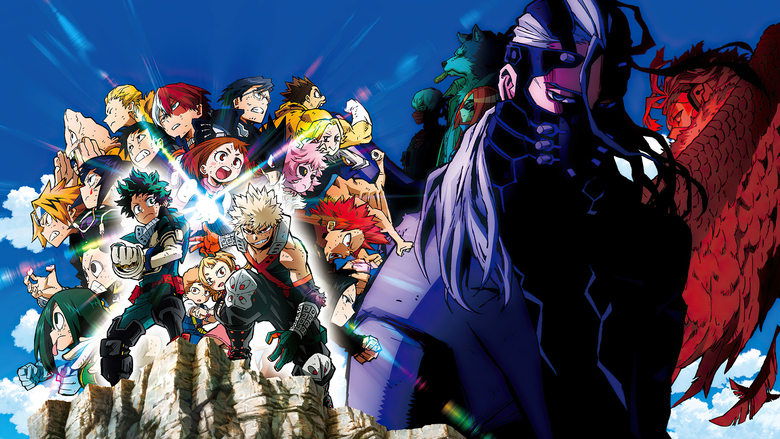
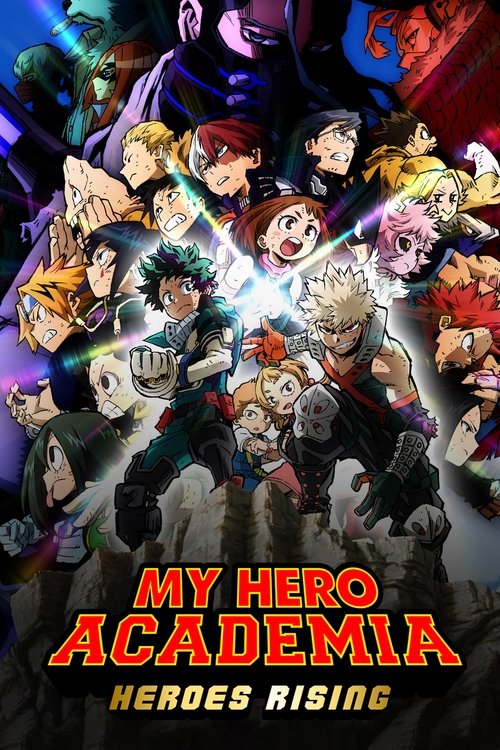
In "My Hero Academia: Heroes Rising," the students of Class 1-A are sent to the remote Nabu Island to gain practical hero experience through a special work-study program. Their time on the peaceful island, helping the local community with everyday tasks, is abruptly shattered by the arrival of a formidable group of villains led by the powerful Nine. Nine possesses the ability to steal and utilize multiple Quirks and is in search of a specific one to achieve his radical societal vision. With professional heroes far away and all communication lines severed, the young heroes-in-training must band together and use their developing skills to protect the island's inhabitants from this unprecedented threat, pushing their abilities and their bonds to the absolute limit.

The film focuses heavily on the dynamic between Izuku Midoriya (Deku) and his childhood rival, Katsuki Bakugo. Faced with a villain whose power seems insurmountable, they are forced to confront their differing ideologies on what it means to be a hero—saving people versus winning at all costs—and find a way to cooperate. The students must devise clever strategies, combining their diverse Quirks in novel ways to combat Nine's overwhelming power and protect the innocent islanders, leading to a series of intense and visually spectacular battles.

Core Meaning

"My Hero Academia: Heroes Rising" delves into the essence of heroism, exploring the idea that being a hero is defined by selfless sacrifice and the unwavering will to protect others, even at great personal cost. The film posits that true strength lies not just in individual power, but in the collaborative spirit of a team and the willingness to lay everything on the line for the greater good. It powerfully illustrates the core tenet of the series: the spirit of self-sacrifice is the ultimate heroic act. The narrative culminates in the idea that the next generation of heroes, by working together, can surpass the achievements of their predecessors and redefine what it means to be a hero in a world of escalating threats. The movie accentuates classic shonen themes of friendship, youth, and the power derived from them to overcome seemingly impossible odds.

Thematic DNA

The Nature of Heroism: Saving vs. Winning 35%
Self-Sacrifice and Legacy 30%
The Power of Teamwork and Strategy 25%
The Rise of the Next Generation 10%

The Nature of Heroism: Saving vs. Winning

The film crystallizes a central conflict within the series through the rivalry of Deku and Bakugo. Deku embodies the philosophy of heroism focused on saving everyone, prioritizing the safety of civilians above all else. Bakugo, conversely, is driven by the desire to be the number one hero, which to him means achieving absolute victory against any foe. "Heroes Rising" forces these two ideologies to coexist and ultimately merge. To defeat Nine, they must learn that saving people and winning are not mutually exclusive but two sides of the same heroic coin. Their teamwork in the final battle represents a profound understanding that both perspectives are necessary to be a truly great hero.

Self-Sacrifice and Legacy

The theme of self-sacrifice is pushed to its extreme in the film's climax. Deku makes the monumental decision to transfer his inherited Quirk, One For All, to Bakugo, believing it's the only way to protect the people of Nabu Island. This act represents the ultimate sacrifice for a hero-in-training, as it means giving up his own dream of becoming the number one hero. This moment echoes the legacy of All Might and the previous wielders of One For All, highlighting that a hero's true legacy is not personal glory but the peace and safety they ensure for others. The film explores the idea that true heroism involves being willing to give up everything for the sake of others.

The Power of Teamwork and Strategy

Unlike many hero narratives that focus on a single protagonist, "Heroes Rising" gives the entirety of Class 1-A a chance to shine. Faced with a threat beyond any one of them, the students are forced to rely on strategic planning and the synergistic use of their diverse Quirks. The film showcases how seemingly less-powerful abilities can be crucial when used intelligently as part of a larger plan. The coordinated efforts to separate and defeat Nine's underlings demonstrate that their collective strength and ingenuity are their greatest weapons, reinforcing the shonen trope that friendship and cooperation can overcome overwhelming power.

The Rise of the Next Generation

With All Might retired and the professional heroes unavailable, the film places the responsibility of protecting society squarely on the shoulders of the students. Their mission on Nabu Island transforms from a simple training exercise into a real-world trial by fire. They must step up and become the heroes the world needs them to be, demonstrating their growth and readiness to inherit the mantle from the previous generation. The movie serves as a powerful statement about the potential and importance of the new generation of heroes.

Character Analysis

Izuku Midoriya (Deku)

Daiki Yamashita

Archetype: The Idealistic Hero
Key Trait: Selfless

Motivation

Deku's primary motivation is to save people with a smile, just like his idol, All Might. He is driven by a deep-seated empathy and a desire to protect the innocent. He believes that the purpose of being a hero is to give help to those who need it, even if it's not asked for. This motivation is what allows him to consider sacrificing his own power for the greater good.

Character Arc

Deku's arc in the film is a powerful affirmation of his core heroic philosophy. He begins by demonstrating his kindness and desire to help with even the smallest tasks on Nabu Island. When faced with Nine, his resolve to save everyone is tested. His journey culminates in the ultimate act of selflessness: being willing to permanently give up his Quirk and his dream to save others. This solidifies his status as a true hero, one who embodies the principle of putting others before himself, regardless of the personal cost.

Katsuki Bakugo

Nobuhiko Okamoto

Archetype: The Prideful Rival
Key Trait: Ambitious

Motivation

Bakugo's overriding motivation is to become the undisputed number one hero, surpassing even All Might. He is driven by a fierce competitive spirit and a desire to prove his own strength and superiority. He wants to win, believing that a hero's primary purpose is to be victorious over evil.

Character Arc

Bakugo undergoes significant development in "Heroes Rising." Initially, his abrasive and competitive nature is on full display as he scoffs at the menial hero tasks. However, the film forces him to cooperate with Deku, his long-time rival. By temporarily wielding One For All and fighting alongside Deku, he experiences a power that comes from trust and cooperation. This shared experience deepens his grudging respect for Deku and forces him to acknowledge the validity of Deku's heroic philosophy. His arc is about learning that true strength isn't just about winning, but about fighting for others.

Nine

Yoshio Inoue

Archetype: The Tragic Antagonist
Key Trait: Ideological

Motivation

Nine's motivation is to create a utopian society where the strong rule over the weak, eliminating the concepts of heroes and villains entirely. He believes that power is the only true measure of worth. This ideology stems from his past and a desire to create a world where people like him and his comrades are no longer oppressed. His immediate goal is to steal a specific Quirk that can counteract the cellular degeneration caused by his multiple stolen Quirks.

Character Arc

Nine is presented as a villain with a complex, albeit destructive, ideology. A one-shot manga prequel reveals he was once a man who wanted to protect his friends who were oppressed for their powerful Quirks. He subjected himself to experiments by All For One's doctor to gain more power, but this came at the cost of his body degenerating. His arc in the film is a desperate and destructive quest to obtain Katsuma's "Cell Activation" Quirk to heal himself and create a new world order based on power. He is ultimately a tragic figure, consumed by his own ambition and the very power he sought to control.

Symbols & Motifs

One For All

Meaning:

One For All symbolizes legacy, responsibility, and the collective hope of humanity. It is not merely a superpower but a torch passed down through generations of heroes. In this film, its potential transfer represents the ultimate act of selfless heroism, where the individual's dream is sacrificed for the collective good. It also embodies the idea that power is not owned but held in trust for the protection of others.

Context:

The Quirk is central to the film's plot, especially during the climactic battle. Deku's decision to transfer One For All to Bakugo is the film's most significant turning point. Additionally, Nine's inability to steal One For All because it contains the vestiges of multiple Quirks hints at its unique and profound nature.

Nabu Island

Meaning:

Nabu Island represents a microcosm of the society the heroes are sworn to protect. Its initial peace and tranquility symbolize the ideal world that heroes strive for. When it comes under attack, it becomes a crucible for Class 1-A, testing their resolve and forcing them to put their training into practice in a real-world scenario without a safety net.

Context:

The entire film is set on Nabu Island, where Class 1-A is deployed for their hero work program. The island's isolation is a key plot device, cutting the students off from any professional hero support and forcing them to rely solely on themselves.

Memorable Quotes

I'm the one who'll be better than All Might and take the number one spot.

— Katsuki Bakugo

Context:

This is a recurring sentiment from Bakugo throughout the series and is reflective of his core personality, which is on full display in the film as he initially clashes with Deku over their differing approaches to heroism.

Meaning:

This quote perfectly encapsulates Bakugo's fierce ambition and unwavering goal. It highlights his competitive nature and his singular focus on becoming the greatest hero, serving as a stark contrast to Deku's more altruistic motivations.

The strong will rule over the weak in my utopia. It won't matter if someone is a villain or a hero. Everything is equal before power. That is what a true superhuman society should be.

— Nine

Context:

Nine expresses this belief as he enacts his plan to reshape the world, justifying his ruthless actions in pursuit of his ideal society.

Meaning:

This quote lays bare Nine's radical ideology. It's a philosophy of social Darwinism applied to a super-powered world, rejecting traditional morality in favor of a hierarchy based purely on strength. It establishes him as a villain with a clear, albeit terrifying, vision for the future.

Stop talking. I will win. That's … what heroes do.

— Katsuki Bakugo

Context:

This line is delivered during a critical moment, highlighting Bakugo's mindset in the heat of battle and his fundamental understanding of what it means to be a hero from his perspective.

Meaning:

A concise and powerful declaration of Bakugo's philosophy of heroism. For him, the defining characteristic of a hero is their ability to achieve victory, to overcome any obstacle through sheer force of will and power. It contrasts sharply with Deku's focus on the act of saving.

Philosophical Questions

What is the true measure of a hero: the outcome of their actions or the intent behind them?

The film explores this through the dichotomy of Deku and Bakugo. Bakugo is focused on the outcome: victory. Deku is focused on the intent: saving people. The narrative suggests that both are vital. Furthermore, Deku's choice to sacrifice his power, an act that could be seen as a failure in his personal quest to become the number one hero, is portrayed as the most heroic act possible. This raises the question of whether heroism is defined by personal achievement or by the willingness to forsake it for others.

Does a society built on power inevitably lead to oppression?

The villain, Nine, seeks to create a society where strength is the only governing principle, believing it will create a true form of equality among the powerful. However, his methods involve violence, theft, and a disregard for the "weak." The film implicitly critiques this ideology by showing the chaos and destruction it causes. The heroes of Class 1-A, by protecting the vulnerable and working together, offer a counter-philosophy: that a just society is one that protects all its members, not just the strong.

Alternative Interpretations

The film's ending is the primary subject of alternative interpretations. The miraculous return of One For All to Deku after he seemingly gave it away permanently is a point of contention. One interpretation is that the transfer was incomplete because Bakugo fell unconscious. A more popular and symbolic reading is that the vestiges of the previous One For All users, having witnessed Deku's ultimate act of heroism, intervened to allow him to keep the Quirk. This suggests a level of sentience and will within the Quirk itself, making it more than just a transferable power. Another interpretation is that the entire event, being non-canon to the manga, is a "what if" scenario, showcasing a potential finale for the series where Deku truly becomes the greatest hero by sacrificing his own power and dream. This reading views the ending's reset as a necessary narrative device to avoid conflicting with the ongoing manga, treating the film as an emotional exploration of the series' core themes rather than a strict plot progression.

Cultural Impact

"My Hero Academia: Heroes Rising" was a significant box office success, particularly in North America, where it surpassed the earnings of the first film and became one of the highest-grossing anime films in the U.S. at the time. Its success demonstrated the growing mainstream appeal of the "My Hero Academia" franchise and anime in general in Western markets. The film was praised by critics and audiences for its high-octane action sequences, emotional weight, and for giving the entire cast of Class 1-A moments to shine. However, its non-canonical status, a common trait of films based on ongoing anime series, drew some criticism for feeling inconsequential to the main storyline, despite being supervised by the original creator. The movie's plot, particularly the temporary transfer of One For All, sparked intense discussion and debate among fans regarding its implications for the series' lore and its potential as an alternate ending to the entire saga. It solidified the franchise's place as a global pop culture phenomenon, bridging the gap between anime enthusiasts and mainstream superhero fans.

Audience Reception

"My Hero Academia: Heroes Rising" was met with a highly positive reception from audiences and fans of the series. Viewers praised the film for its stunning animation, particularly during the lengthy and elaborate fight sequences. Many lauded the decision to give every member of Class 1-A a meaningful role in the conflict, allowing a wide array of characters to showcase their abilities and growth. The emotional core of the film, centered on the evolving relationship between Deku and Bakugo, was a major point of praise, with the climactic battle being a fan-favorite moment. The main point of criticism and debate revolved around the ending's "reset button," where the significant development of Bakugo temporarily wielding One For All is effectively erased. Some viewers found this to be an unsatisfying cop-out that undermined the emotional weight of Deku's sacrifice, while others accepted it as a necessary consequence of the film being a non-canonical side story. Overall, it was considered a thrilling and emotionally resonant experience for fans of the franchise.

Interesting Facts

  • The creator of the "My Hero Academia" manga, Kohei Horikoshi, stated that the film's story contains elements he had originally considered for the manga's final battle.
  • Horikoshi initially intended for this to be the last film in the franchise, believing he couldn't top the story presented.
  • The film is set after the first part of the anime's fourth season, and contains some spoilers for anime-only viewers at the time of its release, such as character costume upgrades and new super moves.
  • A special one-shot prequel manga titled "League of Villains: Undercover," written and illustrated by Horikoshi, was distributed to the first million moviegoers in Japan, delving into the villain Nine's backstory.
  • The character Nine had a cameo in chapter 222 of the manga, long before his official introduction in the film, teasing his appearance.

Easter Eggs

Endeavor's Facial Scar

At the beginning of the film, the hero Endeavor is shown with a large scar over his left eye. This is a direct reference to his fight with the High-End Nomu in the Pro Hero Arc of the manga, an event that had not yet been fully animated in the TV series when the movie was released.

Past One For All Users

When Nine attempts to steal Deku's Quirk, he has a vision of the previous wielders of One For All. One of these figures is clearly identifiable as Daigoro Banjo, the 5th user, whose identity and Quirk, Blackwhip, are significant reveals that occur much later in the manga.

Deku's Upgraded Gear

Deku is seen using his upgraded Air Force Gloves and Iron Soles with much more proficiency than he had at that point in the anime. This was a subtle nod to his future development and mastery of his Shoot Style.

Godzilla Cameo

The film features a brief appearance of a kaiju-like Pro Hero named Godzillo. This is a clear homage to the iconic monster Godzilla, with his bio even referencing the 1998 American Godzilla film.

⚠️ Spoiler Analysis

Click to reveal detailed analysis with spoilers

Frequently Asked Questions

Explore More About This Movie

Dive deeper into specific aspects of the movie with our detailed analysis pages

Comments (0)

Leave a comment

No comments yet. Be the first to share your thoughts!