Capernaum
کفرناحوم
"It takes courage to hope."
Overview
"Capernaum" tells the story of Zain El Hajj, a resilient and street-smart 12-year-old boy living in the impoverished slums of Beirut. The film is framed by a startling courtroom scene where Zain, already serving a five-year prison sentence for a violent crime, decides to sue his own parents. His charge against them: the crime of giving him life in a world that offers him nothing but suffering and neglect.
Through an extended flashback, the film chronicles the harrowing circumstances that led Zain to this desperate act. We witness his daily struggle for survival, his fierce love for his younger sister Sahar, and his escape from home after his parents sell her into marriage. Alone on the streets, he finds a precarious refuge with Rahil, an undocumented Ethiopian refugee, and her infant son, Yonas. Zain forms a powerful bond with the baby, becoming his sole protector when Rahil is suddenly arrested, forcing him to use every ounce of his ingenuity to care for them both amidst the city's unforgiving chaos.
Core Meaning
The core meaning of "Capernaum" is a powerful indictment of a society that fails its most vulnerable members, specifically children. Director Nadine Labaki sought to give a voice to the voiceless and invisible children living in extreme poverty, who are denied basic rights like education, healthcare, and even a legal identity. The film's central conceit—a child suing his parents for being born—is a dramatic metaphor for questioning a system where children are brought into a life of suffering without any hope or support. Labaki's message is that the parents are also victims of a broken system, and the lawsuit is ultimately against the societal neglect, failed governance, and collective indifference that perpetuate cycles of poverty and abuse. It's a plea for recognition of every child's fundamental right to a dignified existence and a challenge to the audience to stop being complicit through silence.
Thematic DNA
Childhood Neglect and Lost Innocence
This is the central theme of the film, embodied by Zain. He is not allowed to be a child; instead, he is a provider, a caretaker, and a defender. His parents view him and his siblings as a source of labor or a commodity, as seen when they sell his sister Sahar. The film relentlessly portrays how poverty and parental irresponsibility strip children of their innocence, forcing them into a brutal adult world. Zain's foul language and hardened exterior are defense mechanisms developed in a life devoid of love and safety.
Statelessness and Lack of Identity
A critical theme is the 'invisibility' of people without official documentation. Zain does not have a birth certificate, so legally, he does not exist. This denies him access to school, healthcare, and any legal protection. This is mirrored in the character of Rahil, an undocumented immigrant whose precarious status leads to her arrest and separation from her son. The film powerfully argues that a piece of paper can determine one's humanity in the eyes of the state, asking, "I need proof that you're human."
Poverty and Survival
"Capernaum" provides an unflinching look at the brutal realities of life in Beirut's slums. Characters are forced to make impossible choices to survive. Zain's family resorts to criminal schemes, like soaking clothes in crushed tramadol to sell to prisoners. After running away, Zain's entire existence revolves around finding food and shelter for himself and the infant Yonas, highlighting the desperate ingenuity required to survive day-to-day in a world of extreme deprivation.
Injustice and Systemic Failure
Zain's lawsuit is a cry against a world of injustice. The film critiques not just his parents but the entire societal and legal framework that allows such suffering to occur. The government is corrupt or absent, social safety nets are non-existent, and the legal system is ill-equipped to protect the rights of children or refugees. The film portrays a system where the most vulnerable are consistently failed by those in power.
Character Analysis
Zain El Hajj
Zain Al Rafeea
Motivation
Zain is driven by a fierce, instinctual desire for justice and a better life. His primary motivation is to protect those more vulnerable than himself—first his sister Sahar, and then the baby Yonas. Ultimately, he is motivated by the need to be seen and acknowledged as a human being and to prevent others from suffering the same fate.
Character Arc
Zain begins as a hardened, cynical survivor, forced into adulthood by neglect. His arc is not one of drastic change, but of reaffirming his core humanity. Initially focused on his own survival and protecting his sister, his journey evolves when he takes responsibility for the infant Yonas. This act of profound empathy solidifies his moral core. His final act of suing his parents is a desperate attempt to impose meaning and justice on his suffering, transforming him from a passive victim into an active agent demanding accountability.
Rahil
Yordanos Shifera
Motivation
Rahil's motivation is singular and powerful: to protect her son, Yonas, and secure a future for him. She works a menial job, lives in a shanty, and navigates the dangerous world of forged documents, all for the sake of her child. Her kindness to Zain stems from her maternal instinct and empathy for another vulnerable child.
Character Arc
Rahil's arc is one of tragic descent due to systemic cruelty. She starts as a compassionate and resourceful mother, offering Zain a brief period of stability and kindness. However, her status as an undocumented immigrant makes her constantly vulnerable. Her arc highlights the fragility of survival for those without legal status, as she is arrested and disappears from the narrative, her fate left uncertain, demonstrating how easily people on the margins can be erased.
Souad and Selim
Kawsar Al Haddad and Fadi Kamel Yousef
Motivation
Their motivation is survival, albeit in a distorted and irresponsible way. They have children they cannot care for, viewing them as both a burden and a potential, albeit minimal, source of income or advantage (e.g., marrying off Sahar). They are trapped in a cycle of poverty and lack the education or resources to break it, continuing to have children as an inevitability of their circumstances.
Character Arc
Zain's parents do not have a developmental arc; they are static characters representing a cycle of poverty and despair. They are presented as the antagonists from Zain's perspective, neglectful and seemingly unremorseful. However, the film subtly suggests they are also victims of the same system that has crushed their son. Their final testimony in court reveals their own desperation and lack of options, not justifying their actions but contextualizing them within a larger societal failure.
Symbols & Motifs
Identification Papers / Birth Certificate
This symbolizes legal existence, humanity, and basic rights. The lack of these documents renders individuals like Zain and Rahil invisible and powerless, stripping them of their identity and access to society. It is the physical manifestation of their marginalization.
Zain's quest for an ID is a recurring plot point, culminating in the final shot of the film where he is photographed for his papers. Rahil's inability to produce papers leads to her arrest, leaving her son Yonas abandoned.
The Makeshift Skateboard
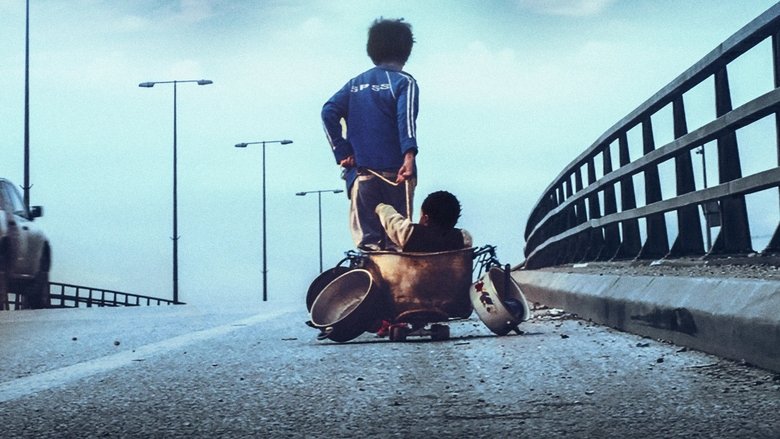
The skateboard, constructed from a pot lid and a plank, symbolizes Zain's resourcefulness and fleeting moments of childhood freedom. It represents his ability to create something functional and even joyful out of discarded scraps, mirroring his own struggle to build a life from nothing.
Zain uses the skateboard to transport gas canisters and, more poignantly, to wheel the baby Yonas around the city in a stolen pot. It's a tool of both labor and care, a testament to his ingenuity.
Cockroaches
Cockroaches symbolize the dehumanized status of the characters. They are seen as pests, unwanted, and resilient survivors in a filthy environment. Zain's parents call their children cockroaches, and Zain internalizes this, feeling he is less than human, an insect to be crushed. An elderly man in a knock-off Spider-Man costume calls himself "Cockroach Man," embracing this identity of a survivor on the fringes.
The term is used as an insult by Zain's parents. Zain meets the "Cockroach Man" when he first runs away from home, finding a strange kinship with someone who also identifies with being a societal pest.
Memorable Quotes
I want to sue my parents... Because I was born.
— Zain Al Hajj
Context:
Said in the courtroom at the beginning of the film, in response to the judge asking why he is taking legal action against his parents.
Meaning:
This is the film's central premise and most iconic line. It's a profound philosophical statement that encapsulates Zain's suffering. It's not just a complaint against his parents, but against the very fact of his existence in a world that has given him nothing but pain. It questions the morality of procreation without the means to provide a decent life.
Life is a pile of shit. Not worth more than my shoe.
— Zain Al Hajj
Context:
Zain says this during a phone call to a television show from prison, explaining the reality of his life and why he is suing his parents.
Meaning:
This quote brutally expresses Zain's worldview, shaped by constant hardship. It reflects his complete disillusionment and the devaluing of life itself when it is filled with nothing but violence, insults, and neglect. It's a statement of utter despair from a child who has seen too much.
I want adults who can't raise kids not to have any.
— Zain Al Hajj
Context:
Spoken in the courtroom, this line clarifies the purpose of his lawsuit to the judge and the world. It is his demand for a fundamental change to prevent the suffering of other children.
Meaning:
This is the core of Zain's legal and moral argument. It is a simple, yet powerful, plea for responsibility. It shifts the focus from his personal tragedy to a universal principle: the right of a child to be born into a caring and capable environment. It's the ultimate goal of his lawsuit.
Philosophical Questions
Is it immoral to have children if you cannot provide for them?
This is the central question posed by Zain's lawsuit. The film explores this from multiple angles. Through Zain's suffering, it presents a powerful argument that bringing a child into a life of guaranteed neglect, abuse, and poverty is a moral crime. However, it also humanizes the parents, showing them not as monsters, but as people trapped in a cycle of poverty and ignorance, themselves victims of a failing system. It forces the audience to consider whether procreation is a fundamental right regardless of circumstance, or a responsibility that requires a minimum capacity for care.
What defines a person's existence and humanity?
The film probes the distinction between biological existence and legal/social existence. Zain is alive, but without papers, he is officially invisible. The film asks whether humanity is inherent or something granted by the state through documentation. Rahil's arrest and Zain's inability to access basic services demonstrate that without official recognition, a person's rights, and even their presence, can be easily erased by the system. Zain's fight is not just for survival, but for the right to be recognized as existing.
Where does parental responsibility end and societal responsibility begin?
While Zain sues his parents, the film makes it clear they are not the sole villains. They are products of an environment with no education, no social support, and no opportunities. The film explores the idea of collective guilt, suggesting that society is complicit in the crime against Zain through its indifference and systemic failures. It questions whether it is fair to place the entire burden of responsibility on individuals when the state and society at large fail to create the conditions necessary for a dignified life.
Alternative Interpretations
While widely praised, "Capernaum" also faced criticism and alternative interpretations. One of the main points of debate was whether the film constitutes 'poverty porn'—an accusation that it exploits the suffering of its subjects for the emotional gratification of a privileged audience. Critics of this view argue that Labaki's neorealist approach and use of non-actors with lived experience makes the portrayal authentic rather than exploitative.
Another interpretation questions the film's narrative framework. Some critics found the courtroom scenes, where Zain sues his parents, to be an overly theatrical and implausible device that detracted from the raw power of the flashback sequences. They argue that the film is at its strongest when it simply observes Zain's daily struggle for survival, and that the framing story is a form of 'Oscar bait' designed to make the film's message more explicit and palatable for international awards bodies.
Finally, there's a reading of the ending as being overly optimistic or simplistic. The final shot of Zain smiling as he gets his ID photo taken could be seen as a neat resolution that undermines the film's critique of deep, systemic problems. An alternative view is that this small victory is deliberately personal and fragile, representing not a solution to the crisis, but a single, hard-won moment of recognition and hope for one individual.
Cultural Impact
"Capernaum" had a significant cultural impact both in Lebanon and internationally. Premiering at the 2018 Cannes Film Festival, it received a 15-minute standing ovation and won the prestigious Jury Prize. It was later nominated for an Academy Award for Best Foreign Language Film, bringing global attention to Lebanese cinema and the issues it portrayed.
The film's raw, neorealist style and its use of non-actors living in the situations depicted blurred the lines between documentary and fiction, sparking conversations about 'poverty porn' and the ethics of representation. Some critics argued it was emotionally manipulative, while audiences and other critics praised its authenticity and power.
Most importantly, the film gave a powerful and humanizing voice to the plight of street children and refugees in Lebanon, a country hosting an enormous refugee population. Director Nadine Labaki has stated her intent for the film to be a form of activism, aiming to provoke debate and effect social change. The film's success provided a platform for these discussions on a global scale and had a direct, life-changing impact on its young star, Zain Al Rafeea, whose resettlement in Norway became a widely reported story.
Audience Reception
Audience reception for "Capernaum" was overwhelmingly emotional and positive. Viewers frequently described the film as "heartbreaking," "powerful," and "unforgettable." Many praised the film's raw realism, feeling that it felt more like a documentary than a fictional movie, which made its impact even more profound. The performance of the young star, Zain Al Rafeea, was universally lauded as astonishing and deeply moving.
The main points of praise focused on the film's ability to create intense empathy and shine a light on the invisible crisis of street children. Audiences felt it was an essential film that everyone should see to understand the harsh realities of poverty and statelessness.
Criticism from audiences was less common but often mirrored some critical reviews. A minority of viewers found the film's depiction of suffering to be relentless and difficult to watch, bordering on emotionally manipulative. Some also found the courtroom framing device to be contrived and less effective than the more naturalistic depiction of Zain's life on the streets. However, the overall verdict from audiences was that "Capernaum" is a masterful and necessary piece of cinema that leaves a lasting emotional and intellectual impact.
Interesting Facts
- The majority of the cast were non-professional actors whose real lives mirrored the struggles depicted in the film.
- Zain Al Rafeea, who plays Zain, was a Syrian refugee living in the slums of Beirut since 2012 and was not attending school when he was cast.
- The actress who played the baby Yonas was, in reality, a girl named Boluwatife Treasure Bankole. During filming, her real-life parents were arrested for not having proper documentation, meaning the baby was actually separated from her mother during some of the scenes where she is alone with Zain.
- Similarly, Yordanos Shiferaw, who plays Rahil, was an undocumented Eritrean worker who was also arrested during production for the same reasons as her character.
- Director Nadine Labaki spent three years researching the film, visiting slums, detention centers, and juvenile courts to gather stories.
- The crew shot over 520 hours of footage over six months. The first edit of the film was 12 hours long.
- After the film's success, Zain Al Rafeea and his family were resettled in Norway with the help of the UNHCR. He is now attending school for the first time in his life.
- The producer, Khaled Mouzanar (who is also Labaki's husband), mortgaged their house to raise the film's $4 million budget.
⚠️ Spoiler Analysis
Click to reveal detailed analysis with spoilers
Frequently Asked Questions
Explore More About This Movie
Dive deeper into specific aspects of the movie with our detailed analysis pages
Comments (0)
No comments yet. Be the first to share your thoughts!