Skip to content
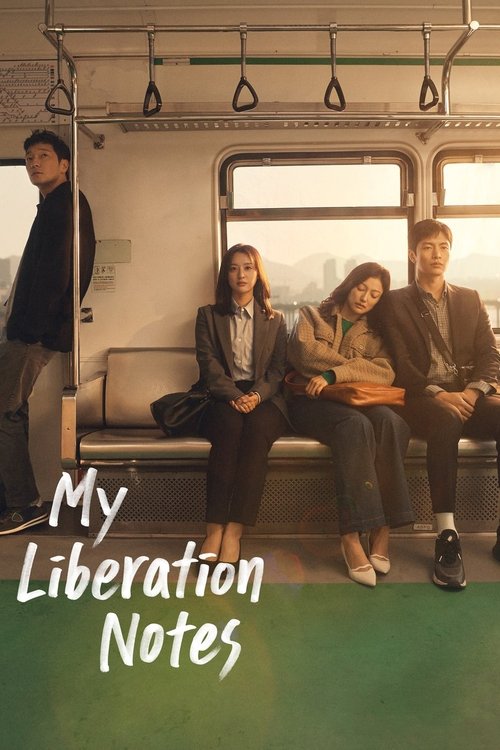
My Liberation Notes
A hushed, slow-burning drama of commuter-train loneliness, where small mercies glow like a single lit window on a dark mountain road, and freedom is measured in five quiet minutes.
My Liberation Notes

My Liberation Notes

나의 해방일지

"Searching for Happiness."

09 April 2022 — 29 May 2022 South Korea 1 season 16 episode Ended 7.9 (100)

Cast: Lee Min-ki, Kim Ji-won, Son Seok-koo, Lee El, Cheon Ho-jin

Drama Loneliness and Connection Liberation from a mundane, suffocating life Family and its unspoken burdens Work, money and class anxiety in modern Korea Self-acceptance and love

Overview

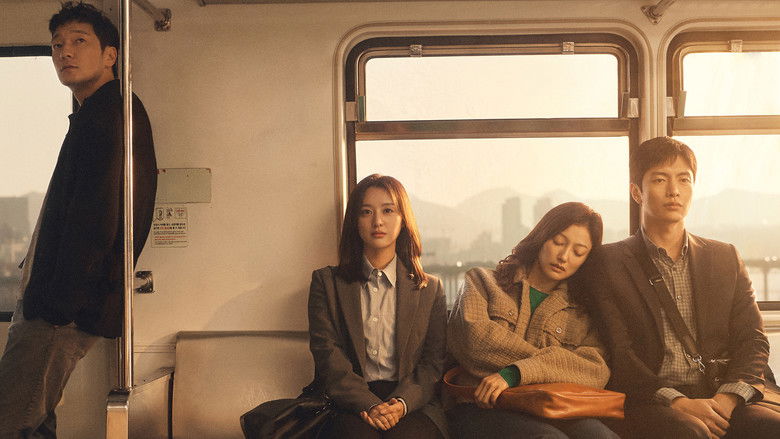
Three adult siblings, Ki-jung, Chang-hee and Mi-jung Yeom, live with their parents in Sanpo, a village in Gyeonggi-do. Every day they commute to Seoul for work. Each is unhappy in a different way. Ki-jung is a worn-down office worker who is blunt about her disappointment. Chang-hee is the middle child. He wants to escape, has no dream to chase, and is looked down on by his family. Mi-jung is an introverted employee who feels like she is slowly shriveling.

Mi-jung persuades two male colleagues to form the "Liberation Club". It is barely more than a group of people sitting around asking existential questions. Later they keep diaries, the "liberation notes" of the title. Into this circle drifts Mr. Gu, a mysterious, heavy-drinking stranger who seems to carry his own hidden wounds. The show follows the siblings' workplaces, their love lives and their dysfunctional family.

The series is a slice-of-life drama. It has no big plot machinery, and it is dialogue-heavy and open-ended. It asks whether a person can be freed from the dull cycle of work, family and obligation. Its answer is modest: liberation comes in small moments of honesty and connection, not in a grand escape.

Core Meaning

The writer, Park Hae-young, who also wrote My Mister, presents liberation as something other than escape. The characters feel trapped without knowing where the trap is. The show suggests that freedom comes from facing yourself honestly, from being truly seen by another person, and from collecting small moments of peace. Mi-jung's line about five minutes of peace a day being enough to bear life captures this.

The series rejects tidy resolutions. Nothing is fully resolved for any character, and that is intentional. Life continues and the cycle goes on, but the characters change in how they relate to it: they stop pretending, accept who they are, and let love and fellowship soften their loneliness.

Thematic DNA

Liberation from a mundane, suffocating life 30%
Loneliness and connection 25%
Family and its unspoken burdens 20%
Work, money and class anxiety in modern Korea 15%
Self-acceptance and love 10%

Liberation from a mundane, suffocating life

The Liberation Club and the diaries give the characters a vocabulary for feeling trapped. The idea of liberation gradually shifts from dramatic escape to small, repeatable moments of relief, such as Mr. Gu counting the seconds of joy after work.

Loneliness and connection

Family members live together yet stay strangers, while an outsider like Mr. Gu makes Mi-jung feel whole. The series shows that being truly seen by another person is what eases isolation.

Family and its unspoken burdens

The siblings and their parents quietly wound and support each other. Chang-hee in particular is the one who is there at the end for family members, which leads into the finale.

Work, money and class anxiety in modern Korea

Chang-hee's debts and urge to get rich, Ki-jung's burnout after years in the same job, and Mi-jung's workplace alienation reflect the pressures of the commuter generation. The 'coin and mountain' idea turns financial discipline into a form of self-respect.

Self-acceptance and love

By the end, Chang-hee accepts himself, Ki-jung chooses to face the difficulties of loving someone, and Mi-jung ends with an expression of love toward the world. Growth consists of dropping pretence.

Character Analysis

Yeom Mi-jung

Kim Ji-won

Archetype: Introverted seeker Key Trait: Quietly intense and self-aware

Motivation

To understand 'What am I? Why am I here?' and to see heaven while she is still alive. This evolves into a desire to love and be loved.

Character Arc

She begins the show with a sense of emptiness and withdrawal. Her mother's death and her reunion with Mr. Gu bring moments of happiness. She finally leaves her old job, deals with her ex without making a scene, and later helps clear his name. The series ends with her smiling and speaking of nothing but love in her heart.

Mr. Gu (Gu Ja-gyeong)

Son Seok-koo

Archetype: Wounded outsider Key Trait: Rough, transparent and tender

Motivation

To avoid being hurt and to avoid burdening others. He gradually opens to connection and a fresh start.

Character Arc

A heavy drinker haunted by his past, he believes he cannot escape his demons. Through his bond with Mi-jung he begins to change. The finale suggests a second chance, and some viewers read him as quitting alcohol and taking up responsibility for his brother's debts.

All 4 characters and cast

Symbols & Motifs

The Liberation Club and diaries

Meaning: The need to name one's discontent and put it into words, so that it can be shared.
Context: Mi-jung and two colleagues form the club. Needing evidence of activity, they begin writing liberation notes. In the end the diaries are offered for publication so others may find comfort.

The coin and the mountain

Meaning: Self-worth, thrift and the accumulation of small efforts.
Context: Mr. Gu's analogy about coins and a mountain guides Chang-hee into disciplining his spending and paying off his loan. Chang-hee later says he has been the mountain all along. A coin that does not fall into the gutter in the finale is read by viewers as standing for Mr. Gu's chance to pick himself up.

Birds

Meaning: Things out of place and the possibility of a hopeful future.
Context: Viewers connect the bird on the coin in the finale to the bird scene in episode 10, which they read as foreshadowing a future for Gu and Mi-jung.

The broken rose

Meaning: Imperfect love that is still worth keeping.
Context: In the finale Tae-hun leaves Gi-jeong a rose whose head has snapped off. She brings it in, realizes she loves him, and messages him about his misbuttoned shirt.

The 'egg white' of Gyeonggi-do and the commute

Meaning: Being on the margins of the center, stuck between country and city.
Context: In episode 1 Chang-hee laments being born in an 'egg white' that surrounds Seoul, and the daily commute frames the siblings' lives.

Memorable Quotes

Five minutes a day. If you have five minutes of peace, it's bearable.
— Mi-jung

Context

Said across the series as Mi-jung explains how she gets through her days.

Meaning

A small, realistic definition of liberation that holds the show's philosophy.
Fate is nothing more than a person's outlook on life.
— Mrs. Yeom

Context

Spoken by the siblings' mother.

Meaning

Suggests that attitude shapes what we call destiny, which is a hopeful but modest reading of fate.
All 7 quotes

Episode Highlights

Episode 1

S1E1
Introduces the three siblings, their commute from Sanpo and Chang-hee's complaint about being born in the 'egg white' around Seoul.
Significance: Sets up the feeling of being trapped on the margins that drives the whole series.

Episode 10

S1E10
Contains the bird scene that viewers later connect to the bird on the coin in the finale.
Significance: Read by fans as foreshadowing a possible future for Mr. Gu and Mi-jung.

Episode 15

S1E15
Mi-jung and Mr. Gu rediscover their comfort in sharing whatever is on their minds, and the Liberation Club returns to business.
Significance: Moves the central relationship toward its quiet resolution.

Episode 16 (Final)

S1E16
Chang-hee finds his calling after witnessing deaths around him. Gi-jeong and Tae-hun reconcile after a broken rose, Mi-jung faces her ex and helps clear his name, and the club discusses small moments of liberation.
Significance: The finale refuses a tidy close. It ended with the series' highest ratings, 6.7 percent.

Philosophical Questions

Is liberation a permanent state or a series of small moments?

The club members conclude that they have only small moments of liberation that help them go on, which suggests freedom is practiced rather than achieved.

Do we need a goal to live a meaningful life?

Chang-hee asks whether he must have a goal, then drifts into a vocation that fits him. The show implies meaning can be discovered rather than planned.

Can another person save us from loneliness?

Mi-jung and Mr. Gu heal each other through honest, unforced company, while family members who share a house remain isolated. The series locates the cure in being seen.

Is fate fixed, or is it a person's outlook on life?

The mother's line reframes fate as perspective, and Chang-hee's change of outlook turns his financial and emotional fortunes.

How It Ends

Alternative Interpretations

Viewers disagree about whether the ending is happy. Some say the Yeom siblings have found their liberation. Others argue it is neither sad nor happy but an ordinary 'good ending' in which life simply goes on. One critic compared the open finale to The Sopranos, arguing that a neat wrap-up would betray the show.

Full ending explanation

Cultural Impact

The series arrived as a quiet, introspective counterpoint to plot-driven K-dramas, reaching audiences through its depiction of the exhaustion and alienation of Korea's commuting working generation. It is often linked with Park Hae-young's earlier My Mister for its compassion toward ordinary, flawed people. One reviewer described it as a ray of hope within South Korean series production.

It has become a favorite for quotable lines about loneliness and meaning, and quote compilations continue to circulate. Its popularity was driven largely by viewers who found pieces of themselves in the leads, especially quiet introverts.

Audience Reception

Viewers and critics praised the acting, especially Son Seok-koo and Kim Ji-won, whose silent, nuanced scenes were highlighted. The dialogue, cinematography and relatable depiction of loneliness also drew admiration. MyDramaList shows a rating of 8.5 out of 10 from over 31,000 users. Reviewers called it special, endlessly re-watchable and moving.

Criticism centered on its slow pace, heavy dialogue, lack of drama and refusal to resolve its storylines. One reviewer who compared it unfavorably with My Mister found it undramatic, though they acknowledged the open-endedness was deliberate. The finale was received warmly and delivered the highest ratings of the run.

Interesting Facts

  • The series was written by Park Hae-young and directed by Kim Seok-yoon, and the original Korean title translates literally as 'My Liberation Diary'.
  • Park Hae-young also wrote My Mister, and Kim Seok-yoon directed The Light in Your Eyes.
  • It was produced by Studio Phoenix, Chorokbaem Media and SLL, with music by Kim Tae-seong.
  • It aired on JTBC from April 9 to May 29, 2022, in 16 episodes.
  • The finale recorded a 6.7 percent viewership rating, its highest of the run.
  • The soundtrack includes songs such as 'My Spring', 'A Kind Of Confession' (in female and male versions) and 'Here We Are' by Kim Feel.

Frequently Asked Questions

Explore More About This Series

Dive deeper into specific aspects of the series with our detailed analysis pages

Comments (0)

Leave a comment

No comments yet. Be the first to share your thoughts!

Similar Movies