Skip to content
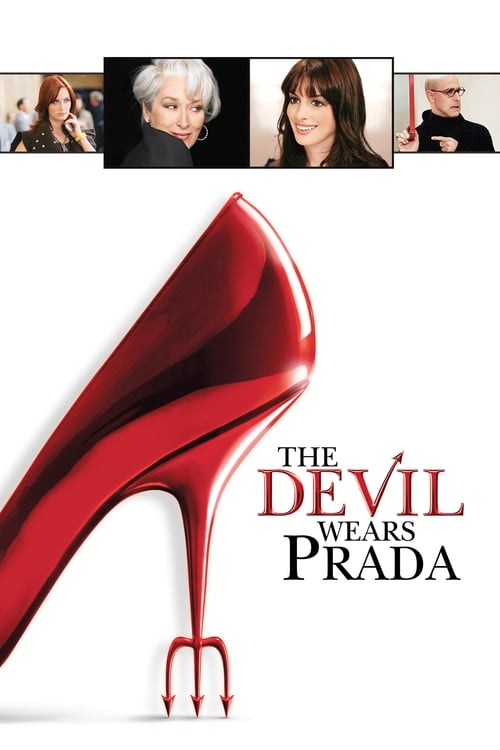
The Devil Wears Prada
A razor-sharp satirical drama pulsing with ambition and intoxicating glamour, where the relentless grind of high fashion turns into a dizzying runway over thin ice, demanding a soul for every tailored silhouette.
The Devil Wears Prada

The Devil Wears Prada

"Meet Andy Sachs. A million girls would kill to have her job. She's not one of them."

29 June 2006 United States of America 109 min 7.4 (14,095)

Director: David Frankel

Cast: Meryl Streep, Anne Hathaway, Emily Blunt, Stanley Tucci, Simon Baker

Drama Comedy Ambition vs. Personal Authenticity The Cost of Professional Excellence and Gatekeeping Cultural Snobbery vs. Art and Industry Gendered Expectations of Power and Leadership The Complicity of Choice
Budget: $35,000,000
Box Office: $326,588,371

Overview

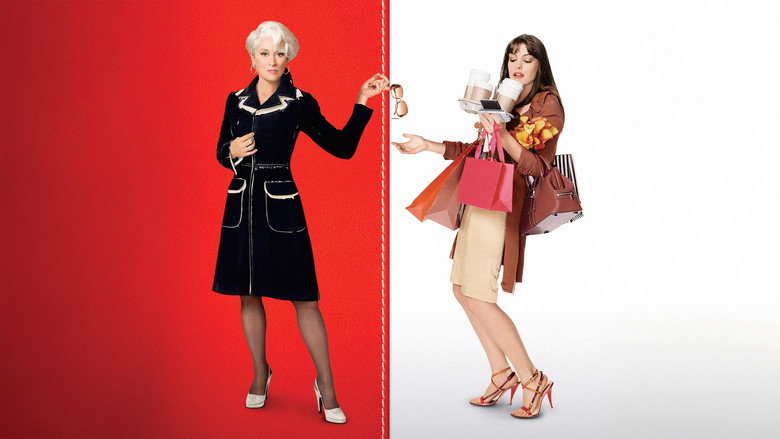
The Devil Wears Prada (2006), directed by David Frankel from a screenplay by Aline Brosh McKenna (adapting Lauren Weisberger’s 2003 novel), follows Andy Sachs, an earnest recent graduate from Northwestern University who aspires to become a serious investigative journalist. Lacking interest in high fashion, Andy nonetheless lands an interview and is unexpectedly hired as the junior personal assistant to Miranda Priestly, the terrifying, impeccably poised editor-in-chief of Runway magazine. Miranda is the most influential arbiter in the global fashion industry, and working for her is an opportunity "a million girls would kill for".

Thrust into the frantic, cutthroat environment of Elias-Clarke Publications, Andy is quickly overwhelmed by impossible demands, biting condescension from senior assistant Emily Charlton, and Miranda’s chillingly quiet scrutiny. Initially viewing the fashion world as superficial and trivial, Andy struggles to keep up and finds herself alienated. With the guidance of Runway’s pragmatic art director, Nigel Kipling, she undergoes a dramatic sartorial and professional transformation, mastering the unwritten rules of corporate survival and earning Miranda’s hard-won respect.

However, Andy’s rapid ascent comes at a steep personal cost. As her professional life consumes her waking hours, her relationships with her chef boyfriend Nate and her close circle of friends begin to fray. Seduced by the allure of power and high status, Andy is drawn deeper into Miranda's inner circle, forcing her to confront whether the person she is becoming aligns with the values and integrity she originally set out to uphold.
Core Meaning

Director David Frankel crafted The Devil Wears Prada not simply as a workplace satire or a Cinderella makeover fable, but as an incisive examination of female ambition, institutional power, and the ethical compromises inherent in corporate climbing. The film illustrates that dismissing an industry or subculture as frivolous does not make one immune to its cultural machinery—as crystallized in the "Cerulean Sweater" monologue, every consumer is complicit in the global systems that shape taste and economy.

At its core, the film’s message is about conscious agency: true self-worth is measured neither by passive disdain for the system nor by complete assimilation into its cutthroat ruthlessness, but by recognizing when personal integrity must supersede prestige and prestige-driven validation.

Thematic DNA

Ambition vs. Personal Authenticity 30%
The Cost of Professional Excellence and Gatekeeping 25%
Cultural Snobbery vs. Art and Industry 20%
Gendered Expectations of Power and Leadership 15%
The Complicity of Choice 10%

Ambition vs. Personal Authenticity

The central engine of the narrative is Andy's moral renegotiation. As she proves her competence, her ambition transforms from a pragmatic career stepping stone into an intoxicating drive that gradually erodes her personal identity, empathy, and relationships.

The Cost of Professional Excellence and Gatekeeping

Miranda Priestly represents the pinnacle of perfectionism. The film reveals that maintaining world-class excellence in a male-dominated corporate structure requires an unyielding, armor-plated persona that extracts devastating sacrifices in private life.

Cultural Snobbery vs. Art and Industry

Andy arrives with an elitist disdain for fashion, viewing it as shallow vanity. Through Nigel and Miranda, the film demonstrates that fashion is a multi-billion-dollar art form and economic engine that dictates cultural aesthetics and touches everyday lives.

Gendered Expectations of Power and Leadership

The film critiques double standards in leadership: Miranda observes that if she were a man, her uncompromising standards, cold demeanor, and ruthless decision-making would be hailed as decisive leadership rather than demonized as monstrous.

The Complicity of Choice

The movie repeatedly challenges characters’ claims that they "had no choice." Every step up the ladder involves active ethical trades, and personal responsibility cannot be deflected onto a demanding boss or institutional momentum.

Character Analysis

Andrea "Andy" Sachs

Anne Hathaway

Archetype: Hero / Ingenue undergoing corruption Key Trait: Resourceful, intellectually sharp, yet initially self-righteous.

Motivation

To survive one year at Runway to secure a job at a prestigious news publication.

Character Arc

Starts as an unkempt intellectual snob, transforms into a hyper-competent corporate operative, and ultimately chooses self-defined integrity over prestige.

Miranda Priestly

Meryl Streep

Archetype: Tyrant Boss / Reluctant Shadow Mentor Key Trait: Chillingly quiet authority, uncompromising perfectionism.

Motivation

To maintain absolute artistic standard and supreme control over the global fashion landscape.

Character Arc

Remains outwardly unflappable, but reveals fleeting glimpses of isolation and vulnerability beneath her icy, calculated facade.

All 5 characters and cast

Symbols & Motifs

The Cerulean Sweater

Meaning:

Symbolizes Andy’s naive illusion of intellectual detachment and moral superiority.

Context:

Miranda deconstructs it during an editorial meeting to demonstrate that even Andy’s choice to wear an unstylish bargain garment is the end product of decisions made by elite tastemakers.

The Thigh-High Chanel Boots

Meaning:

Marks Andy’s official aesthetic transition and initiation into the fashion world.

Context:

The moment she walks into the office wearing them signals her mastery of the environment and shocks Emily.

The Ringing Cell Phone

Meaning:

A sonic motif representing corporate intrusion, control, and constant surveillance.

Context:

It interrupts every intimate dinner, family gathering, and quiet moment, symbolizing Andy's surrender of personal boundaries.

The "Book" (The Mockup of Runway)

Meaning:

Represents the sacred text of the fashion industry and Miranda’s gatekeeping authority.

Context:

Delivered nightly to Miranda's townhouse; Andy's breach of townhouse etiquette while delivering it underscores the invisible boundaries of Miranda's private life.

The Untested Harry Potter Manuscript

Meaning:

An impossible task designed to break Andy, which transforms into a demonstration of ultimate competence.

Context:

Marks the critical narrative pivot where Miranda stops viewing Andy as incompetent and begins viewing her as an indispensable asset.

The Paris Fountain (Place de la Concorde)

Meaning:

The ultimate symbol of catharsis, autonomy, and liberation.

Context:

Andy dropping her vibrating phone into the fountain represents the conscious rejection of Miranda’s world and the reclamation of her own values.

Memorable Quotes

You think this has nothing to do with you... You go to your closet and you select, I don’t know, that lumpy blue sweater, for instance, because you’re trying to tell the world that you take yourself too seriously to care about what you put on your back.
— Miranda Priestly

Context

Delivered when Andy snickers during an editorial discussion where staff agonize over two virtually identical belts.

Meaning

A calculated deconstruction of the supply chain of taste, establishing that even anti-fashion choices are dictated by elite industry arbiters.

Florals? For spring? Groundbreaking.
— Miranda Priestly

Context

Delivered with deadpan weariness to an editor suggesting a spring floral shoot during a pitch meeting.

Meaning

An iconic putdown highlighting Miranda's intolerance for clichéd, uninspired thinking in creative work.

All 6 quotes

Philosophical Questions

Can high-level professional excellence exist without personal ruthlessness?

The film explores whether reaching the absolute pinnacle of an industry inherently requires the sacrifice of empathy, personal relationships, and ethical boundaries.

Is anyone truly detached from consumerist culture?

Through the cerulean sweater lecture, the narrative examines the illusion of independent aesthetic choice and reveals how individuals are complicit in global industrial systems.

What constitutes genuine personal betrayal?

By contrasting Andy taking Emily’s place in Paris with Miranda sacrificing Nigel’s promotion to keep her own position, the film explores the blurred lines between corporate necessity and moral betrayal.

Alternative Interpretations

Several alternative readings have emerged in retrospective cultural discussions:

Full ending explanation

Cultural Impact

The Devil Wears Prada was released in June 2006 during the zenith of glossy print media dominance, just before digital publications, social media algorithms, and influencer culture upended legacy fashion journalism.

  • Critical and Award Success: The film earned critical acclaim, garnering Meryl Streep an Academy Award nomination for Best Actress and Patricia Field a nomination for Best Costume Design. Streep won the Golden Globe for Best Actress in a Motion Picture – Musical or Comedy.
  • Transformation of the "Workplace Comedy": The movie elevated the chick-flick genre into an incisive corporate morality play. It famously passes the Bechdel test effortlessly, centering its drama around female power, career negotiations, and workplace dynamics without relying on romance to resolve the protagonist's journey.
  • Enduring Lexicon: Dialogue like "Florals? For spring? Groundbreaking" and "That's all" became cemented into modern pop-culture vernacular and digital meme culture.

Audience Reception

The Devil Wears Prada received widespread critical acclaim and strong audience enthusiasm:

  • Praise: Universally acclaimed for Meryl Streep’s layered, commanding performance, which elevated a potential caricature into a nuanced, multi-dimensional antagonist. Anne Hathaway and Emily Blunt received widespread praise for their charm and comedic timing, with Blunt’s performance launching her international stardom. The costume design, sharp script, and brisk pacing were also heavily celebrated.
  • Criticism: Some contemporary critics (such as Roger Ebert) felt the narrative clung too closely to predictable workplace tropes and that the romantic subplot with Nate was the weakest element of the script.
  • Controversies: Over time, viewers and commentators have scrutinized the film’s casual normalization of toxic workplace culture, fat-shaming jokes (labeling a size 6 as "fat"), and disordered eating behaviors among Runway staff.
  • Overall Consensus: An enduring classic of 2000s American cinema that blends satire, drama, and style with timeless insight into ambition and work.

Interesting Facts

  • Rather than playing Miranda with shouting anger, Meryl Streep modeled her soft-spoken, whispery cadence on Clint Eastwood, forcing everyone in the room to lean in and hang on her every word.
  • Meryl Streep personally advocated for the Paris hotel scene where Miranda appears without makeup and stripped of her glamorous armor, revealing her vulnerability regarding her impending divorce.
  • While the official costume budget was roughly $100,000, legendary costume designer Patricia Field utilized her extensive relationships to borrow over $1 million worth of high-fashion designer clothing and accessories.
  • Many top designers and industry figures originally feared cooperating or making cameos out of concern over offending American Vogue editor Anna Wintour.
  • Production designer Jess Gonchor secretly gained access to the Vogue editorial offices in New York to scout Anna Wintour’s workplace, recreating the layout so accurately that Wintour reportedly redecorated her real office shortly thereafter.
  • Stanley Tucci was cast as Nigel just 72 hours before he was scheduled to begin filming.
  • Produced on a budget of approximately $35–41 million, the film went on to gross an astounding $326.7 million worldwide.
  • After filming wrapped, Meryl Streep donated her entire character wardrobe to be auctioned off for charity, save for a vintage green coat.

Easter Eggs

Valentino Garavani Cameo

He was one of the only prominent high-fashion designers who braved the project to appear in a speaking cameo during the Paris Fashion Week party scene.

Gisele Bündchen as Serena

The supermodel agreed to appear under the condition that she would not play a model; she was cast as Serena, Emily’s chic editorial friend wearing glasses in the Runway office.

Lauren Weisberger Cameo

The author of the original 2003 novel makes a brief cameo appearance in the film as the twins' nanny reading on a train.

Opening Footwear Montage

The opening sequence contrasts diverse ordinary New York women meticulously applying makeup, lingerie, and footwear with Andy's mismatched, utilitarian morning routine, establishing the visual thesis of the film.

Frequently Asked Questions

Explore More About This Movie

Dive deeper into specific aspects of the movie with our detailed analysis pages

Comments (0)

Leave a comment

No comments yet. Be the first to share your thoughts!

Similar Movies