My Mom Is a Character 2
Minha Mãe é uma Peça 2: O Filme
Overview
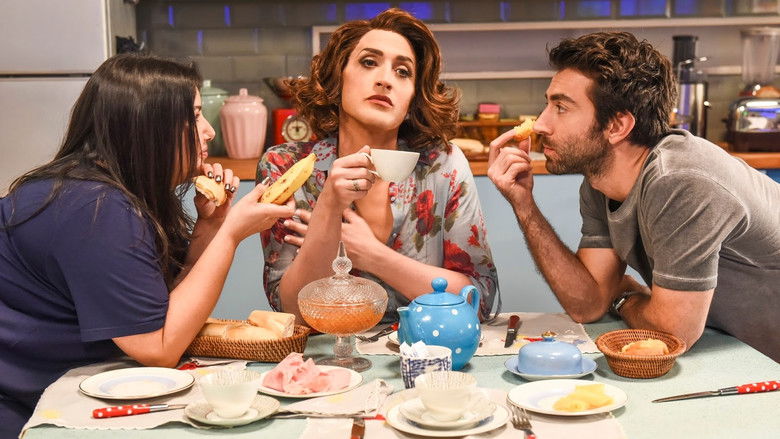
Dona Hermínia, now a wealthy and successful TV host with her own show, faces a new chapter in her chaotic life. While she has upgraded her lifestyle, her overbearing and protective nature remains unchanged. Her world is shaken when her two youngest children, Marcelina and Juliano, announce their intentions to move to São Paulo to pursue their independent adult lives.
As Hermínia struggles with the looming "Empty Nest Syndrome," she must also contend with the arrival of her free-spirited sister Lúcia Helena from New York and the declining health of her beloved aunt Zélia. Between stress attacks, family bickering, and hilarious attempts to keep her children close, Hermínia embarks on a journey of acceptance, learning that loving her children means letting them fly.

Core Meaning
The film is a poignant exploration of the inevitability of change within a family. Beneath the slapstick comedy, director César Rodrigues and writer/star Paulo Gustavo deliver a touching message about the Empty Nest Syndrome. The core meaning is that a mother's role evolves from protector to spectator; true maternal love is proven not by holding on, but by having the courage to let go and trust the values instilled in one's children.
Thematic DNA
Empty Nest Syndrome
The central theme driving the plot. Hermínia's physical and emotional reaction to her children leaving reveals the crisis of identity many mothers face when their primary role of 'caregiver' is diminished.
Maternal Identity vs. Professional Success
Despite being a famous and rich TV host, Hermínia feels unfulfilled without her children's dependence. The film contrasts her public success with her private vulnerability, showing that professional achievement cannot replace family connection.
Acceptance of Sexuality
Juliano's revelation of his bisexuality challenges Hermínia's previous understanding (from the first film where he came out as gay). The film uses humor to address the confusion and eventual acceptance of fluid sexuality within the family unit.
Aging and Loss
Through the character of Aunt Zélia, the film touches on the sadness of aging and Alzheimer's. Her passing serves as a catalyst for Hermínia to realize that time is precious and children must live their lives while they can.
Character Analysis
Dona Hermínia
Paulo Gustavo
Motivation
To protect her children from the world's hardships and to maintain her relevance in their lives.
Character Arc
She starts as a controlling mother paralyzed by the fear of being alone. Through the loss of her aunt and the persistence of her children, she transitions into a supportive figure who encourages their independence.
Juliano
Rodrigo Pandolfo
Motivation
To find his own identity and career success outside his mother's shadow.
Character Arc
He seeks to define his professional path in law and clarify his sexual identity, moving from a dependent son to an independent man in a new city.
Marcelina
Mariana Xavier
Motivation
To prove she has talent and can survive on her own.
Character Arc
She evolves from the butt of her mother's jokes about her weight and laziness into a determined aspiring actress who chases her dreams in São Paulo.
Lúcia Helena
Patrícya Travassos
Motivation
To reconnect with family after years abroad.
Character Arc
The 'black sheep' sister who returns from New York. She serves as a foil to Hermínia, showing a different, more relaxed (and chaotic) way of living.
Symbols & Motifs
The Stress Monitor
Symbolizes Hermínia's inability to control her anxiety and her need to micromanage her environment.
She wears a device that beeps when her stress levels rise, a physical manifestation of her internal chaos as her children plan to leave.
São Paulo
Represents independence, adulthood, and the 'unknown' that Hermínia fears.
It is the destination for both children, viewed by Hermínia as a distant, dangerous place that steals her babies away.
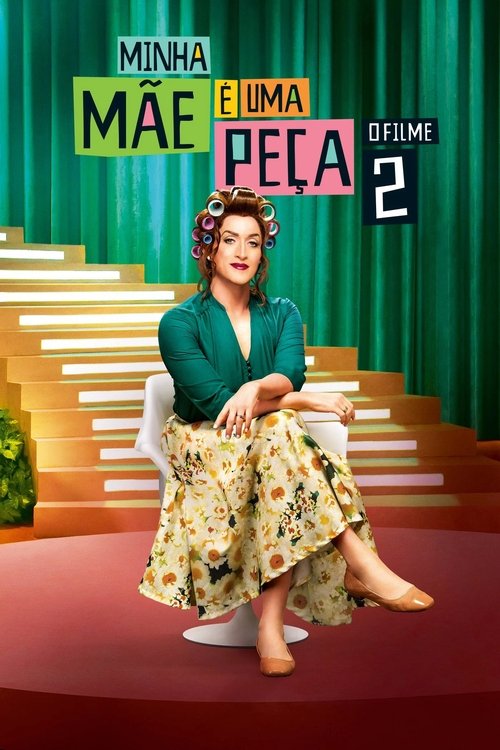
Hermínia's Curlers (Bobes)
Her armor and crown. They represent her domestic authority and refusal to change her essence despite her new wealth.
Even as a rich TV host, she is rarely seen without her signature hair rollers, grounding her character in her domestic roots.
Memorable Quotes
A gente espera nove meses pra nascer, sofre e, quando nasce, só falta dar na cara da gente!
— Dona Hermínia
Context:
During one of her signature rants about how difficult it is to raise children.
Meaning:
Encapsulates her frustration with the lack of gratitude she perceives from her children, highlighting the sacrificial nature of her motherhood.
Adolescente acha que nada de ruim vai acontecer com eles. Eles acham que são imortais.
— Dona Hermínia
Context:
When worrying about her children making decisions she considers dangerous.
Meaning:
Reflects the universal parental anxiety regarding the perceived invincibility and recklessness of youth.
Eu sou uma mãe, não sou uma palhaça!
— Dona Hermínia
Context:
Often yelled when she feels her authority is being undermined by her children's dismissive behavior.
Meaning:
A declaration of dignity. Despite her funny antics, she demands respect for her role as the head of the family.
Philosophical Questions
Does a mother's role ever truly end?
The film explores whether 'mothering' is a temporary job or a permanent state of being. Hermínia struggles to understand who she is if she isn't actively managing her children's lives, suggesting that for her, existence precedes essence only through motherhood.
Can we ever really protect those we love?
Hermínia's stress monitor and constant vigilance are shown to be futile against the natural progression of life. The film posits that true love involves surrendering the illusion of control.
Alternative Interpretations
While primarily a comedy, the film can be interpreted as a psychological study of co-dependency. Some critics argue that Hermínia's humor is a defense mechanism to mask deep-seated loneliness and an inability to define herself outside of her relationships. Another reading suggests the film is a social critique of the 'nouveau riche' in Brazil, showcasing how wealth changes surroundings but not the fundamental cultural habits or family dynamics of the emerging middle class.
Cultural Impact
My Mom Is a Character 2 solidified Dona Hermínia as a cultural icon in Brazil, transcending cinema to become a national symbol of motherhood. The film broke box office records, becoming the highest-grossing Brazilian film of all time until its own sequel surpassed it. It validated the 'favela mother' archetype as a protagonist worthy of blockbuster status. Culturally, it sparked discussions about the representation of the Brazilian middle class and the universal nature of maternal relationships, proving that local, specific humor could have massive, broad appeal. The film's legacy is also tied to the memory of Paulo Gustavo, whose portrayal celebrated the strength and humor of Brazilian women.
Audience Reception
The film was a phenomenal hit with audiences, praised for its relatability, rapid-fire humor, and Paulo Gustavo's charismatic performance. Viewers loved the emotional authenticity mixed with slapstick. Criticism, however, focused on the script's structure, which some reviewers felt was episodic and more akin to a series of TV sketches than a cohesive cinematic narrative. Some also criticized the stereotypical portrayal of certain side characters, though the audience score remained overwhelmingly positive due to the emotional connection with the protagonist.
Interesting Facts
- The film became the highest-grossing film in the history of Brazilian cinema at the time of its release, selling over 9 million tickets.
- Paulo Gustavo's real mother, Déa Lúcia, the inspiration for Dona Hermínia, makes a special appearance in the post-credits scene singing and dancing.
- The character of Lúcia Helena (the sister) was introduced in this sequel and was played by Patrícya Travassos to contrast with Hermínia's uptight nature.
- Despite the character's wealth in the sequel, the costume designers kept her iconic tasteless wardrobe to maintain the character's essence.
- Actor Paulo Gustavo wrote the script, stating it was his most autobiographical work as it dealt with his own leaving of his mother's house.
Easter Eggs
Déa Lúcia Post-Credits Cameo
The real-life mother of Paulo Gustavo appears after the credits. This is significant because she is the literal muse and source material for the character of Dona Hermínia, blurring the line between fiction and reality.
Meta-references to success
The plot point of Hermínia becoming a famous TV host mirrors Paulo Gustavo's own meteoric rise to fame following the first film, creating a meta-commentary on celebrity.
⚠️ Spoiler Analysis
Click to reveal detailed analysis with spoilers
Frequently Asked Questions
Explore More About This Movie
Dive deeper into specific aspects of the movie with our detailed analysis pages
Comments (0)
No comments yet. Be the first to share your thoughts!