Skip to content
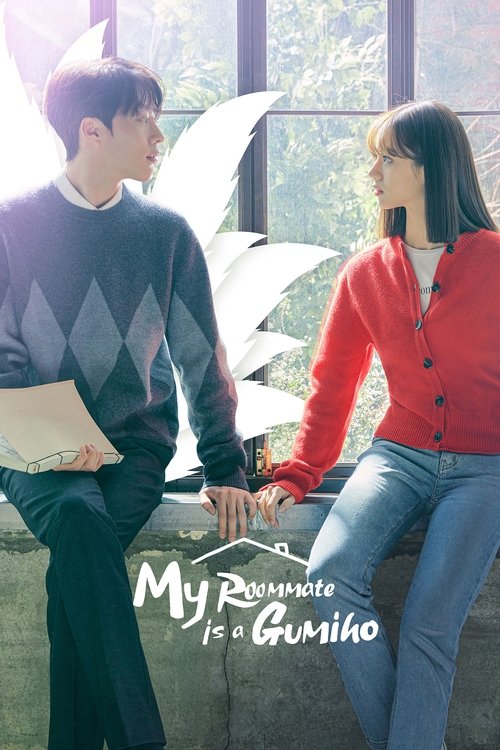
My Roommate Is a Gumiho
A luminous fantasy romantic comedy wrapped in warm collegiate nostalgia, where a centuries-old solitary immortal learns the fragile, fluttering beauty of human tenderness through an incandescent storm of modern youth.
My Roommate Is a Gumiho

My Roommate Is a Gumiho

간 떨어지는 동거

"I ended up living with a gumiho."

26 May 2021 — 15 July 2021 China 1 season 16 episode Ended 8.1 (146)

Cast: Jang Ki-yong, Lee Hye-ri, Bae In-hyuk, Kang Hanna, Kim Do-wan

Drama Sci-Fi & Fantasy What Constitutes "Being Human" Fate vs. Agency and Free Will Emotional Authenticity and Vulnerability Youth, Identity, and Growing Pains Platonic Friendship and Loyalty

Overview

My Roommate Is a Gumiho is a 16-episode fantasy romantic comedy broadcast on tvN and streaming globally via iQIYI in 2021. Adapted from the popular Naver webtoon created by comic artist "Na," the series is directed by Nam Sung-woo and Park Joon-hwa, with scripts by Baek Sun-woo and Choi Bo-rim. The story follows Shin Woo-yeo, a 999-year-old male nine-tailed fox (gumiho) and cultured historian living in modern Seoul, who needs to saturate his magical fox bead with human essence before his thousandth year or risk fading into oblivion.

The plot kicks into gear when Lee Dam, an outspoken, food-loving university history student born in 1999, accidentally swallows Woo-yeo’s fox bead during a drunken misadventure with her best friend. Because a human body cannot sustain a fox bead indefinitely without lethal consequences, and Woo-yeo cannot risk losing centuries of accumulated mystical energy, the pair enter into a pragmatic cohabitation contract.

As their eccentric domestic life unfolds alongside campus dilemmas, social misunderstandings, and supernatural interventions from deities, Woo-yeo and Dam transition from reluctant housemates to genuine confidants. Balancing comedic roommate hijinks with existential folklore rules, the narrative charts how proximity and vulnerability alter the destiny of both a solitary myth and a young woman just discovering herself.

Core Meaning

The overarching thesis of My Roommate Is a Gumiho is that humanity is defined not by biological existence or mystical longevity, but by the capacity for unconditional empathy, emotional courage, and self-sacrifice. Through Shin Woo-yeo’s journey, the creators argue that living for hundreds of years detached from pain and attachment is merely an empty existence; true humanity begins only when one is willing to feel heartache, cherish fleeting moments, and prioritize another person's well-being above self-preservation.

Thematic DNA

What Constitutes "Being Human" 30%
Fate vs. Agency and Free Will 25%
Emotional Authenticity and Vulnerability 20%
Youth, Identity, and Growing Pains 15%
Platonic Friendship and Loyalty 10%

What Constitutes "Being Human"

The central thematic engine explores the difference between merely existing and truly being human. While Yang Hye-sun attains human form by checking off technical prerequisites, Woo-yeo discovers that transforming his bead from red to blue requires learning grief, longing, joy, and existential fear.

Fate vs. Agency and Free Will

Represented by the red thread of destiny tied by the Mountain Spirit (Sanshin), the narrative debates whether romantic connections and life paths are predestined by celestial authorities or actively chosen through perseverance and mutual dedication.

Emotional Authenticity and Vulnerability

Shin Woo-yeo has kept emotional walls intact for hundreds of years following past tragedy. Lee Dam’s unvarnished honesty challenges his cynical detachment, illustrating that real intimacy requires the courage to let oneself be hurt.

Youth, Identity, and Growing Pains

Through collegiate subplots involving career anxieties, university gossip, unrequited crushes, and social pressure, the drama portrays the turbulent journey of young adults finding their individual identities.

Platonic Friendship and Loyalty

The deep, non-romantic bond between Lee Dam and Do Jae-jin—as well as the centuries-long camaraderie between Woo-yeo and Hye-sun—demonstrates that platonic trust is just as vital to emotional survival as romantic love.

Character Analysis

Shin Woo-yeo

Jang Ki-yong

Archetype: Solitary Immortal / Reluctant Mentor turned Romantic Hero Key Trait: Elegant stoicism masking deep emotional vulnerability

Motivation

Initially to become human before his 1,000-year deadline expires; evolves into an overriding desire to protect Dam’s life and future, even at the cost of his own existence.

Character Arc

Begins as an aloof, refined, 999-year-old gumiho who views humans with polite detachment and sees the bead as a functional goal. Through his cohabitation with Lee Dam, his emotional defenses crumble, leading him from self-centered survival to ultimate self-sacrifice and mortal rebirth.

Lee Dam

Lee Hye-ri

Archetype: Unconventional Everywoman Heroine Key Trait: Uncompromising honesty and emotional clarity

Motivation

Initially to survive the bead removal process and graduate safely; evolves into choosing Woo-yeo as her partner despite supernatural obstacles.

Character Arc

A 22-year-old college history student with zero dating experience who prioritizes food, personal boundaries, and peace of mind. Upon swallowing the bead, she confronts existential danger with pragmatic boldness, learning how to love deeply without compromising her moral integrity or self-worth.

All 5 characters and cast

Symbols & Motifs

The Fox Bead (Yeou-guseul, 여우구슬)

Meaning:

The ultimate physical embodiment of Shin Woo-yeo's soul, magical energy, and mortal longing. Its shift from crimson to azure mirrors the purification of his spirit from predatory instinct to genuine human warmth.

Context:

Carried inside Lee Dam after an accidental swallowing, central to their cohabitation contract and Woo-yeo's quest to become human.

The Red Thread of Fate (붉은 실)

Meaning:

Serves as a visual metaphor for external societal expectations and predestined paths, which Dam consciously rejects.

Context:

A supernatural manifestation created by the Mountain Spirit tying Lee Dam to college senior Gye Sun-woo.

The Umbrella and Passing Rain

Meaning:

Symbolizes transient seasons of hardship and emotional breakthroughs. Woo-yeo notes that people pass like seasons, but with Dam, he chooses to "remain standing in the rain."

Context:

Rain motifs recur at critical relationship milestones between Shin Woo-yeo and Lee Dam.

Historical Books and Written Words

Meaning:

Quotations from classic texts (such as Gabriel García Márquez’s Love in the Time of Cholera) reflect Woo-yeo's intellectualized attempt to grasp love before feeling it firsthand.

Context:

Present throughout Woo-yeo's environment as an ancient historian and modern nonfiction author who surrounds himself with literature.

Food and Communal Meals

Meaning:

Acts as a barometer for trust, domestic intimacy, and emotional safety.

Context:

Seen through shared late-night chicken and snacks, as well as Dam’s dietary restrictions (avoiding chicken and men born in the Year of the Tiger while carrying the bead).

Memorable Quotes

어르신.
— Lee Dam

Context

Established in Episode 1 when defining their boundary and age difference (999 years vs. 22 years).

Meaning

Over time, this term transitions from a humorous honorific into a tender, intimate moniker unique to their relationship.

긴 세월을 살면 모든 게 지나가는 한철 계절처럼 느껴지죠. 그런데 담이 씨는 매 순간 진심 같아 보여서 좋아요.
— Shin Woo-yeo

Context

Episode 5; delivered during a late-night drinking conversation.

Meaning

Woo-yeo first admits how Dam's raw human emotionality cuts through his centuries of existential apathy.

All 5 quotes

Episode Highlights

The Fateful Collision

S1E1

Dam swallows Woo-yeo’s 999-year-old fox bead during an accident, leading them to strike a contract cohabitation deal.

Significance:

Establishes the supernatural premise and the core dynamic of the cohabitation contract between the two leads.

The First Blue Glimmer

S1E3

Woo-yeo witnesses the fox bead faintly glow blue for the first time in nearly a millennium.

Significance:

Makes Woo-yeo realize Dam possesses the unique emotional power to change his destiny and turn the bead blue.

Literary Confessions

S1E5

Features the classic literary reading scene and vulnerable late-night drinking confessions.

Significance:

Marks the emotional turning point from guarded roommates to mutual romantic attraction.

Memory and Deception

S1E7

Woo-yeo extracts the bead to protect Dam and attempts to wipe her memory, but Dam's strong will preserves her recollection.

Significance:

Breaks the supernatural barrier between them, forcing both leads to confront their genuine feelings directly.

The Red Thread Intervention

S1E9

The Mountain Spirit supernaturally binds Dam and college senior Sun-woo with the red thread of fate.

Significance:

Tests whether human choice and genuine love can overpower divine destiny and external cosmic design.

Fading Existence

S1E14

Woo-yeo's magical powers begin malfunctioning as his physical form progressively fades away.

Significance:

Confronts the couple with the urgency and lethal reality of Woo-yeo's approaching 1,000-year deadline.

The True Human Condition

S1E16

Woo-yeo shields Dam from an oncoming vehicle, disintegrates into spirit particles, and is subsequently resurrected as a mortal human.

Significance:

Concludes the series arc by fulfilling the final requirement of true humanity through selfless sacrifice, rewarding Woo-yeo with mortal life alongside Dam.

Philosophical Questions

What is the true cost of immortality?

The series suggests that eternal life without change or vulnerability degrades into an empty existence where centuries blur into identical, indifferent seasons.

Is sacrifice required for genuine empathy?

Woo-yeo only achieves mortality when he willingly forfeits his own life and centuries of accumulated magic to preserve Dam's future, suggesting that true empathy requires selflessness.

Does divine destiny override human choice?

By having Dam actively reject the celestial red thread tied to Sun-woo, the narrative posits that individual choice and mutual commitment outweigh cosmic design.

How do social masks distort authentic connection?

Both Woo-yeo (the composed scholar) and Hye-sun (the glamorous human) wear masks to blend into society; only when those masks slip during intimate moments do they form real human bonds.

Alternative Interpretations

The narrative invites multiple interpretive frameworks:

Full ending explanation

Cultural Impact

The series subverts classical Korean folklore surrounding the gumiho, traditionally depicted as a predatory, shape-shifting female fox spirit who seduces men to devour their livers or hearts. Following modern K-drama reinventions, the drama flips these tropes by presenting the fox spirit as an ethical, male historian living quietly among modern humans.

Airing during a major surge of digital webtoon adaptations on Korean television, the production demonstrated that digital manhwa romances could translate effectively into mainstream live-action programming while retaining comic-panel visual pacing. Despite domestic cable ratings averaging 3.8%–5.3% on tvN, it gained substantial international viewership across Southeast Asia, North America, and Europe via iQIYI and Viki.

Audience Reception

Audiences and critics widely praised the charismatic lead chemistry between Jang Ki-yong and Lee Hye-ri, noting Lee's expressive physical comedy and Jang's vocal resonance and visual elegance. The secondary romance featuring Kang Han-na and Kim Do-wan was hailed as a standout highlight and one of the best K-drama secondary pairings of 2021.

Conversely, some reviewers noted that the 16-episode format suffered from familiar rom-com misunderstandings and predictable fantasy pacing. Overall, the drama was received as a comforting, polished, and laugh-out-loud romantic comedy with strong comedic timing and a satisfying emotional payoff.

Interesting Facts

  • My Roommate Is a Gumiho was the first Korean original series produced and globally distributed by the international streaming platform iQIYI in partnership with Studio Dragon.
  • The screenwriters closely preserved key visual beats from the popular Naver webtoon by Na, including Dam’s exaggerated comedic reactions and distinctive physical comedy.
  • The drama served as one of the final pre-enlistment filming commitments for lead actor Jang Ki-yong, who entered active military duty shortly after broadcast wrap-up.
  • Co-director Park Joon-hwa brought extensive rom-com experience from acclaimed hits such as What's Wrong with Secretary Kim and Touch Your Heart, helping shape the show's comedic timing and visual warmth.
  • Shin Woo-yeo’s house was built as an expansive, dual-toned set combining traditional Korean Joseon-era artifacts with sleek mid-century modern architecture to reflect his centuries-spanning life.
  • The comedic pairing of Kang Han-na and Kim Do-wan generated viral social media buzz, leading both actors to receive wide praise for elevating secondary plotlines.

Easter Eggs

Go Kyung-pyo as the Mountain Spirit (Sanshin)

A high-profile casting reunion with Lee Hye-ri, five years after they starred together as childhood neighborhood friends in the blockbuster drama Reply 1988.

Jung So-min as Seo-hwa

Appeared in Joseon-era flashbacks and modern incarnations as Woo-yeo’s tragic first love, referencing her previous collaboration with director Park Joon-hwa on Because This Is My First Life.

Kang Mi-na Cameo

Kang Mi-na appeared as Jae-jin’s haughty ex-girlfriend Jin-ah, establishing the comedic setup that allowed Hye-sun to defend Jae-jin.

Han Ji-eun Cameo

Han Ji-eun appeared as Hwang Yoo-jin, the head of Haemil Publishers, whose romantic advances toward Woo-yeo are humorously deflected.

Kim Eung-soo’s Transformation Cameo

In Episode 1, veteran actor Kim Eung-soo makes an appearance as an elderly form Shin Woo-yeo transforms into, providing early physical comedy.

Lee Jun-hyuk as Professor Park Bo-gum

Lee Jun-hyuk's character is listed as "Professor Park Bo-gum" on the university roster, humorously referencing Lee Hye-ri’s Reply 1988 co-star.

Frequently Asked Questions

Explore More About This Movie

Dive deeper into specific aspects of the movie with our detailed analysis pages

Comments (0)

Leave a comment

No comments yet. Be the first to share your thoughts!

Similar Movies