NANA
Overview
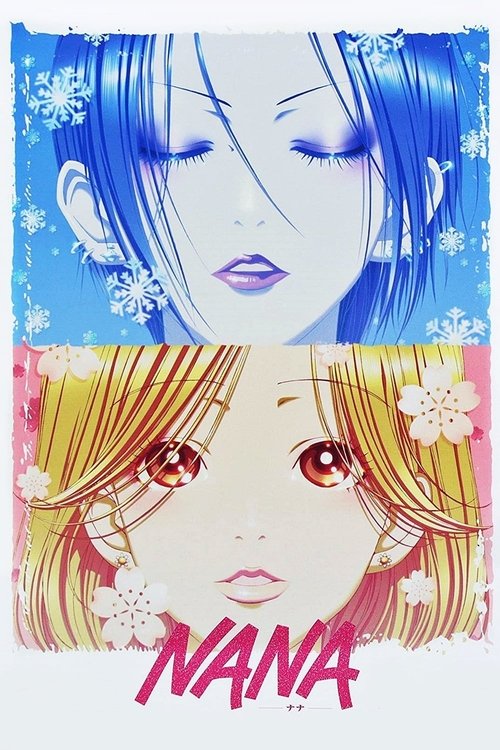
"NANA" chronicles the lives of two twenty-year-old women who share the same first name but possess starkly different personalities and ambitions. Nana Komatsu, nicknamed Hachi, is a naive and dependent girl who moves to Tokyo chasing after her boyfriend, seeking a fairytale romance. Nana Osaki is a fiercely independent and proud punk rock vocalist, determined to make her band, the Black Stones (BLAST), a success in the competitive music world.
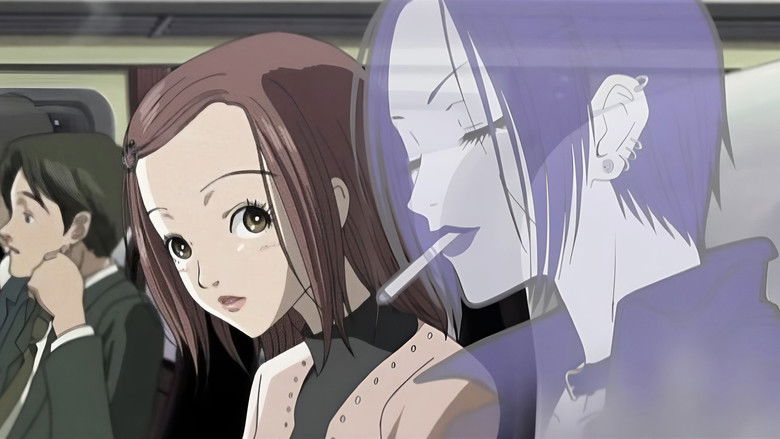
A chance encounter on a snow-bound train to Tokyo leads to them becoming roommates in apartment 707. Their unlikely and powerful friendship becomes the anchor in their tumultuous lives. The series meticulously explores their intertwined journeys through romance, heartbreak, career struggles, and the difficult transition into adulthood. As Hachi navigates a complex love life involving members of the popular band Trapnest, Nana Osaki confronts her past with her ex-boyfriend Ren Honjo, who is now Trapnest's star guitarist, forcing her to choose between love and her own musical dreams.
Core Meaning
The core meaning of "NANA" is a raw and unflinching exploration of the complexities of female friendship, the pursuit of dreams versus the compromises of reality, and the often-painful journey of self-discovery in young adulthood. It conveys the message that life, love, and happiness are rarely the fairytales we imagine. The series poignantly illustrates that the dreams we chase and the reality that chases us are often on parallel paths that never meet. It emphasizes that true connection and identity are forged not in perfect moments, but through shared struggles, heartbreak, and the enduring, complicated bonds of friendship that become a fragile refuge against the loneliness of the world.
Thematic DNA
Friendship and Female Bonding
The central pillar of the series is the deep, codependent, and occasionally strained friendship between the two Nanas. Their bond showcases the power of female connection as a source of strength and stability amidst romantic turmoil and career pressures. Nana Osaki's fierce protectiveness over the naive Hachi and Hachi's unwavering admiration and emotional support for Nana form a complex dynamic that is both heartwarming and fraught with jealousy and miscommunication as their lives diverge.
Love, Romance, and Heartbreak
"NANA" presents a mature and painfully realistic portrayal of romantic relationships, steering clear of typical shoujo tropes. It explores various facets of love: passionate and destructive love (Nana and Ren), idealized and innocent love (Hachi and Nobu), and pragmatic, often toxic love (Hachi and Takumi). The series delves into themes of infidelity, emotional dependency, jealousy, and the difficult choices characters must make between what their heart desires and what reality dictates.
Ambition vs. Reality
The pursuit of dreams is a powerful driving force, particularly for Nana Osaki and her band, BLAST. The series contrasts her relentless ambition to achieve musical fame with Hachi's more traditional dream of finding happiness through marriage and stability. It repeatedly poses the question of whether achieving one's dreams can coexist with personal happiness, showing the immense sacrifices, compromises, and harsh realities of the entertainment industry.
Identity and Self-Discovery
Both protagonists are on a tumultuous journey to define who they are. Nana Komatsu (Hachi) struggles with her dependency on others and her tendency to lose herself in relationships, slowly learning to find her own footing. Nana Osaki, despite her strong exterior, grapples with insecurities stemming from her traumatic past, forcing her to confront her vulnerability and her deep-seated fear of abandonment. Their growth is messy, non-linear, and deeply human.
Character Analysis
Nana Osaki
Romi Park (Anna Tsuchiya, singing)
Motivation
Her primary motivation is to surpass the band Trapnest and prove that she can succeed as a musician on her own terms, without relying on her famous ex-boyfriend, Ren. This ambition is deeply intertwined with her desire for self-worth and her need to overcome the feeling of abandonment that has haunted her entire life.
Character Arc
Nana begins as a fiercely independent and proud punk singer, defined by her ambition and her traumatic past, which includes being abandoned by her mother. Her tough exterior is a shield for deep-seated vulnerability and a fear of being alone. Her arc is about learning to open up and rely on others, primarily through her friendship with Hachi, which she describes as feeling 'like a teenage boy falling in love for the first time.' However, as her band gains success and her tumultuous relationship with Ren reignites, she is crushed by media pressure, jealousy, and eventually, profound grief, causing her to retreat and isolate herself once more, showing that her journey to trust and stability is far from over.
Nana Komatsu (Hachi)
KAORI
Motivation
Hachi is motivated by an overwhelming desire to be loved and to build a stable, happy home. She constantly seeks validation and a sense of belonging through a romantic partner, which often leads her to make impulsive and self-destructive decisions.
Character Arc
Nana Komatsu, nicknamed Hachi for her puppy-like loyalty, starts as a naive, boy-crazy, and highly dependent young woman who defines her happiness by her romantic relationships. Her journey is a harsh coming-of-age story. After being cheated on by her boyfriend Shoji, she becomes entangled in a love triangle with the kind Nobu and the manipulative Takumi. An unexpected pregnancy forces her into a difficult marriage with Takumi, shattering her idealized notions of love. Her arc is about gradually moving from complete dependence to finding a semblance of maturity and resilience, learning to make difficult choices and live with their consequences, even if it means sacrificing her own happiness for the sake of her child.
Takumi Ichinose
Toshiyuki Morikawa
Motivation
Takumi is motivated by control and a desire to maintain the success of his band, Trapnest. He views people and relationships as pieces to be managed for his own benefit and the stability of his world. His decisions are almost always rooted in logic and pragmatism rather than emotion.
Character Arc
Takumi is the brilliant but cold and manipulative leader of Trapnest. He is introduced as a womanizer who sees relationships as transactional. His character arc is largely static, but the series provides glimpses into the reasons for his behavior, suggesting a cynical worldview born from his own dysfunctional family. When Hachi becomes pregnant with his child, he steps up to marry her, not out of love, but out of a sense of responsibility and control. He remains a possessive and often cruel partner, but his actions show a complex, albeit twisted, form of commitment, challenging the audience's perception of him as a pure villain.
Nobuo Terashima
Tomokazu Seki
Motivation
Nobu is motivated by his passion for music and his unwavering belief in true love. He wants to make a living with his friends in BLAST and build a happy, honest life with someone he genuinely loves, specifically Hachi.
Character Arc
Nobu, the guitarist for BLAST, is the heart of the band and a loyal friend to Nana Osaki. He represents a pure, idealized form of love. His arc centers on his deep and genuine feelings for Hachi. He offers her a chance at a truly happy, supportive relationship, which stands in stark contrast to her toxic involvement with Takumi. The central tragedy of his arc is seeing his dream of a life with Hachi destroyed by her pregnancy and subsequent marriage. He is left heartbroken but ultimately remains a kind and supportive figure, forced to mature through his pain and accept a harsh reality.
Ren Honjo
Hidenobu Kiuchi
Motivation
Ren is motivated by his love for music and his all-consuming, possessive love for Nana Osaki. He feels a desperate need to provide for her and protect her, but this desire is often at odds with the demands of his career and his personal demons.
Character Arc
Ren is the gifted guitarist of Trapnest and Nana Osaki's first love. His arc is tragic and defined by the conflict between his love for Nana and the pressures of fame. He leaves his hometown and Nana to pursue his career in Tokyo, a decision that haunts both of them. Though they eventually reunite and get engaged, their relationship is plagued by jealousy, possessiveness, and the destructive influence of the media. Ren's arc takes a dark turn as he becomes increasingly reliant on drugs to cope with the pressure, leading to a downward spiral that foreshadows tragedy.
Symbols & Motifs
Apartment 707
Symbolizes the shared world and sanctuary of the two Nanas. The number 7, "nana" in Japanese, represents their fated connection and destiny. It is the physical and emotional space where their lives and dreams intersect, a refuge from the outside world.
The apartment is the central setting where the two protagonists decide to become roommates. It is the backdrop for many of their most important conversations, celebrations, and moments of crisis. The number is repeated on the door, symbolizing the two Nanas. Even after they move on, they plan to meet there again, signifying its importance as the origin of their bond.
Strawberry Glasses
The matching strawberry-patterned glasses represent Nana Komatsu's dream of a happy, domestic life and the simple, sweet beginnings of her friendship with Nana Osaki.
Hachi buys two matching glasses for their apartment, envisioning a shared, happy life with Nana. When Nana Osaki, in a fit of rage and despair over Hachi's decision to marry Takumi, smashes one of the glasses, it symbolizes the shattering of that innocent dream and the deep fracture in their relationship.
Lotus Flowers (Ren's Tattoo)
The lotus flower, or 'ren' in Japanese, symbolizes Ren Honjo himself. It represents resilience, rebirth, and the ability to find beauty in hardship, as the flower blooms from mud. It also signifies Nana Osaki's deep, enduring, and painful love for him.
Ren has a prominent lotus tattoo on his arm. Nana Osaki frequently references it, and the image is a constant reminder of their shared past and seemingly unbreakable bond. It's a symbol of the love that she can't escape, no matter how much pain it causes her.
Sid Vicious Padlock
The padlock necklace that Ren gives Nana, identical to the one worn by Sid Vicious of the Sex Pistols, symbolizes their punk rock ethos and a desire to be bound together. It represents a promise and a deep, possessive connection that is both protective and confining.
Nana Osaki wears the padlock necklace throughout the series as a symbol of her bond with Ren. It's a physical manifestation of their intense, all-consuming relationship that she feels she can't, or won't, unlock herself from.
Memorable Quotes
People can have lovers. They can have friends. They can be together. But when you think about it, you'll see that originally, we're alone.
— Nana Osaki
Context:
This is a recurring sentiment expressed in Nana's inner monologues throughout the series as she reflects on her relationships and her fear of abandonment.
Meaning:
This quote encapsulates Nana Osaki's cynical yet realistic worldview, shaped by her lonely childhood. It speaks to the series' core theme of existential loneliness and the idea that even the deepest connections cannot completely erase the fundamental solitude of the human condition.
The dreams we are chasing and the reality that is chasing us are always parallel; they never meet.
— Nana Komatsu (Hachi)
Context:
This line is part of Hachi's narration, often used to reflect on the divergence of her and Nana Osaki's paths and the difficult choices they've all had to make.
Meaning:
This quote captures the central conflict of the series: the struggle between youthful aspirations and the harsh, often disappointing, nature of adult life. It reflects the characters' painful realization that achieving a dream might not bring happiness, and that the practicalities of life can often derail one's passions.
Hey, Nana... Do you remember the first time we met? I'm a believer in things like fate. So I think it was fate.
— Nana Komatsu (Hachi)
Context:
This quote is from the very beginning of the series, Episode 1, "Prologue: Nana and NANA," as Hachi narrates their chance meeting on the train to Tokyo, setting the stage for their entire story.
Meaning:
This highlights Hachi's romantic and idealistic nature, as well as the profound importance she places on her friendship with Nana Osaki. It establishes the idea of an inescapable, fated bond between the two protagonists that underpins the entire narrative.
You were a stray cat, strutting so free and full of pride. But I could see your open wound. And without really thinking I just chalked it up to another cool thing about you. I never realized how much you hurt.
— Nana Komatsu (Hachi)
Context:
This is from Hachi's later narrations, reflecting on her initial impressions of Nana and how their relationship allowed her to see past the punk-rock facade to the vulnerable person underneath.
Meaning:
This quote shows Hachi's growing maturity and deeper understanding of Nana Osaki's character. It acknowledges the difference between Nana's cool, tough exterior and the deep-seated pain she hides, revealing the depth of their emotional intimacy.
Episode Highlights
Prologue: Nana and NANA
The two protagonists, Nana Komatsu and Nana Osaki, meet by chance on a snowbound train to Tokyo. Despite their polar opposite personalities, they bond over their shared name and age, setting in motion the fated encounter that will define their lives.
This episode is the cornerstone of the entire series. It establishes the central relationship, introduces the core themes of fate and connection, and perfectly contrasts the two main characters' personalities and aspirations.
Family Restaurant of Shambles
Hachi discovers that her boyfriend Shoji has been cheating on her with a coworker, Sachiko. The confrontation is emotionally raw and devastating, leading to their breakup. Nana Osaki provides fierce, unwavering support for the heartbroken Hachi.
A major turning point for Hachi's character. It marks the end of her innocent, idealized view of love and deepens her reliance on Nana Osaki, solidifying their bond as Hachi's primary emotional anchor.
Trapnest, Live
Hachi gets tickets to a Trapnest concert. In a pivotal moment, Nana Osaki comes face to face with her ex-boyfriend Ren for the first time since he left for Tokyo, forcing them both to confront their unresolved feelings.
This episode reignites the central romance between Nana and Ren, a relationship that drives much of the series' drama. It also marks the beginning of Hachi's entanglement with the members of Trapnest, setting up future conflicts.
Hachi's Child, Pregnancy
After breaking up with Takumi and starting a promising relationship with Nobu, Hachi discovers she is pregnant. The episode is filled with tension and uncertainty as she realizes the baby could be Takumi's, threatening her chance at happiness with Nobu.
This is arguably the most significant plot twist in the series. The pregnancy forces Hachi into an impossible choice and sets her on a path that will irrevocably change her life and her relationship with everyone around her.
The Broken Strawberry Glass
Takumi arrives and declares he will take responsibility and marry Hachi. Devastated by the news and feeling betrayed, Nana Osaki accidentally drops and shatters one of the matching strawberry glasses, a symbol of their friendship and shared home.
A powerful, symbolic moment that represents the shattering of the two Nanas' idyllic life together. It marks a major fracture in their friendship and the end of an era for the residents of apartment 707.
Fireworks Display, Hachi and NANA
The season finale shows Hachi, now married to Takumi and living separately, watching fireworks from the window of apartment 707, waiting for Nana. The episode is a montage of past moments and flash-forwards, ending on a bittersweet and unresolved note about their friendship enduring despite the distance.
The anime's conclusion is open-ended, providing emotional closure but leaving the plot unresolved as it only covers up to Volume 12 of the manga. It emphasizes the enduring bond between the two Nanas while acknowledging the painful reality of their separate lives.
Philosophical Questions
Are fate and free will mutually exclusive?
The series constantly plays with the idea of fate (the 'Demon Lord' Hachi often blames for her misfortunes) bringing people together, exemplified by the chance meeting of the two Nanas. However, it meticulously shows how the characters' own choices, mistakes, and personal flaws are what truly shape their lives and relationships. The story explores whether fated connections can survive the consequences of individual free will, questioning whether destiny is a starting point or an unchangeable destination.
Can true happiness coexist with the successful pursuit of ambitious dreams?
This question is at the heart of the conflict between the two Nanas' life goals. Nana Osaki relentlessly pursues musical stardom, but this path is filled with personal sacrifice, heartbreak, and immense pressure that jeopardizes her mental health and relationships. Hachi seeks happiness in domesticity, but achieves it through a compromising marriage that leaves her feeling unfulfilled and lonely. The series suggests that both paths are fraught with pain and that the idealized versions of success and happiness are often illusions.
What is the true nature of love and dependency?
"NANA" deconstructs idealized notions of romance, presenting a spectrum of relationships from passionate and toxic to gentle and pragmatic. It forces viewers to question what constitutes love. Is it the all-consuming, destructive passion of Nana and Ren? The stable but controlling pragmatism of Hachi and Takumi? Or the sweet, unfulfilled potential of Hachi and Nobu? The series deeply explores emotional dependency, especially in Hachi's character, asking whether relying on others for happiness is a fatal flaw or an inescapable part of the human condition.
Alternative Interpretations
One of the most debated aspects of "NANA" is the nature of the relationship between the two protagonists. While ostensibly a deep friendship, many fans and critics interpret their bond as having romantic and queer undertones. Nana Osaki's intense possessiveness and jealousy over Hachi, combined with Hachi's deep emotional reliance on Nana, suggest a connection that transcends platonic friendship. Osaki's internal monologue where she compares her feelings for Hachi to "a teenage boy falling in love for the first time" is often cited as evidence for this interpretation.
Another area of debate is the character of Takumi Ichinose. While largely portrayed as a villain—manipulative, cold, and misogynistic—some interpretations view him through a more complex lens. His decision to marry Hachi can be seen not just as an act of control, but as a fulfillment of a twisted sense of duty, providing the stability that he himself never had. His actions are still toxic, but this perspective suggests his character is a product of his own trauma rather than pure malice, making him a more tragic, rather than simply evil, figure.
Cultural Impact
"NANA" had a profound cultural impact in Japan and internationally, significantly influencing fashion, music, and the shoujo/josei manga genre. Its mature, realistic portrayal of complex relationships, sexuality, and the struggles of young adulthood was revolutionary for a story aimed at a female audience, pushing the boundaries of the genre and appealing to older readers. The series is credited with popularizing the punk aesthetic in mainstream fashion, with Nana Osaki's Vivienne Westwood-inspired style becoming iconic and widely emulated.
The music from the anime, featuring performances by Anna Tsuchiya and Olivia Lufkin, was incredibly successful, leading to hit singles and sold-out concerts, blurring the line between fictional bands and real-world music success. The story's unflinching look at topics like emotional dependency, infidelity, and ambition resonated deeply with a generation of young adults, cementing its status as a timeless classic. Despite the manga's long hiatus, the series maintains a passionate global fanbase and continues to be a benchmark for dramatic, character-driven storytelling in anime and manga.
Audience Reception
"NANA" was met with widespread critical and audience acclaim upon its release, and it is considered a modern classic in the josei/shoujo genre. Audiences overwhelmingly praised its realism, emotional depth, and mature handling of complex themes like love, friendship, and the harsh realities of adulthood. The characters were lauded for being deeply flawed, relatable, and human, a departure from the often-idealized protagonists found in other romance anime. Nana Komatsu (Hachi) is a particularly polarizing figure; while some viewers find her frustratingly naive and dependent, many others sympathize with her realistic portrayal of a young woman struggling to find her way.
The main point of criticism and frustration for viewers is the anime's abrupt and open-ended conclusion, which only adapts the first 12 volumes of the manga. This, coupled with the manga's ongoing hiatus since 2009, has left fans in a state of perpetual longing for a definitive ending to the story. Despite this, the series' reputation remains incredibly strong, with a dedicated fanbase that continues to discuss and analyze its intricate story decades later.
Interesting Facts
- The creator of the manga, Ai Yazawa, studied fashion, and her love for the British designer Vivienne Westwood is heavily featured in the series. Many of Nana Osaki's iconic outfits and accessories, like the armor ring and the orb lighter, are real-life Vivienne Westwood pieces.
- The manga has been on an indefinite hiatus since 2009 after Ai Yazawa fell seriously ill. While she has recovered, she has not yet been able to resume the grueling work of serialization, leaving the story incomplete. However, in 2022 and subsequent years, she has expressed a commitment to eventually finishing the series.
- The name 'Nana' means the number seven in Japanese, a number that is a recurring symbol throughout the series, most notably in the apartment number 707.
- The singing voices for the two main bands in the anime were provided by two real-life musicians: Anna Tsuchiya performed as Nana Osaki for BLAST, and Olivia Lufkin performed as Reira Serizawa for Trapnest. Their songs became major hits in Japan.
- The series was adapted into two successful live-action films in Japan, released in 2005 and 2006, starring Mika Nakashima as Nana Osaki and Aoi Miyazaki (later replaced by Yui Ichikawa) as Nana Komatsu.
⚠️ Spoiler Analysis
Click to reveal detailed analysis with spoilers
Frequently Asked Questions
Explore More About This Movie
Dive deeper into specific aspects of the movie with our detailed analysis pages
Comments (0)
No comments yet. Be the first to share your thoughts!