
Tomorrow
A poignant fantasy drama where grim reapers, cloaked in stylish sorrow, intervene in human despair, painting a world where saving a life is a revolutionary act against fate itself.
Tomorrow

Tomorrow

내일

"Finding a reason to live tomorrow, that's what we do."

01 April 2022 — 21 May 2022 South Korea 1 season 16 episode Ended ⭐ 8.5 (256)
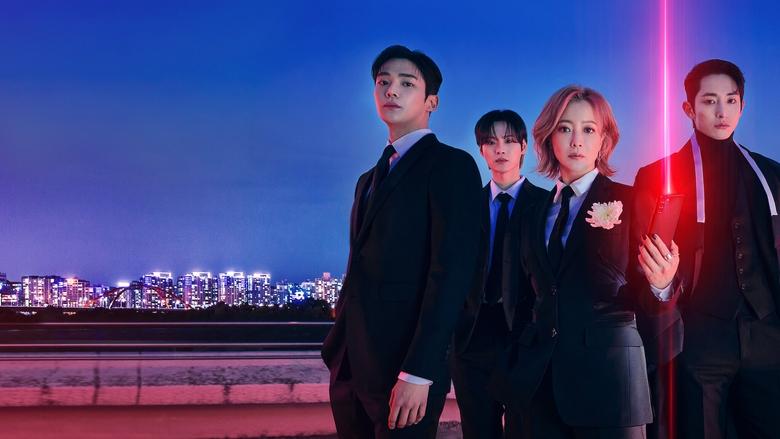
Cast: Rowoon, Kim Hee-seon, Yun Ji-on, Lee Soo-hyuk, Moon Seo-Yoon
Drama Sci-Fi & Fantasy Action & Adventure
Suicide and Mental Health Awareness Empathy and Human Connection Past Trauma and Redemption Social Commentary

Overview

"Tomorrow" follows Choi Joon-woong, a young man who, after a series of failed job interviews, attempts to stop a man from committing suicide but ends up in a coma himself. His spirit leaves his body, and he encounters a team of grim reapers from a crisis management division within the underworld monopoly known as Jemadeung. This team, led by the stern but compassionate Goo Ryeon and her colleague Lim Ryung-gu, is not tasked with guiding souls to the afterlife, but with preventing suicides among the living.

Given the choice between remaining in a coma for three years or working for Jemadeung for six months to wake up early, Joon-woong joins the Risk Management team as their newest, and only human, member. Each episode presents a new 'case,' tackling the deeply personal and societal reasons that drive individuals to despair, such as school bullying, past trauma, societal pressure, and historical injustice. While the team works to save lives, an overarching plot unravels the tragic, interconnected past of Goo Ryeon and the cold, rule-abiding elite grim reaper, Park Joong-gil, who staunchly opposes her mission to interfere with human life and death.
Core Meaning

The core meaning of "Tomorrow" is a powerful assertion that every life has value and that empathy is the most crucial intervention in moments of despair. The series directly confronts the social stigma surrounding mental health and suicide, particularly within the context of South Korea's high suicide rates. It posits that the role of others is not to offer simple solutions but to provide comfort, support, and a listening ear, reminding those in pain that they are not alone. The creators aimed to send a positive message that saving a life can be as simple as offering a few warm, understanding words and that choosing to live for 'tomorrow' is a courageous act. The series champions the idea of breaking the cycle of trauma through compassion and human connection, suggesting that even grim reapers can learn the profound importance of hope.

Thematic DNA

Suicide and Mental Health Awareness 35%
Empathy and Human Connection 30%
Past Trauma and Redemption 25%
Social Commentary 10%

Suicide and Mental Health Awareness

This is the central theme of the series. Each case the Risk Management team undertakes explores the complex reasons behind suicidal ideation, including bullying, unemployment, grief, historical trauma, and societal pressure. The show handles these sensitive topics with empathy, aiming to break the stigma surrounding mental health issues and open a dialogue. It refrains from romanticizing the pain, instead focusing on the importance of listening, validating feelings, and showing support to those who feel they have lost all hope. The series' mission is explicitly stated as suicide prevention, a unique twist on the traditional grim reaper mythology.

Empathy and Human Connection

The series argues that empathy is the most powerful tool against despair. Choi Joon-woong, the human member of the team, often succeeds where the more detached reapers struggle because of his innate empathy and emotional responses. His character arc demonstrates how genuine connection and a willingness to understand another's pain can reignite a person's will to live. The show repeatedly emphasizes that the team's job is not to solve problems, but to offer comfort and show people that someone cares, thereby helping them find their own strength to continue.

Past Trauma and Redemption

Many characters, both the grim reapers and the humans they save, are haunted by their pasts. The overarching narrative between Goo Ryeon and Park Joong-gil is rooted in a tragic past life filled with trauma, misunderstanding, and loss, which led to their respective roles in the afterlife. Goo Ryeon's mission to save others is a form of penance and a way to redeem her own past actions. Similarly, Lim Ryung-gu's backstory involves deep personal trauma related to his mother. The series explores how confronting and understanding past wounds is essential for healing and moving forward.

Social Commentary

"Tomorrow" uses its fantasy framework to deliver sharp commentary on real-world societal issues in South Korea. It tackles sensitive historical topics like the plight of Korean War veterans and the unresolved trauma of "comfort women" during WWII. It also critiques modern problems like toxic workplace culture, online bullying, lookism, and the immense pressure placed on young people to succeed. The show doesn't shy away from portraying the harsh realities that can push individuals to their breaking point.

Character Analysis

Goo Ryeon

Kim Hee-seon

Archetype: The Penitent Mentor
Key Trait: Driven by Penance

Motivation

Her primary motivation is to save people who are contemplating suicide, believing it's the one thing she must do to atone for her past. This mission is deeply personal, as she understands the depth of despair that leads to such a decision. Her wish, granted by the Jade Emperor, is to save the person she most needed to save: herself. This internal motivation fuels her relentless, often rule-breaking, dedication to her work.

Character Arc

Initially presented as a cold, intimidating, and seemingly ruthless grim reaper, Goo Ryeon's arc is one of profound pain and redemption. Flashbacks gradually reveal her tragic past life, where she was a beloved wife who endured immense suffering, leading her to take her own life and sever her fated bond with her husband (Park Joong-gil). Her role as the leader of the Risk Management team is a direct consequence of her past; having come from Hell, she dedicates her existence to saving others from making the same choice she did. Through her interactions with Choi Joon-woong and the people she saves, she slowly allows her compassionate nature to resurface, learning to save herself while saving others. By the end, she finds peace and a renewed purpose, reconciling with Joong-gil without erasing the consequences of their past.

Choi Joon-woong

Rowoon

Archetype: The Empathic Hero
Key Trait: Compassionate

Motivation

His motivation is a simple, powerful desire to help others. As someone who has felt lost and hopeless, he deeply sympathizes with the people the team is assigned to save. He is also driven by his contract: succeed in his role for six months to wake up from his coma and not cause his mother further pain. This evolves into a genuine commitment to the team's mission.

Character Arc

Joon-woong begins as a kind but perpetually unsuccessful job seeker who feels like a failure. His accidental entry into the world of grim reapers forces him into a role where his greatest asset is not his resume, but his empathy. Initially clumsy and emotionally driven, he often clashes with Ryeon's stoic methods. However, his humanity becomes the team's greatest strength, allowing him to connect with people on a level the reapers cannot. Over the series, he transforms from a lost young man into a confident and compassionate individual who understands the true value of life. After his six months, he wakes from his coma, retaining his empathetic nature and continuing to save people in the living world, proving his journey fundamentally changed him.

Park Joong-gil

Lee Soo-hyuk

Archetype: The Antagonist with a Hidden Wound
Key Trait: Principled but Traumatized

Motivation

His initial motivation is to uphold the strict rules of the afterlife, believing that suicide is a selfish sin that disrupts cosmic order. This conviction stems from his forgotten trauma. After recovering his memories, his motivation shifts to protecting Goo Ryeon and coming to terms with their shared tragedy, driven by his enduring, deeply buried love for her.

Character Arc

Park Joong-gil is introduced as the rigid, cold-hearted leader of the Escort Team, who despises those who take their own lives and vehemently opposes the Risk Management Team's work. His arc is a journey of rediscovery and reconciliation with a forgotten past. It's revealed he was Goo Ryeon's loving husband in a past life, and his current animosity is a subconscious manifestation of the immense pain and trauma from losing her. His memories were sealed for his own protection. Through Joon-woong's intervention, he is forced to confront his past through nightmares, leading him to remember everything. This revelation transforms his perspective, replacing his rigid anger with understanding and sorrow. He ultimately chooses to protect Ryeon, shouldering her punishment and finally achieving closure with her.

Lim Ryung-gu

Yun Ji-on

Archetype: The Loyal Deputy
Key Trait: Loyal and Dutiful

Motivation

For centuries, his main motivation has been to find his reincarnated mother to atone for his past failure. He is also motivated by a strong sense of duty to Goo Ryeon, who saved him from eternal suffering. This loyalty drives him to support her mission even when it conflicts with Jumadeung's rules. After resolving his personal quest, his motivation aligns more completely with the team's goal of saving others.

Character Arc

Ryung-gu is the pragmatic and seemingly detached assistant manager of the Risk Management team, known for his punctuality and professional demeanor. His personal arc reveals a tragic past: he took his own life after failing to protect his mother from abuse, a decision he has regretted for centuries. His work as a reaper is overshadowed by a personal mission to find his mother's reincarnation. When he finally encounters her, he is able to protect her in this life and find a measure of peace and forgiveness for himself, allowing him to more fully commit to the team's purpose. His loyalty to Goo Ryeon is unwavering, and he develops a grudging respect and fondness for Joon-woong.

Symbols & Motifs

Red Thread of Fate

Meaning:

Rooted in East Asian folklore, the red thread symbolizes a destined, unbreakable connection between two people, typically romantic soulmates. In "Tomorrow," this thread represents the fated bond between Goo Ryeon and Park Joong-gil in their past life. The show introduces a unique rule: if a person connected by this thread dies by suicide, the thread is severed, and they are fated never to meet their loved one again in future lives. This adds a layer of cosmic tragedy to Ryeon's past actions.

Context:

Goo Ryeon wears a cut red thread around her wrist, a constant, visible reminder of the connection she severed through her own actions in a past life. The concept is explicitly explained in Episode 5. The entire backstory between Ryeon and Joong-gil, revealed in later episodes, revolves around the establishment and subsequent breaking of this fated bond, explaining their antagonistic yet deeply connected relationship in the present.

Goo Ryeon's Pink Hair and Red Eyeshadow

Meaning:

Goo Ryeon's distinct appearance is a direct link to her human past and her relationship with Park Joong-gil. The pink/red eye makeup was first applied by him as a gesture of love. After her traumatic experiences and subsequent death, the pink hair and red makeup become her signature look as a grim reaper. It symbolizes that she carries the memory of that love and loss with her, turning a symbol of affection into a part of her hardened, intimidating persona. It's a visual representation of her inability to let go of her past.

Context:

This look is consistent throughout the series. Flashbacks in episodes like 10, 13, and 14 reveal the origin of the makeup and the tragic events of her past life with Joong-gil, giving her appearance a profound and sorrowful meaning. Actress Kim Hee-seon intentionally adopted the look to match the original webtoon character's design.

Jumadeung (The Afterlife Corporation)

Meaning:

Jumadeung, the underworld entity, is depicted not as a mystical realm but as a highly structured, modern corporation with various departments (Escort Team, Risk Management, IT, etc.), a CEO (the Jade Emperor), and corporate politics. This symbolizes the bureaucratization of life and death and serves as a satirical take on South Korea's intense corporate culture. Life-and-death matters are handled with paperwork, performance reviews, and inter-departmental rivalries, grounding the fantastical premise in a relatable, mundane reality.

Context:

The corporate setting of Jumadeung is established in the first two episodes and remains the central hub for the main characters throughout the series. The tension between Park Joong-gil's Escort Team and Goo Ryeon's Risk Management Team often plays out like a workplace conflict, with the Jade Emperor acting as the ultimate authority figure resolving disputes.

Memorable Quotes

Those who stomp on others don't remember. Only those who get stomped on remember.

— Goo Ryeon

Context:

Said during the case of Noh Eun-bi (Episode 2, "Fallen Flower"), a writer being tormented by her high school bully. Goo Ryeon says this to explain why the past is still so painfully present for Eun-bi, even though years have passed.

Meaning:

This quote encapsulates the lasting impact of bullying and trauma. It highlights the profound and enduring pain victims carry, often dismissed or forgotten by their aggressors. It validates the victim's experience and memory as the true record of the harm done.

Your life is yours. Why do you let other people have a say in it? Don't ever let anyone treat you horribly.

— Goo Ryeon

Context:

Goo Ryeon says these empowering words to a victim of severe online bullying and slut-shaming, encouraging her to fight back against her tormentors and recognize her own value.

Meaning:

This is a powerful assertion of self-worth and agency. It's a direct message to anyone suffering from external judgment or abuse, urging them to reclaim ownership of their life and refuse to be defined or diminished by others' cruelty.

I believe you must love and care for those who are around you during your short stay in the land of the living as someone who has a tomorrow to live.

— Goo Ryeon

Context:

Goo Ryeon offers this wisdom to Choi Joon-woong at the end of Episode 5, after they help a young couple bound by the red thread of fate. It reflects her deep, sorrowful understanding of what is lost when a life is cut short.

Meaning:

This quote, spoken by an immortal being, underscores the preciousness and brevity of human life. It serves as the series' core message: the most important thing one can do with the gift of 'tomorrow' is to cherish and support the people in their life, as those connections are what give life meaning.

It feels like everyone's moving ahead and I'm the only one who's lost my way… Like I'm the only loser. Like I'm the only one standing still.

— Choi Joon-woong

Context:

Joon-woong shares this feeling with his childhood friend, Jae-soo, in Episode 3 ("Forest of Time"), whom the team is trying to save. He expresses his own struggles to connect with his friend and show him he's not alone in feeling this way.

Meaning:

This quote perfectly captures the feeling of isolation and failure that many young people experience when struggling with their careers and personal goals. It's a deeply relatable sentiment of being left behind in a fast-paced, competitive world, which is a key driver for the despair the team often confronts.

Episode Highlights

Fallen Flower (Episodes 2-3)

S1E2

The team's first major case involves Noh Eun-bi, a TV writer whose past trauma from severe high school bullying resurfaces when her tormentor becomes a successful webtoon artist. The episode dives deep into her memories, showcasing the lasting psychological scars of abuse. It establishes the show's procedural format and its commitment to tackling difficult subjects head-on.

Significance:

This two-part episode solidifies the series' core theme of confronting past trauma and the importance of speaking out. It highlights Choi Joon-woong's empathetic approach and contrasts it with Goo Ryeon's tougher methods, establishing their dynamic. It was praised for its sensitive yet unflinching portrayal of the long-term effects of bullying.

A Soul Becomes a Star (Episode 6)

S1E6

The Risk Management team is assigned to Lee Young-chun, a Korean War veteran living in poverty and neglect, who believes his life was worthless. Rather than just preventing his death, the team works to give him the honor and recognition he was denied in life. This culminates in a powerful scene where the Escort Team, led by Park Joong-gil, arrives in full traditional attire to give him a hero's escort to the afterlife.

Significance:

This episode was widely acclaimed as one of the most moving and poignant of the series. It serves as a powerful tribute to war veterans and a critique of societal neglect of the elderly. It also marks a turning point for Park Joong-gil's character, showing a flicker of compassion beneath his rigid exterior and his respect for a life of sacrifice.

Someday, Because of You (Episode 9)

S1E9

In a departure from human cases, the team must save a dog named Kong who has fallen into depression and lost the will to live after his owner, an army veteran, becomes blind and pushes him away. The episode explores themes of loyalty, companionship, and the deep emotional lives of animals.

Significance:

This episode was memorable for its unique premise and emotional depth, highlighting the series' message that all life is precious. It provided a moment of levity while still delivering a heartfelt story about grief, guilt, and the unbreakable bond between a pet and its owner.

Spring (Episode 13)

S1E13

The team encounters Yoo Bok-hui, an elderly woman haunted by the guilt of surviving while her friend was taken by Japanese soldiers during the colonial era to become a "comfort woman." The episode delves into this dark period of Korean history, telling a story of immense trauma, survival, and the lifelong burden of memory.

Significance:

This episode was praised for its brave and sensitive handling of a deeply painful and politically charged historical issue. It provided a platform to honor the victims and shed light on their enduring suffering, solidifying the show's role as a social commentary as much as a fantasy drama.

Threads of Fate (Episodes 15-16)

S1E16

The finale brings all the central character arcs to a close. The full story of Goo Ryeon and Park Joong-gil's past is revealed, explaining their tragic connection and his subconscious animosity. The team unites to save Ryeon from being sent back to Hell, and Joong-gil, with his memories restored, sacrifices himself to protect her. Choi Joon-woong completes his contract and returns to the living world, forever changed by his experience.

Significance:

This two-part finale provides emotional closure for the main characters. It resolves the central mystery of the series, transforms Joong-gil from an antagonist to a tragic hero, and affirms the lasting impact of the team's work as Joon-woong continues to save people even without his memories of Jemadeung. It concludes the series on a bittersweet but hopeful note.

Philosophical Questions

What is the true meaning of 'saving' someone?

The series continuously explores this question. Initially, saving someone seems straightforward: prevent the act of suicide. However, the team learns that true salvation isn't about a last-minute physical intervention. It's about addressing the root cause of despair. The show argues that saving someone means listening without judgment, validating their pain, and showing them they are not alone. Goo Ryeon states their job is to offer comfort and support, not solutions, because individuals are the only ones who can ultimately free themselves. This suggests that 'saving' is the act of empowering someone to find their own reason to live for tomorrow.

Is it a sin to give up on life?

"Tomorrow" presents a nuanced view on this difficult question. The afterlife system of Jemadeung, particularly Park Joong-gil's perspective, initially frames suicide as a grave sin that disrupts cosmic balance and leads to Hell. However, the entire premise of the Risk Management team challenges this rigid dogma. The team's work is an acknowledgment by the Jade Emperor that the reasons for suicide are complex and often rooted in unbearable suffering caused by external factors like bullying or trauma. Goo Ryeon, who has been to Hell for this very act, embodies the argument that it is a choice made from immense pain, not malice. The series ultimately shifts the focus from judgment to empathy, suggesting that the morality of the act is less important than compassion for the suffering that leads to it.

Alternative Interpretations

One area of interpretation revolves around the nature of the "severed" red thread of fate. The show establishes that suicide breaks this destined bond forever. However, both Goo Ryeon and Lim Ryung-gu encounter their key past-life connections (Park Joong-gil and his mother, respectively) in the afterlife. This has led to discussions about whether the rule is absolute. One interpretation is that the thread guarantees a happy romantic or familial union in reincarnation, and severing it only prevents that specific type of reunion, not any and all future encounters. Another perspective is that their unique circumstances as grim reapers, existing outside the cycle of reincarnation, place them in a loophole where they can meet but not truly rekindle their fated mortal relationship.

Cultural Impact

"Tomorrow" made a significant cultural impact by tackling the subject of suicide with unprecedented directness for a mainstream Korean drama. In a country with one of the highest suicide rates among developed nations, the show's focus on suicide prevention was both timely and bold. It contributed to a broader public conversation about mental health, depression, and the societal pressures that exacerbate these issues, topics often stigmatized in Korean society.

The series also garnered praise for its sensitive handling of painful historical events, particularly its episode on "comfort women," which was seen as a respectful and important acknowledgment of the victims' suffering. By weaving these real-world issues into a fantasy narrative, the show made them accessible to a wider, global audience, offering insights into Korean history and culture. While its domestic ratings were inconsistent, its success on Netflix demonstrated a strong international appetite for K-dramas that blend genre entertainment with deep social commentary. The show's legacy lies in its compassionate approach to life's darkest moments and its powerful message of hope and empathy.

Audience Reception

The audience reception for "Tomorrow" was notably divided between domestic and international viewers. Globally, the series was a significant success on Netflix, praised for its unique premise, emotional depth, and willingness to tackle heavy social issues. International fans lauded the performances, the chemistry of the main cast, and the powerful, tear-jerking stories in each episode, particularly those dealing with historical trauma.

In South Korea, however, the viewership ratings were inconsistent. After a strong premiere, the ratings fluctuated and saw a decline in the latter half of the series. Some Korean viewers may have found the direct and episodic confrontation with the sensitive topic of suicide to be uncomfortable or emotionally taxing. Despite this, the show was commended by many for its important social messages and fresh take on the fantasy genre. The main points of praise were the powerful acting and the impactful handling of episodic cases, while criticism sometimes pointed to tonal shifts between its comedic and dramatic elements.

Interesting Facts

  • The series is based on a popular Naver webtoon of the same name by Llama. While the core premise is the same, the drama made some changes, such as altering the chronological order of the opening scenes and adding more fantasy elements.
  • Actress Kim Hee-seon underwent a dramatic transformation to play Goo Ryeon, cutting her hair short and dyeing it pink for the first time in over 20 years to match the webtoon's depiction of the character. She revealed the process was damaging to her hair, requiring it to be re-dyed every four days.
  • The drama received rave reviews and high popularity among international audiences, frequently ranking in the top 10 on Netflix globally. However, its domestic viewership ratings in South Korea were more modest and fluctuated, dropping after a strong start.
  • The head of the afterlife, the Jade Emperor, is traditionally a male deity in Chinese mythology. The series made a deliberate choice to portray the character as a powerful, grandmotherly woman (played by Kim Hae-sook), subverting traditional depictions.
  • The series was selected as one of the best broadcast video contents of 2021 by the South Korean Ministry of Culture, Sports and Tourism before its air date.

⚠️ Spoiler Analysis

Click to reveal detailed analysis with spoilers

Frequently Asked Questions

Explore More About This Movie

Dive deeper into specific aspects of the movie with our detailed analysis pages

Comments (0)

Leave a comment

No comments yet. Be the first to share your thoughts!