Skip to content
Narco-Saints
A suffocating tropical neo-noir where devotional hymns dissolve into gun smoke and cocaine dust, trapping an ordinary working-class father in an intricate cage match of deceit, survival, and predatory ambition.
Narco-Saints

Narco-Saints

수리남

09 September 2022 — 09 September 2022 South Korea 1 season 6 episode Ended 7.7 (175)

Cast: Ha Jung-woo, Hwang Jung-min, Park Hae-soo, Jo Woo-jin, Yoo Yeon-seok

Crime The Perversion of Faith and Charismatic Manipulation The Weight of Paternal Duty and Economic Survival The Art of the Hustle and Strategic Deception (The Mole) Institutional Power, Exploitation, and Sovereignty

Overview

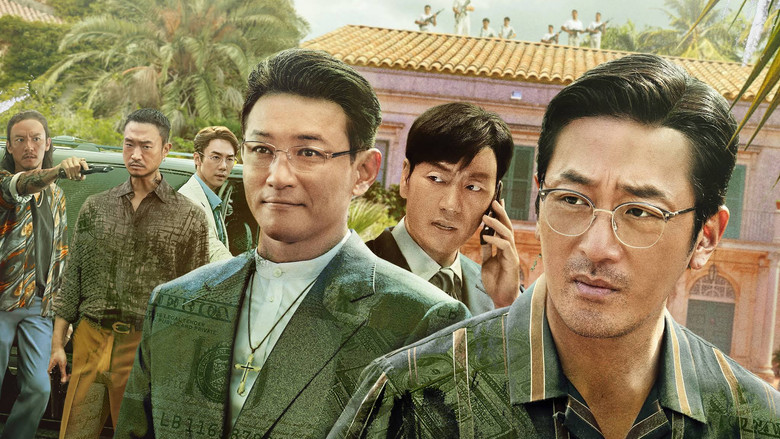
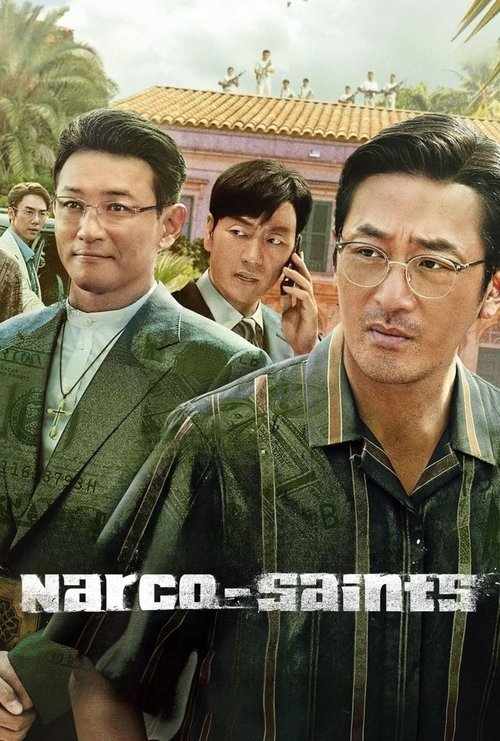
Narco-Saints (Korean: 수리남, Suriname) is a six-part South Korean crime thriller mini-series directed and co-written by Yoon Jong-bin. Inspired by real events from the 2000s, the story follows Kang In-gu, a relentless South Korean entrepreneur and devoted family man who travels to the South American nation of Suriname to establish an export business for skate fish. Instead of financial security, In-gu walks into a deadly trap orchestrated by Pastor Jeon Yo-hwan, a charismatic cult leader and covert cocaine kingpin controlling the country's underworld with the blessing of corrupt local authorities.

Framed for international drug trafficking and imprisoned abroad, In-gu is approached by Choi Chang-ho, an operative of South Korea’s National Intelligence Service (NIS). Because Suriname has no extradition treaty with South Korea, Chang-ho devises an audacious undercover sting operation: In-gu must return to the lion's den as a counterfeit drug broker and persuade Pastor Jeon to distribute cocaine into United States jurisdiction, thereby triggering an intervention by the U.S. Drug Enforcement Administration (DEA).

Trapped between Jeon’s fanatic cult enclave, rival Chinese organized crime syndicates in Paramaribo’s Chinatown, and the shifting loyalties of ruthless lieutenants, In-gu must rely entirely on street smarts, bluffing, and sheer willpower. The narrative unfolds as a psychological game of chess, culminating in high-stakes cartel warfare, cross-continental law enforcement operations, and lingering questions regarding trust, faith, and survival.
Core Meaning

Through its portrayal of international narcotics trafficking and state espionage, Narco-Saints examines how fundamental institutions of human trust—organized religion, familial obligation, national loyalty, and commercial enterprise—can be weaponized to exploit vulnerability.

Director Yoon Jong-bin juxtaposes the raw economic desperation of the modern working class (symbolized by In-gu’s relentless hustle to secure his children’s future) against the predatory nature of charismatic authority (embodied by Jeon’s use of Christian salvation to run a cocaine syndicate). The series posits that survival and morality in an exploitative world depend not on divine providence or institutional righteousness, but on practical pragmatism, mutual suspicion, and individual resilience.

Thematic DNA

The Perversion of Faith and Charismatic Manipulation 30%
The Weight of Paternal Duty and Economic Survival 25%
The Art of the Hustle and Strategic Deception (The Mole) 25%
Institutional Power, Exploitation, and Sovereignty 20%

The Perversion of Faith and Charismatic Manipulation

The series dissects how religious fervor is used as a psychological shield and coercive tool. Pastor Jeon cloaks greed in holy scripture, demanding unconditional obedience from his congregation while secretly dosing communion meals with narcotics to foster physical dependency. Faith is revealed as the ultimate confidence trick.

The Weight of Paternal Duty and Economic Survival

Kang In-gu’s trajectory is defined by the generational trauma of poverty and his refusal to be a "disgraceful father". Every mortal risk he takes—from setting up a fish plant in Suriname to staring down cartel hitmen—is justified by his desperate ambition to lift his family out of precariousness.

The Art of the Hustle and Strategic Deception (The Mole)

Survival in the criminal underworld requires continuous performance. In-gu, Chang-ho, and undercover operative Byeon Ki-tae inhabit shifting identities, turning the entire plot into an escalating contest of social engineering, counter-intelligence, and psychological warfare.

Institutional Power, Exploitation, and Sovereignty

The narrative reveals the friction between national governments and international illicit networks. By showing a foreign drug baron manipulating local politics, alongside U.S. and Korean intelligence agencies executing geopolitical maneuvers across foreign soil, the series explores power dynamics and jurisdictional reach in globalized crime.

Character Analysis

Kang In-gu

Ha Jung-woo

Archetype: The Reluctant Everyman / Trickster Key Trait: Unshakeable composure under life-or-death pressure.

Motivation

Securing wealth and stability for his family; vindicating his name.

Character Arc

Shifts from a weary, cash-strapped merchant into an unflinching, streetwise undercover operative who outwits ruthless kingpins.

Pastor Jeon Yo-hwan

Hwang Jung-min

Archetype: The Megalomaniacal Con Artist / Cult Leader Key Trait: Charismatic theatricality masking lethal ruthlessness.

Motivation

Absolute control, wealth, and playing a godlike arbiter over followers.

Character Arc

Evolves from a seemingly benevolent community benefactor into a paranoid, megalomaniacal tyrant facing the collapse of his empire.

All 5 characters and cast

Symbols & Motifs

Skate Fish (Hong-eo)

Meaning:

Symbolizes both overlooked opportunity and poisoned bait. Discarded by locals but prized in Korea, it represents the immigrant's economic hustle; when hollowed out to smuggle cocaine bricks, it represents how innocent enterprises are corrupted by illicit trade.

Context:

The fish cargo that initially brings In-gu to Suriname to establish an export business, which is later intercepted when laced with narcotics.

The Signed Park Chan-ho Baseball

Meaning:

Serves as a motif of authenticity, bluffing, and valuation. Whether the ball is an authentic signed treasure or a counterfeit token reflects Jeon’s entire persona: a masterwork of deception whose genuine value remains an enigma.

Context:

A recurring personal artifact gifted by Pastor Jeon to In-gu, which Jeon later desperately requests back from prison in the epilogue.

The Pastor’s Pastoral Collar / Golden Cross

Meaning:

Highlights the blasphemous synthesis of religious sanctity and lethal violence, serving as an emblem of sanctimonious authority masking criminal atrocities.

Context:

Worn continuously by Pastor Jeon during his church sermons as well as during brutal cartel interrogations and executions.

The Gated Cult Compound

Meaning:

Represents an insulated kingdom built on delusions, isolation, and paranoia, illustrating total institutional control over its inhabitants.

Context:

Pastor Jeon's heavily fortified jungle estate, placed in sharp visual contrast with the vibrant, chaotic streets of Paramaribo.

Memorable Quotes

사탄 들렸어? 왜 이렇게 의심이 많아?
— Pastor Jeon Yo-hwan

Context

Episode 3; spoken during high-tension negotiations when associates question his decisions and methods.

Meaning

Demonstrates how Jeon employs religious guilt, spiritual gaslighting, and intimidation to deflect suspicion and assert absolute psychological control over his associates.

식사는 잡쉈어?
— Pastor Jeon Yo-hwan

Context

Recurring throughout the series (notably Episodes 2 and 4) as a chilling conversational opener.

Meaning

An ordinary Korean greeting delivered with an unsettling, passive-aggressive menace that subverts everyday hospitality into a veiled threat.

All 4 quotes

Episode Highlights

Episode 1

S1E1

Introduces Kang In-gu’s background of arduous labor in Korea and his venture to Suriname with his friend Eung-soo. Establishes the clash with Chen Zhen’s Chinatown syndicate and the introduction of Pastor Jeon as an apparent savior.

Significance:

Lays the groundwork for In-gu’s economic motivations and introduces the deceptive mechanics of Suriname's criminal underworld.

Episode 2

S1E2

In-gu’s skate fish shipment is seized with cocaine, landing him in a foreign prison. NIS agent Choi Chang-ho reveals Jeon’s true identity and recruits In-gu for a sting.

Significance:

Acts as the central inciting incident that transforms a trade drama into a high-stakes espionage and undercover sting operation.

Episode 3

S1E3

In-gu returns to Suriname posing as an ambitious drug distributor and arranges a tense sit-down between Pastor Jeon and Chang-ho (undercover as investor Gu Sang-man).

Significance:

Establishes the core psychological standoff where every interaction and line of dialogue functions as a high-stakes lie detector test.

Episode 4

S1E4

Border crossing negotiations and armed ambushes in the jungle test the fragile trust between Jeon, the Colombian cartel links, and In-gu.

Significance:

Escalates the physical danger and proves In-gu’s ability to hold his nerve under direct fire and active gun battles.

Episode 5

S1E5

Paranoia peaks inside the cult mansion as Jeon hunts for a mole, leading to internal executions and the setup of rival gangs.

Significance:

Features the pivotal narrative twist revealing Byeon Ki-tae’s true identity as an embedded NIS agent, fundamentally altering the internal power dynamic.

Episode 6

S1E6

The joint DEA-NIS tactical operation strikes Jeon’s compound, culminating in an intense jungle pursuit, the dismantling of Jeon's network, and an ambiguous epilogue in Korea.

Significance:

Resolves all narrative arcs and delivers the series' central thematic enigma regarding the baseball gift and genuine trust.

Philosophical Questions

Can faith exist independently of the human messenger?

The series asks whether devotion rooted in manipulated doctrine still holds subjective spiritual validity for believers who find genuine comfort in it despite their leader being a fraud.

What constitutes the moral boundary of paternal duty?

By placing In-gu in life-threatening moral compromises for his children's prosperity, the story questions how far an individual can go before the pursuit of family welfare destroys personal integrity.

Is trust merely a calculated calculation of leverage?

Across all six episodes, every alliance is dictated not by shared ethical values, but by mutual vulnerability, continuous leverage, and survival mathematics.

Alternative Interpretations

The mystery of the signed Park Chan-ho baseball in the epilogue offers multiple distinct interpretations:

Full ending explanation

Cultural Impact

Following the show's worldwide release, the government of Suriname, via Minister of Foreign Affairs Albert Ramdin, formally protested the series, threatening legal action and diplomatic complaints for portraying their nation as a lawless "narco-state". This prompted the South Korean Embassy in Venezuela to issue safety advisories for Korean residents in Suriname.

Narco-Saints was part of a major wave of global prestige Korean dramas on streaming platforms that demonstrated high-budget Korean cinematic storytelling could successfully tackle international espionage and cartel genres. The series achieved widespread critical acclaim, earning Jo Woo-jin the Best Supporting Actor award at the 59th Baeksang Arts Awards and Ha Jung-woo the Best Actor award at the 2nd Blue Dragon Series Awards.

Audience Reception

Critics and audiences praised the blistering pacing, taut six-episode structure, high-end cinematography, and the electrifying performances of Hwang Jung-min and Jo Woo-jin. Hwang’s chilling transformation between devout preacher and monstrous cartel leader was widely singled out as a masterclass.

On the critical side, some international reviewers noted that the series leaned into familiar cartel tropes reminiscent of Narcos, and observed that supporting female characters were virtually nonexistent in the predominantly male ensemble cast. Overall, the consensus viewed it as a gripping, tightly directed thriller that successfully adapted an unbelievable true story into a polished, high-octane prestige mini-series.

Interesting Facts

  • The series is based on a real South Korean businessman (referred to publicly as "K") who collaborated with the NIS to bring down real-life drug kingpin Cho Bong-haeng in Suriname during the late 2000s.
  • Known for acclaimed South Korean films like Nameless Gangster: Rules of the Time and The Spy Gone North, this project marked director Yoon Jong-bin's first foray into directing a multi-episode television series.
  • With a reported production budget of approximately ₩35 billion (~$5 million per episode), Narco-Saints was one of the most expensive South Korean television productions produced up to that date.
  • The production originally planned to film extensively across Latin America, but due to COVID-19 travel restrictions, the crew shot key overseas sequences in the Dominican Republic and built massive tropical sets on Jeju Island and in Jeonju, South Korea.
  • The real-life inspiration, Cho Bong-haeng, was arrested in 2009 in São Paulo and sentenced to 10 years in prison in South Korea; he passed away in 2016 at age 64 due to hypertension and heart failure.

Easter Eggs

Park Chan-ho Baseball Lore

The autographed baseball of Park Chan-ho (the first South Korean Major League Baseball player) is an authentic pop-culture touchpoint for Koreans who grew up in the 1990s, symbolizing national pride, triumph abroad, and aspirational wealth.

Casting Reunions

Ha Jung-woo and Hwang Jung-min starred together for the first time in this production under director Yoon Jong-bin, with whom Ha Jung-woo had previously collaborated on The Unforgiven, The Chaser, Nameless Gangster, and Kundo.

Cinematic Allusion to Classic Mob Films

The dynamic between In-gu, Pastor Jeon, and Chen Zhen deliberately references Hong Kong undercover classics such as Infernal Affairs and American mafia epics like Scarface.

Frequently Asked Questions

Explore More About This Movie

Dive deeper into specific aspects of the movie with our detailed analysis pages

Comments (0)

Leave a comment

No comments yet. Be the first to share your thoughts!

Similar Movies