Skip to content
Tulsa King
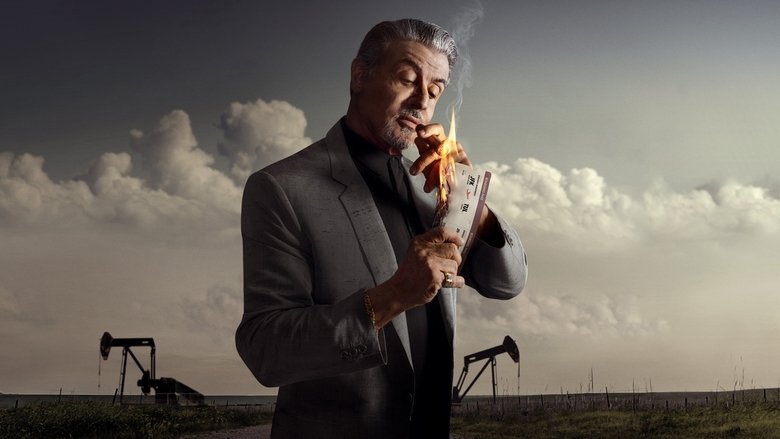
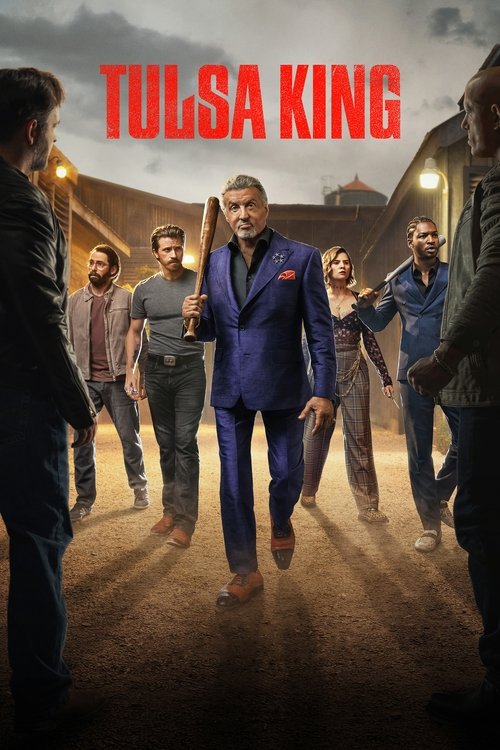
A sun-baked neo-Western crime drama pulsing with bitter regret and resilient swagger, where a weathered iron titan carves out an empire against a dusty horizon of neon grass and forgotten promises.
Tulsa King

Tulsa King

"More power, more problems."

13 November 2022 — 23 November 2025 United States of America 4 season 39 episode Returning Series 8.3 (2,764)

Cast: Sylvester Stallone, Martin Starr, Jay Will, Garrett Hedlund, Dana Delany

Drama Crime Loyalty, Betrayal, and the Illusion of Brotherhood Reinvention and the Clash of Eras Paternal Guilt and Familial Reconciliation The Frontier Spirit and American Capitalism

Overview

Tulsa King follows Dwight “The General” Manfredi (Sylvester Stallone), an old-school New York Mafia capo who walks out of federal prison after serving an honorable, unyielding twenty-five-year sentence. Rather than being rewarded with territory and respect by the Invernizzi crime family he shielded at great personal cost, Dwight is unceremoniously banished to the unfamiliar terrain of Tulsa, Oklahoma. Realizing that his former syndicate views him as an obsolete relic to be discarded, Dwight chooses survival over submission, setting out to carve an autonomous criminal footprint from scratch in the heart of modern Middle America.

Operating as a classic fish out of water in a world revolutionized by legal dispensaries, digital transactions, and shifting cultural mores, Dwight assembles a colorful, unorthodox syndicate of local outliers—including a tech-savvy cannabis entrepreneur, an ambitious young driver, an ex-con bar owner, and disenchanted renegades. Across consecutive seasons, this unlikely alliance consolidates power across legal and illicit markets, branching from weed and nitrous distribution to bourbon distilling, nightlife, and regional racketeering.

As Dwight’s nascent empire expands, it sparks inevitable confrontations on multiple battlegrounds: old New York associates demanding their cut, entrenched Oklahoma powerbrokers, ruthless rival syndicates (including Kansas City kingpins and corporate agrarian barons), and relentless federal law enforcement agencies. Dwight’s journey is simultaneously an empire-building saga and an introspective quest to reconcile with his estranged family, navigate personal betrayal, and discover whether an archaic criminal code can survive in an indifferent 21st-century society.
Core Meaning

At its core, Tulsa King examines the collision between obsolete codes of honor and modern pragmatism. Through Dwight Manfredi’s journey, the series asks what loyalty is truly worth when the institutions that demand it have surrendered their integrity. Having lost a quarter-century of life and his relationship with his daughter to preserve an omertà that his bosses readily betrayed, Dwight embodies the tragedy of blind loyalty.

The overarching message argues that genuine power and family are not inherited through blood or established mafia hierarchies, but actively forged through mutual respect, personal responsibility, and adaptability. Rather than behaving as an exploitative overlord, Dwight acts as an unconventional mentor who empowers local underdogs, demonstrating that personal reinvention is possible at any age if one is willing to confront past traumas and build something genuine in exile.

Thematic DNA

Loyalty, Betrayal, and the Illusion of Brotherhood 30%
Reinvention and the Clash of Eras 25%
Paternal Guilt and Familial Reconciliation 25%
The Frontier Spirit and American Capitalism 20%

Loyalty, Betrayal, and the Illusion of Brotherhood

Tulsa King dismantles romanticized mob mythology. Dwight spent 25 years in prison without turning informant, only to be cast out like garbage by Pete and Chickie Invernizzi. Across the seasons, this theme evolves from Dwight's grief over his former family’s betrayal to his deliberate effort to build a surrogate family founded on transactional fairness and genuine protection. The recurring pain of betrayal resurfaces in Dwight’s complex romantic relationship with ATF agent Stacy Beale and in external partnerships with ruthless powerbrokers like Cal Thresher and Bill Bevilaqua.

Reinvention and the Clash of Eras

Dwight represents a 20th-century analog dinosaur dropped into a hyper-digitized, modernized landscape. The narrative continually mines humor and tension from the clash between his brutal, direct codes of engagement and modern concepts: legal weed dispensaries, cashless economies, cyber security, and corporate legalities. Over time, Dwight does not merely adapt; he synthesizes his hard-won street intelligence with modern commercial avenues, proving that resilience and emotional insight can turn displacement into dominance.

Paternal Guilt and Familial Reconciliation

Dwight’s deepest internal conflict is his estrangement from his daughter Tina and the collateral damage his imprisonment inflicted on his blood relatives. Throughout the series, every step toward criminal dominance carries the counterweight of family vulnerability. Dwight's drive to protect Tina, his grandchildren, and his sister Joanne continually collides with his violent reality, highlighting that the true cost of ambition is always paid by those closest to the throne.

The Frontier Spirit and American Capitalism

Drawing on creator Taylor Sheridan’s neo-Western sensibilities, Tulsa serves as a modern American frontier. The boundary between legitimate commerce and criminal racket is fluid. Dwight recognizes that corporate agriculture, legal cannabis, casino gambling, and municipal politics operate on power dynamics identical to organized crime. The series depicts enterprise in America as an ongoing territorial turf war where self-made pioneers carve kingdoms out of untamed spaces.

Character Analysis

Dwight “The General” Manfredi

Sylvester Stallone

Archetype: The Aging Antihero / Exiled Warlord Key Trait: Unshakable gravitas balanced with street pragmatism and surprising philosophical wit

Motivation

Carving out complete autonomy and securing financial security and safety for his family and crew.

Character Arc

Begins as an embittered, discarded mob veteran struggling to process a transformed 21st century. Over multiple seasons, he transforms into a formidable, autonomous kingpin who abandons blind fealty to the mafia and constructs a thriving, loyal syndicate based on mutual empowerment. He constantly wrestles with whether his violent nature will forever poison his attempts to be a decent father and brother.

Lawrence “Bodhi” Geigerman

Martin Starr

Archetype: The Tech Trickster / Reluctant Partner Key Trait: Deadpan humor concealing razor-sharp technical intelligence

Motivation

Protecting his business, generating wealth, and avoiding federal prosecution.

Character Arc

Starts as a cynical, laconic owner of a legal cannabis dispensary intimidated by Dwight’s strong-arm tactics. As the series progresses, Bodhi evolves into an indispensable financial strategist and cyber-operative who uses hacking and financial savvy to safeguard the syndicate's wealth, finding purpose in Dwight’s ambition.

All 5 characters and cast

Symbols & Motifs

The Tailored Suits in Oklahoma Dirt

Meaning:

Symbolizes dignity, defiance, and a refusal to surrender identity, functioning as personal armor against rust, exile, and irrelevance.

Context:

Dwight continuously wears bespoke Italian-cut suits and dress shoes through the dirt ranches, dusty roads, and strip malls of Oklahoma.

The Fennario Ranch and White Horse

Meaning:

Symbolizes Dwight's yearning for uncorrupted grace, freedom, and an alternative life away from the asphalt cages of New York and federal penitentiaries.

Context:

Appears throughout the pastoral landscape of Margaret Devereaux’s ranch and embodies Pilot, the rogue horse that Dwight saves from being put down.

The Weed Dispensary (The Higher Plane)

Meaning:

Represents the transformation of crime into sanitized modern commerce, serving as the nexus where Dwight’s old-school protection racket fuses with the digital, green economy.

Context:

Operated by Bodhi, this legitimate business serves as Dwight's initial target and foundational enterprise in Tulsa.

Cigars and Lighters

Meaning:

Acts as Dwight’s ritualistic communion; offering a cigar signifies an invitation into his inner circle of respect, while smoking alone marks his introspective isolation.

Context:

Shared during pivotal conversations with prospective allies or enjoyed quietly during solitary moments of strategic planning.

The Gavel and Courtroom/Prison Bars

Meaning:

Emphasizes Dwight’s perpetual shadow of institutional confinement, showing that even when he is physically free, the threat of the state’s cage hovers over every triumph.

Context:

Manifests as recurring visual motifs during scenes of detention, legal hearings, and courtroom trials.

Memorable Quotes

When you take care of people, they take care of you. That’s how an empire works.
— Dwight Manfredi

Context

Season 1, Episode 2 (“Center of the Universe”), explaining to Tyson why he distributes wealth generously rather than extorting everyone dry.

Meaning

Encapsulates Dwight’s entire philosophy of governance and leadership, which sharply contrasts with the exploitative, paranoid tyranny of New York's mob bosses.

I waited twenty-five years for this? You sent me to a place where there isn't even a sidewalk!
— Dwight Manfredi

Context

Season 1, Episode 1 (“Go West, Old Man”), confronting his mafia handlers over his banishment.

Meaning

Highlights the profound disorientation and biting humor of an urban Italian gangster exiled into the flat expanse of middle America.

All 5 quotes

Episode Highlights

Go West, Old Man

S1E1

Introduces Dwight’s release, his cold exile to Tulsa, and his instantaneous realization that he must establish a personal kingdom. Features his immediate shakedown of Bodhi’s dispensary and hiring Tyson, setting the narrative machine into motion.

Significance:

Establishes the tone, humor, and foundational ensemble dynamics of the entire series.

Stable

S1E6

Dwight returns to New York for his brother Joe’s funeral, confronting Pete and Chickie Invernizzi while reconciling with his sister Joanne. He visits Tina and witnesses the lasting trauma his absence caused.

Significance:

Marks the emotional pivot where Dwight permanently rejects subordination to New York and claims personal independence.

Happy Trails

S1E9

Dwight’s crew engages in a lethal firefight against Caolan Waltrip and the Black Macadam gang at the Bred-2-Buck. Dwight eliminates Waltrip, only to be ambushed and arrested outside his celebratory casino launch after Stacy Beale betrays him to save her career.

Significance:

A gut-wrenching finale that shatters Dwight’s newfound triumph and sends him back to the justice system.

Back in the Saddle

S2E1

Dwight faces federal bribery charges in court, representing himself with sharp legal wit while navigating hostility from Oklahoma weed mogul Cal Thresher and Kansas City boss Bill Bevilaqua.

Significance:

Broadens the scope from local turf battles to an interstate multi-syndicate war involving corporate agriculture and rival mafia outfits.

Life Support

S2E7

Chickie Invernizzi travels West, escalating his vendetta against Dwight while Dwight’s crew defends their manufacturing footprint against coordinated sabotage.

Significance:

Accelerates the collapse of the Invernizzi family structure, establishing that Chickie’s unchecked malice is no match for Dwight’s calculated discipline.

Reconstruction

S2E10

A bloody showdown resolving the Kansas City and New York incursions, ending with Chickie’s downfall and Dwight securing cross-regional respect, only to face shadowy political conspiracies targeting his corporate ventures.

Significance:

Seals Dwight’s undisputed status as king of Tulsa while opening geopolitical and corporate vulnerabilities for subsequent seasons.

Dead Weight

S3E9

High-stakes escalation in the bourbon and liquor distribution turf war. Jeremiah Dunmire executes a brutal retaliatory strike and abducts Dwight's sister Joanne, pushing Dwight past all self-imposed moral restraint.

Significance:

Destroys any lingering diplomacy, setting up the most savage rescue offensive in the series’ history.

Jesus Lizard

S3E10

The explosive Season 3 finale. Dwight and his crew mount an armed assault on Dunmire’s fortress. After rescuing Joanne, Dwight pursues Dunmire and burns him alive in retribution, settling the bourbon syndicate conflict before confronting splintering crew dynamics.

Significance:

Highlights Dwight's terrifying capacity for biblical retribution and sets the stage for Season 4’s volatile political landscape.

Philosophical Questions

What is the true moral value of loyalty if the institution demanding it lacks honor?

Explored through Dwight’s 25-year prison sacrifice, which earned him abandonment rather than gratitude from the Invernizzi family.

Can a human being truly shed the imprint of institutionalization and criminality?

Explored across Dwight’s futile attempts to lead a normal domestic life without slipping into violence.

Where is the dividing line between legitimate corporate capitalism and organized crime?

Explored through the collision of Dwight’s syndicates with legal weed, industrial bourbon, and local government.

Is an honorable criminal better for a community than a corrupt civil system?

Explored as Dwight’s brand of street protection consistently outdelivers bureaucratic and law enforcement institutions.

Alternative Interpretations

The narrative accommodates several divergent viewpoints:

Full ending explanation

Cultural Impact

Premiering in late 2022, Tulsa King emerged during a broader television renaissance of modern, rural Americana led by Taylor Sheridan’s expansive Paramount footprint (Yellowstone, Mayor of Kingstown). For decades, mafia television had been rooted in New York, New Jersey, or Chicago. Tulsa King broke this geography by transplanting the traditional Cosa Nostra archetype into red-state flyover country, tapping into an underserved audience that appreciates traditional masculinity, blue-collar grit, and straightforward entertainment.

Critically, the series was celebrated for revitalizing Sylvester Stallone’s career in the twilight of his stardom, showing that his emotional vulnerability and comedic self-awareness were as compelling as his action credentials. It demonstrated that streaming platforms could achieve massive global ratings by wedding classic premium-cable character drama with pulpy, serialized entertainment.

Audience Reception

Season 1 debuted to positive-to-enthusiastic reviews (averaging ~79% on Rotten Tomatoes), with critics singling out Stallone’s charismatic, unexpectedly funny performance and the playful culture-shock dynamic. Subsequent seasons maintained steady viewership while critics noted the show lean into heightened pulp and melodrama.

Viewers widely praised the magnetic screen presence of Sylvester Stallone, the comedic deadpan interplay between Dwight, Bodhi, and Tyson, and the refreshing pacing that avoided navel-gazing. Conversely, some critics and discerning viewers lamented occasional plot shortcuts, inconsistent writing, and unrealistic scenarios—such as a hardened mobster shaking down a legal dispensary with zero initial police interference or secondary characters submitting too willingly to Dwight's authority.

Overall, it is regarded by audiences as an enormously entertaining, addictive, and charismatic mob dramedy that gives Sylvester Stallone one of the most tailored, rewarding roles of his late career.

Interesting Facts

  • Producer David C. Glasser mentioned to Taylor Sheridan that Sylvester Stallone had spent decades wanting to play an Italian-American mobster. Sheridan conceived the concept and wrote the entire pilot script—originally titled Kansas City King—in less than 24 hours.
  • Despite a cinematic career spanning over fifty years headlining franchises like Rocky, Rambo, and The Expendables, Tulsa King marks Sylvester Stallone’s first-ever leading role in a scripted television series.
  • To ground the mafia authenticity, Sheridan recruited Terence Winter—veteran writer/producer of The Sopranos and creator of Boardwalk Empire—who adjusted the setting from Kansas City to Tulsa and shaped the dialogue and character psychology.
  • Stallone actively adjusted dialogue, tone, and character dynamics on set, infusing Dwight Manfredi with a touch of Cyrano de Bergerac, self-deprecation, and philosophical vulnerability.
  • Season 1 was shot heavily on location in Oklahoma City and Tulsa under extreme summer heat. Due to logistical demands, production shifted portions of subsequent seasons to the Atlanta, Georgia area while retaining establishing Oklahoma location shooting.
  • During the filming of Season 2 in Atlanta, an Atlanta casting agency abruptly resigned amid allegations regarding comments about background actors, an incident that director Craig Zisk addressed and disputed publicly.
  • The show’s massive viewership on Paramount+ inspired discussions and active development for sister spin-offs within the Sheridan-verse, including projects exploring other cities like New Orleans (Frisco King / related spin-offs).

Easter Eggs

Grateful Dead Iconography

The series features repeated winks to the Grateful Dead; the character Margaret Devereaux owns the "Fennario Ranch" (a mythic location in Robert Hunter's song lyrics like Dire Wolf and Peggy-O), a car displays the vanity plate "GDTRFB" (Going Down the Road Feeling Bad), and character nicknames like "Ripple" pepper the criminal underworld.

The Sopranos Reunited

Several actors from The Sopranos universe appear: Annabella Sciorra (who played Gloria Trillo) stars as Dwight’s sister Joanne, and Max Casella (Benny Fazio in The Sopranos) plays Armand Truisi.

Zappa and 1970s Counterculture Tees

Bodhi (Martin Starr) regularly sports vintage clothing and niche countercultural shirts (such as "RENTAL" and "PIPCO", referencing Frank Zappa's Lumpy Gravy), contrasting Dwight's mid-century aesthetic.

Cinematic Homages to Gangster Classics

In Season 1, Episode 4, Armand’s violent confrontation with an annoying neighbor over a dog is staged and shot with specific camera framing echoing Joe Pesci’s unhinged street violence in Martin Scorsese’s Goodfellas.

Self-Referential Stallone Boxing Cues

Dwight occasionally delivers rapid-fire body-blow combinations in brawls, an intentional visual shorthand paying subtle homage to Stallone’s Rocky heritage.

Frequently Asked Questions

Explore More About This Movie

Dive deeper into specific aspects of the movie with our detailed analysis pages

Comments (0)

Leave a comment

No comments yet. Be the first to share your thoughts!

Similar Movies