Skip to content
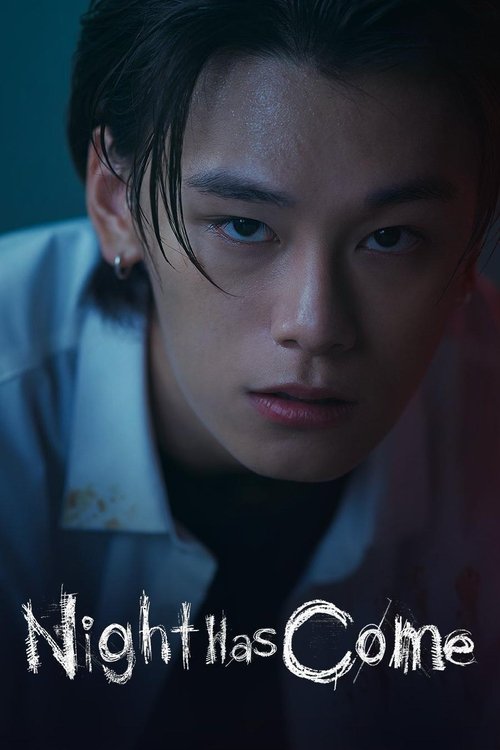
Night Has Come
A suffocating psychological thriller draped in blood and shadows, where innocent high school bonds dissolve into visceral terror under the cold, hypnotic glow of smartphone screens counting down to execution.
Night Has Come

Night Has Come

밤이 되었습니다

"The game of death has begun."

04 December 2023 — 21 December 2023 South Korea 1 season 12 episode Ended 7.9 (120)

Cast: Song Byeong-geun, Lee Jae-in, Kim Woo-seok, Choi Ye-bin, Park Yoon-ho

Drama Mystery Bystander Apathy & Collective Guilt Moral Degradation & Survival Instincts Vengeance and the Illusion of Justice Power Dynamics & Social Hierarchy Simulated Reality & Traumatic Loops

Overview

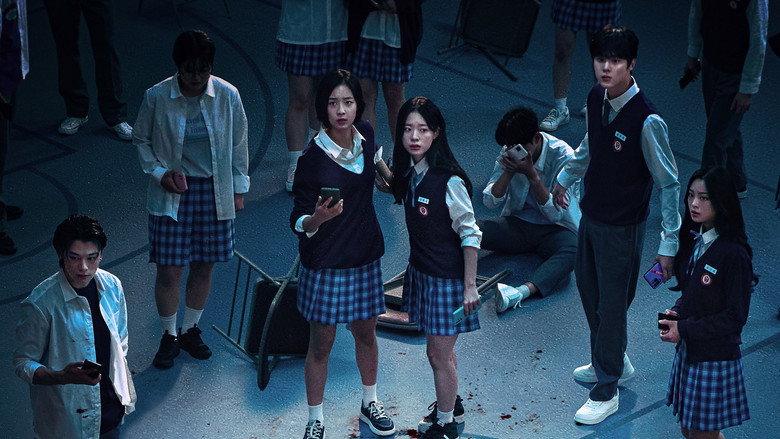
Night Has Come (2023) follows the students of Class 2–3 from Yooil High School who set off on a routine field trip to an isolated youth retreat center. Shortly after their arrival, their teachers vanish and a mysterious application automatically installs itself on every student's smartphone. The app forces them to participate in a real-life, high-stakes game of Mafia. Each student is secretly assigned a role—Citizen, Doctor, Police, or Mafia. Every afternoon, the class must vote to execute one classmate suspected of being Mafia; every midnight, the Mafia members secretly choose a victim to murder.

As panic erupts, the teenagers realize that the rules are enforced by an unnatural, hypnotic force: anyone who refuses to vote, tries to escape the facility's perimeter, or breaks game protocols suffers an immediate, horrifying self-inflicted death. Led by the observant mystery fan Lee Yoon-seo, the principled class president Kim Jun-hee, and top student Oh Jung-won, the surviving classmates are thrust into relentless psychological warfare. Friendships fracture, moral boundaries crumble, and mob mentality takes over as the teenagers desperately try to uncover the identity of the hidden host and survive before everyone is eliminated.

Core Meaning

The core message of Night Has Come is an exploration of bystander apathy, collective guilt, and the toxic nature of cyclical vengeance. The series uses the metaphor of the Mafia game—where silence and deception kill—to critique how society, particularly adolescent peer groups, turns a blind eye to bullying and trauma.

Through its shocking final revelations, the show highlights how passive standing-by makes an entire group complicit in tragedy. Furthermore, it demonstrates how consuming grief and retributive justice can transform victims' families into the very monsters they despise, creating an inescapable, infinite loop of suffering where no one truly wins.

Thematic DNA

Bystander Apathy & Collective Guilt 30%
Moral Degradation & Survival Instincts 25%
Vengeance and the Illusion of Justice 20%
Power Dynamics & Social Hierarchy 15%
Simulated Reality & Traumatic Loops 10%

Bystander Apathy & Collective Guilt

The central driver of the narrative. The game is not random; it is a calculated punishment for a class that collectively ignored the extreme bullying and subsequent suicide of classmate Park Se-eun. The show demonstrates that failing to intervene in injustice makes every individual accountable for the outcome.

Moral Degradation & Survival Instincts

As the body count rises, civil decorum rapidly collapses. Teenagers who were once close friends vote against each other out of sheer self-preservation. The series illustrates how fear strips away morality, turning ordinary youth into ruthless conspirators and executioners.

Vengeance and the Illusion of Justice

Explored through the game's creators. Driven by unyielding grief, Park Se-eun's parents construct a nightmare to inflict eye-for-an-eye retribution. However, the show illustrates that infinite revenge yields no healing—only endless cruelty.

Power Dynamics & Social Hierarchy

The deadly game upends traditional high school social structures. Bullies who previously dominated through physical aggression find their power challenged by democratic voting, while former victims leverage secret game roles to exact lethal revenge.

Simulated Reality & Traumatic Loops

Revealed in the climax, the theme questions consciousness and punishment. The tragedy occurs inside a recurring digital simulation, symbolizing how trauma and guilt trap victims and perpetrators alike in recurring psychological torment.

Character Analysis

Lee Yoon-seo

Lee Jae-in

Archetype: The Observant Detective / Tragic Hero Key Trait: Sharp observation and deductive reasoning

Motivation

Protecting her friends and solving the mystery to escape; ultimately evolves into confronting her past guilt.

Character Arc

Initially a quiet outcast with a heart condition who absorbs herself in mystery novels, Yoon-seo becomes the primary force attempting to unravel the game's hidden rules. Over time, she confronts her own buried memories regarding Park Se-eun, evolving from a passive observer into the emotional core fighting for everyone's survival.

Kim Jun-hee

Kim Woo-seok

Archetype: The Virtuous Leader / Fallible Protector Key Trait: Unwavering sense of responsibility

Motivation

Keeping as many classmates alive as possible; evolves into ensuring Yoon-seo's survival above all.

Character Arc

As class president, Jun-hee attempts to maintain order, democratic fairness, and moral integrity. However, as the voting grows vicious, his idealistic leadership breaks down, forcing him into pragmatic compromises and violence to protect Yoon-seo.

All 5 characters and cast

Symbols & Motifs

The Smartphone App & Digital Countdown

Meaning:

Represents the modern digital panopticon, inescapable systemic judgment, and how modern technology can weaponize human panic.

Context:

Automatically installs itself on every student's phone upon arrival at the retreat center, forcing their participation in the game and dictating voting deadlines.

Hypnotic White/Red Flashing Lights

Meaning:

Symbolizes the absolute loss of free will and submission to the system.

Context:

Accompanies the trance-like state during rule violations, vote executions, and midnight actions.

The Cold Storage Freezer

Meaning:

Symbolizes cold indifference, emotional detachment, and the accumulating weight of past sins.

Context:

Used throughout the game to store the bodies of deceased students.

Park Se-eun's Photograph

Meaning:

Represents buried trauma, suppressed memory, and the catalyst behind the game.

Context:

Appears as a recurring visual fragment in Lee Yoon-seo's visions and memories.

The Red Perimeter Line

Meaning:

Symbolizes the strict, non-negotiable boundaries imposed by the game masters.

Context:

The invisible boundary drawn around the retreat center; crossing it forces immediate, automated suicide.

Memorable Quotes

밤이 되었습니다. 마피아는 고개를 들어 서로를 확인해 주세요.
— Automated System App Voice

Context

Spoken by the app voice at midnight throughout the series (Season 1, Ep 1–12).

Meaning

The automated system announcement that initiates every murder cycle; it serves as the spine-chilling harbinger of imminent horror.

너는 안 죽어. 내가 절대 너 죽게 안 놔둬.
— Kim Jun-hee

Context

Said by Jun-hee to Yoon-seo during a high-stress moment in Episode 6.

Meaning

Highlights Kim Jun-hee's protective vow toward Lee Yoon-seo amidst the collapse of moral order.

All 3 quotes

Episode Highlights

The First Night

S1E1

Establishes the nightmare scenario. The app installs, and student Heo Yul is voted out; his immediate, violent self-execution confirms that the game's lethal rules are terrifyingly real.

Significance:

Sets the series in motion by establishing the inescapable and lethal nature of the competition.

The Boundary

S1E3

Students attempt to flee the retreat facility, only to cross the red boundary line and fall under hypnotic control, committing suicide.

Significance:

Proves escape is impossible and solidifies Kyung-jun's authoritarian rule over the votes.

Police and Doctor

S1E6

The mid-series game changer where Cha Yoo-jun (Doctor) and An Na-hee (Police) reveal their roles.

Significance:

Tactical play replaces simple panic, but betrayal turns even more deadly.

Masks Off

S1E9

Jin Da-bum's meek facade completely shatters as his true identity as a Mafia member is exposed after he orchestrates the demise of key classmates.

Significance:

Shifts the power dynamic entirely to the killers as Da-bum steps into his role as executioner.

Freezer of Sins

S1E11

High-stakes psychological and physical battle inside the body storage freezer. Yoon-seo uncovers the lingering memory of Park Se-eun.

Significance:

Links the current horrors directly to their past actions and suppressed memories of Se-eun.

The Infinite Loop

S1E12

The series climax. Jung-won sacrifices herself so Yoon-seo survives, ending the game. Yoon-seo awakens in a laboratory pod array, revealing the entire ordeal is an advanced VR simulation created by Se-eun's parents.

Significance:

Delivers the ultimate narrative twist, wiping Yoon-seo's memory and resetting the simulation to Day 1.

Philosophical Questions

Is passive inaction in the face of harm morally equivalent to active abuse?

The show argues yes; by standing by during Se-eun's bullying, every student contributed to her ultimate death.

Does intense grief justify absolute, retributive cruelty?

The actions of Se-eun's parents question whether revenge ever yields justice or simply produces more evil.

Can human morality survive when existence becomes a zero-sum game?

The collapse of order among the students highlights how thin the veneer of civil ethics is under the immediate threat of death.

Alternative Interpretations

Different ways to interpret the ending include:

Full ending explanation

Cultural Impact

Night Has Come reflects South Korean society's deep anxieties surrounding youth mental health, severe school violence (hakpok), peer pressure, and bystander culture. It belongs to the popular subgenre of Korean high-stakes survival/death-game dramas (Squid Game, All of Us Are Dead, Duty After School).

Critics and viewers praised its fast pacing, ruthless tension, and strong acting performances. However, its abrupt finale loop generated wide public debate, dividing audiences between those who admired its dark philosophical message and those frustrated by the unresolved cliffhanger.

Audience Reception

Praised Elements: High tension, compact 35-minute episode format, gory visual effects, and strong performances by Cha Woo-min (Kyung-jun) and Ahn Ji-ho (Da-bum).

Common Criticisms: Flaws in character logic during voting scenes, occasional plot holes, and an ending that felt sudden to viewers expecting a real-world resolution.

Overall Verdict: Highly entertaining and gripping survival horror that maintains intense suspense throughout, even if its simulation finale split audience reception.

Interesting Facts

  • Directed by Lim Dae-woong, renowned for horror/thriller projects like Search and House of the Disappeared, who applied feature-film techniques to a short-form web drama.
  • Filmed at an actual abandoned youth facility in South Korea to convey real claustrophobia and physical isolation for the young ensemble cast.
  • The production team prioritized practical makeup effects and stunt coordination over heavy CGI for the gruesome self-mutilation death scenes.
  • Brought together prominent young talents, including Lee Jae-in (Racket Boys), Kim Woo-seok (UP10TION), Choi Ye-bin (The Penthouse), and Cha Woo-min (Weak Hero Class 1).
  • Produced as an original web drama for U+ Mobile TV, airing in compact ~35-minute episodes before gaining explosive global streaming viewership on Viki, Viu, and Netflix.

Easter Eggs

Mystery Novel Foreshadowing

In Episode 1, Lee Yoon-seo is seen reading novels by Stephen King and Ellery Queen. This directly foreshadows her analytical role as the class 'detective' trying to deduce the game's code.

Name Wordplay ('Yooil High')

'Yooil' (유일) in Korean translates directly to 'Sole' or 'Only'. This hints that only a single survivor—or none at all—can emerge from the simulation loop.

Jung-won's Subtle Visual Glitches

In early episodes, Oh Jung-won occasionally exhibits uncanny emotional detachment or subtle visual lighting framing, hinting at her true identity as an AI construct rather than a human student.

Frequently Asked Questions

Explore More About This Movie

Dive deeper into specific aspects of the movie with our detailed analysis pages

Comments (0)

Leave a comment

No comments yet. Be the first to share your thoughts!

Similar Movies