Skip to content
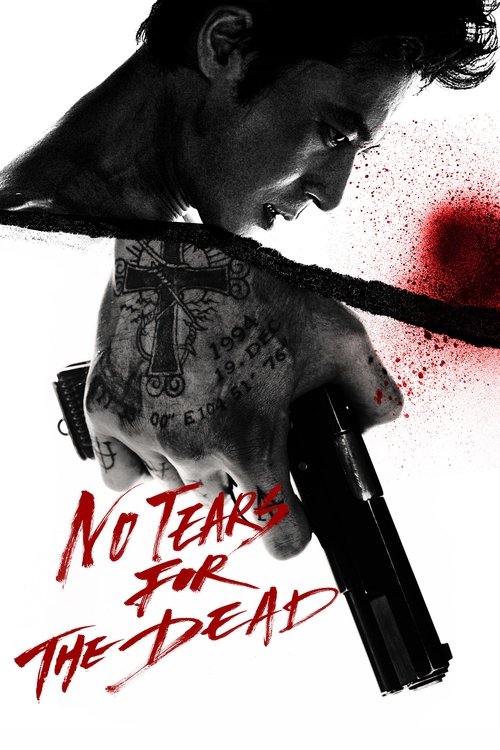
No Tears for the Dead
A bullet-riddled Korean noir of guilt and penance, where a killer's single fatal mistake turns into a vigil of protection, and remorse falls like rain on concrete.
No Tears for the Dead

No Tears for the Dead

우는 남자

"His first mistake is his last chance for redemption."

04 June 2014 South Korea 117 min 7.3 (313)

Director: Lee Jeong-beom

Cast: Jang Dong-gun, Kim Min-hee, Brian Tee, Kim Min-jae, Brian Kim

Drama Action Thriller Guilt and Remorse Redemption through Sacrifice Grief and Loss The Hitman's Code and Honor Exhaustion with Violence
Box Office: $4,500,000

Overview

No Tears for the Dead (우는 남자, literally "The Crying Man") is a 2014 South Korean action film written and directed by Lee Jeong-beom. It stars Jang Dong-gun as Gon, a hired killer working in the United States, with Kim Min-hee and Brian Tee.

A job in America goes terribly wrong, and Gon accidentally kills a little girl. For the first time he feels the full weight of everything he has done. His next contract takes him to South Korea, and the target is Mo-gyeong (Kim Min-hee), a woman who has recently lost her husband and her daughter.

Gon can't bring himself to pull the trigger. The film turns into a tense, violent study of a man caught between the code of his trade and a growing need to atone. Other killers close in on the woman he was sent to eliminate.
Core Meaning

The film is about guilt and whether a violent man can be redeemed. Gon's accidental killing of a child breaks his professional detachment. The Korean title, "The Crying Man," points to the emotional core: a killer who has spent his life feeling nothing is finally overwhelmed by remorse. Lee Jeong-beom uses the familiar hitman-with-a-conscience setup to ask whether penance through violence is possible. Gon chooses to protect the woman he wronged, at a heavy personal cost. His guilt can't be wiped away, but it can be answered with sacrifice.

Thematic DNA

Guilt and Remorse 30%
Redemption through Sacrifice 25%
Grief and Loss 20%
The Hitman's Code and Honor 15%
Exhaustion with Violence 10%

Guilt and Remorse

The accidental death of a little girl haunts Gon and changes him from a detached professional into a man consumed by regret. That regret drives every choice he makes in Korea.

Redemption through Sacrifice

Gon can't undo his crime, so he protects the victim's mother and puts himself between her and the killers sent after her, at a heavy cost.

Grief and Loss

Mo-gyeong has lost both her husband and her daughter. The film sets her private mourning against Gon's hidden responsibility for that loss.

The Hitman's Code and Honor

Critics noted that the story follows hitmen, their code and their honor. Gon's refusal to finish the contract puts him at odds with his own world and its rules.

Exhaustion with Violence

Gon's weary admission that he is "just... tired" shows a man worn down by a life of killing and looking for a way out.

Character Analysis

Gon

Jang Dong-gun

Archetype: Antihero / remorseful assassin Key Trait: Guilt-ridden, lethal efficiency

Motivation

To atone for the death of the girl by protecting her mother.

Character Arc

Gon starts as a professional killer for hire in the United States. After accidentally killing a child, he is filled with guilt. In Korea he refuses to kill his new target and ends up protecting her against the other assassins, at a heavy cost to himself.

Mo-gyeong

Kim Min-hee

Archetype: Grieving mother / target Key Trait: Fierce resolve beneath grief

Motivation

Survival and the truth about her daughter's death.

Character Arc

Mo-gyeong is a woman devastated by the loss of her husband and daughter who becomes the target of a hit. In the climax she has to arm herself against the man coming to kill her, who is the same man that killed her daughter.

All 3 characters and cast

Symbols & Motifs

Tears / The "Crying Man"

Meaning:

Tears stand for the conscience that returns to Gon. They are the emotional release a killer is supposed to deny himself.

Context:

The idea is built into the Korean title 우는 남자 and sits in tension with the English title's claim of "no tears."

The Dead Child

Meaning:

The girl stands for innocence destroyed and for the moral debt Gon can never fully repay.

Context:

The botched job in the United States sets the story in motion and hangs over Gon's relationship with Mo-gyeong.

The Telephone

Meaning:

The phone is Gon's only link to Mo-gyeong. He can be close to her and guide her without ever facing her.

Context:

In the climax, Gon talks Mo-gyeong through picking up a nearby gun and warns her that the man coming to kill her is the one who killed her daughter.

The Gun

Meaning:

For Gon the gun is the tool of his sin. When he directs Mo-gyeong to take one, it also becomes a way for her to defend herself and possibly to take justice into her own hands.

Context:

This comes during the final confrontation, as the assassins close in.

Memorable Quotes

I'm just... tired.
— Gon

Context

Gon admits his weariness with his life as a killer.

Meaning

This line sums up Gon's spiritual exhaustion. The guilt and violence have worn him down, and the confession shows the turn in him that drives the film.

If I hear anything but the truth, I'll kill you with my hands.
— Mo-gyeong

Context

Mo-gyeong confronts Gon about her daughter's death.

Meaning

Mo-gyeong shows she is not a passive victim. Her grief has turned into a fierce demand for the truth.

All 4 quotes

Philosophical Questions

Can someone who has taken innocent life ever truly atone?

Gon can't bring the child back. The film asks whether protecting her mother counts as atonement or only as a gesture, and it answers through the heavy price he pays.

Is a killer who feels remorse morally different from one who does not?

Gon's guilt sets him apart from the other assassins, yet his skills and his methods stay violent. The film leaves it open whether conscience without changed means is enough.

Should the victim know the truth?

Mo-gyeong demands the truth about her daughter's death. The story weighs honesty against mercy, and the right to know against the pain of knowing.

How It Ends

Alternative Interpretations

Redemption or self-punishment? One reading treats Gon's protection of Mo-gyeong as real redemption, with the killer earning a measure of grace. Another sees it as self-destruction: a tired man looking for a meaningful way to pay for a debt he can never settle.

Full ending explanation

Cultural Impact

No Tears for the Dead belongs to the wave of stylized, hard-hitting South Korean action thrillers of the 2010s. It features a major star, Jang Dong-gun, and has a partly international setting and cast. Critics tied it to the Hong Kong heroic-bloodshed tradition, especially John Woo's The Killer.

Critical reception was mixed. The action sequences were widely called the best part of the film, but reviewers said the hitman-code plot was predictable and unoriginal. Its commercial performance was modest, at about US$3.6 million. Some later reappraisals, such as Asian Movie Pulse's 2023 review, argued that it delivers what South Korean action is known for without losing its emotional side.

Audience Reception

Audiences and critics mostly praised the action choreography and set pieces, which were singled out as the film's best feature, along with Jang Dong-gun's brooding lead performance. The emotional angle, a guilt-driven bond that stops short of romance, won over some viewers.

The main criticisms were a predictable, derivative plot built on familiar hitman-honor tropes and underdeveloped characters. Several reviews said that stronger characters and a more original story would have lifted the film. Overall it is seen as a solid, well-made Korean action thriller with emotional ambitions rather than a genre landmark.

Interesting Facts

  • Filming began on September 30, 2013, and wrapped on February 19, 2014.
  • Actress Lim Soo-jung was originally cast in the female lead but had to drop out because of scheduling conflicts. The role went to Kim Min-hee.
  • The film earned about US$3.6 million at the box office.
  • The Korean title, 우는 남자, translates literally as "The Crying Man."
  • Lee Jeong-beom both wrote and directed the film.
  • Part of the story is set in the United States, and the cast includes American actor Brian Tee.

Easter Eggs

Echoes of John Woo's The Killer

Reviewers described the film as Lee Jeong-beom's take on John Woo's The Killer "minus the copper." It borrows that film's setup of a remorseful hitman who harms an innocent woman and then tries to protect her.

Frequently Asked Questions

Explore More About This Movie

Dive deeper into specific aspects of the movie with our detailed analysis pages

Comments (0)

Leave a comment

No comments yet. Be the first to share your thoughts!

Similar Movies