Skip to content
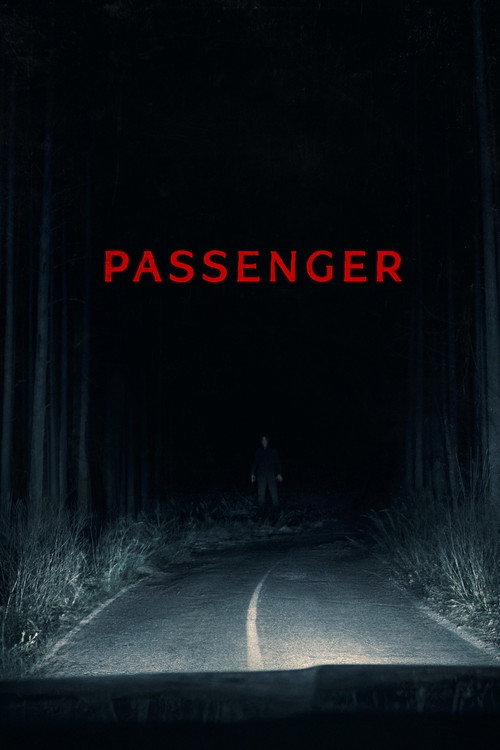
Passenger
A claustrophobic supernatural horror that twists the romanticized freedom of the open road into an inescapable nightmare, where a demonic hitchhiker becomes a lingering shadow in the rearview mirror.
Passenger

Passenger

"130 million people take road trips every year. 15,400 of them are never seen again."

20 May 2026 United States of America 94 min 7.0 (341)

Director: André Øvredal

Cast: Lou Llobell, Jacob Scipio, Melissa Leo, Joseph Lopez, Tony Doupe

Thriller Horror The Illusion of Freedom The Cost of Empathy The Inescapability of Fate
Budget: $15,000,000
Box Office: $31,558,866

Overview

In the supernatural horror film Passenger (2026), young couple Tyler and Maddie abandon their cramped New York apartment in pursuit of the idyllic van life. However, their quest for freedom takes a dark turn when they witness a horrific car crash on an isolated highway and stop to act as good Samaritans, unwittingly marking themselves as targets.

Soon, their mobile sanctuary transforms into a claustrophobic trap as they realize they didn't leave the crash scene alone. A relentless demonic entity, known simply as "The Passenger," attaches itself to them. As the entity stalks them across the desolate American landscape, Tyler and Maddie must decipher mysterious traveler lore and fight for survival in a terrifying game of cat and mouse on the open road.
Core Meaning

Through Passenger, director André Øvredal deconstructs the romanticized hashtag-van-life culture, exploring the severe vulnerability that accompanies modern escapism. The film suggests that severing ties with community and society in pursuit of absolute freedom leaves one isolated and defenseless against the encroaching darkness. The demonic entity serves as a physical manifestation of the unavoidable dread and danger that lurks in liminal spaces, proving that some baggage cannot be left behind.

Thematic DNA

The Illusion of Freedom 40%
The Cost of Empathy 30%
The Inescapability of Fate 30%

The Illusion of Freedom

The film aggressively subverts the modern obsession with #VanLife. What begins as Tyler and Maddie's ultimate expression of independence and untethered living quickly devolves into extreme isolation. The open road is revealed not as a space of liberation, but as a desolate trap devoid of societal protection.

The Cost of Empathy

The narrative hinges on the couple's decision to stop and help a crashed driver. This moral act of intervention directly curses them, exploring the cynical idea that in a dangerous world, acting as a Good Samaritan can lead to one's own doom.

The Inescapability of Fate

Unlike traditional monsters that can be outsmarted or outrun, the demonic entity in the film is relentless. The theme of inescapable destiny is woven throughout the film, emphasizing that once you are marked by the darkness of the road, survival is an illusion.

Character Analysis

Tyler Genocchio

Jacob Scipio

Archetype: The Naive Optimist Key Trait: Courageous but naive

Motivation

To protect Maddie and salvage the idyllic life he promised her when they left the city.

Character Arc

Tyler begins as an enthusiastic proponent of van life, eager to provide a romantic, adventurous life for his fiancée. As the supernatural threat intensifies, his optimistic bravado shatters, forcing him into the desperate role of a protector fighting a losing battle.

Maddie Brecker

Lou Llobell

Archetype: The Reluctant Survivor Key Trait: Intuitive and cautious

Motivation

To survive the nightmare and escape the claustrophobic trap of the road.

Character Arc

Initially hesitant about leaving her secure life for the unpredictability of the road, Maddie's underlying anxieties are proven correct. She transitions from a reluctant passenger to a hardened, intuitive survivor.

Diana Larson

Melissa Leo

Archetype: The Harbinger / Mentor Key Trait: Cynical and world-weary

Motivation

To warn oblivious travelers about the inescapable doom of the road.

Character Arc

Diana serves as the seasoned traveler who understands the dark truths of the highway. She does not undergo a massive personal change but functions to deliver crucial exposition regarding the entity and the Hobo Code.

The Passenger

Joseph Lopez

Archetype: The Relentless Pursuer Key Trait: Unstoppable malevolence

Motivation

To claim the souls of those who stop and interfere on the haunted highways.

Character Arc

As a supernatural force of nature, the entity remains a static, unstoppable force throughout the narrative, slowly closing the distance between itself and its prey.

Symbols & Motifs

The Hobo Code

Meaning:

Historically used by vagabonds to communicate safe and dangerous spaces, the code in the film symbolizes an ancient, hidden network of survival and the grim reality that the road has always been a predatory environment.

Context:

Diana (Melissa Leo) explains these symbols to the couple, and they tragically realize their own van has been marked for death long before they understood the danger.

The Passenger Van

Meaning:

Initially a symbol of absolute freedom, mobility, and modern romance, the van morphs into a symbol of claustrophobia, vulnerability, and a rolling coffin.

Context:

Used as their primary living space, the van's tight interiors and onboard cameras frame the couple's increasing paranoia as the entity invades their sanctuary.

The Rearview Mirror

Meaning:

The mirror represents the impossibility of leaving the past behind and the constant, creeping anxiety of being pursued by an unseen threat.

Context:

Throughout the driving sequences, the camera frequently focuses on the rearview mirror, using it for terrifying jump scares and establishing a lingering sense of dread.

Memorable Quotes

People don't take trips. Trips take people.
— Diana Larson

Context

Delivered by Diana when explaining the dark, unwritten rules of the highway and the nature of the demonic entity.

Meaning

This quote serves as the film's philosophical thesis, suggesting that humans are at the mercy of the journey and the untamed environments they naively traverse.

130 million people take road trips every year. 15,400 of them are never seen again.
— Title Card / Marketing Tagline

Context

Used heavily in the film's marketing and as a thematic anchor for the danger of the open road.

Meaning

Establishes a grounded, true-crime level of terror before introducing the supernatural elements, making the vulnerability of the road feel incredibly real.

Philosophical Questions

Does absolute freedom equate to absolute vulnerability?

By stripping away the safety nets of community, a stable home, and a stationary life, the film asks whether the modern pursuit of "living free" on the road actually leaves individuals entirely defenseless against malevolent forces.

What is the moral cost of empathy?

The narrative forces the audience to question the safety of being a Good Samaritan. By stopping to help a dying stranger, the protagonists invite evil into their lives, exploring the dark reality that compassion can sometimes lead to one's own destruction.

Alternative Interpretations

While on the surface a straightforward supernatural thriller, critics and audiences have proposed several alternative readings of Passenger:

  • The Anxiety of Commitment: The demonic stalker emerges shortly after Tyler proposes to Maddie. The inescapable entity can be viewed as a manifestation of Maddie's claustrophobia regarding marriage, adulthood, and being permanently tethered to one person in a tiny space.
  • Critique of Modern Nomadism: The film functions as an allegory for the dangers of rootless living. By abandoning their jobs and community, the couple loses the "safety herd," exposing themselves to predatory forces that prey on the isolated.
  • The Cost of Intervention: A darker philosophical reading posits that the demon is a punishment for empathy. In a society that often rewards looking the other way, stopping to act as a Good Samaritan ultimately dooms the couple, twisting a moral act into a fatal mistake.

Cultural Impact

Passenger arrived in theaters attempting to capitalize on the post-pandemic surge in the "van life" movement and gig-economy nomadism. By turning the ultimate symbol of millennial and Gen-Z freedom into a vessel of horror, it sparked conversations about the realities of isolated living. While it received a mixed critical reception—with some critics comparing it favorably to a blend of Nomadland and It Follows—it struggled to maintain its momentum in a crowded horror market. Nevertheless, its intense first act and creative use of practical effects garnered appreciation from dedicated horror fans, adding a notable, if bumpy, entry to the road-trip horror subgenre.

Audience Reception

Audience reception for Passenger was starkly divided, reflected in its mixed 48% Rotten Tomatoes score. Praised Aspects: Viewers highly praised the film's first 45 minutes, noting its intense, atmospheric dread and the strong, grounded chemistry between Jacob Scipio and Lou Llobell. The initial highway scenes and a particularly terrifying sequence in a parking station were highlighted as masterclasses in suspense. Criticisms: The majority of the criticism was aimed at the film's second half. Audiences and critics alike felt the narrative rushed toward a chaotic resolution, abandoning its psychological tension for generic, unearned jump scares reminiscent of lesser studio franchises. Melissa Leo's exposition-heavy role was also cited as unintentionally jarring by some viewers. Overall Verdict: It is widely regarded as a film with a brilliant, terrifying premise and a strong first act that unfortunately crashes into conventional B-movie tropes before reaching its destination.

Interesting Facts

  • Cast members Jacob Scipio and Lou Llobell actually brought a real Catholic priest to the set to bless the production, an idea meant to ward off bad luck while filming a demonic horror movie.
  • The film was shot on location in Washington state, with director André Øvredal specifically utilizing an iconic forest road previously seen in David Lynch's classic series Twin Peaks.
  • To capture a terrifying and grounded atmosphere, the production relied heavily on practical effects to create the demonic entity, which required very few digital touch-ups in post-production.
  • The film's marketing campaign famously featured the chilling, though fabricated, statistic: '130 million people take road trips every year. 15,400 of them are never seen again,' creating a strong sense of real-world dread.
  • Director André Øvredal cited the terrifying aesthetic of Poltergeist II and the atmospheric dread of John Carpenter's films as primary inspirations for the film's tone and creature design.

Easter Eggs

Twin Peaks Filming Location

The use of the Pacific Northwest forest road is a direct visual nod to the eerie, liminal atmosphere of Twin Peaks, paying homage to David Lynch's mastery of suburban and rural dread.

Hidden Hobo Codes in the Van

Eagle-eyed viewers can spot subtle warning symbols etched into the van's woodwork early in the film, foreshadowing that the vehicle was marked for tragedy long before Tyler and Maddie bought it.

Roman Holiday Superimposition

In a deeply unsettling scene, the couple watches Roman Holiday on a makeshift screen in the woods. The demonic entity's gaunt face is superimposed over Audrey Hepburn and Gregory Peck, creating a stark, terrifying juxtaposition between timeless romance and modern horror.

⚠️ Spoiler Analysis

Click to reveal detailed analysis with spoilers

Frequently Asked Questions

Explore More About This Movie

Dive deeper into specific aspects of the movie with our detailed analysis pages

Comments (0)

Leave a comment

No comments yet. Be the first to share your thoughts!

Similar Movies