Skip to content
PAW Patrol
An exuberant, technicolor preschool adventure pulsating with boundless optimism and altruism, where high-tech pup-packs and transforming doghouses serve as a vibrant beacon of hope, reassuring young minds that community kindness triumphs over every crisis.
PAW Patrol

PAW Patrol

12 August 2013 — 14 August 2026 Canada 14 season 567 episode Returning Series 7.0 (816)

Cast: Ron Pardo, Kallan Holley, Samuel Faraci, Devan Cohen, Justin Paul Kelly

Animation Kids Teamwork and Complementary Skills Civic Duty, Altruism, and Community Safety Resilience and Overcoming Vulnerabilities Environmental Stewardship and Recycling Benevolent Leadership and Mentorship

Overview

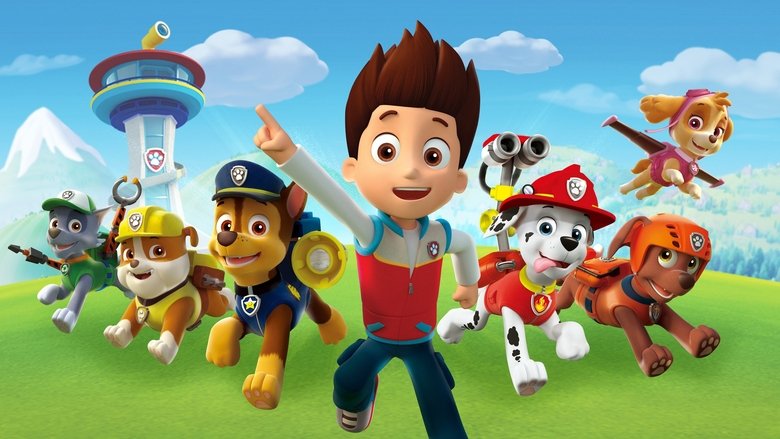
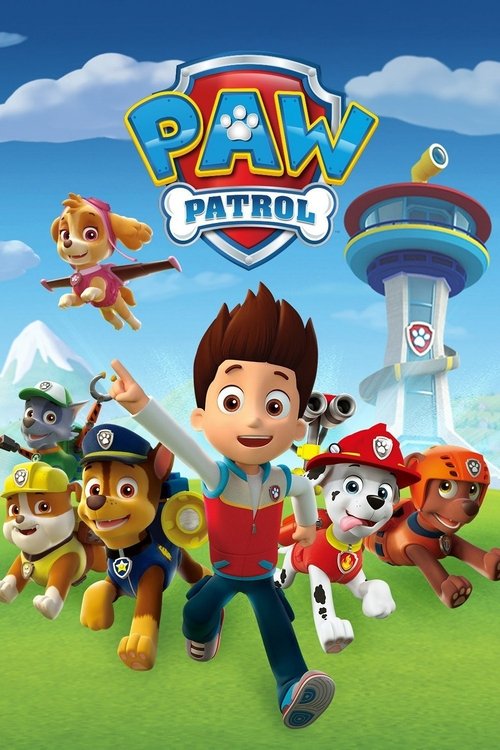
Created by British television veteran Keith Chapman and developed by Scott Kraft alongside Spin Master Entertainment and Guru Studio, PAW Patrol is a long-running Canadian 3D-animated series that debuted in August 2013. Set in the coastal town of Adventure Bay, the series chronicles the emergency response adventures of a tech-savvy 10-year-old boy named Ryder and his specialized search-and-rescue team of anthropomorphic puppies. Each pup represents a dedicated civic service—policing, firefighting, aquatic rescue, aviation, construction, and recycling—operating high-tech transformable vehicles and gadget-laden pup-packs.

As the series progresses across multiple seasons and themed sub-series, the scale of their operations broadens dramatically. What begins as localized town rescues expands into airborne operations (Air Patrol), deep-ocean quests (Sea Patrol), prehistoric expeditions (Dino Rescue), knightly quests (Rescue Knights), and superhero showdowns (Mighty Pups). Along the way, the core squad expands to welcome auxiliary specialists—including snowy mountain rescue pup Everest, bilingual jungle tracker Tracker, motorized feline squad Cat Pack, and city stray turned official officer Liberty.

The narrative structure maintains a reassuring rhythm of community safety: an emergency arises, Ryder summons the pups to the Lookout command tower, formulates a collaborative tactical plan, and coordinates a successful rescue, ending with a celebratory social moment.
Core Meaning

The core thesis of PAW Patrol is that civic cooperation, inclusive teamwork, and proactive problem-solving can overcome any obstacle, no matter how small or inexperienced an individual feels. Encapsulated by the mantra "No job is too big, no pup is too small," the series teaches young children that every individual possesses unique strengths that become transformative when aligned in service of the common good, presenting public service as a joyful, compassionate duty rooted in empathy and mutual care.

Thematic DNA

Teamwork and Complementary Skills 30%
Civic Duty, Altruism, and Community Safety 25%
Resilience and Overcoming Vulnerabilities 20%
Environmental Stewardship and Recycling 15%
Benevolent Leadership and Mentorship 10%

Teamwork and Complementary Skills

Every mission demonstrates that no single pup can solve an entire emergency alone. Ryder assigns specific roles matching each pup's distinct specialty, demonstrating how diverse abilities harmonize into effective solutions.

Civic Duty, Altruism, and Community Safety

Adventure Bay thrives because its protectors ask for nothing in return. The series frames civic assistance, emergency medical response, and municipal maintenance as honorable, accessible forms of community citizenship.

Resilience and Overcoming Vulnerabilities

The pups routinely encounter their intrinsic fears and physical vulnerabilities—Marshall's clumsiness, Chase's allergies, Rocky's hydrophobia, and Tracker's fear of the dark—demonstrating that courage is acting despite apprehension.

Environmental Stewardship and Recycling

Through Rocky's recurring motto, the series teaches young viewers the value of upcycling scrap materials, preserving natural animal habitats, and minimizing municipal waste.

Benevolent Leadership and Mentorship

Ryder exemplifies patient, emotionally intelligent leadership. He never scolds when mistakes occur; rather, he guides the pups with constructive encouragement, reinforcing emotional safety.

Character Analysis

Ryder

Owen Mason, Elijha Hammill, Jaxon Mercey, Joey Nijem, Beckett Hipkiss, Kai Harris

Archetype: The Mentor / Tech Inventor Key Trait: Unflappable composure and mechanical genius.

Motivation

Ensuring the safety, harmony, and well-being of all living beings in and around Adventure Bay.

Character Arc

Starts as an adept municipal rescuer; evolves into a master strategist overseeing global aerial, marine, and sub-surface expeditions without losing his gentle demeanor.

Chase

Tristan Samuel, Max Calinescu, Justin Paul Kelly, Luke Dietz

Archetype: The Dedicated Officer / Hero Key Trait: Fierce loyalty, athletic precision, and acute sensory alertness.

Motivation

Upholding order, protecting his team, and fulfilling Ryder's faith in him.

Character Arc

Grows from a rule-bound, disciplined police pup into an emotionally mature second-in-command who learns to confront deep-seated self-doubt and past trauma.

All 5 characters and cast

Symbols & Motifs

The Lookout Tower

Meaning:

Symbolizes community vigilance, readiness, and modern organizational harmony.

Context:

Serves as the central architectural anchor of Adventure Bay, featuring a periscope, elevator, and slide chute used during rescue briefings.

Pup-Packs (Pup Badges & Gear)

Meaning:

Symbolizes empowerment through ingenuity and represents the functional tools required to translate good intentions into tangible aid.

Context:

Worn on each dog's back and activated by barks to deploy specialized rescue tools.

The Pup Tag / Comm-Badge

Meaning:

Symbolizes communication, interconnectedness, and identity within a shared cause.

Context:

Glowing emblems on each collar that link the pups directly to Ryder's pup-pad.

The Transforming Vehicles / Doghouses

Meaning:

Embodies adaptability and represents the bridge between domestic comfort and heroic duty.

Context:

Modular kennels that convert into specialized emergency vehicles such as fire trucks, police cruisers, bulldozers, and hovercraft.

The Glowing Meteor

Meaning:

Symbolizes hidden inner potential unlocked by extraordinary circumstances.

Context:

An alien artifact introduced in Season 5 onward that imbues the pups with elemental superpowers during Mighty Pups storylines.

Memorable Quotes

PAW Patrol is on a roll!
— Ryder

Context

Stated in virtually every episode (from Season 1 onward) at the climax of the Lookout mission briefing as Ryder slides down the pole.

Meaning

The quintessential mission-launch catchphrase signifying decisive transition from planning to action.

No job is too big, no pup is too small!
— Ryder

Context

Premiering in Season 1, Episode 1 ("Pups Make a Splash"), recited during emergency calls.

Meaning

The overarching philosophy of the entire franchise, instilling self-worth and egalitarian inclusion in preschoolers.

All 6 quotes

Episode Highlights

Pups Make a Splash

S1E1

The pilot segment that established Adventure Bay's world, Ryder's command structure, and the original six pups' core dynamics.

Significance:

Introduced the foundational narrative formula and core character roles for the entire series.

Pups Get a Rubble

S1E12

The official origin story detailing how Rubble was an abandoned stray who bravely rescued Jake from a rockslide, earning his yellow construction gear and a permanent home.

Significance:

Establishes the emotional backstory and adoption theme within the team's formation.

The New Pup

S2E6

Introduces Everest the Siberian Husky and the PAW Patroller mobile headquarters.

Significance:

Marks the franchise's first permanent cast expansion beyond the initial six pups.

Tracker Joins the Pups!

S3E15

Introduces Tracker, an English/Spanish-speaking Chihuahua with supersensitive hearing, in a jungle rescue context.

Significance:

Expands the series into bilingual representation and new international biomes.

Mission PAW: Quest for the Crown

S4E1

Inaugurates the Mission PAW spy sub-theme in the Kingdom of Barkingburg, introducing stealth-suit mechanics.

Significance:

Introduces Sweetie, the show's first major recurring canine antagonist, and broadens operations overseas.

Mighty Pups

S5E0

A glowing meteor crash gives the team superpowers to protect Adventure Bay from enhanced threats.

Significance:

Launches the multi-season Super Paws and Charged Up lore lines, fundamentally expanding the series into superhero fantasy.

Dino Rescue: Pups and the Lost Dino Eggs

S7E6

Introduces the hidden Dino Wilds and Rex, who utilizes a wheeled mobility cart.

Significance:

Introduces the first disabled pup to the series, modeling physical accessibility and disability representation.

All Paws on Deck

S9E24

A landmark 10th-anniversary celebration episode uniting every major pup, auxiliary member, and vehicle across the series' history to defend Adventure Bay against a massive high-tech machine.

Significance:

Acts as a major franchise culmination celebrating a decade of lore, characters, and vehicle innovations.

Philosophical Questions

What constitutes legitimate municipal authority and duty?

Explores whether community safety is best secured through institutional government structures or voluntary, tech-enabled civic networks.

Is technology an amplifier of human kindness or a dependency?

Questions how gadgetry, transforming vehicles, and automation can serve empathy and civic care rather than replacing personal connection.

How do individual limitations enrich collective capability?

Examines the balance between recognizing personal vulnerabilities (such as fears or physical clumsiness) and achieving collective strength through collaborative division of labor.

Alternative Interpretations

Beyond the intended Pro-Social Civic Reading celebrating altruistic volunteerism and community problem-solving, critics have offered other perspectives:

Full ending explanation

Cultural Impact

Debuting in 2013 during a transition toward digital preschool streaming on platforms like Noggin and Nickelodeon, PAW Patrol redefined preschool action television. Before its arrival, preschool programming was predominantly slow-paced and didactic (e.g., Blue's Clues, Dora the Explorer); PAW Patrol introduced dynamic, cinematic rescue pacing while maintaining safe emotional boundaries.

The show became an unprecedented cultural fixture for Generation Alpha, shaping childhood play patterns worldwide. In media culture, it spawned widespread critical discussion, parenting memes, and academic essays regarding its depiction of civic infrastructure, municipal privatization, and law enforcement.

Audience Reception

Parent and Educator Praise: Widely applauded for its clean moral messaging, absence of real malice, positive portrayal of recycling through Rocky, clear gender equality in rescue operations (Skye, Everest, Liberty), and ability to capture toddler attention during stressful transitions.

Main Points of Criticism: Frequent adult critiques center on repetitive episode formulas, constant vehicle upgrades perceived as merchandise-driven, and the comedic incompetence of adult authority figures such as Mayor Goodway and Mayor Humdinger.

Evolution of Reception: Early seasons were viewed as a modest rescue cartoon; by Seasons 5–10, reception shifted toward viewing it as an expansive multi-genre cinematic universe featuring superhero (Mighty Pups) and prehistoric fantasy arcs.

Interesting Facts

  • Keith Chapman originally developed the idea as Robbie & the Rescue Dogs before pitching it to Spin Master's Jennifer Dodge.
  • Spin Master and Guru Studio established a strict production policy of casting genuine child actors for the pups and Ryder rather than adult voice artists, leading to planned cast rotations every 2–3 seasons.
  • Canadian comedian Ron Pardo supplies the voices for both the primary villain, Mayor Humdinger, and Adventure Bay's eccentric marine biologist, Cap'n Turbot.
  • Spin Master designed 3D vehicle assets simultaneously for CGI animation and physical toy molds to ensure screen-accurate transformations in real-world play.
  • The late Charles E. Bastien directed over 200 episodes of the franchise (from Season 3 through Season 9), establishing the kinetic pacing and visual tone.
  • Since its 2013 launch, PAW Patrol has generated more than $10 billion in global retail merchandise sales and broadcasts in over 160 countries in 30+ languages.

Easter Eggs

Classic Movie Homages

Sub-series parody classic cinema—Sea Patrol: Pups Save a Pirate nods to Pirates of the Caribbean, while Dino Rescue episodes visually mirror scenes from Jurassic Park.

Apollo the Super-Pup

The cartoon within a cartoon watched on the Lookout television serves as a direct visual tribute to classic Silver Age comic book heroes like Superman and Krypto the Superdog.

Mayor Humdinger's Cat-astrophe Crew

Humdinger's six mischievous kittens wear smaller, satirical versions of each PAW Patrol member's uniform, parodying the hero squad's design.

Celebrity Voice Actor Connections

Theatrical specials and spin-offs feature cameos by celebrities like Kim Kardashian, Jimmy Kimmel, and Tyler Perry making subtle jokes about Adventure Bay's improbable logistics.

Frequently Asked Questions

Explore More About This Movie

Dive deeper into specific aspects of the movie with our detailed analysis pages

Comments (0)

Leave a comment

No comments yet. Be the first to share your thoughts!

Similar Movies