Skip to content
The Tom and Jerry Show
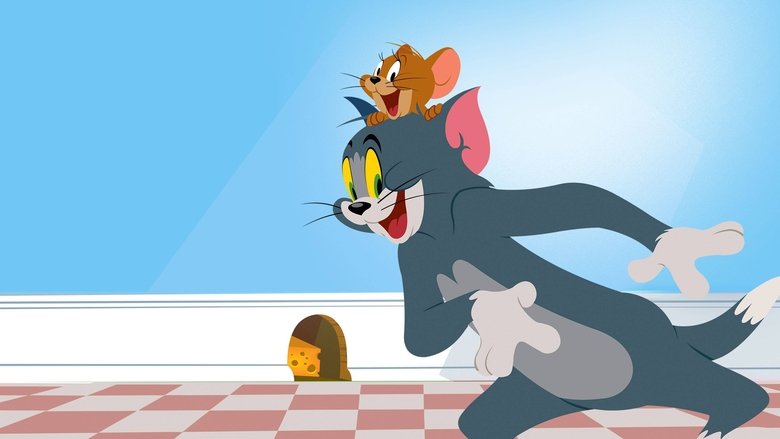
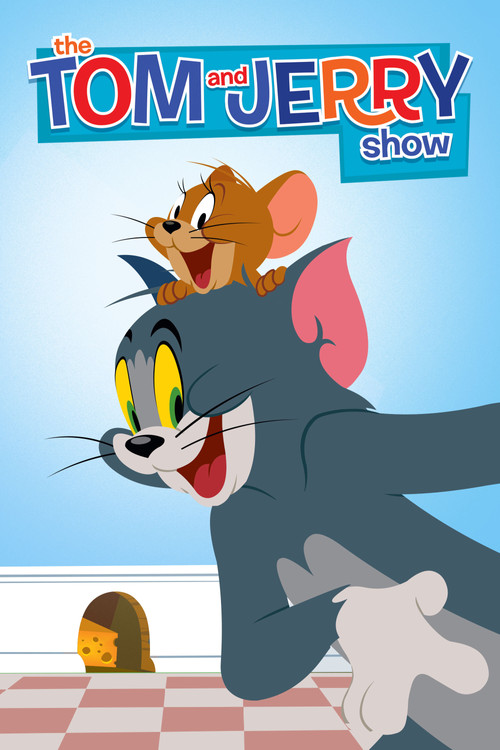
Flash-animated kinetic mayhem meets classic orchestral vengeance, turning a sunlit suburban home into an unending, pastel-hued theater of slapstick survival and symbiotic warfare.
The Tom and Jerry Show

The Tom and Jerry Show

09 April 2014 — 17 January 2022 United States of America 5 season 325 episode Ended 7.3 (128)

Cast: Kath Soucie, Rick Zieff, Grey DeLisle, Joey D'Auria, Gary Cole

Animation Family Comedy Kids Existential Codependency The Illusion of Dominance and Power Reversal Cooperation Under Pressure Chaos vs. Domestic Order

Overview

The Tom and Jerry Show (2014–2021) is a modern television iteration of William Hanna and Joseph Barbera's legendary rivalry, produced by Warner Bros. Animation and Renegade Animation under the direction and supervision of Darrell Van Citters. Rather than confining the iconic cat and mouse to a single repetitive domestic setting across its 117 half-hour broadcasts (encompassing 325 episodic segments across five seasons), the series broadens the classic slapstick universe into distinct rotating sub-premises.

The show structures its overarching narrative through recurring parallel scenarios. Alongside standard suburban neighborhood conflict involving their owners Rick and Ginger and the territorial bulldog Spike, the duo appears as familiars to two magical witches (Beatie and Hildie), private investigators running The Cat & Mouse Detectives agency in a 1930s–40s film noir metropolis, laboratory test subjects alongside rat companion Napoleon, and participants in historical/transylvanian folklore environments.

Throughout its five seasons, the series functions on an episodic status-quo reset typical of classic theatrical animation, yet it gradually evolves character dynamics. Tom displays heightened resourcefulness and occasional parity with Spike, while Jerry’s defensive maneuvers regularly border on preemptive mischief. The overarching run celebrates the enduring mechanics of cause-and-effect physical comedy, modernizing classic pacing without erasing the primal, unspoken bond linking predator and prey.
Core Meaning

The fundamental philosophical core across all 325 segments is the inescapable codependency of rivals. Behind every frying pan blow and elaborate mouse trap lies an unspoken existential reality: Tom and Jerry define each other’s purpose. The creative team illustrates that while conflict, hierarchy, and ambition naturally pit individuals against one another, extreme adversity or the intrusion of an outside threat consistently drives them into seamless collaboration, conveying that mutual opposition is itself a profound form of intimacy and balance.

Thematic DNA

Existential Codependency 35%
The Illusion of Dominance and Power Reversal 25%
Cooperation Under Pressure 20%
Chaos vs. Domestic Order 20%

Existential Codependency

Explored in domestic and supernatural scenarios alike. Tom without Jerry is stripped of purpose, frequently subjected to replacement or domestic neglect; Jerry without Tom loses his foil and playground. Whenever third-party adversaries (Butch, alley cats, or monsters) threaten either party, the two instinctively unite to preserve their dynamic.

The Illusion of Dominance and Power Reversal

Spike overpowers Tom, Tom overpowers Jerry, yet Jerry’s wits and situational physics invariably topple the food chain. Over five seasons, Tom becomes more proactive and direct, occasionally outsmarting Spike or claiming decisive comedic victories.

Cooperation Under Pressure

Epitomized primarily in The Cat & Mouse Detectives premise and witch-household segments. When professional duty or survival demands it, the duo operates as a synchronized unit, showing that their enmity is contextual rather than purely malevolent.

Chaos vs. Domestic Order

Suburban boundaries—embodied by homeowners Rick and Ginger, pristine furniture, obedience schools, and neighborhood rules—exist solely to be shattered by animal instinct and mechanical chain reactions.

Character Analysis

Tom

William Hanna (archival vocal effects), Richard Danhakl

Archetype: Comic Antihero / Determined Sisyphus Key Trait: Resilient obstinacy

Motivation

Seeking territorial peace, home security, owner approval, and the elusive capture of Jerry.

Character Arc

Tom evolves from an easily duped domestic pet into a bolder, more adaptable, and occasionally victorious combatant across the seasons. He acts as a detective, witch's assistant, and scientist's foil, showing a broader emotional spectrum while remaining chained to his hunting instinct.

Jerry

William Hanna (archival vocal effects)

Archetype: The Trickster Hero Key Trait: Improvisational resourcefulness

Motivation

Preserving his territory, obtaining food, and maintaining freedom from Tom’s paws.

Character Arc

Jerry retains his sharp intellect and cunning reflexes, but across five seasons displays extraordinary physical feats and occasionally initiates conflict for sport rather than pure survival. In detective segments, he emerges as an analytical problem solver.

All 4 characters and cast

Symbols & Motifs

The Mouse Hole

Meaning:

Symbolizes inviolable autonomy and the permanent boundaries Tom cannot breach.

Context:

Serves as Jerry’s impenetrable domestic sanctuary across standard household episodes.

Cheese and Heavy Domestic Appliances

Meaning:

Represent base animal motivation and the tools of industrial slapstick, reflecting how everyday household items become weapons of tactical warfare.

Context:

Encountered in kitchen chases involving irons, toasters, refrigerators, and bait traps.

The Cauldron / Witch Manor

Meaning:

Represents magical unpredictability and unrestrained chaos.

Context:

Employed in witch scenarios where the duo battles over supernatural reagents rather than simple food.

The Fedora and Trench Coat

Meaning:

The motif of human civilization, professionalism, and partnership, signifying a rare state of collaborative equality.

Context:

Worn by Tom and Jerry during recurring The Cat & Mouse Detectives noir episodes.

Spike’s Doghouse

Meaning:

The territorial demarcation of brute physical force and immediate retribution for Tom's oversteps.

Context:

Located in the suburban backyard where Spike retaliates whenever Tom disturbs him or Tyke.

Memorable Quotes

Just another day in the city, where finding trouble is as easy as tripping over your own paws.
— The Detective Narrator (Gary Cole)

Context

Narrating the opening of Cat & Mouse Detectives segments during Season 1 and 2.

Meaning

Establishes the hard-boiled noir pastiche and cynical urban tone that governs the partnership episodes.

Thomas! If one more thing in this house gets broken, you are sleeping outside!
— Ginger (Grey DeLisle)

Context

Repeated whenever suburban domestic destruction threatens household peace.

Meaning

Delivers the foundational recurring ultimatum that raises the personal stakes for Tom's chases.

All 4 quotes

Episode Highlights

Spike Gets Skooled

S1E1

Tom frames Spike to send him to obedience school, only for Jerry to navigate life without his guard dog and work to keep Spike placid upon his return.

Significance:

Sets the comedic tone and baseline domestic mechanics of the entire revival series.

Cat's Ruffled Fur-niture

S1E1

Focuses on Tom attempting to keep brand-new living room furniture spotless while Jerry weaponizes the pristine home environment.

Significance:

Demonstrates the pristine modern domestic setting and restrictive stakes of the 2014 series.

The Plight Before Christmas

S1E26

A holiday-themed confrontation where the escalating battle threatens domestic Christmas festivities.

Significance:

Serves as a holiday milestone and season closer highlighting classic truce dynamics under festive circumstances.

Dental Dud / Picture Imperfect

S2E1

Presents tighter, faster-paced slapstick narratives as Tom navigates medical and aesthetic domestic crises.

Significance:

Marks the formal structural transition of the series, moving from 11-minute paired segments to faster, tighter 7-minute segments across a three-short broadcast format.

The Transylvanian Environment Segment Cycle

S3E1

Transports the cat-and-mouse dynamic into gothic castles featuring vampires, mad scientists, and supernatural creatures.

Significance:

Expands the gothic setting of the show to a full Eastern European monster-mash atmosphere, proving the flexibility of the duo beyond domestic slapstick.

Series Finale Segments

S5E26

The culminating cycle of slapstick episodes concluding the five-season run on Boomerang and digital platforms.

Significance:

Marked the conclusion of the 325-segment run before the franchise transitioned into the 2021 feature film and Tom and Jerry in New York.

Philosophical Questions

Can an entity have true purpose in the absence of an antagonist?

Explored through Tom's psychological unraveling; his life consistently collapses into despair or aimlessness whenever Jerry is temporarily absent or removed from the home.

Is instinct inherently stronger than intellect?

Examined across chases where, despite Tom's physical power and technological advantages, Jerry's fast intellect and exploitation of natural physics level the playing field.

What constitutes genuine justice in a world governed by brute force?

Tested constantly through Spike's arbitrary morality, weighing whether protecting the innocent small or Tom's right to maintain domestic security holds moral authority.

Alternative Interpretations

The series supports multiple viewing perspectives:

Full ending explanation

Cultural Impact

Premiering in 2014 during an era when Cartoon Network was prioritizing creator-driven surrealism (Adventure Time, Regular Show) and stylized reboots (Teen Titans Go!), The Tom and Jerry Show had the difficult mandate of honoring golden-age theatrical shorts without appearing dated.

Critics and fans acknowledged its fidelity to non-verbal physical comedy and praised Vivek Maddala’s traditional acoustic score. However, purists debated the clean digital vector animation compared to the lush, hand-painted MGM backgrounds and frame-by-frame pencil animation of the 1940s. Nevertheless, its five seasons and 325 segments proved the commercial and intergenerational durability of the IP, paving the way for the 2021 feature film and subsequent streaming offshoots.

Audience Reception

Initial reception for Season 1 reflected modest enthusiasm. Viewers commended the choice to keep Tom and Jerry largely mute and physical—avoiding the spoken-dialogue pitfalls of the 1992 feature film—though some critics noted the 11-minute segments felt slightly stretched for simple chases.

Reception improved significantly during Seasons 2 through 5 when the series shifted to brisk 7-minute segments. Audiences embraced the rotating sub-scenarios, notably the Cat & Mouse Detectives and the witch manor. While purists criticized the Flash-based puppet movement for lacking the weight, smear frames, and kinetic squash-and-stretch fluidity of the hand-drawn originals, the series is widely regarded as one of the most respectful, enduring modern television revivals in the classic Hanna-Barbera catalog.

Interesting Facts

  • The series was animated by Renegade Animation using 2D digital Flash/Toon Boom pipeline methods designed to mimic classic hand-drawn squash-and-stretch timing while operating on a modern television schedule.
  • Tom’s and Jerry’s iconic vocal shrieks, yelps, and groans were sourced directly from the original archival recordings of co-creator William Hanna recorded during the 1940s and 1950s.
  • Composer Vivek Maddala won Daytime Emmy Awards for his work on the series, creating rich orchestral arrangements that maintained Scott Bradley’s wall-to-wall musical storytelling philosophy.
  • The show started on Cartoon Network in 2014 before shifting its primary premiere run to the Boomerang SVOD service in 2017 to anchor Turner's classic IP streaming drive.
  • The creative team and artistic model designed by Darrell Van Citters served as the blueprint for the direct spin-off series Tom and Jerry in New York (2021) and direct-to-video films like Tom and Jerry: Cowboy Up! (2022).

Easter Eggs

Andy Sturmer's Opening Theme

Performs a modernized opening theme that directly incorporates Scott Bradley’s legendary mid-century musical motifs from the MGM theatrical shorts.

Classic Hanna-Barbera Guest Animals

Frequently reintroduces deep-cut franchise heritage characters, including Meathead the cat, Quacker the duckling, and Tyke.

Hard-Boiled Noir Tropes

Features classic 1940s Humphrey Bogart-style monologues and jazz tropes parodied straight out of classic Warner Bros. film noir.

Recreated Golden-Age Sight Gags

Executes homages like the accordion-folding gag and feline wall splats that recreate specific frames from 1940s masterpieces such as Quiet Please! and The Cat Concerto.

Frequently Asked Questions

Explore More About This Movie

Dive deeper into specific aspects of the movie with our detailed analysis pages

Comments (0)

Leave a comment

No comments yet. Be the first to share your thoughts!

Similar Movies