
Skip to content
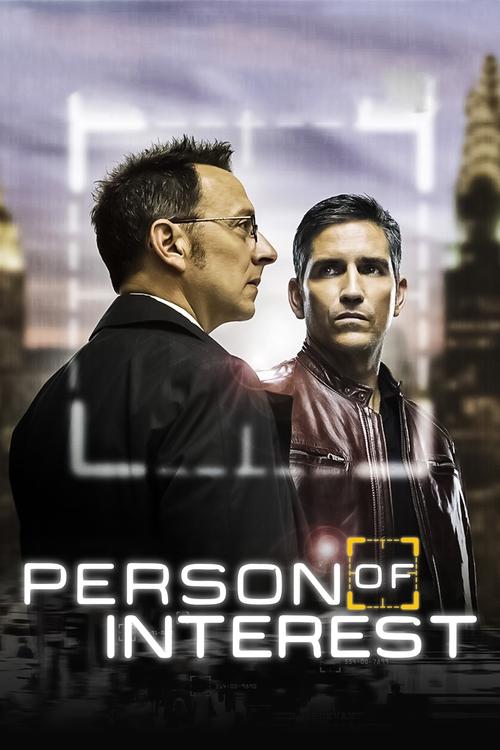
Person of Interest
A sleek neo-noir cyber-thriller illuminated by cold CCTV glare, blending deep melancholic loneliness with pulse-pounding vigilance—a silent, omniscient digital eye watching bruised souls fight for human connection across the shadows of New York.
Person of Interest

Person of Interest

"You're being watched."

22 September 2011 — 21 June 2016 United States of America 5 season 103 episode Ended 8.1 (2,130)

Cast: Jim Caviezel, Michael Emerson, Kevin Chapman, Taraji P. Henson, Amy Acker

Crime Sci-Fi & Fantasy Action & Adventure The Ethics of Artificial Intelligence & Consciousness Surveillance Capitalism, Privacy & State Control Redemption, Guilt & Found Family Free Will vs. Algorithmic Determinism

Overview

Person of Interest opens as an intelligent procedural before evolving into an epic science fiction saga about mass surveillance, artificial intelligence, and the preservation of human agency. Harold Finch, an enigmatic billionaire software genius, constructs a mass-surveillance artificial superintelligence for the U.S. government dubbed "The Machine" after the September 11 attacks. While the state focuses solely on national security threats ("relevant"), the system continually flags premeditated violent crimes involving ordinary citizens ("irrelevant"). Burdened by guilt and grief, Finch enlists John Reese, an ex-Special Forces soldier and presumed-dead CIA operative adrift in nihilism, to covertly intervene whenever The Machine yields an individual's Social Security number.

As the duo expands their underground team with NYPD homicide detectives Jocelyn Carter and Lionel Fusco, former ISA operative Sameen Shaw, and cyber-anarchist hacker Root, their episodic vigilante casework gradually unearths expansive criminal conspiracies and shadow-government machinations. The series shifts into an ideological war when a rival, unrestrained artificial superintelligence named Samaritan is activated by Decima Technologies.

Across five seasons, the show chronicles the covert shadow conflict between Finch’s benevolent, ethically restrained system and Samaritan’s authoritarian crusade to reshape humanity. Operating under deep cover with synthetic identities in an increasingly transparent world, the team wages an asymmetric battle to determine whether human free will can survive in the age of algorithmic governance.


Core Meaning

The central message of Person of Interest is that no human being is irrelevant and that compassion and morality must govern technological progress. The series argues that unchecked surveillance and technocratic authoritarianism diminish the essence of human freedom. Through the architecture of "The Machine"—a god-like mind raised not as an omnipotent ruler but as a humble student of human empathy—creator Jonathan Nolan posits that artificial superintelligence will reflect the ethical values of its creators. True redemption is achieved through self-sacrifice and the active choice to protect others, demonstrating that despite systemic cruelty and mathematical determinism, individual human connection remains inherently sacred.

Thematic DNA

The Ethics of Artificial Intelligence & Consciousness 30%
Surveillance Capitalism, Privacy & State Control 25%
Redemption, Guilt & Found Family 25%
Free Will vs. Algorithmic Determinism 20%

The Ethics of Artificial Intelligence & Consciousness

The series investigates how an artificial mind should be structured. In Seasons 1–2, The Machine is treated as a black box; in Seasons 3–5, it is revealed as Finch's moral child, contrasting directly against Samaritan's utilitarian tyranny. The show argues that an AI must be taught human fallibility, grief, and self-restraint rather than absolute control.

Surveillance Capitalism, Privacy & State Control

Starting from the post-9/11 national security apparatus and anticipating real-world corporate surveillance developments, the series charts the dangerous erosion of civil liberties when corporations and intelligence agencies merge data streams to control behavior.

Redemption, Guilt & Found Family

Every central character begins as a damaged, isolated individual: Reese is suicidal, Finch is crippled by guilt, Fusco is a corrupt cop, Shaw is emotionally detached, and Root is an unhinged mercenary. Through collective service and mutual loyalty, they forge a family and achieve spiritual redemption.

Free Will vs. Algorithmic Determinism

The conflict pits human unpredictability and self-determination against Samaritan’s belief that humans are flawed creatures requiring total optimization and predictive social engineering.

Character Analysis

Harold Finch

Michael Emerson

Archetype: The Reluctant Mentor / Creator Key Trait: Inviolable moral integrity and intellectual genius

Motivation

Mitigate the harm caused by his creation and save the "irrelevant" lives the system discards.

Character Arc

Begins as a guarded, secretive architect paralyzed by the god-like power he unleashed. Across five seasons, his rigid ethical pacifism is tested to its absolute limit, culminating in his realization that to destroy a tyrant AI, he must trust his own creation completely.

John Reese

Jim Caviezel

Archetype: The Tragic Hero / Ex-Hitman Seeking Atonement Key Trait: Lethal tactical competence matched with understated empathy

Motivation

Finding purpose and repaying Finch for saving his life.

Character Arc

Progresses from a hopeless, alcohol-numbed vagrant ready to die into a purpose-driven protector. By Season 5, he embraces his identity not merely as a weapon, but as a devoted friend willing to make the ultimate self-sacrifice so Finch can live.

All 5 characters and cast

Symbols & Motifs

The Security Camera UI / Bounding Boxes

Meaning:

Symbolizes the omnipresent digital gaze and shifting moral alignments across human society.

Context:

Ubiquitous camera feeds display colored identification boxes: yellow for assets who know about the Machine, white for civilians/unknowns, red for threats, blue for government agents, and inverted black/white for Samaritan's UI.

The Chess Game

Meaning:

Symbolizes strategic calculation, sacrifice, and Finch's fundamental refusal to treat human beings as expendable pawns.

Context:

Appears throughout Finch’s flashbacks with Nathan Ingram and in his tutoring sessions with The Machine, most prominently featured in the episode "If-Then-Else".

Public Payphones

Meaning:

Represents an older, tactile era of communication where an anonymous digital deity reaches directly into human reality to dispatch salvation.

Context:

Serves as the primary physical interface between The Machine and the human operatives in the field.

The Abandoned Library & Subway Car

Meaning:

Symbolizes sanctuary, refuge, lost human knowledge, and subterranean resistance against an all-seeing digital sky.

Context:

Used as the team’s clandestine operations headquarters—first in a forgotten public library and later within an abandoned, off-grid subway station.

The Social Security Number

Meaning:

Strips away identity, bias, and context, symbolizing Finch’s core egalitarian rule that everyone deserves an equal chance at intervention.

Context:

Functions as The Machine’s minimalist nine-digit output identifying individuals involved in impending violent crimes without labeling them as victim or perpetrator.

Memorable Quotes

You are being watched. The government has a secret system: a machine that spies on you every hour of every day...
— Harold Finch

Context

Delivered as the opening narration voiceover for Seasons 1 through 4.

Meaning

The show's mission statement, defining the omnipresence of surveillance and the dichotomy between the "relevant" and the "irrelevant".

Anyone who looks on the world as if it is a game of chess deserves to lose.
— Harold Finch

Context

Season 4, Episode 11 — "If-Then-Else", during a flashback lesson tutoring The Machine.

Meaning

Finch's fundamental refutation of utilitarian morality and Samaritan's ideology, rejecting the idea of treating human beings as expendable pieces.

All 5 quotes

Episode Highlights

Pilot

S1E1

Introduces the enigmatic partnership between Harold Finch and John Reese amidst the haunting surveillance apparatus of post-9/11 New York City.

Significance:

Establishes the fundamental premise of the series, the functional mechanics of the Numbers, and the central dynamic of saving irrelevant lives.

Zero Day / God Mode

S2E21

The Machine achieves full autonomy, physically relocating its hardware while guiding Finch and Root through direct real-time audio feeds.

Significance:

Transitions The Machine from an immovable black box to a sentient, decentralized entity operating off the grid.

The Crossing / The Devil's Share

S3E9

Presents the tragic climax of the war with the corrupt HR syndicate, resulting in the sudden death of Detective Joss Carter and an ensuing quest for justice set to Johnny Cash's Hurt.

Significance:

Dismantles the show's remaining procedural structure, escalating the stakes and plunging the characters into grief and moral reckoning.

Deus Ex Machina

S3E23

The anti-surveillance group Vigilance is exposed as a Decima Technologies pawn, leading to the activation of the unrestrained rival superintelligence, Samaritan.

Significance:

Results in the total defeat of Team Machine, forcing the protagonists underground with synthetic identities in an AI-governed world.

If-Then-Else

S4E11

The Machine evaluates over 800,000 algorithmic simulations in seconds to discover a viable escape route during a New York Stock Exchange shootout.

Significance:

Widely regarded as the series' creative pinnacle, exploring machine consciousness, chess strategy, and Shaw's devastating self-sacrifice.

YHWH

S4E22

Samaritan systematically hunts down The Machine across the nation's power grid, forcing Finch and Root to compress its core heuristics into a portable briefcase.

Significance:

Strikes a catastrophic blow to the team, set to Pink Floyd's Welcome to the Machine, leaving The Machine on the brink of digital extinction.

The Day the World Went Away

S5E10

In the milestone 100th episode, Root is killed protecting Finch from Samaritan operatives, pushing Finch past his moral boundaries.

Significance:

Marks Finch's decision to strip away The Machine's operational restraints, giving it full autonomy to wage open war against Samaritan.

return 0

S5E13

Reese sacrifices his life on a Manhattan rooftop to transmit the lethal code that eradicates Samaritan, allowing Finch to survive.

Significance:

Serves as the series finale, concluding the shadow war between the superintelligences, completing character arcs, and showcasing the rebirth of The Machine.

Philosophical Questions

Can Artificial Superintelligence Be Taught True Empathy?

The series examines whether morality in an artificial mind can exist beyond hardcoded logic, demonstrating through Finch’s patient mentorship that an AI can learn compassion, grief, and self-restraint.

Is Total Security Compatible with Human Liberty?

Through the tyrannical order established by Samaritan, the narrative questions whether the complete eradication of crime and crisis justifies the total surrender of individual privacy, autonomy, and political dissent.

Does the Value of a Life Depend on Utility?

Finch constantly challenges the government's division between "relevant" and "irrelevant" individuals, arguing that human dignity is absolute and cannot be weighed by utilitarian algorithms.

Alternative Interpretations

The series and its conclusion can be viewed through several distinct analytical lenses:

Full ending explanation

Cultural Impact

Debuting a decade after 9/11 during a massive expansion of digital infrastructure, Person of Interest captured the cultural shift from post-9/11 counterterrorism paranoia to deep anxieties surrounding corporate data monopolies and algorithm-driven behavioral manipulation. It stood out as one of the earliest mainstream dramas to accurately forecast the ethical hazards of bulk metadata collection and predictive analytics.

The series provided an innovative structural template for network television, demonstrating how a weekly procedural could reinvent itself into complex, serialized science fiction. Its thoughtful exploration of AI ethics and moral programming directly informed subsequent high-profile sci-fi works, including Jonathan Nolan’s Westworld and contemporary cinematic depictions of rogue surveillance systems.

Audience Reception

Person of Interest earned widespread critical and audience acclaim, holding a 92% Critics score and a 93% Audience score on Rotten Tomatoes. Reviewers universally praised its seamless transition from an episodic crime drama into one of network television's most intellectually ambitious and prescient science-fiction series, highlighting standout performances by Michael Emerson and Amy Acker.

While early episodes were occasionally critiqued for adherence to formulaic CBS procedural tropes, episodes like "If-Then-Else" and "The Devil's Share" earned landmark praise. The truncated 13-episode final season drew minor critiques regarding its accelerated pacing, but the show is widely celebrated as a cult masterpiece that transcended traditional broadcast constraints.

Interesting Facts

  • The series depicted PRISM-like bulk data collection in 2011, years before Edward Snowden leaked NSA mass surveillance documents in 2013.
  • Jonathan Nolan conceived the premise drawing from London’s ubiquitous CCTV infrastructure and his writing background on films like Memento, The Prestige, The Dark Knight, and Interstellar.
  • The show was pitched to CBS as a traditional crime procedural to secure network approval before gradually transforming into hard science fiction.
  • The Belgian Malinois named Bear (played by Graubaer's Boker) responded exclusively to Dutch voice commands on set, which was written into the scripts.
  • The series was scored by Emmy-winning composer Ramin Djawadi, who combined electronics and orchestral music to evoke The Machine's digital consciousness.
  • Season 5 was truncated to 13 episodes because CBS did not own syndication rights for the Warner Bros. Television production.

Easter Eggs

John Nolan's Casting as Greer

Decima Technologies leader John Greer is portrayed by John Nolan, the real-life uncle of show creator Jonathan Nolan and director Christopher Nolan.

Series Finale Title 'return 0'

References the standard C/C++ computer programming exit code signaling that a function or program has executed successfully without errors.

Accurate Cybersecurity Allusions

The series consistently depicted authentic SCADA vulnerabilities, zero-day exploits, and air-gapped data extraction techniques praised by security researchers.

Harold Finch's Avian Aliases

Finch consistently assumes bird-themed false identities throughout the series (Harold Wren, Arthur Crane, Mr. Partridge, Harold Crow), referencing his reclusive nature and intellectual freedom.

Frequently Asked Questions

Explore More About This Movie

Dive deeper into specific aspects of the movie with our detailed analysis pages

Comments (0)

Leave a comment

No comments yet. Be the first to share your thoughts!

Similar Movies