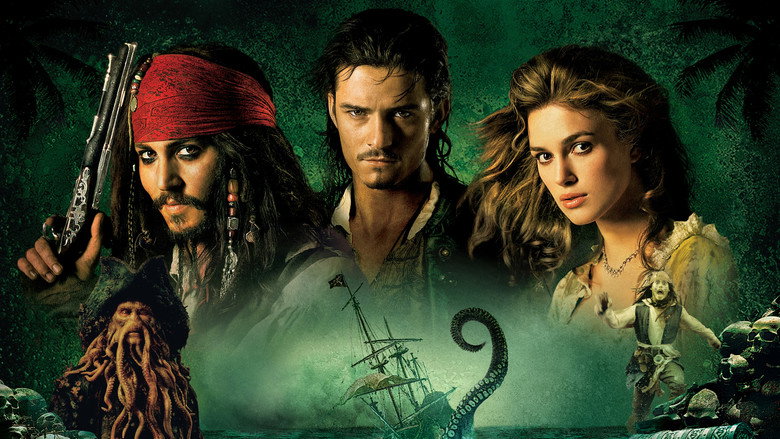
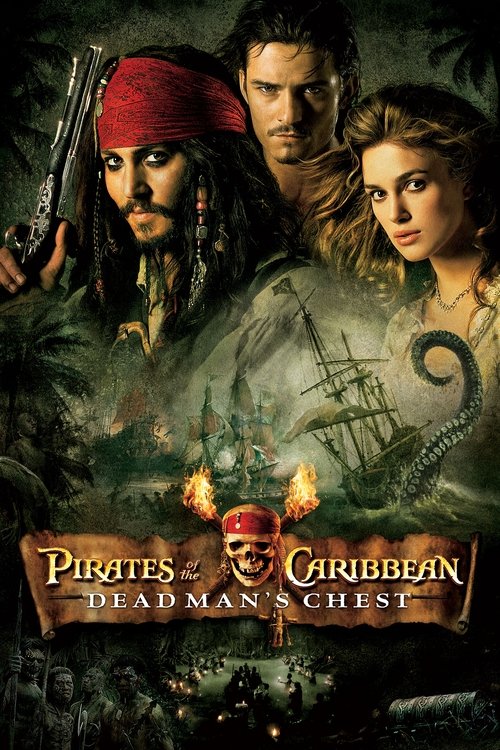
The debt. Thirteen years earlier, Jack asked Davy Jones to raise the sunken Black Pearl in exchange for thirteen years as her captain and then one hundred years of service aboard the Flying Dutchman. The Kraken is Jones's enforcer, and the black spot on Jack's palm is the summons. Jack's every scheme in the film — recruiting a crew in Tortuga, palming Will off as payment, hunting the chest — is an attempt to renegotiate a contract he already signed.
What is in the chest. The Dead Man's Chest contains Davy Jones's still-beating heart. He carved it out of his own body after his betrayal by the sea goddess he loved, specifically so he would never again have to feel grief, guilt or love. Because the heart exists outside him, Jones cannot be killed — but whoever holds the heart commands him absolutely, which is why Beckett wants it: control of Jones means control of every sea lane on earth.
The Isla Cruces triangle. The three-way duel between Jack, Will and Norrington on the island is a collision of three secret agendas: Jack wants the heart as leverage over Jones; Will wants it to free his father Bootstrap Bill from the Dutchman; Norrington wants it to buy back his career. Norrington wins by stealth — he takes the heart (and the letters of marque) in the confusion and delivers them to Beckett.
The mast. With the Kraken bearing down on the Black Pearl, Jack initially flees in a longboat, then turns back to fight — the closest thing to selflessness he has ever shown. Elizabeth recognises that the beast wants only Jack, kisses him, and while kissing him guides him against the mast and shackles him to it, telling him she is not sorry. Will sees the shackle and understands what she has done; Jack, left alone, faces the Kraken with \"Hello, beastie,\" and goes down with his ship.
The revelations that reframe the film. Jones's cruelty is retroactively legible as heartbreak; Elizabeth's competence throughout the film is retroactively legible as ruthlessness; the compass's failure to work for Jack is retroactively legible as his refusal to admit he wanted the Pearl more than his own survival. And Jones's triumph is hollow — when he orders the chest opened after the Pearl sinks, it is empty (Norrington already has the heart), and he screams \"Damn you, Jack Sparrow!\"
The ending. Beckett takes possession of the heart, meaning the East India Trading Company now owns the terror of the seas — the villain wins outright. The survivors gather at Tia Dalma's shack, where she asks whether they would sail to the ends of the earth to bring Jack back. They agree, and she introduces their new captain: Hector Barbossa, alive, eating an apple, laughing — resurrected by Tia Dalma, and the direct set-up for At World's End (2007). The last frames also quietly imply that Jack's fate is not death but the locker, and that Tia Dalma's interest in these particular sailors is not charity.