Skip to content
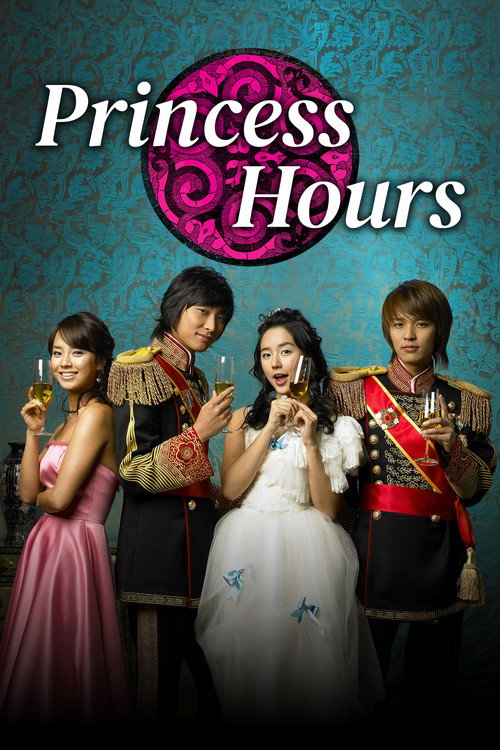
Princess Hours
An opulent fusion of modern romance and Joseon dynasty court drama, Princess Hours captures the ache of youth trapped in gilded cages, painting a fragile transition from reluctant duty into heartfelt devotion across sweeping palace courtyards.
Princess Hours

Princess Hours

"A fantasy romance between the Imperial crown prince and the crazy high school girl."

11 January 2006 — 30 March 2006 South Korea 1 season 24 episode Ended 7.6 (150)

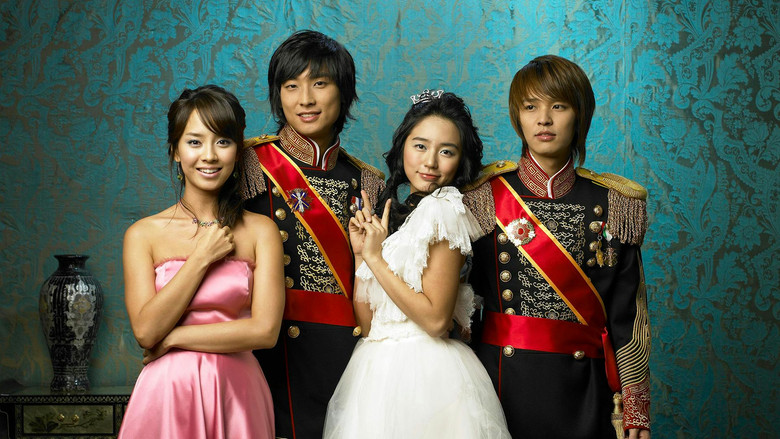
Cast: Yoon Eun-hye, Ju Ji-hoon, Song Ji-hyo, Kim Jeong-hoon, Lee Yoon-ji

Drama Comedy Duty & Tradition vs. Individual Freedom The Gilded Cage: Isolation and Loneliness in High Society Emotional Growth and Forged Intimacy Political Ambition and Generational Trauma Public Image, Surveillance, and Media Pressures

Overview

Set in an alternate 21st-century South Korea governed by a constitutional monarchy, Princess Hours follows Shin Chae-kyeong, a cheerful, artistic, and clumsy high school girl whose ordinary life unravels when a pact between her late grandfather and the late Emperor comes due. She is betrothed to the stoic Crown Prince, Lee Shin, to save her family from financial ruin. Thrust into the rigid, archaic royal court, Chae-kyeong must navigate stifling palace etiquette, pervasive royal surveillance, and a husband who appears emotionally detached and in love with another woman.

As Chae-kyeong and Shin gradually warm up to each other, the political equilibrium of the imperial court fractures with the return of Prince Lee Yul—Shin’s cousin and the former rightful Crown Prince—and his ambitious mother, Lady Seo. Yul falls deeply in love with Chae-kyeong and resolves to reclaim both the throne and the princess. What begins as an uneasy political arrangement deepens into an intricate tangle of palace conspiracies, public media scandals, and genuine romantic awakening, testing whether love and individuality can survive beneath the crushing weight of the crown.

Core Meaning

At its core, Princess Hours explores the tension between institutional duty and personal autonomy. The series presents a poignant coming-of-age narrative demonstrating that true royalty and maturity are not defined by bloodline, titles, or rigid adherence to tradition, but by the willingness to empathize, communicate honestly, and sacrifice personal power for emotional authenticity. It asserts that personal freedom and genuine love must be forged through self-determination rather than inherited obligation.

Thematic DNA

Duty & Tradition vs. Individual Freedom 30%
The Gilded Cage: Isolation and Loneliness in High Society 25%
Emotional Growth and Forged Intimacy 20%
Political Ambition and Generational Trauma 15%
Public Image, Surveillance, and Media Pressures 10%

Duty & Tradition vs. Individual Freedom

Central to the narrative arc, Chae-kyeong and Shin begin as hostages to ancestral promises and imperial protocols. As the drama progresses, both characters must decide whether to conform to archaic expectations or redefine what it means to lead on their own terms.

The Gilded Cage: Isolation and Loneliness in High Society

The grandeur of the palace (Goong) serves as an architectural metaphor for emotional imprisonment. Shin's cold cynicism and Yul's festering melancholy stem directly from lives stripped of privacy and authentic human connection.

Emotional Growth and Forged Intimacy

Moving away from fairy-tale instant romance, the series illustrates how intimacy develops through shared vulnerabilities, cultural shock, and weathering misunderstandings together.

Political Ambition and Generational Trauma

Lady Seo's thirst for vengeance and the unresolved history between the elder royals project inherited burdens onto Shin and Yul, showing how parental obsession scars the next generation.

Public Image, Surveillance, and Media Pressures

Set in a modern media-saturated society, royal scandals, paparazzi intrusion, and public opinion act as external forces constantly dictating the protagonists' private lives.

Character Analysis

Shin Chae-kyeong

Yoon Eun-hye

Archetype: The Reluctant Hero / Spirited Catalyst Key Trait: Irrepressible empathy and unpretentious honesty.

Motivation

Initially motivated to rescue her family from bankruptcy, which evolves into protecting the people she loves and claiming her self-respect.

Character Arc

Transforms from a naive, uninhibited high school art student into a resilient, compassionate royal figure who humanizes the cold court without losing her soul.

Crown Prince Lee Shin

Ju Ji-hoon

Archetype: The Wounded Prince / Stoic Protagonist (Tsundere) Key Trait: Guarded stoicism concealing profound emotional loyalty.

Motivation

Initially driven to escape his royal destiny, shifting to earning true love and relinquishing the throne on his own terms.

Character Arc

Starts as a frosty, cynical heir suffocated by court duties and unfulfilled dreams of independence. Through Chae-kyeong’s warmth, he dismantles his emotional armor and learns to express affection and embrace genuine leadership.

All 5 characters and cast

Symbols & Motifs

Alfred the Teddy Bear

Meaning:

Represents Shin's hidden innocence and unspoken vulnerabilities. Because Shin was taught to suppress outward emotions, Alfred serves as his emotional proxy and confidant.

Context:

Kept in Shin's private quarters and featured at the end of every episode in dressed-up dioramas that mirror the dramatic events of the narrative.

The High Palace Walls (Goong)

Meaning:

Symbolizes the separation between the royal family and common society, as well as the emotional barriers the characters erect around themselves.

Context:

Framed throughout the cinematography to emphasize the characters' physical confinement and isolation from the modern world outside.

Hanbok vs. Modern Western Uniforms

Meaning:

Illustrates the collision between contemporary youth culture and centuries-old Joseon heritage.

Context:

Juxtaposed visually through the contrast of modern school uniforms and modified, vividly colored traditional royal hanboks worn during palace duties.

Shin Chae-kyeong's School Skirt over Tracksuit Pants

Meaning:

Symbolizes her refusal to conform completely to standardized norms and represents her unvarnished, spirited authenticity.

Context:

Worn by Chae-kyeong during school scenes, establishing her quirky and unconventional personality before entering the palace.

Bicycles in the Courtyard

Meaning:

Symbolizes youthful rebellion, mobility, and breaking through ceremonial stillness.

Context:

Used by Chae-kyeong and Shin when riding through the ancient, rigid palace grounds.

Memorable Quotes

별은 말이지, 스스로 빛을 내는 별이 있고 남의 빛을 받아서 빛나는 별이 있어.
— Lee Shin

Context

Spoken by Shin in Episode 8 during a reflective moment regarding his public role and relationship.

Meaning

Shin reflects on his role as a prince under public scrutiny while acknowledging Chae-kyeong as an organic source of light. (Translation: 'You see, among stars, there are stars that shine with their own light, and stars that shine by reflecting the light of others.')

내 마음이 너를 향해 뛰고 있는데, 그걸 어떻게 모른 척하란 말이야?
— Lee Yul

Context

Spoken by Yul to Chae-kyeong in Episode 15 as palace tensions escalate.

Meaning

Yul openly exposes his feelings to Chae-kyeong, abandoning passive gentleness for overt emotional confrontation. (Translation: 'My heart is beating toward you, so how can you expect me to pretend otherwise?')

All 4 quotes

Episode Highlights

The Grand Proposal

S1E1

Establishes the alternate constitutional monarchy premise. Shin proposes to Hyo-rin and is rejected; Chae-kyeong accidentally overhears and is soon told of the grandfather's pact.

Significance:

Sets the entire narrative engine into motion by introducing the core conflict between duty, choice, and royal expectation.

The Royal Wedding

S1E4

Features Chae-kyeong and Shin's grand traditional wedding ceremony, sealing their contract marriage.

Significance:

Visually iconic milestone marking Chae-kyeong’s official entrance into the gilded palace world and the start of their cohabitation.

The Jeju Island Trip & Teddy Bear Museum

S1E9

The couple travels outside palace grounds to Jeju Island, where Shin reveals his vulnerable side in a relaxed setting.

Significance:

Serves as the first genuine emotional breakthrough and foundation for romantic bonding between Shin and Chae-kyeong.

The Horseback Rescue & The Public Kiss

S1E12

Court rivalries intensify, culminating in a dramatic public street kiss sequence involving Shin and Chae-kyeong.

Significance:

Forces Shin to confront his authentic protective feelings toward Chae-kyeong under intense public and media scrutiny.

The Fire Incident & Royal Slander

S1E19

A deliberate fire is set in the palace, creating a major scandal framed against Crown Prince Shin.

Significance:

Triggers the climax of palace power struggles and intensifies Yul's moral and emotional conflict.

Shin's Press Confession

S1E23

Shin confronts the court scandal and press scrutiny directly, publicly declaring his love for Chae-kyeong and offering to surrender the crown.

Significance:

Demonstrates Shin's complete character maturation from a passive prince into a self-determined individual willing to sacrifice status for love.

Macau Reunion & A True Union

S1E24

Shin steps down from succession, allowing Princess Hye-myeong to take the crown. In Macau, Shin and Chae-kyeong reunite as equals for a private wedding.

Significance:

Concludes the series by demonstrating that true marital devotion and peace are achieved outside institutional confines.

Philosophical Questions

Is Identity Defined by Destiny or Choice?

The series interrogates whether Shin and Yul are bound by royal birthright or if an individual possesses the moral right to forfeit duty in pursuit of personal happiness.

Can Tradition Evolve Without Losing Its Essence?

Through Chae-kyeong’s disruption of court customs, the story examines how heritage can remain dynamic rather than static and suffocating.

What Constitutes Legitimate Authority?

The contrast between the elder royals' obsession with public prestige and Princess Hye-myeong's grassroots humanitarianism asks whether authority stems from lineage or ethical service.

Alternative Interpretations

The narrative can be analyzed through several distinct thematic lenses:

Full ending explanation

Cultural Impact

Premiering in early 2006, Princess Hours stood alongside Dae Jang Geum and Winter Sonata at the apex of the First Hallyu Wave, driving the global expansion of Korean pop culture across Asia—particularly in Japan, China, Taiwan, and the Philippines. The series pioneered the modern-monarchy subgenre in Korean television, creating a blueprint later utilized in dramas like The King 2 Hearts (2012) and The Last Empress (2018). Furthermore, it served as a major career launchpad for Ju Ji-hoon and Yoon Eun-hye, while spawning the 2007 spinoff Goong S, an international stage musical adaptation, and translated releases of the original manhwa worldwide.

Audience Reception

Princess Hours received widespread acclaim and achieved immense commercial success, registering peak domestic viewership ratings of 28.3%.

  • Praise: Critics and audiences universally lauded the lush aesthetic, lavish set decoration, magnetic lead chemistry between Yoon Eun-hye and Ju Ji-hoon, and its soundtrack (notably the iconic theme song 'Perhaps Love').
  • Criticism: Some viewers and critics noted that the four-episode extension created pacing drag, leading to repetitive misunderstandings and love-triangle angst between episodes 17 and 21.
  • Legacy Score: Holds an overall critical legacy score of 8.8/10, celebrated as an era-defining classic of modern Korean television.

Interesting Facts

  • Yoon Eun-hye (a former idol from Baby V.O.X) and model Ju Ji-hoon faced significant public skepticism upon initial casting due to lack of traditional lead acting experience, but their chemistry turned the drama into a ratings hit peaking near 28.3%.
  • MBC spent billions of won constructing the palace interiors from scratch on massive soundstages, blending authentic Joseon architectural woodcraft with Western Victorian chandeliers and luxury furniture.
  • MBC collaborated directly with the Jeju Teddy Bear Museum, creating custom miniature versions of the actors' outfits for ending diorama scenes.
  • Due to high domestic popularity and ratings, the original 20-episode broadcast order was extended to 24 episodes.
  • The drama sparked a fashion trend in South Korea by modernizing traditional clothing, pairing hanboks with sneakers, hoodies, and Western accessories.

Easter Eggs

Manhwa Visual Cues

The director deliberately framed two-shots and reaction scenes to recreate iconic comic panels and splash pages from Park So-hee’s original graphic manhwa.

Tribute to British Royal Scandals

The intense media frenzy, leaked photographs, and broadcast interviews throughout the drama draw direct visual and narrative parallels to the British royal family's 1990s tabloid press coverage.

Classical Music Symbolism

The soundtrack deliberately layers traditional Korean court instruments (gayageum, daegeum) with European classical cello and harpsichord motifs to sonically mirror the clash between Eastern heritage and Western modernization.

Jeju Teddy Bear Museum Cameo

Actual exhibits and historical bear dioramas of the Jeju Teddy Bear Museum were featured in Episode 9, boosting the venue into a major international tourist attraction.

Frequently Asked Questions

Explore More About This Movie

Dive deeper into specific aspects of the movie with our detailed analysis pages

Comments (0)

Leave a comment

No comments yet. Be the first to share your thoughts!

Similar Movies