Queen of Tears
눈물의 여왕
"The wedding of the century or the war of the century?"
Overview
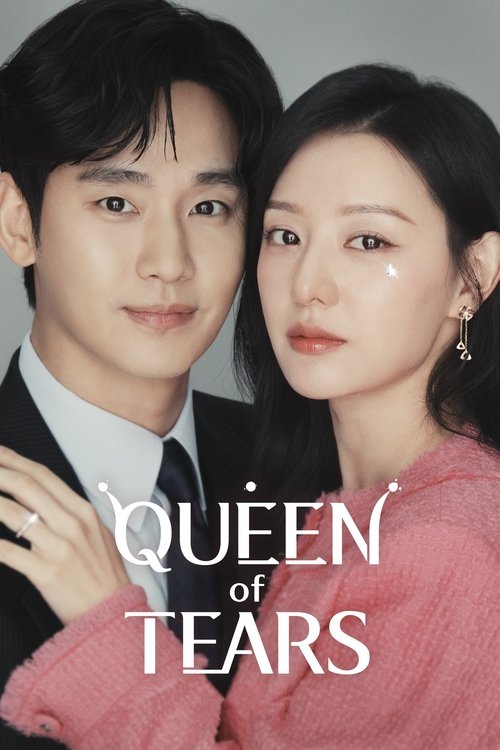
Queen of Tears follows the tumultuous journey of Baek Hyun-woo and Hong Hae-in, a couple married for three years who have reached a bitter breaking point. Hyun-woo, a successful lawyer from a humble rural village, feels suffocated by the cold, high-pressure environment of the Queens Group conglomerate and his overbearing in-laws. Just as he prepares to serve divorce papers to his wife, Hae-in—the icy and ambitious CEO of Queens Department Store—reveals she has been diagnosed with a rare, terminal brain tumor, giving her only months to live.
The series navigates their complex emotional landscape as they rediscover the love that first drew them together while facing a hostile takeover of the family business by the scheming Yoon Eun-seong and Moh Seul-hee. Moving from the high-stakes corporate world of Seoul to the warmth of Hyun-woo's hometown and the scenic vistas of Germany, the story explores the resilience of the human spirit when faced with mortality and betrayal. Ultimately, it is a journey of healing not just for the couple, but for their fragmented families, proving that miracles are often born from the willingness to be vulnerable.
Core Meaning
The core meaning of Queen of Tears centers on the idea that love is an active choice rather than a static state. The creators suggest that the 'miracle' of love is not found in the absence of hardship, but in the decision to stay and fight through 'tears' and terminality. It explores how the walls we build to protect our pride often become the prisons that isolate us, and that true intimacy requires the destruction of those barriers, even when the cost is certain loss or painful memory. The series argues that a life lived fully for another—even if cut short or marked by suffering—is the ultimate victory over the cruelty of fate and corporate greed.
Thematic DNA
Reconciliation and Second Chances
The series deconstructs a failing marriage to show that reconnection is possible through shared vulnerability. The transition from Hyun-woo's resentment to his desperate devotion mirrors the theme of rediscovering what was lost under the weight of pride and miscommunication.
Mortality and the Value of Time
Hae-in's diagnosis serves as a catalyst that strips away superficial corporate ambitions, forcing the characters to confront the fragility of life. This theme emphasizes that moments of happiness are the only legacy that truly matters.
Gender Role Subversion
The show satirizes the 'Cinderella' trope by placing a commoner man in the role of the oppressed 'daughter-in-law' figure within a chaebol family, while portraying the female lead as the powerful, emotionally guarded executive.
Family and Social Class
The stark contrast between the chaotic, heartless corporate elite (the Hongs) and the simple, warm-hearted villagers of Yongdu-ri (the Baeks) highlights how genuine bonds are often found outside the pursuit of power.
Character Analysis
Baek Hyun-woo
Kim Soo-hyun
Motivation
Initially motivated by self-preservation and escape, his motivation shifts to a singular, desperate desire to save Hae-in's life and her memories.
Character Arc
Begins as a man trapped in a 'golden cage,' desiring only to escape his marriage. Through the series, he evolves into a fierce protector who risks his life and career to save Hae-in, ultimately finding peace by choosing to love her unconditionally regardless of the outcome.
Hong Hae-in
Kim Ji-won
Motivation
Primarily driven by a desire to reach 'one trillion won' in sales; after her diagnosis, she seeks to leave a meaningful footprint in the heart of the one person who truly loved her.
Character Arc
A cold, defensive CEO who uses her wealth and power as armor. Facing death, she sheds her icy exterior, learns to express affection, and eventually accepts the loss of her memories to save her life, rebuilding her identity through love.
Yoon Eun-seong
Park Sung-hoon
Motivation
An obsessive need to possess Hae-in and the Queens Group to validate his own worth after a lifetime of neglect.
Character Arc
A man abandoned as a child who tries to 'buy' or force love and family. His arc is a descent into madness as he realizes that Hae-in's heart cannot be conquered like a corporation, leading to his ultimate destruction.
Hong Soo-cheol
Kwak Dong-yeon
Motivation
Wants to prove his worth to his family; later, his only motivation is to protect and reunite with his wife and son.
Character Arc
Starts as an incompetent, spoiled younger brother but grows into a devoted husband and father who learns the value of hard work and genuine loyalty when his world collapses.
Symbols & Motifs
MP3 Player
Represents fated connection and the 'unseen' thread of destiny.
Discovered to belong to Hae-in from her high school days, it proves that Hyun-woo was her 'guardian angel' long before their official meeting, symbolizing that their souls were always meant to find one another.
Lavender Fields / Sanssouci
Symbolizes devotion and a life 'without worries.'
The palace in Germany where they spent their honeymoon becomes the site of their reconciliation and the final visual metaphor for their eternal reunion in the series' epilogue.
Sneakers
Symbolize protection and the desire to walk a path together.
Hyun-woo buys Hae-in comfortable sneakers to replace her high heels, a practical expression of his love and his wish for her to walk safely through her illness.
Four-leaf Clover
Represents hope and the 'luck' found in small, ordinary moments.
Hyun-woo searches for a four-leaf clover for Hae-in in Yongdu-ri, mirroring the shift from seeking corporate 'success' to seeking the 'luck' of simply being alive together.
Memorable Quotes
If you can't live without me, do you want to die together?
— Hong Hae-in
Context:
Episode 2, reflecting the intense but dysfunctional nature of their bond before their reconciliation.
Meaning:
A dark yet deeply romantic expression of her possessive and intense love, early in the series.
In life, everyone has their own stones to carry. Even those who seem to have an easy life have their own heavy stones in their pockets.
— Baek Hyun-woo
Context:
Episode 12, during a quiet moment of reflection on his life and the struggles of the Hong family.
Meaning:
A philosophical reflection on the universal nature of suffering and the futility of envy.
My ideal type will never change, so I'll fall for you again.
— Hong Hae-in
Context:
Episode 16, affirming that even if she lost her past, her soul would choose Hyun-woo in the present.
Meaning:
A promise that her love transcends memory and biological limitations.
I thought I wouldn't be part of your future. But now, we have a future together.
— Hong Hae-in
Context:
Episode 13, after receiving news that surgery might be possible.
Meaning:
Captures the transition from hopelessness to a miracle of shared time.
Episode Highlights
The Supermarket Prince's Tears
Introduces the 'miracle' marriage that has turned into a nightmare, featuring the viral ad-libbed drunken crying scene by Kim Soo-hyun.
Establishes the show's unique blend of high drama and subverted rom-com tropes.
The Germany Reconciliation
Hyun-woo and Hae-in find each other in Germany, leading to a heart-wrenching confrontation about his desire for divorce vs. her will to live.
Marks the pivotal emotional turning point where the 'ice' finally begins to break.
The Press Conference
Hae-in publicly defies Eun-seong by revealing her illness and Hyun-woo's innocence to the media.
A major plot twist that shifts the power dynamic back to the leads and confirms their public unity.
The Price of Living
Hae-in must decide between keeping her memories and dying, or losing them and living.
Explores the philosophical core of identity and the tragedy of a love that might be forgotten.
The Lavender Epilogue
The finale follows the couple through a lifetime, showing them growing old together and having a daughter.
Provides a rare, comprehensive closure that extends beyond the immediate plot into a poetic reflection on a life well-lived.
Philosophical Questions
Is identity tied to memory or the soul?
The series explores this through Hae-in's surgery. Even after losing her specific memories, her 'heart' and 'habits' gravitate back to Hyun-woo, suggesting a core self that exists beyond cognitive recall.
Can love survive the death of communication?
The first half of the series shows how two people who love each other can become strangers through silence, while the second half proves that vulnerability is the only antidote to that estrangement.
Alternative Interpretations
Critics and fans have debated the meaning of Hae-in's memory loss. One popular interpretation is that the amnesia was a necessary rebirth; it allowed the couple to shed the years of trauma, miscarriage, and silence that had poisoned their first marriage, effectively giving them a clean slate to build a healthier bond. Others view the ending's time-jump to 2074 as a spiritual metaphor, suggesting that their love was a 'miracle' that could only be fully realized in the peace of the afterlife, represented by the lavender fields where Hae-in (as an 'angel') finally guides an elderly Hyun-woo home.
Cultural Impact
Queen of Tears became a global cultural phenomenon, achieving the highest viewership rating in tvN history (24.85%), surpassing Crash Landing on You. Its impact is characterized by its subversion of patriarchal norms in Korea, particularly through its satirical portrayal of the 'rituals' men are forced to perform for their in-laws. The 'Kim-Kim' chemistry (Kim Soo-hyun and Kim Ji-won) dominated social media discussions for months, while Hae-in’s 'chaebol chic' fashion sparked major retail trends across Asia. The series is credited with revitalizing the 'second-chance romance' genre, proving that audiences were hungry for mature, complex portrayals of marriage rather than just the initial spark of courtship.
Audience Reception
Reception was overwhelmingly positive, particularly regarding the leads' performances and the high production value. While the first 12 episodes were praised for their tight writing and emotional resonance, the final stretch (episodes 13-15) received some criticism for relying on 'makjang' tropes like car accidents and memory loss. However, the final episode's extended epilogue was hailed as one of the most satisfying and poetic endings in K-drama history, successfully mending the frustrations of the previous episodes and securing its status as a modern classic.
Interesting Facts
- Actress Kim Ji-won wore a staggering 166 different outfits throughout the 16 episodes, averaging over 10 per episode.
- Kim Soo-hyun has a total of 40 crying scenes in the series, reflecting the title's emphasis on emotional vulnerability.
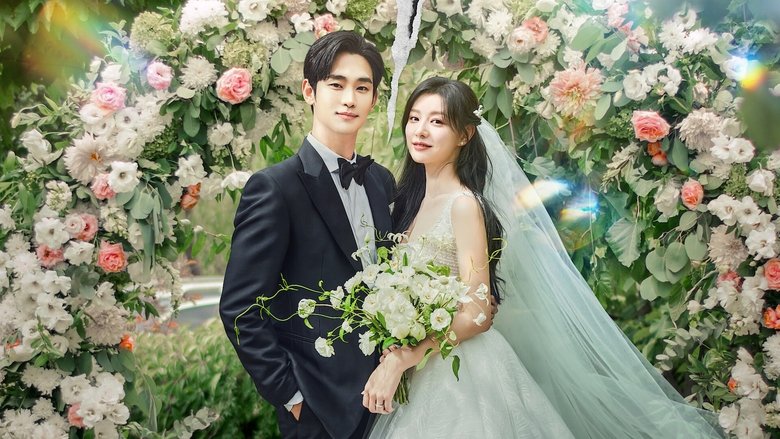
- The wedding scene was filmed at the same location (Aston House) and inspired by the real-life wedding of actors Hyun Bin and Son Ye-jin.
- The production period spanned 331 days, reflecting the high scale and detailed cinematography of the series.
- Kim Soo-hyun reportedly took a voluntary pay cut to help manage the production's high budget.
- The show features a massive cast of 793 actors for various speaking and background roles.
Easter Eggs
Vincenzo Cassano Cameo
Song Joong-ki appears as his character Vincenzo from the 2021 drama, acting as Hae-in's divorce lawyer and referencing his 'scary' reputation.
Fight For My Way Reference
Kim Soo-hyun's drunken line 'I was born this way' is a direct parody of Kim Ji-won's iconic 'I was born pretty' aegyo from her previous hit drama.
Crash Landing on You Connections
The writer (Park Ji-eun) includes several nods to her previous work, including the mention of 'Queens Group' in CLOY and similar floral wedding decor.
⚠️ Spoiler Analysis
Click to reveal detailed analysis with spoilers
Frequently Asked Questions
Explore More About This Movie
Dive deeper into specific aspects of the movie with our detailed analysis pages
Comments (0)
No comments yet. Be the first to share your thoughts!