Skip to content
Rage of Bahamut
A swashbuckling dark fantasy galloping with irreverent roguish vitality and tragic romance, where mortal defiance dances like a rogue spark against the towering, cataclysmic obsidian shadow of an apocalyptic god-dragon.
Rage of Bahamut

Rage of Bahamut

神撃のバハムート

06 October 2014 — 30 September 2017 Japan 2 season 36 episode Ended 7.6 (145)

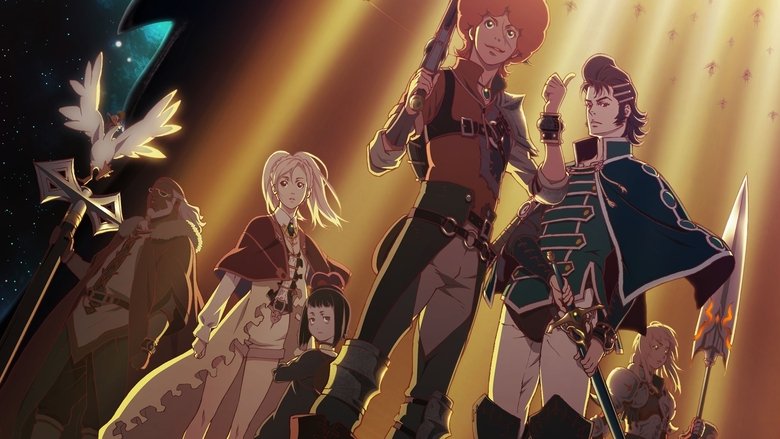
Cast: Risa Shimizu, Eri Kitamura, Go Inoue, Miyuki Sawashiro, Ryuuzaburou Ootomo

Animation Sci-Fi & Fantasy Action & Adventure Mortal Agency vs. Divine & Demonic Manipulation The Burden of Vengeance and Cycle of Retribution Empathy Across Incompatible Natures & Otherness The Price of Ambition and Autocratic Utilitarianism

Overview

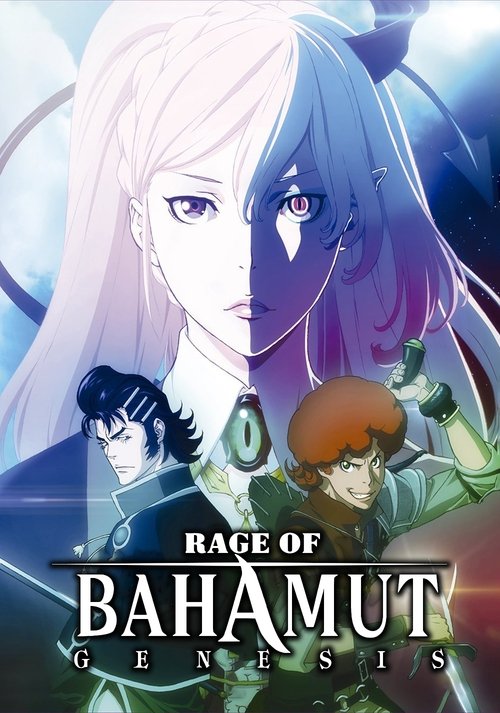
Rage of Bahamut is an epic fantasy saga spanning two major seasons—Rage of Bahamut: Genesis (2014) and Rage of Bahamut: Virgin Soul (2017)—comprising 36 episodes produced by studio MAPPA. Set in the magical realm of Mistarcia, the universe exists under a delicate cosmic equilibrium between humans, celestial deities, and underworld demons. Two millennia prior to the series' events, these three factions were forced to forge a desperate pact to seal away the dragon Bahamut, an entity of absolute annihilation whose wrath threatened total obliteration.

The narrative across both seasons traces the destabilization of this ancient peace. It begins on a personal, rogue-picaresque scale when self-serving bounty hunters Favaro Leone and Kaisar Lidfard become tangled with a mysterious maiden carrying a heavenly artifact, pulling them straight into the clash of heaven and hell. A decade later, the narrative broadens into a sweeping geopolitical epic centered on the royal capital, where a ruthless human monarchy attempts to overturn divine hegemony by subjugating demons and defying the gods, only to provoke the return of the primordial terror once more.

Across its complete arc, the series shifts from an energetic, cinematic road-trip adventure into a sprawling socio-political drama exploring oppression, personal freedom, and moral ambiguity. Despite changes in tone and lead protagonists, the overarching tale remains grounded in mortal resilience, showing how rogue wanderers, disgraced knights, dragon-folk, and outcast demigods defy cosmic predetermination to shape their own destiny.

Core Meaning

The overarching thesis of Rage of Bahamut is the assertion of mortal agency and human dignity against autocratic and cosmic determinism. Across both Genesis and Virgin Soul, Mistarcia's gods and demons treat humanity as pawns, collateral damage, or sources of worship and spiritual sustenance. The story posits that neither dogmatic divine benevolence nor demonic malevolence offers genuine salvation; rather, meaningful destiny is forged through spontaneous, flawed human connections, empathy, and personal choice.

Even when King Charioce XVII commits moral atrocities to sever humanity's servitude to the heavens, the narrative ultimately demonstrates that liberation purchased through tyranny and slaughter only perpetuates cycles of trauma. True transcendence is instead found in characters like Favaro, Nina, Kaisar, and Rita—individuals who transcend racial and theological boundaries to protect one another, asserting that life’s joy and moral compass reside in genuine empathy and unfiltered personal freedom.

Thematic DNA

Mortal Agency vs. Divine & Demonic Manipulation 30%
The Burden of Vengeance and Cycle of Retribution 25%
Empathy Across Incompatible Natures & Otherness 25%
The Price of Ambition and Autocratic Utilitarianism 20%

Mortal Agency vs. Divine & Demonic Manipulation

In Genesis, both angels and devils manipulate humanity—and particularly the tragic homunculus Amira—to tip the cosmic scales, treating mortal lives as disposable keys to Bahamut's lock. By Virgin Soul, humanity turns this dynamic upside down by weaponizing ancient forbidden artifacts against both pantheons. The series continuously argues that freedom from divine puppetry is mortals' ultimate birthright, though claiming that autonomy requires enduring profound suffering.

The Burden of Vengeance and Cycle of Retribution

Vengeance drives personal arcs throughout the show: Kaisar is consumed by avenging his family's fallen honor against Favaro in early Genesis; Azazel evolves into an avenging insurgent in Virgin Soul seeking retribution for demon subjugation; and Jeanne d'Arc grieves the martyrdom of her child El (Mugaro). The narrative systematically illustrates that unchecked vengeance blinds characters to deeper conspiracies and inflicts collateral tragedy, resolving only when individuals choose forgiveness or collaborative justice.

Empathy Across Incompatible Natures & Otherness

The emotional heartbeat of the series lies in connections formed across hostile species lines: the cynical rogue Favaro falling for the demon-angel chimera Amira; the zombie girl Rita becoming the conscience of living mortals; the dragon-girl Nina empathizing with both the demon fugitive Azazel and the human despot Charioce. These relationships break down societal dogmas and establish that authentic intimacy can dismantle centuries of institutional hatred.

The Price of Ambition and Autocratic Utilitarianism

Through the rise of King Charioce XVII in Virgin Soul, the series scrutinizes the Machiavellian calculation: can enslaving demons, executing dissidents, and defying the gods be justified if the goal is preventing humanity's extinction by Bahamut? The series strips romanticism from Charioce's pragmatic cruelty, demonstrating the severe ethical rot such cold logic leaves upon the kingdom and its architects.

Character Analysis

Favaro Leone

Not specified in research

Archetype: Scoundrel / Rogue Antihero turned Wandering Mentor Key Trait: Irreverent cunning and opportunistic bravado masking an unshakeable moral compass

Motivation

Self-preservation and bounty payouts → Protecting Amira and fulfilling an unspoken oath → Preserving cosmic harmony and nurturing the next generation.

Character Arc

Favaro begins Genesis as a deceitful, self-absorbed bounty hunter who values only coin and tavern drinks. Through his journey with Amira, his veneer of cynicism cracks, culminating in a willingness to sacrifice his foot, his happiness, and his heart to save the realm. By Virgin Soul, set a decade later, Favaro reappears as a seasoned, peg-legged master-swordsman and philosophical mentor to Nina Drango, maintaining his trademark roguish grin while carrying the sorrow of his past.

Kaisar Lidfard

Go Inoue

Archetype: Tragic Knight / Honorable Nemesis Key Trait: Obstinate chivalric idealism and relentless adherence to personal honor

Motivation

Avenging paternal dishonor → Upholding justice against demonic machinations → Mediating peaceful coexistence among humans, demons, and gods.

Character Arc

Introduced as a ruined noble obsessed with hunting Favaro to avenge his family’s downfall, Kaisar's comedic tunnel-vision yields to genuine chivalric heroism. Over time, he makes peace with Favaro, willingly sacrificing his left arm during the final battle of Genesis. In Virgin Soul, elevated to Knight Commander of the Orleans Knights, he endures a crushing dilemma: serving a tyrannical human king whose anti-god agenda he questions, while attempting to shield enslaved demons from slaughter, embodying the tragic weight of maintaining nobility in a corrupt system.

All 5 characters and cast

Symbols & Motifs

Bahamut (The Primordial Dragon)

Meaning:

Bahamut does not symbolize conscious evil, but rather an indifferent, uncontrollable natural catastrophe—an apocalyptic force of raw annihilation. Bahamut represents the ever-present threat of total entropy that emerges whenever mortal hubris and cosmic factionalism tear the fabric of the world apart.

Context:

Appears as the ancient cataclysmic threat sealed away two millennia ago by the gods, demons, and humans, later reawakened when cosmic balances crumble in both Genesis and Virgin Soul.

The Tail of the Demon

Meaning:

A physical manifestation of karmic entrapment: a compulsive liar trapped by his own deception, forcing him to undergo a journey of genuine selflessness.

Context:

In Genesis, Amira places a curse on Favaro that sprouts a demon's tail after he falsely promises to guide her to Helheim.

Bounty Hunter Collars and Tokens

Meaning:

Symbolizes transactional worth in a mercenary world. The progression from chasing gold bounties to laying down lives for loved ones charts the moral awakening of the series’ protagonists.

Context:

Carried by the god Bacchus and worn by marks across the realm.

The Dance

Meaning:

Serves as a visual motif of emotional nakedness, shedding social masks, and uninhibited connection between worlds.

Context:

Recurs at climactic emotional beats: Favaro and Amira’s joyous, spontaneous tavern and lakeside dance in Genesis (Episode 2), and Nina and Charioce’s festival masquerade dance in Virgin Soul (Episode 8) and final ballroom dance (Episode 24).

The Mechanical Prosthetic Leg / Arm

Meaning:

Symbolizes the permanent, irreversible bodily toll of heroism—reminding viewers that defying gods and dragons is never free from physical consequence.

Context:

Favaro loses his right leg sealing Bahamut, replacing it with an ingeniously crafted peg leg; Kaisar loses an arm in Genesis to assist Favaro.

Memorable Quotes

ファヴァローーーッ!
— Kaisar Lidfard

Context

Shouted constantly across Genesis (e.g., Episode 1, Episode 5) whenever Kaisar pursues or is frustrated by Favaro.

Meaning

The cry became the defining comedic catchphrase and emotional signature of their dynamic, highlighting Kaisar's exasperated obsession before it evolved into profound camaraderie.

俺は誰かのためじゃねぇ、俺自身のために生きてんだよ。
— Favaro Leone

Context

Genesis, Episode 2. Spoken when Amira questions why he stays with her and what he fights for.

Meaning

Establishes Favaro's foundational existential philosophy of uncompromising self-determination, which provides ironic contrast when he later sacrifices everything for her and the world.

All 4 quotes

Episode Highlights

Encounters Wytecarp

S1E1

Features the masterfully choreographed rooftop duel between Favaro and Kaisar, the arrival of Amira, and the fateful magical contract sealed with a kiss.

Significance:

Sets the visual and thematic tone of the franchise.

Escape from Yumen-gard

S1E2

Establishes Favaro and Amira’s chemistry during the tavern dance and starlight swim.

Significance:

Deconstructs Favaro’s mercenary facade and introduces the emotional core of the first season.

An Oasis, Anomaly

S1E6

Introduces Rita's tragic past in the zombie-infested town of Nebelcole and explores the tragic backstories of Favaro and Kaisar’s fathers.

Significance:

Transforms the show from slapstick adventure to genuine emotional drama.

Farewell, Helheim / Shawshank

S1E11

Belial's deception unravels, Amira fuses into Bahamut, Kaisar loses his arm to assist Favaro, and Favaro shoots the fateful God-Piercing arrow, losing his leg while sharing a heartbreaking final kiss with Amira as she dissolves into light.

Significance:

Marks the climax of the first season, concluding Amira's arc and sealing Bahamut at great physical sacrifice.

Red Dragon

S2E1

Jumps forward ten years, introducing a grim, industrialized capital where humans dominate, demons are enslaved in ghettos, and gods have withered. Introduces Nina Drango's draconic abilities and the shadowy 'Rag Demon' insurgent (Azazel).

Significance:

Establishes the new socio-political dynamic and introduces the primary protagonist and conflict of Virgin Soul.

The Day of Defeat

S2E8

Features the masquerade ball where King Charioce and Nina dance incognito.

Significance:

Weaves their romance directly into the brewing rebellion of the Orleans Knights and demonic underground.

Vengeance / Which Way Is the Wind Blowing?

S2E21

The death of Mugaro (El) at the hands of Alessand shatters the fragile peace. Jeanne and Azazel lead open revolts against the capital, while Charioce reveals the true existential reason behind his tyranny: weaponizing the royal superweapon Dromos to slaughter the returning Bahamut.

Significance:

Escalates into open factional war and unveils Charioce's ultimate overarching motivation.

Run, Nina, Run

S2E24

Nina, Favaro, and Charioce combine mortal and dragon might to neutralize Bahamut. Charioce loses his sight, Nina temporarily loses her voice, and the final scene shows them dancing together without royal pomp, while Favaro rides into the sunset with Kaisar.

Significance:

Serves as the series finale, permanently obliterating Bahamut and concluding the overarching narrative saga.

Philosophical Questions

Does existential necessity excuse tyranny?

King Charioce XVII orchestrates war and enslavement to amass the power needed to annihilate Bahamut. The narrative asks whether preventing species-wide extinction retroactively absolves monstrous atrocities committed along the way.

Can genuine agency exist under omnipotent pantheons?

Through Amira's synthetic creation and the gods' demand for unquestioned mortal prayers, the series questions whether mortal free will is genuine or merely an illusion permitted by higher powers.

What defines humanity when gods and monsters share the world?

With Rita being an empathetic zombie, Nina a dragon, Amira a demon-angel chimera, and human kings acting like monsters, the series constantly asks whether 'humanity' is a biological category or an ethical choice.

Alternative Interpretations

The series can be viewed through two prominent critical lenses:

Full ending explanation

Cultural Impact

When Rage of Bahamut: Genesis premiered in Fall 2014, it defied industry expectations: mobile gacha game adaptations in Japan were notorious for being low-budget promotional tie-ins. Genesis disrupted this paradigm by delivering movie-grade frame rates, expressive character acting, dynamic layouts, and a distinct Western-picaresque flavor. It established Studio MAPPA—founded by former Madhouse producer Masao Maruyama—as an ambitious powerhouse capable of top-tier theatrical-grade animation.

Furthermore, its success proved to Japanese gaming conglomerates like Cygames that funding prestige, auteur-led anime projects was an effective brand-building strategy, directly leading to subsequent lavish Cygames anime ventures (such as Granblue Fantasy: The Animation and Uma Musume). Globally, it was hailed by critics as a breath of fresh air in television fantasy anime, often compared to Cowboy Bebop and Pirates of the Caribbean for its irreverent ensemble camaraderie and energetic pacing.

Audience Reception

Audience and critical response across the franchise reflects a distinct shift across its two seasons:

  • Season 1 (Genesis): Received near-universal acclaim from both Japanese and international critics. Praise focused on its blistering pacing, cinema-level animation by MAPPA, witty dialogue, and the charismatic antihero dynamic between Favaro and Kaisar. Viewers celebrated it as an unexpected masterpiece born from an unpromising mobile card game premise.
  • Season 2 (Virgin Soul): Greeted with enthusiasm for its initial 12 episodes due to Nina Drango’s charming personality, expanded world-building, and exploration of human supremacy. However, the second cour sparked sharp community division. Many fans and critics felt the narrative lost focus, Favaro was sidelined too long, and Charioce’s sudden romantic absolution undermined the gravity of the demon genocide and Mugaro's tragic death.
  • Overall Verdict: Regarded as an essential modern dark-fantasy anime landmark with exceptional production value and unforgettable characters, even if its sequel's writing choices remain widely debated.

Interesting Facts

  • The series was adapted from Cygames' wildly successful mobile collectable digital card game Rage of Bahamut, but director Keiichi Sato and Cygames decided to craft an original story populated by original characters (Favaro, Kaisar, Amira) rather than adapting fragmented card lore.
  • Cygames funded the production directly with unprecedented creative freedom given to MAPPA, instructing Sato to make a world-class cinematic production without typical commercial merchandising constraints.
  • Director Keiichi Sato deliberately modeled the action choreography, facial expressions, and comedic beats on Hollywood films and Sergio Leone westerns rather than typical moe anime tropes.
  • The orchestral score for both seasons was composed by Yoshihiro Ike and recorded with full live symphonic orchestras, creating an operatic, cinematic soundscape rare for standard TV anime.
  • Many of the elaborate chase scenes and physical comedy beats were timed to music and storyboards using Hollywood-style animation timing rather than conventional limited television frame-rates, causing industry-wide buzz upon its 2014 debut.

Easter Eggs

Sergio Leone Homage

Favaro’s surname 'Leone' is a direct tribute to legendary Italian director Sergio Leone, matching the character's squint, quick-draw scoundrel charm, and western-style bounty hunting.

Jeanne d'Arc's Mythos

Jeanne d'Arc’s design and holy lance evoke historical and mythical portrayals of the Maid of Orléans, complete with the tragic trial-and-corruption trope inspired by medieval legends.

KISS Cosplay Allusion

The demonic grand master Belial/Martinet was designed with stark, theatrical black-and-white face paint and tongue flourishes, which animators and reviewers frequently likened to a glam-rock homage to Gene Simmons from the rock band KISS.

Bacchus and Hamsa

The bounty-dispensing god Bacchus is directly named after the Roman god of wine and revelry, spending his entire screen time intoxicated in a cart driven by Hamsa, a divine duck-like creature derived from Hindu mythological iconography (the sacred swan/goose vehicle of Brahma).

The Shawshank Redemption Reference

Episode 12 of Genesis is titled 'Shawshank,' nodding to themes of confinement, escape, and spiritual liberation.

Frequently Asked Questions

Explore More About This Movie

Dive deeper into specific aspects of the movie with our detailed analysis pages

Comments (0)

Leave a comment

No comments yet. Be the first to share your thoughts!

Similar Movies