Skip to content
Ranma1/2
A vibrant martial arts romantic comedy bursting with kinetic energy, where cold splashes transform identity like shifting watercolor on silk, unraveling a heartwarming journey through teenage pride, reluctant romance, and comical chaos.
Ranma1/2

Ranma1/2

らんま1/2

06 October 2024 — 21 December 2025 Japan 1 season 25 episode Returning Series 8.1 (169)

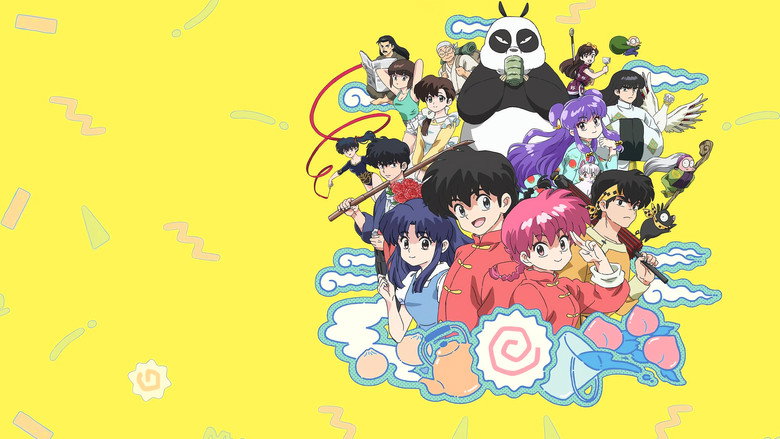
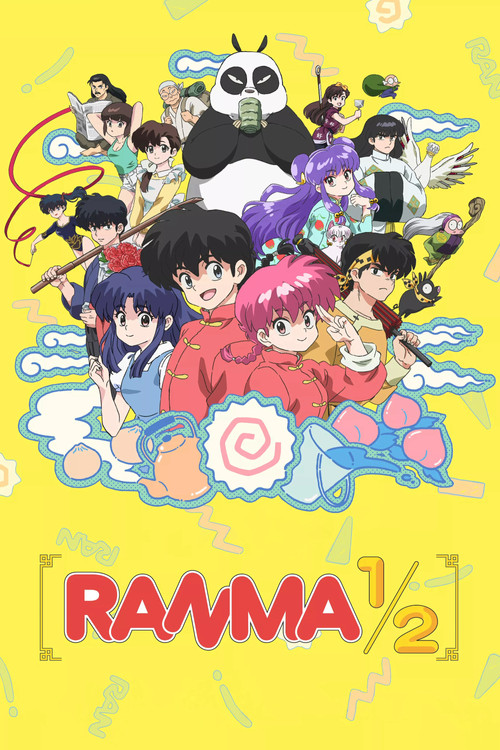
Cast: Kappei Yamaguchi, Megumi Hayashibara, Noriko Hidaka, Kikuko Inoue, Shou Okumura

Animation Action & Adventure Comedy Fluidity of Identity and Gender Roles Vulnerability vs. Pride in Romance (Tsundere Dynamics) Martial Arts as Emotional Proxy & Absurdist Expression Family Obligation vs. Personal Autonomy Unwanted Devotion and Romantic Misunderstandings

Overview

The 2024 TV series adaptation of Ranma ½ (produced by Studio MAPPA) revitalizes Rumiko Takahashi's legendary manga. The story follows Ranma Saotome, a teenage martial arts prodigy, and his father Genma. During a training journey in Bayan Har Mountains, Qinghai, China, father and son fall into the cursed springs of Jusenkyo. As a result, splashing Ranma with cold water transforms him into a red/pink-haired girl, while hot water reverts him to a boy; Genma, meanwhile, transforms into a giant panda.

Upon returning to Japan, Genma arranges a marriage between Ranma and Akane Tendo, the fierce, tomboyish youngest daughter of fellow martial artist Soun Tendo, to unite their "Anything-Goes Martial Arts" schools. Both high schoolers fiercely resist the arrangement due to stubbornness and wounded pride, yet they find themselves forced to live under the same roof. As they navigate high school life, an absurd lineup of martial artist rivals, eccentric suitors, and ancient martial arts masters descend upon the Tendo Dojo—each adding layers of romantic misunderstandings and combat challenges.

Across its run, the series balances high-stakes, slapstick martial arts battles with a slow-burning romantic development. Rather than relying on episodic filler, MAPPA's streamlined adaptation follows the manga's original narrative pace, tracing Ranma and Akane's turbulent shift from hostile fiances to unspoken soulmates who fight side-by-side.
Core Meaning

At its core, Ranma ½ is an exploration of identity, self-acceptance, and the courage required to be vulnerable. Through its signature gender-bending premise, the creators demonstrate that true identity transcends physical forms, societal gender roles, and external curses.

The show conveys that genuine love cannot flourish under forced parental decree or performative bravado; it can only be realized when individuals strip away their ego and embrace one another's true, unvarnished selves. Ranma and Akane's journey illustrates that vulnerability is not a sign of martial or personal weakness, but the ultimate expression of emotional strength.

Thematic DNA

Fluidity of Identity and Gender Roles 30%
Vulnerability vs. Pride in Romance (Tsundere Dynamics) 25%
Martial Arts as Emotional Proxy & Absurdist Expression 20%
Family Obligation vs. Personal Autonomy 15%
Unwanted Devotion and Romantic Misunderstandings 10%

Fluidity of Identity and Gender Roles

Ranma's constant transformation between male and female forms challenges traditional rigid gender expectations. Over time, Ranma learns to leverage both forms' strengths, demonstrating that masculine toughness and feminine grace are not mutually exclusive, while Akane continuously rejects conventional submissive femininity in favor of raw martial talent.

Vulnerability vs. Pride in Romance (Tsundere Dynamics)

Both Ranma and Akane possess immense martial pride, making explicit confessions of love nearly impossible. Their relationship evolves as they gradually learn to replace insults ("kawaikunē" / un-cute) with protective actions during life-or-death encounters.

Martial Arts as Emotional Proxy & Absurdist Expression

Combat in Ranma ½ is never just physical; it serves as a metaphor for personal feelings, jealousy, and ego. Martial Arts Figure Skating, Martial Arts Rhythmic Gymnastics, and Martial Arts Dining turn everyday teenager rivalries into grand, cinematic duels.

Family Obligation vs. Personal Autonomy

Genma Saotome and Soun Tendo represent traditional patriarchal authority, constantly forcing their children into an arranged marriage for dojo inheritance. Ranma and Akane's growth comes from taking ownership of their lives, shifting their engagement from an enforced duty to a personal choice.

Unwanted Devotion and Romantic Misunderstandings

Rivals like Kuno, Ryoga, Shampoo, and Mousse chase idealized, superficial versions of their targets. The show highlights the comedy and pitfalls of obsessive love versus genuine mutual understanding.

Character Analysis

Ranma Saotome

Male: Kappei Yamaguchi / Female: Megumi Hayashibara

Archetype: Reluctant Hero / Martial Prodigy Key Trait: Fiery pride and unparalleled athletic genius.

Motivation

To find a cure for his Jusenkyo curse and become the ultimate martial artist.

Character Arc

Begins as an arrogant fighter obsessed only with lifting his curse and proving superiority. Over time, learns humility, emotional honesty, and protective devotion toward Akane.

Akane Tendo

Noriko Hidaka

Archetype: Heroine / Tsundere Deuteragonist Key Trait: Unyielding determination and fiery temper.

Motivation

To defend the Tendo Dojo's honor and be recognized for her true self.

Character Arc

Initially distrustful of men due to unwanted suitors. Moves past her childhood crush on Dr. Tofu, cuts her long hair, and grows into an independent fighter who learns to trust Ranma.

All 5 characters and cast

Symbols & Motifs

Hot and Cold Water

Meaning:

Represents hidden anxieties and repressed identities. Cold water forces characters into cursed alter-egos, while hot water restores normalcy.

Context:

Serves as the primary catalyst for physical transformation throughout the series during battles and daily life.

Ranma's Pigtail & Hair Color Shift

Meaning:

A symbol of martial heritage and identity distinction.

Context:

In MAPPA's version, female Ranma's distinct hair tone highlights his dual existence and pride in both forms.

P-Chan / The Black Piglet

Meaning:

Symbolizes Ryoga's tragic lack of direction and his hidden closeness to Akane, who remains unaware of his true identity.

Context:

Ryoga Hibiki's cursed form after falling into Jusenkyo's Black Pig Spring.

Kettle & Hot Water Flasks

Meaning:

Symbolizing preparedness and adaptability.

Context:

Ever-present props carried by characters to execute or reverse transformations during battle.

Everyday Objects as Martial Arts Weapons

Meaning:

Demonstrates the series' core philosophy: "Anything-Goes Martial Arts" can turn any aspect of mundane life into a battleground.

Context:

Ribbons, skates, spatulas, and ramen delivery bicycles used as combat gear in duels.

Memorable Quotes

らんまが来た
— Narrator / Genma Saotome

Context

Season 1, Episode 1.

Meaning

Sets the entire series in motion upon the chaotic arrival of female Ranma and the Panda at Tendo Dojo.

男なんか大っ嫌い!
— Akane Tendo

Context

Season 1, Episode 2.

Meaning

Encapsulates Akane's defensive barrier against the horde of violent male suitors ambushing her daily.

All 5 quotes

Episode Highlights

Here's Ranma

S1E1

Establishes the core premise and Jusenkyo curse mechanics.

Significance:

Features the initial meeting between Ranma and Akane.

I Hate Men!

S1E2

Introduces Furinkan High School life and Tatewaki Kuno's eccentric obsession.

Significance:

Highlights Akane's daily battles against unwanted male suitors.

The Hunter

S1E4

Marks the entrance of Ryoga Hibiki.

Significance:

Reveals Ryoga's bitter rivalry with Ranma.

Who Says You're Cute

S1E5

Features Akane's accidental hair cut during combat and her emotional release regarding Dr. Tofu.

Significance:

Marks the start of a genuine bond between Ranma and Akane.

I'll Never Let Go

S1E9

Serves as the climax of the Martial Arts Figure Skating arc.

Significance:

Showcases Ranma and Akane's synchronization and unspoken romantic feelings under pressure.

Kiss of Death / You I Love

S1E10

Introduces Shampoo and the Chinese Amazon laws.

Significance:

Raises the romantic stakes by establishing a multi-way romantic rivalry.

Ranma's Weakness

S2E1

Introduces Ranma's extreme phobia of cats.

Significance:

Leads to the creation of Ranma's uncontrollable "Cat Fu" state.

Chestnuts Roasting on an Open Fire

S2E3

Cologne introduces ancient martial arts training techniques.

Significance:

Forces Ranma to master hyper-speed punches.

Okonomiyaki Means I Love You

S2E8

Introduces Ukyo Kuonji, Ranma's childhood cross-dressing savory pancake chef fiancee.

Significance:

Further complicates the marriage battle surrounding Ranma and Akane.

Philosophical Questions

What constitutes true identity—physical form or internal consciousness?

The series explores whether Ranma remains the same person regardless of biological gender, proving that character, spirit, and soul transcend outward appearance.

Can authentic affection exist alongside extreme personal pride?

Examines how ego and fear of rejection lead young people to construct toxic barriers (tsundere dynamics) that hinder emotional intimacy.

Does societal expectation overrule personal choice?

Investigates the tension between traditional family obligations (arranged marriage, dojo legacy) and individual self-determination.

Alternative Interpretations

Queer & Non-Binary Reading: Critics and scholars frequently analyze Ranma as a gender-fluid icon. While Ranma often asserts his male identity, his comfort with using female Ranma's form for tactical advantage or personal expression creates a nuanced exploration of gender presentation beyond binary norms.

Full ending explanation

Cultural Impact

Ranma ½ stands as one of the most influential manga/anime properties in global pop culture history. When Rumiko Takahashi created the manga in 1987, it pioneered romantic comedy tropes, tsundere archetypes, and gender-transformation narrative mechanics that defined 1990s anime.

The 2024 MAPPA anime reboot arrived during a wave of high-profile retro revivals (such as Urusei Yatsura in 2022). Globally distributed via Netflix, the remake introduced Takahashi's foundational work to a new generation while receiving critical praise for preserving retro charm with modern animation production value.

Audience Reception

The series achieved strong overall ratings, including an Overall Audience Rating of 7.9/10 on IMDb, an 8.0/10 for Season 1, a 7.8/10 for Season 2, and an 89-90% fan recommendation rate on AnimeOshi.

Praised Aspects: Studio MAPPA's dynamic fight choreography, pastel color palettes, and fluid transitions between comedy and martial arts action received high praise. Returning veteran voice actors brought unmatched nostalgia and emotional authenticity to their roles, while the fast-paced storytelling following the manga closely was preferred over filler-heavy older adaptations.

Critiques & Controversies: Initial fan debates centered around female Ranma's hair shade (pinkish-red in the remake vs vibrant scarlet red in the 1989 anime), though audience acceptance grew as the show aired. Some fans of the 1989 anime also missed the slow, episodic slice-of-life scenes omitted to maintain streamlined narrative speed.

Overall Verdict: A highly successful modern remake that respects its 1980s roots while delivering peak modern animation quality.

Interesting Facts

  • Historic Voice Cast Reunion: Uniquely for an anime reboot, MAPPA reassembled nearly the entire primary Japanese voice cast from the original 1989 series after 35 years, including Kappei Yamaguchi, Megumi Hayashibara, and Noriko Hidaka.
  • Faithful Manga Adaptation: Unlike the 1989 anime, which contained extensive filler, the 2024 series directly adapts Rumiko Takahashi's original manga chapters in streamlined order.
  • Directed by Kōnosuke Uda: Industry veteran Kōnosuke Uda (known for directing early One Piece) brought cinematic comedy timing and high-velocity battle framing to the show.
  • Music by Kaoru Wada: The score was composed by Kaoru Wada (famed for Inuyasha), blending traditional Chinese instrumentation (erhu, pipa) with modern orchestral rock.
  • Modernized Character Design: Character designer Hiromi Taniguchi modernized Takahashi's iconic 80s aesthetic while preserving soft retro linework and expressive slapstick caricatures.

Easter Eggs

16-Bit Fighting Game Intros

Pre-opening gags in early episodes recreate 16-bit Super Nintendo fighting game layouts (Street Fighter II style health bars and Shoryuken animations), referencing vintage Ranma ½ SNES fighting games like Hard Battle.

Classic Anime Homages

Early episode cold-opens reference classic retro media including Heidi, Girl of the Alps and Jackie Chan's Drunken Master martial arts tropes.

Anime-Original Reporter Character

The 2024 series introduces "Ichiro" (voiced by Tomokazu Seki), an original news reporter who breaks the fourth wall to report live on Furinkan High's absurd daily martial arts disasters.

Cameo of Classic Staff

Voice actor Kōichi Yamadera returns to play both Ryoga Hibiki and his original 1989 role as the Jusenkyo Guide.

Frequently Asked Questions

Explore More About This Movie

Dive deeper into specific aspects of the movie with our detailed analysis pages

Comments (0)

Leave a comment

No comments yet. Be the first to share your thoughts!

Similar Movies