Skip to content
REBORN!
An exuberant supernatural battle-shonen where comical everyday absurdity ignites into fiery, high-stakes brotherhood. A fragile spark of reluctant resolve blazes like an unbreakable flame against the encroaching darkness of inherited destiny.
REBORN!

REBORN!

家庭教師ヒットマン REBORN!

07 October 2006 — 25 September 2010 Japan 8 season 203 episode Ended 8.2 (189)

Cast: Yukari Kokubun, NEEKO, Takashi Kondo, Toshinobu Iida, Kenjiro Tsuda

Animation Action & Adventure Comedy Bonds and Family Self-Overcoming and "Dying Will" Rejection vs. Acceptance of Legacy Redemption and Second Chances Time, Memory, and Consequences

Overview

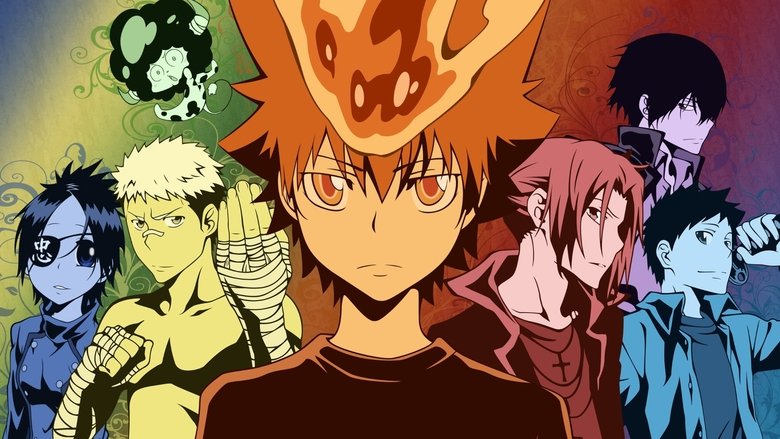
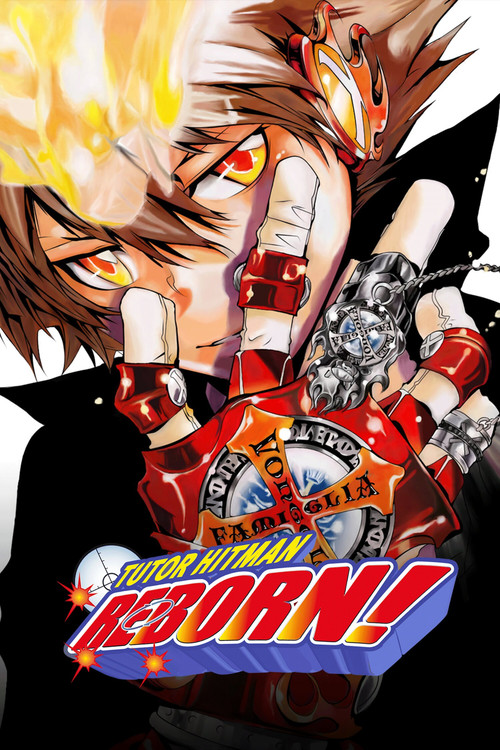
REBORN! follows Tsunayoshi "No-Good Tsuna" Sawada, a clumsy, cowardly Japanese middle-school student who discovers he is the sole remaining heir to the Vongola Famiglia—the world's most powerful Italian mafia organization. To prepare Tsuna for leadership, the Vongola boss dispatches Reborn, an enigmatic, gun-toting infant who serves as a world-class hitman and unforgiving tutor. Using supernatural ammunition that forces Tsuna to confront his deepest regrets, Reborn systematically dismantles Tsuna's insecurity, surrounding him with a makeshift "family" of eccentric classmates, guardians, and rivals.

What begins as a slapstick slice-of-life comedy rapidly transforms into a dark, action-driven battle series. Across 203 episodes, Tsuna and his Guardians are dragged into escalations of underground warfare. They face rogue criminal syndicates, power-hungry mafia factions, and dystopian future apocalyptic timelines. Through each trial, Tsuna is forced to mature from a terrified boy into a genuine leader who must redefine what "family" and authority mean in a violent world.

Ultimately, the series chronicles a journey of self-actualization, bonds, and destiny. Rather than embracing the ruthless traditions of the mafia underworld, Tsuna fights to preserve his human values, transforming a legacy built on blood and syndicate power into a protective mantle for those he holds dear.
Core Meaning

The central philosophy of REBORN! is that true strength does not originate from ambition, bloodline, or raw power, but from the unyielding desire to protect others and overcome one's own limitations ("Dying Will" / Shinin Ki). Creators Akira Amano and the animation team at Artland use the high-contrast premise of an infant tutor pushing an incompetent boy into mafia leadership to critique blind ambition and corrupted authority.

Across the narrative, the show asserts that lineage and legacy should never dictate a person's morality. Tsuna constantly rejects the ruthless mafia tradition of conquest and destruction; instead, he reshapes the Vongola legacy into a protective umbrella, proving that compassion and empathy are superior to tyranny.

Thematic DNA

Bonds and Family 30%
Self-Overcoming and "Dying Will" 25%
Rejection vs. Acceptance of Legacy 20%
Redemption and Second Chances 15%
Time, Memory, and Consequences 10%

Bonds and Family

Initially presented as slapstick school friendships, the concept of "Family" expands into a profound brotherhood. The core Guardians begin as solitary or antagonistic figures (such as the lone-wolf Hibari or the vengeful Mukuro) who gradually align under Tsuna's Sky Flame, demonstrating that true family is forged through shared struggles rather than blood.

Self-Overcoming and "Dying Will"

The Dying Will concept evolves from a comical gag—where Tsuna fights clad only in his underwear after being shot with a Dying Will Bullet—into a deep spiritual state of focused resolution (Hyper Dying Will Mode). It illustrates that true willpower surfaces when an individual shedding fear and hesitation to face their own regrets.

Rejection vs. Acceptance of Legacy

Tsuna's continuous conflict between escaping his mafia inheritance and stepping up when his friends are threatened drives the plot. Over time, he learns that he can accept the responsibility of leadership without inheriting its historical corruptions.

Redemption and Second Chances

Opponents such as Mukuro Rokudo, Xanxus, and the Varia are not simply erased; they are given pathways to redemption. The narrative emphasizes that past trauma or criminality does not preclude someone from contributing to a greater cause.

Time, Memory, and Consequences

Introduced primarily during the Future Arc, this theme examines how choices in the present echo into dark alternate realities, forcing characters to mature rapidly as they see the grim consequences of losing their innocence.

Character Analysis

Tsunayoshi "Tsuna" Sawada

Yukari Kokubun

Archetype: Reluctant Hero / Coming-of-Age Protagonist Key Trait: Absolute Compassion & Sky Harmony

Motivation

Starts with a desire to avoid danger and impress Kyoko; evolves into a resolute resolve to protect his companions at all costs.

Character Arc

Begins as an incompetent, bullied middle-schooler ("Dame Tsuna"). Through brutal training and trials, he transforms into an empathetic, formidable leader who redefines Vongola tradition.

Reborn

NEEKO

Archetype: Enigmatic Mentor / Trickster Master Key Trait: Unyielding Strictness & Wisdom

Motivation

Tasked with shaping Tsuna into the 10th Boss; evolves from a harsh instructor into a fiercely proud guardian of Tsuna's moral path.

Character Arc

A legendary hitman cursed into an infant body. Maintains an unshakeable, strict demeanor while quietly guiding Tsuna to grow organically rather than forcing him into a pre-molded criminal boss.

All 5 characters and cast

Symbols & Motifs

The Dying Will Flame (Shinin ki no Honō)

Meaning:

Represents pure resolve, emotion, and character harmony.

Context:

The Sky Flame harmonizes all other weather attributes (Storm, Rain, Sun, Cloud, Mist, Lightning).

The Tri-Ni-Set (7³)

Meaning:

This cosmic construct symbolizes the balance and preservation of space-time and world existence.

Context:

Comprising the Vongola Rings, the Mare Rings, and the Arcobaleno Pacifiers.

Arcobaleno Pacifiers

Meaning:

Symbolizes suppressed potential, sacrifices of the past, and the hidden burdens of authority.

Context:

Worn around the necks of the world's strongest seven fighters cursed into infant bodies.

Tsuna's Mittens/X-Gloves

Meaning:

Visually symbolizes turning meek weakness into refined, controlled strength.

Context:

Transforming from mundane woolen gloves into steel combat gear.

Reborn's Chameleon (Leon)

Meaning:

Symbolizes evolution and adaptiveness.

Context:

A shape-shifting creature capable of creating tailored weapons and gear (like the X-Gloves) based on a student's emotional growth.

Namimori Middle School Crest & Uniform

Meaning:

Represents childhood innocence, peaceful daily life, and the grounding anchor worth fighting for.

Context:

Worn fiercely by Hibari and the Guardians throughout the series.

Memorable Quotes

Ciaossu!
— Reborn

Context

Spoken consistently throughout all seasons upon Reborn's sudden appearances.

Meaning

Reborn's signature greeting, blending Italian "Ciao" with Japanese "Osu". It highlights the show's blend of Italian mafia lore and Japanese youth culture.

Kamikorosu.
— Kyoya Hibari

Context

Spoken across all seasons (e.g., Season 1, Episode 5) when confronting troublemakers or enemies.

Meaning

Hibari’s battle slogan, illustrating his predatory nature and zero-tolerance stance toward anyone disrupting peace or crowding his space.

All 5 quotes

Episode Highlights

What!? I'm a Tenth Generation Mafia Boss?!

S1E1

Introduces Tsuna, Reborn, and the Dying Will Bullet, establishing the foundational comedic status quo.

Significance:

Sets up the overall premise of the series.

The End and the Beginning

S1E26

The climax of the Kokuyo Arc, where Tsuna unlocks Hyper Dying Will Mode and receives the X-Gloves.

Significance:

Marks the official genre shift from gag comedy to battle shonen.

Conclusion!

S2E65

Climax of the Varia Arc where Tsuna masters the Zero Point Breakthrough to defeat Xanxus.

Significance:

Proves Tsuna's legitimacy as Vongola Decimo and solidifies his group of Guardians.

The Strongest Guardian

S3E82

Showcases the ten-years-later version of Hibari Kyoya fighting in the dystopian future.

Significance:

Highlights the dramatic powers of Ring/Box Weapon systems.

Nightfall / X-Burner Complete

S5E141

Tsuna perfects his signature move, the X-Burner, with help from the mechanic Spanner.

Significance:

Represents a peak moment of technical and combat development.

Primo's Will

S6E188

Climax of the anime-original Inheritance/Primo Arc where Giotto (Vongola Primo) unlocks the full power of the Vongola Rings.

Significance:

Giotto judges Tsuna worthy of his noble legacy.

Sea. Clam. Rainbow.

S8E202

The ultimate battle between Tsuna and Byakuran.

Significance:

Reveals the complete lore of the Tri-Ni-Set (7³) and determines the fate of parallel universes.

To a New Future

S8E203

The anime finale where Tsuna and his friends return to the peaceful past with renewed resolve.

Significance:

Completes their long journey.

Philosophical Questions

Can an inherently corrupt institution be reformed from within?

Explored through Tsuna’s continuous refusal to accept the mafia’s bloodsoaked tradition while seeking to transform the Vongola into a protective force.

Does origin or choice define destiny?

Examined via characters like Xanxus and Tsuna; Xanxus believes blood purity confers right to rule, whereas Tsuna proves that heart and resolve define true leadership.

What is the true cost of peace?

Explored during the Future Arc and Arcobaleno lore, where peace often demands hidden sacrifices by figures holding immense burdens.

Alternative Interpretations

The Anti-Mafia Allegory: One common reading posits that REBORN! is a satire and rejection of organized crime and capitalism. Tsuna constantly refuses wealth and power, suggesting that true authority lies in dismantling violent systems rather than inheriting them.

Full ending explanation

Cultural Impact

REBORN! debuted during the mid-2000s height of Weekly Shōnen Jump alongside the "Big Three" (Naruto, Bleach, One Piece). It carved out a unique demographic niche by combining mafia lore, stylish urban streetwear designs, and emotional ensemble dynamics.

The series had an enormous impact on fan culture, particularly inspiring cosplay, character songs, and fan fiction communities throughout Asia and internationally. Akira Amano's distinct visual fashion sense set a precedent for stylish character aesthetics in modern shonen, later influencing her character design work on franchises like Psycho-Pass.

Audience Reception

Daily Life Arc (Episodes 1–19/20): Received mixed to negative reviews initially. Many modern viewers find the low-stakes episodic gag comedy tedious and slow.

Kokuyo & Varia Arcs (Episodes 20–65): Critically acclaimed turning point. Praised for dramatic fight choreography, high emotional stakes, and rapid character development.

Future Arc (Episodes 74–203): Commended for dark world-building, time-travel stakes, and technical power systems (Dying Will Flames & Box Weapons). Minor criticism was directed at pacing issues and anime filler arcs.

Overall Verdict: Considered a cult-classic mid-2000s shonen that rewards patient viewers who persist through its initial comedic setup.

Interesting Facts

  • Akira Amano originally created REBORN! as a purely comedic gag manga for Weekly Shōnen Jump before shifting it into a battle shonen starting with the Kokuyo Arc.
  • Many central character names are derived from Tokugawa Shoguns, such as Giotto's Japanese alias Ieyasu, Iemitsu, and Tsunayoshi.
  • Reborn was voiced by Japanese model and performance artist NEEKO, who had no prior voice acting experience.
  • The Varia assassin squad members were designed around the Seven Deadly Sins: Xanxus (Wrath), Squalo (Pride), Belphegor (Sloth), Lussuria (Lust), Mammon (Greed), Leviathan (Envy), and Gola Mosca (Gluttony).
  • Because the series was never fully dubbed by major Western distributors during its initial run, voice actors Brittany Lauda and Matt Shipman partnered with Discotek Media years later to dub select episodes.

Easter Eggs

Italian Wordplays

Names of factions and artifacts are direct Italian terms: Vongola means "Clam", Mare means "Sea", Arcobaleno means "Rainbow", and Tri-Ni-Set (7³) references Trinity/three sets of seven.

Character Numerology / Net Slang

Characters are associated with numerical shorthand based on Japanese goroawase wordplay used heavily in fan culture: Tsuna = 27, Gokudera = 59, Yamamoto = 80, Hibari = 18, Mukuro = 69, Xanxus = X.

Classic Mafia Film Nods

Characters like Dino Cavallone and events in early episodes pay homage to classical mafia cinema like The Godfather, heavily stylized through a shonen lens.

Frequently Asked Questions

Explore More About This Movie

Dive deeper into specific aspects of the movie with our detailed analysis pages

Comments (0)

Leave a comment

No comments yet. Be the first to share your thoughts!

Similar Movies