Skip to content
Remember
A grim revenge road-thriller threaded with dark humor and tenderness, where a fading mind clings to a lifetime's vow like a red car tearing through the dark, racing the erasure of memory itself.
Remember

Remember

리멤버

"This revenge must be completed."

26 October 2022 South Korea 128 min 7.5 (113)

Director: Lee Il-hyung

Cast: Lee Sung-min, Nam Joo-hyuk, Park Keun-hyong, Jeong Man-sik, Yoon Je-moon

Drama Action Thriller Memory and its loss Historical accountability and revenge Generational transmission Friendship and moral complicity Aging and mortality

Overview

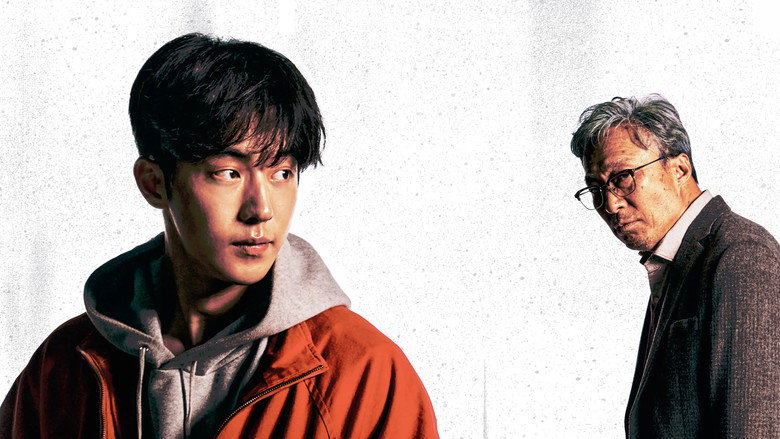
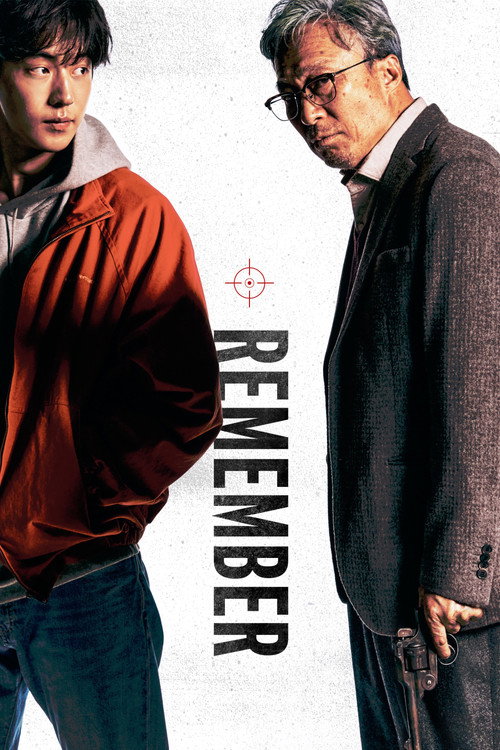
Remember (리멤버, 2022) is a South Korean drama-thriller directed by Lee Il-hyung. It follows Han Pil-joo, an 80-something man with Alzheimer's who lost his entire family under Japanese colonial rule. Before his memory vanishes for good, he sets out to carry out a revenge he has planned for decades.

Pil-joo cannot do it alone. He enlists In-gyu, a young man in his 20s who works with him at a family restaurant, and asks for a week of help with driving. In-gyu follows without knowing the real reason. He soon finds himself at the scene of the first act of vengeance, caught on CCTV and treated as a prime suspect while the police close in.

The film moves between road movie, buddy comedy and revenge thriller. It plays the tension of a mind that forgets its own mission against the generational gap between a man who lived the history and a young man who barely knows it.

Core Meaning

The film is a localized remake of Atom Egoyan's 2015 Remember. It moves the story from the Holocaust to the Japanese occupation of Korea. It is about the gap between personal memory and collective forgetting: one old man carries a wound for over half a century, while the society around him, and a younger generation, has largely moved on.

According to Cine21, director Lee Il-hyung added the 20-something In-gyu, a character not in the original. He felt the film needed the way today's generation looks at history, not just a retelling of the past. In-gyu stands in for the audience, who must decide how to react when history surfaces violently in the present. The film asks what remains when historical accountability is never settled but only buried.

Thematic DNA

Memory and its loss 30%
Historical accountability and revenge 30%
Generational transmission 20%
Friendship and moral complicity 12%
Aging and mortality 8%

Memory and its loss

Pil-joo's Alzheimer's drives the structure. He wakes in a crashed car with a gun and blood on his hand, and must reconstruct his purpose again and again. Memory is both his weapon and his enemy.

Historical accountability and revenge

Pil-joo targets pro-Japanese collaborators who destroyed his family under colonial rule. Their crimes have gone unanswered for decades, so the film treats revenge as a delayed form of justice.

Generational transmission

In-gyu, a young man with no stake in the past, is pulled into Pil-joo's mission. The old man's history becomes the young man's burden, and the film asks who inherits it.

Friendship and moral complicity

In-gyu cannot endorse the killings but never abandons Pil-joo as a person. He keeps calling him by his nickname 'Freddy' and, in the epilogue, supports him to the end.

Aging and mortality

With dementia and a terminal illness, Pil-joo is racing the clock. The film mixes the comedy and tragedy of an elderly man acting as an assassin.

Character Analysis

Han Pil-joo

Lee Sung-min

Archetype: Avenger / tragic antihero Key Trait: Fragile on the surface, relentlessly determined inside

Motivation

To avenge the family he lost under Japanese colonial rule before his memory is gone.

Character Arc

He starts as a gentle, forgetful restaurant worker and reveals himself as a determined planner. He confronts his targets while struggling to hold onto his own purpose.

Park In-gyu

Nam Joo-hyuk

Archetype: Reluctant companion / audience surrogate Key Trait: Kind-hearted, naive and easily rattled

Motivation

Friendship and compassion for the old man, mixed with self-preservation.

Character Arc

He begins as a helpful young coworker asked to drive for a week. He is dragged into the crimes and becomes a suspect, but remains loyal to Pil-joo as a person.

All 4 characters and cast

Symbols & Motifs

The red car

Meaning:

Pil-joo's urgency and violence, along with the fragile vehicle of a failing mind.

Context:

A red Porsche swerves and crashes in the opening, from which Pil-joo emerges confused with a gun in hand.

The revolver

Meaning:

Retribution that has been kept for decades.

Context:

He carries a single revolver and aims it at each target, warning the next one in Japanese that they are next.

Names written on the hand

Meaning:

Memory outsourced to the body, with the mission written where it cannot be lost.

Context:

One viewer review describes five names tattooed on his fingers. This comes from a user review, not from official sources.

The family restaurant

Meaning:

Ordinary, forgettable modern life that hides an extraordinary past.

Context:

Pil-joo and In-gyu meet as co-workers at a restaurant, where Pil-joo washes dishes until he decides to retire.

The CCTV

Meaning:

Modern surveillance and the fact that the past leaves a trace, drawing an innocent young man into the story.

Context:

In-gyu is caught on camera at the first revenge scene and becomes a suspect.

Memorable Quotes

내가 왜 여기에 있는 거지?
— Han Pil-joo

Context

He says it after waking in a wrecked car, with blood on his hand and a revolver beside him.

Meaning

It sums up the film's core predicament: identity and purpose that keep dissolving.

츠기와 오마에다!
— Han Pil-joo

Context

He says it to the next target while aiming his gun at an enemy in front of him.

Meaning

Japanese for 'You're next!'. It turns the language of his old oppressors into a threat.

All 4 quotes

Philosophical Questions

Is justice still possible when it comes decades late?

Pil-joo pursues people who escaped accountability for decades. The film asks whether late revenge is justice or only the continuation of violence.

What are we when our memory fades?

Pil-joo repeatedly loses track of where he is and why. His purpose seems to outlast his awareness, which raises the question of whether identity lives in memory or in conviction.

Who is responsible for inheriting history?

In-gyu did not live through the colonial era, yet he is pulled into its consequences. The film asks what younger generations owe to the past.

How It Ends

Alternative Interpretations

The film can be read as a cathartic revenge fantasy, in which collaborators finally pay for their crimes. It can also be read as a morally uneasy story about vigilante violence and how an unreliable mind sees justice. Some reviewers read it as a historical tragedy about buried guilt; others as a pulpy buddy comedy. Those who know the original film may see the ending differently, since one IMDb reviewer said it was not surprising for those who know the original.

Full ending explanation

Cultural Impact

The film belongs to a long list of Korean remakes of foreign films, and to the tradition of Korean films dealing with the colonial era and pro-Japanese collaborators. The cbci.co.kr article noted that revenge dramas and collaborator stories have appeared many times. It said the distinctive element here is an old man carrying out revenge in the present day, which shows that the past is not over.

Critic reception was modest but positive. Carla Hay called it predictable in parts but still a suspenseful thrill ride with better-than-average acting. Pierce Conran praised how the story was localized. IMDb's score is 6.8, and MyDramaList's is 8.1. Korean admissions were around 412,000.

Audience Reception

Audiences praised the chemistry between Lee Sung-min and Nam Joo-hyuk, the blend of tenderness, dark humor and brutal violence, and the emotional ending. Some reviewers called it better than the original; others found it somewhat predictable, and one felt the ending was deceptive. A few noted the 2h 8m runtime. Ratings are generally strong: 6.8 on IMDb and 8.1 on MyDramaList. Overall, the film is considered a memorable and affecting revenge thriller.

Interesting Facts

  • The film is a remake of the 2015 Canadian film Remember, directed by Atom Egoyan, with the story moved to Korea under Japanese occupation.
  • Lee Il-hyung directed and co-wrote the script with Yoon Jong-bin, who also produced the film; it was produced by Moonlight Film and distributed by Ace Maker Movie Works.
  • Lee Sung-min, who was in his 50s, was cast as the 80-something Pil-joo. According to Cine21, the director wanted an actor who could handle active, physical action and make the old-age makeup convincing.
  • Lee Il-hyung had worked with Lee Sung-min before, as assistant director on Kundo: Age of the Rampant and as director of his debut Master of Deception (검사외전).
  • The character In-gyu, played by Nam Joo-hyuk, did not exist in the original film; he was added to represent the younger generation's view of history.
  • The film was released in Korean theaters on October 26, 2022, with a running time of 128 minutes.
  • Cine21 lists 412,836 admissions in Korea, and Wikipedia gives a box office of US$3.1 million.
  • Cinematography is credited to Yu Eok.
  • tvN aired the film as a Chuseok holiday special in 2023.

Easter Eggs

The nicknames 'Freddy' and 'Jason' for the two coworkers.

Critic Pierce Conran noted he had 'no clue' why they were given these names, though he felt it works. The names evoke slasher-film icons, adding wry humor to an old man who turns out to be a killer.

Frequently Asked Questions

Explore More About This Movie

Dive deeper into specific aspects of the movie with our detailed analysis pages

Comments (0)

Leave a comment

No comments yet. Be the first to share your thoughts!

Similar Movies