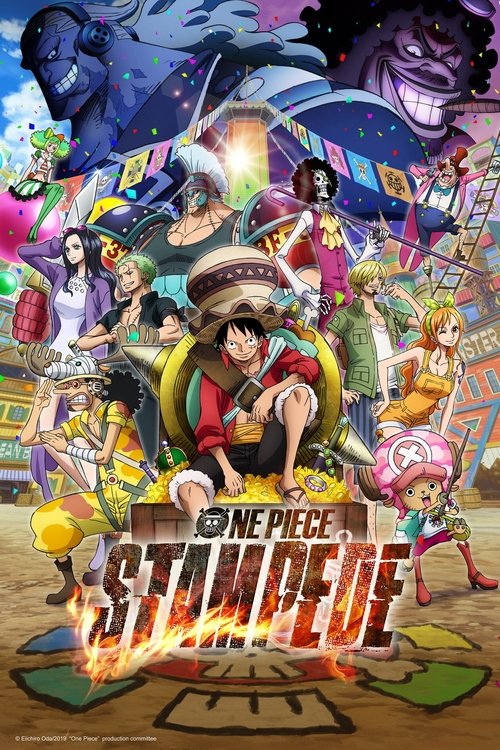
One Piece: Stampede
An explosive animated fantasy where a chaotic festival transforms into a battleground of sheer willpower. The sea burns with nostalgia as legends and rookies collide to claim the ultimate treasure, testing the unbreakable bonds of freedom.
One Piece: Stampede

One Piece: Stampede

ONE PIECE STAMPEDE

"By pirates, for pirates."

03 January 2019 Japan 101 min ⭐ 7.8 (634)
Director: Takashi Otsuka
Cast: Mayumi Tanaka, Kazuya Nakai, Akemi Okamura, Kappei Yamaguchi, Hiroaki Hirata
Animation Fantasy Action Adventure
The Power of Connection vs. Isolation Inherited Will and Legacy The True Meaning of the Pirate King Unlikely Alliances and Breaking Boundaries
Box Office: $81,562,741

Overview

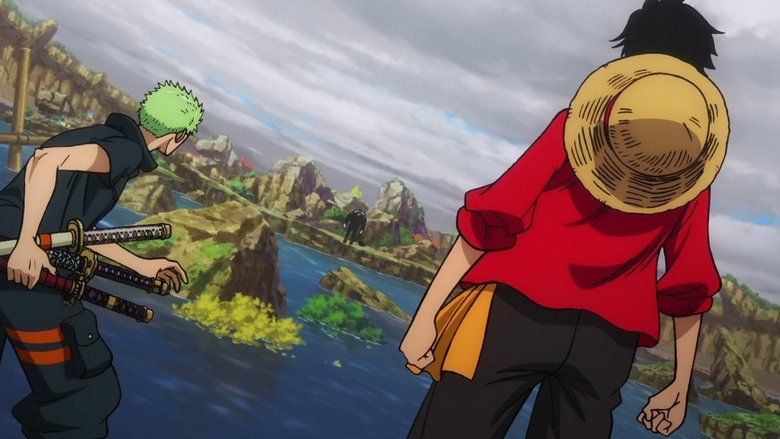
One Piece: Stampede (2019), directed by Takashi Otsuka, is a massive cinematic celebration commemorating the 20th anniversary of the legendary anime series. The story thrusts Monkey D. Luffy and his Straw Hat crew into the chaotic Pirate Festival, an extravagant event orchestrated by the mysterious Buena Festa. The main attraction is a frantic treasure hunt to claim a lost relic belonging to the former Pirate King, Gol D. Roger, drawing the attention of the Worst Generation, the Marines, and the Warlords of the Sea.

However, the vibrant festivities are merely a facade for a much darker conspiracy. As the pirates clash in a chaotic free-for-all, they are confronted by Douglas Bullet, a monstrous former member of Roger's crew known as the Demon Heir. Armed with overwhelming Haki and a devastating Devil Fruit power, Bullet seeks to plunge the world into a new era of madness and establish himself as the undisputed strongest by crushing the current generation of fighters.

To survive this apocalyptic threat, an unprecedented alliance must be forged. Pirates, Marines, Revolutionaries, and Warlords are forced to stand side by side in a spectacular clash of ideologies and raw power. The film delivers a high-octane narrative filled with nostalgia, breathtaking action, and the enduring spirit of adventure that defines the series.
Core Meaning

The film fundamentally contrasts two distinct philosophies of strength and legacy. Douglas Bullet believes that true power lies in utter isolation and personal might, viewing comrades as a fatal weakness that ultimately led to Gol D. Roger's death. In stark contrast, Luffy embodies the idea that genuine strength is found in willpower, friendship, and the ability to rally others to your side.

Through this explosive festival, the creators demonstrate that the future of the seas cannot be conquered by a solitary tyrant living in the past. Instead, the true essence of the Pirate King is absolute freedom, sustained by the unyielding, free-spirited bonds of the new generation.

Thematic DNA

The Power of Connection vs. Isolation 40%
Inherited Will and Legacy 30%
The True Meaning of the Pirate King 15%
Unlikely Alliances and Breaking Boundaries 15%

The Power of Connection vs. Isolation

The narrative pits Douglas Bullet's philosophy of absolute, isolating self-reliance against Luffy's belief in teamwork and vulnerability. Bullet views friends as a liability that dilutes power, while Luffy proves that shared burdens and collective willpower can overcome an impenetrable defense.

Inherited Will and Legacy

The film heavily explores the massive shadow left by the Pirate King, Gol D. Roger. Both Bullet and Luffy are chasing Roger's legacy, but while Bullet is obsessed with surpassing Roger's physical strength through destruction, Luffy inherits Roger's true will—the unbridled pursuit of freedom.

The True Meaning of the Pirate King

Bullet believes the Pirate King is simply the absolute strongest fighter who dominates everyone else. Luffy redefines this title, emphasizing that the Pirate King is the one with the most freedom on the seas, not a solitary conqueror taking shortcuts.

Unlikely Alliances and Breaking Boundaries

The movie breaks traditional faction lines, forcing pirates, Marines, Revolutionaries, and Warlords to fight together. This reflects the theme that against absolute tyranny and existential threats, ideological differences can be set aside.

Character Analysis

Monkey D. Luffy

Mayumi Tanaka

Archetype: The Free-Spirited Hero
Key Trait: Unyielding willpower and an absolute love for freedom.

Motivation

To protect his crew, especially after Usopp is brutally injured, and to claim the treasure fairly without taking shortcuts to become the Pirate King.

Character Arc

Luffy remains steadfast in his ideals, facing an enemy from the previous generation who challenges his core philosophy. He proves that relying on others is not a weakness, ultimately surpassing the ghost of the old era.

Douglas Bullet

Tsutomu Isobe

Archetype: The Solitary Conqueror
Key Trait: Overwhelming power and absolute ruthlessness.

Motivation

To kill the world's most powerful pirates and Marines, proving he is the strongest in the world and finally surpassing the late Gol D. Roger.

Character Arc

Bullet starts as an unstoppable force of nature, completely dismissing the new generation. His arc ends in shattered delusions as he realizes his philosophy of solitary strength cannot overcome the combined will of the new era.

Usopp

Kappei Yamaguchi

Archetype: The Underdog
Key Trait: Courage in the face of absolute terror.

Motivation

To protect his captain and prove his worth as a brave warrior of the sea, despite his overwhelming, natural fear.

Character Arc

Usopp suffers a brutal defeat early on but refuses to stay down. Despite his physical weakness compared to Bullet, his tactical thinking and unwavering loyalty to Luffy provide the crucial opening to defeat the antagonist.

Buena Festa

Yūsuke Santamaria

Archetype: The Mastermind
Key Trait: Cunning and theatrical mania.

Motivation

To create a chaotic stampede that will surpass the era created by Gol D. Roger and flip the world upside down.

Character Arc

Festa orchestrates the entire festival to plunge the world into madness. He watches the chaos unfold from the shadows but is ultimately thwarted and captured, his grand design ruined by the unpredictable nature of the new generation.

Symbols & Motifs

The Eternal Pose to Laugh Tale

Meaning:

It symbolizes a shortcut to absolute power, fame, and wealth—the easy way to become the Pirate King and bypass the struggles of the journey.

Context:

Revealed as Gol D. Roger's lost treasure, it becomes the ultimate prize of the festival. However, Luffy shatters it at the end, rejecting a pre-destined, easy path in favor of a true, free adventure.

Douglas Bullet's Mecha Colossus

Meaning:

It represents his emotional armor, his isolating philosophy, and his reliance on sheer, mechanical destruction rather than human connection.

Context:

Using his Devil Fruit, Bullet absorbs machinery and debris to build a giant wall between himself and the rest of the world during the film's chaotic climax.

The Knock-Up Stream

Meaning:

It symbolizes the chaotic, upward trajectory of the pirate era and the perilous, unpredictable journey required to reach the top of the pirate world.

Context:

The treasure race is elevated into the sky when a massive Knock-Up Stream erupts from the sea, turning a simple naval race into a vertical battle for supremacy.

Memorable Quotes

Those who died are all losers! That's the limit of those who cling to their 'friends.' My strength only exists for me and my victory!

— Douglas Bullet

Context:

Bullet shouts this during his fight, mocking Luffy and the others for their reliance on teamwork and mourning their fallen comrades.

Meaning:

This quote perfectly encapsulates Bullet's worldview: that relying on others is a fatal flaw and only personal, solitary strength matters.

Your so-called 'friends' are just a weakness. Even that monster geezer Whitebeard died for his own men. Same with Roger!

— Douglas Bullet

Context:

Bullet taunting Luffy and the Supernovas during his absolute physical domination in the first phase of their battle.

Meaning:

Bullet dismisses the legendary figures of the past, claiming their human attachments directly led to their downfalls.

Snipers are here for support, after all.

— Usopp

Context:

Usopp says this when his seemingly useless seed attacks from earlier in the movie suddenly bloom, destroying Bullet's mechanical armor and giving Luffy an opening.

Meaning:

Usopp acknowledges his specific role in the crew. He knows he isn't the strongest frontline fighter, but his tactical support is indispensable to the team's success.

An Eternal Pose to Laugh Tale? A scoop like this could flip the world upside down!

— Morgans

Context:

Morgans reacts with shock and journalistic glee to the reveal of the treasure hidden inside Gol D. Roger's chest.

Meaning:

This highlights the sheer magnitude of the festival's prize. The path to the final island is the most coveted and dangerous secret in the world.

Philosophical Questions

Does true strength come from self-reliance or from relying on others?

The film pits Bullet's philosophy of absolute, isolating self-reliance against Luffy's belief in teamwork and vulnerability. Bullet views friends as a liability that dilutes power, while Luffy proves that shared burdens and collective willpower can overcome an impenetrable, solitary defense.

Is a pre-destined shortcut worth taking if it guarantees success?

The Eternal Pose to Laugh Tale offers a guaranteed, risk-free path to the ultimate goal. By destroying it, Luffy asserts that the value of a goal is intrinsically tied to the struggle, freedom, and unknown variables of the journey used to achieve it.

Alternative Interpretations

While the film is largely straightforward in its action-heavy narrative, critics and fans have debated the thematic significance of the Eternal Pose. A common alternative reading is that the entire film is a meta-commentary on the One Piece franchise itself.

In this reading, Buena Festa represents those who want the series to end quickly and chaotically, seeking to force the climax of the story. The Eternal Pose to Laugh Tale is the ultimate spoiler—the quick answer to a 20-year mystery. When Luffy crushes the Eternal Pose, it is Eiichiro Oda speaking directly to the audience through his protagonist: the destination does not matter as much as the journey. Breaking the pose signifies that taking a shortcut would ruin the adventure, mirroring the author's strict commitment to telling his story at its own pace without skipping to the end.

Cultural Impact

One Piece: Stampede made a significant mark on the anime film landscape by acting as the ultimate 20th-anniversary tribute to the franchise. The film broke box office records in Japan, recording the highest first-day attendance for a movie in 2019 and grossing over 5.5 billion yen domestically.

Culturally, it functioned as an Avengers: Endgame style crossover for the One Piece universe, uniting factions that would rarely interact in the canon timeline—such as the Warlords, Marines, and Revolutionaries—into a single, cohesive battle. Critics and audiences praised Takashi Otsuka's directing and the film's relentless, high-octane visual style. However, the movie's most profound cultural impact on the fandom was the official romanization of Laugh Tale. This was a massive lore drop that Eiichiro Oda authorized exclusively for this film before it was formally revealed in the manga, sending shockwaves of excitement through the global community.

Audience Reception

Audience reception for One Piece: Stampede was overwhelmingly positive, with fans celebrating it as the ultimate love letter to the franchise. Audiences praised the phenomenal animation quality, the staggering number of character cameos, and the massive team-up against Douglas Bullet. The spotlight on Usopp's bravery and tactical genius was frequently highlighted as a standout emotional beat.

However, the film did face some criticism; some viewers felt the plot was extremely thin, acting merely as a vehicle to get popular characters into a giant brawl. Douglas Bullet was occasionally criticized as a one-dimensional villain with a generic motivation. Additionally, a few critics pointed out the clunky CGI used for Bullet's final awakened form. Despite these minor gripes, the overall verdict was that Stampede delivered exactly what it promised: an unapologetic, wildly entertaining festival of fan service.

Interesting Facts

  • The film commemorates the 20th anniversary of the One Piece anime series and was highly anticipated due to original creator Eiichiro Oda's involvement as the Creative Supervisor.
  • The spelling of the final island was officially romanized as 'Laugh Tale' for the first time in this movie, confirming a long-standing fan theory about the island's true name (previously translated as Raftel).
  • Douglas Bullet's Devil Fruit, the Clank-Clank Fruit (Gasha Gasha no Mi), allows him to assimilate and manipulate machinery, a power he awakened to disassemble an entire Buster Call fleet.
  • In the post-credits scene, written by Eiichiro Oda himself, Gol D. Roger is shown throwing the Eternal Pose to Laugh Tale into the ocean, stating they were 'too early' to fulfill its destiny.
  • The movie features an unprecedented number of character cameos, making it a massive 'Where's Waldo' experience for hardcore fans.
  • Despite not being canon to the main manga storyline, the film includes canonical revelations, such as the confirmation that Eustass Kid can use Armament Haki.

Easter Eggs

Pandaman appearances

Eiichiro Oda's legendary joke character, Pandaman, is hidden multiple times throughout the movie, including scenes during the festival and in the crowds, maintaining a long-standing franchise tradition.

Minor antagonist cameos in the crowd

Characters like Gedatsu, Baccarat, and Hachi can be spotted in the background. Hachi is seen selling takoyaki, directly referencing his manga cover story and post-Arlong Park life.

The spelling of 'Laugh Tale'

The treasure explicitly reveals the spelling of the final island as 'Laugh Tale' instead of the previously assumed 'Raftel', foreshadowing a massive canon reveal in the manga regarding Joy Boy's treasure.

Zoro and Mihawk cutting the meteor

When Admiral Fujitora summons a giant meteor, Zoro and Mihawk slice it up. This visually mirrors the Dressrosa arc where Law and Doflamingo deal with Fujitora's meteor in a nearly identical fashion.

Buggy's sudden blonde hair

During the climax, Buggy the Clown is briefly seen with blonde hair. Fans and critics have debated whether this was an odd design choice or a hilarious animation error that made it into the final cut.

⚠️ Spoiler Analysis

Click to reveal detailed analysis with spoilers

Frequently Asked Questions

Explore More About This Movie

Dive deeper into specific aspects of the movie with our detailed analysis pages

Comments (0)

Leave a comment

No comments yet. Be the first to share your thoughts!