Skip to content
Revenge of Others
A chilling, noir-tinted high school thriller dripping with raw grief and moral ambiguity, where a sniper’s cold crosshairs reflect the fragile innocence shattered inside a violent, lie-filled pressure cooker.
Revenge of Others

Revenge of Others

3인칭 복수

09 November 2022 — 14 December 2022 South Korea 1 season 12 episode Ended 8.2 (308)

Cast: Shin Ye-eun, Lomon, Seo Ji-hoon, Chae Sang-woo, Lee Soo-min

Drama Mystery Vigilantism vs. Institutional Failure Grief, Trauma, and Identity Loss Gaslighting, Manipulation, and Truth Distortion Moral Ambiguity of Revenge

Overview

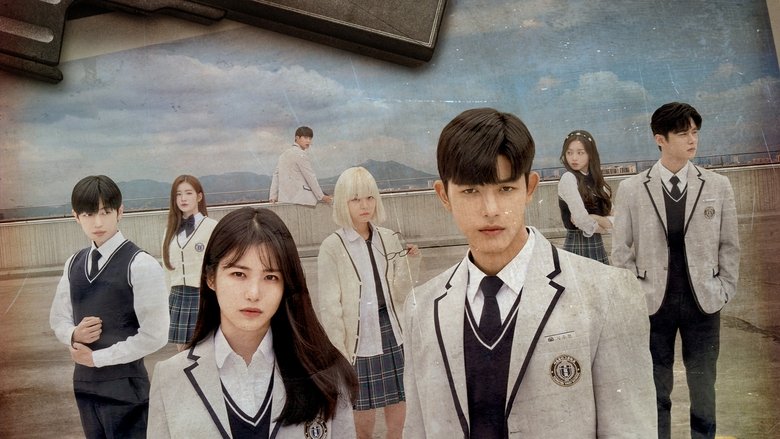
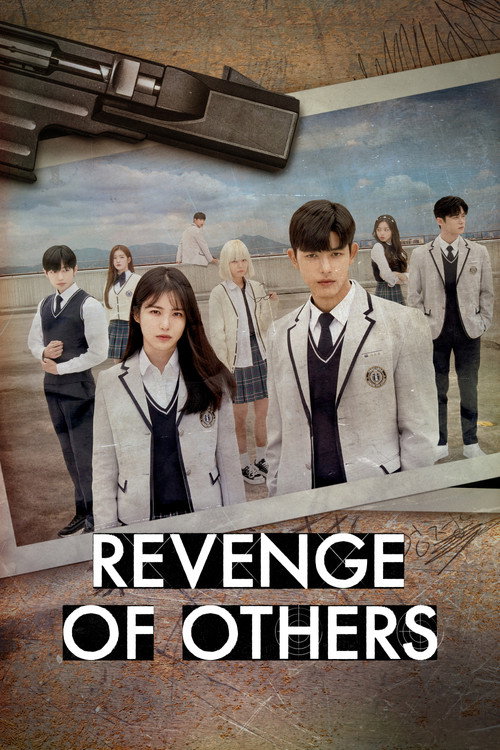
Revenge of Others (Original Title: 3인칭 복수 / Third Person Revenge) is a 12-episode South Korean mystery thriller set within the pressure-cooker environment of a high school in Seoul. The narrative begins when Ok Chan-mi, a high school air pistol shooting athlete living in Busan, learns that her twin brother, Park Won-seok, has fallen to his death from a school window. Refusing to accept the police's ruling of suicide, Chan-mi transfers to her brother’s school—Yongtan High—under an assumed identity to hunt down his murderer.

At Yongtan High, Chan-mi crosses paths with Ji Soo-heon, a quiet yet formidable classmate dealing with terminal illness and severe financial strain. To afford his mother's medical bills, Soo-heon secretly works as a vigilante for hire, violently punishing unrepentant school bullies on behalf of helpless victims. As Chan-mi’s search for her brother’s killer aligns with Soo-heon’s vigilante missions, the two form an uneasy, high-stakes alliance amidst growing suspicion.

As the investigation progresses across the 12 episodes, a tangled web of lies, amnesia, gaslighting, and corruption emerges among the student body. The plot expands beyond a simple murder mystery into a complex exploration of moral decay, institutional failure, and how far teenagers will go when forced to take justice into their own hands.
Core Meaning

The central thesis of Revenge of Others is that when social and legal institutions fail to protect the vulnerable, justice becomes commodified and vigilantism fills the void. However, the creators emphasize that unguided, violent revenge is an intoxicating trap that corrupts both victim and avenger.

Through the tangled lives of its teenage characters, the series delivers a stark critique of systemic school violence, police incompetence, and psychological manipulation. Ultimately, the show conveys that true resolution requires confronting distorted truths rather than perpetuating endless cycles of bloodshed.

Thematic DNA

Vigilantism vs. Institutional Failure 30%
Grief, Trauma, and Identity Loss 25%
Gaslighting, Manipulation, and Truth Distortion 25%
Moral Ambiguity of Revenge 20%

Vigilantism vs. Institutional Failure

The show constantly highlights how police indifference and school administration cover-ups compel students to seek extralegal justice. Ji Soo-heon's transformation into a revenge hero serves as a direct response to a legal system that protects brutal bullies while abandoning victims.

Grief, Trauma, and Identity Loss

Trauma drives every character’s evolution. Chan-mi’s grief over her twin brother causes her to rebuild her life around vengeance. Soo-heon’s terminal brain tumor forces him to face his own mortality, while Jae-beom’s trauma manifests as physical amnesia and psychological fracturing.

Gaslighting, Manipulation, and Truth Distortion

The series shows how sociopathic influence can distort memory and reality. Ki Oh-sung manipulates vulnerable classmates, twisting facts to weaponize innocent people for his own ends.

Moral Ambiguity of Revenge

While vigilante acts offer short-term catharsis, the series illustrates how retribution blurs the line between victim and offender, pulling everyone into a moral downward spiral.

Character Analysis

Ok Chan-mi

Shin Ye-eun

Archetype: Determined Investigator / Hero Key Trait: Exceptional air pistol marksmanship and relentless tenacity

Motivation

Uncovering the truth behind her twin brother’s death; later shifts to protecting her allies from destructive secrets.

Character Arc

Evolves from an impulsive, grief-stricken sister seeking blood into a clear-headed investigator who learns when to pull the trigger and when to show restraint.

Ji Soo-heon

Lomon / Park Solomon

Archetype: Tragic Vigilante / Antihero Key Trait: Brutal combat skill combined with deep empathy

Motivation

Earning money for his hospitalized mother while punishing unrepentant bullies.

Character Arc

Transforms from a terminally ill student driven by financial desperation into a self-sacrificing guardian who accepts his mortality and seeks peace.

All 5 characters and cast

Symbols & Motifs

Target Pistol / Crosshairs

Meaning:

Symbolizes Ok Chan-mi’s sharp focus, emotional detachment, and her ultimate choice between executing summary judgment or seeking lawful justice.

Context:

Used during Chan-mi's shooting practice and key confrontation scenes where she aims at targets or suspects.

Black Hoodie / Mask

Meaning:

Represents Ji Soo-heon’s vigilante alter-ego—a symbol of protection for victims, but also an escalating addiction to violence.

Context:

Worn by Ji Soo-heon when carrying out proxy revenge missions against school bullies.

Brain Tumor / Medical Scans

Meaning:

Serves as a physical ticking clock for Soo-heon, driving his frantic urgency to secure money and deliver retribution before his time runs out.

Context:

Appears throughout Soo-heon's medical visits and private moments dealing with his mortality.

Red Shoelaces / Bloody Shoes

Meaning:

A motif representing evidence, guilt, and the permanent physical stain of violent acts that cannot be washed away.

Context:

Discovered by Chan-mi after a violent incident, raising suspicion around Soo-heon.

Ringtone / Ghostly Phone Calls

Meaning:

Calls originating from Park Won-seok’s missing phone serve as an eerie reminder of unresolved murder and lingering secrets.

Context:

Occurs at key investigative standoffs and mystery reveals.

Mirrors and Horse Stables

Meaning:

Settings that reflect fractured identities, repressed memories, and the hidden dark nature lurking behind affluent, polished exteriors.

Context:

Featured in key scenes involving Jae-beom's memory recovery and the final climax with Oh-sung.

Memorable Quotes

모두가 거짓말을 맞추면, 그것이 진실이 된다.
— Ki Oh-sung / Narrative Theme

Context

S1 E12, addressing the systemic cover-ups throughout Yongtan High.

Meaning

Encapsulates the core thesis of the show regarding how group collusion and gaslighting distort reality.

우리 오빠가 왜 죽었는지, 내가 반드시 내 눈으로 확인할 거야.
— Ok Chan-mi

Context

S1 E1, when Chan-mi rejects the police's suicide ruling and transfers to Seoul.

Meaning

Establishes Chan-mi’s primary drive that propels the mystery forward.

All 4 quotes

Episode Highlights

The Fall

S1E1

Park Won-seok falls from a school window. Ok Chan-mi refuses to accept suicide, discovers her brother's secret adoption history, and transfers to Yongtan High.

Significance:

Serves as the inciting incident that sets the entire mystery in motion.

The Hero Persona

S1E2

Ji Soo-heon accepts his first paid vigilante mission, brutally beating unrepentant rapist Sa Jung-gyeong in a car repair shop.

Significance:

Establishes the 'proxy revenge' premise of the series.

Unlikely Allies

S1E4

Chan-mi suspects Soo-heon after finding his bloodied shoes but chooses not to turn him in. The two open up, build trust, and form a tight alliance.

Significance:

Deepens the relationship and cooperation between the two lead characters.

Crosshairs and Standoffs

S1E7

Misled by false clues, Chan-mi confronts Soo-heon at gunpoint. A call from Won-seok's missing phone interrupts the standoff.

Significance:

Clears Soo-heon from initial suspicion while deepening the surrounding mystery.

Fractured Memories

S1E9

Seok Jae-beom’s memory begins returning, uncovering dark gaps during his coma recovery.

Significance:

Raises critical questions about Ki Oh-sung's influence and Jae-beom's past.

The Trap

S1E10

Ki Oh-sung frames Soo-heon for murder using local thugs. Chan-mi travels to Busan and discovers shocking history connecting Won-seok, Oh-sung, and Jae-beom.

Significance:

Exposes the deep connections between the central characters.

Third Person Revenge

S1E12

Jae-beom’s split personality (DID) is revealed as the killer of Won-seok, orchestrated by Ki Oh-sung’s gaslighting. Oh-sung falls to his death during a standoff, and the students collectively decide to cover it up.

Significance:

The ultimate climax that brings closure to the series arc.

Philosophical Questions

When an institutional legal system repeatedly fails victims, is illegal vigilante revenge morally justified?

Explored through Ji Soo-heon's vigilante acts, highlighting the gap between legal justice and moral catharsis for victims of unpunished abuse.

Is an individual morally and legally responsible for crimes committed by an alternate personality born from severe trauma and gaslighting?

Explored through Seok Jae-beom's split personality (DID) and how Ki Oh-sung manipulated his altered mental state to commit murder.

Can a collective lie be morally acceptable if it prevents further destruction and protects innocent lives?

Explored in the finale when the students decide to cover up Ki Oh-sung's death to protect Jae-beom and bring finality to the violence.

Does terminal mortality alter a person’s moral obligations toward social laws?

Explored through Soo-heon's diagnosis, which drives him to risk his remaining time and reputation to secure his mother's financial future and punish wrongdoers.

Alternative Interpretations

Viewers and critics have proposed several ways to interpret the series:

Full ending explanation

Cultural Impact

Revenge of Others arrived during a wave of public discourse in South Korea regarding high school violence (hakpok), severe bullying, and lenient legal punishments for juvenile offenders. It joined prominent 2022–2023 Korean revenge thrillers like Weak Hero Class 1, The Glory, and Juvenile Justice.

The show was well-received internationally on Disney+/Hulu. Shin Ye-eun's strong performance earned her the Best New Actress award at the 2nd Blue Dragon Series Awards (2023).

Audience Reception

Praise: Audiences praised the show's fast-paced plot, electric chemistry between Shin Ye-eun and Lomon, dark mood, and realistic fight choreography. Seo Ji-hoon's complex performance as Jae-beom received high critical acclaim.

Criticism: The final two episodes received criticism from some viewers. Critics argued that the reveal of Dissociative Identity Disorder (DID) felt rushed, cliché, and psychologically inaccurate.

Overall Verdict: Maintaining an overall score of ~8.5/10 across drama platforms, Revenge of Others is widely considered an entertaining, gripping teen mystery-thriller despite debate over its finale choices.

Interesting Facts

  • Writer Lee Hee-myung, known for romantic comedies and fantasy hits like Rooftop Prince and The Girl Who Sees Scents, made a deliberate transition into dark high school thrillers with this series.
  • Shin Ye-eun underwent weeks of professional air pistol shooting training to portray an elite athlete convincingly, learning proper shooting stances and gun handling.
  • Lomon (Park Solomon) undertook intense physical training and martial arts choreography for several months to perform his own fight scenes without relying heavily on stunt doubles.
  • Produced by Studio S (a subsidiary of SBS) as an exclusive Disney+ Original, allowing the creators to include darker, violent themes not suited for free-to-air broadcast television.
  • Filmed as lead actors Shin Ye-eun and Lomon were gaining massive global attention—Lomon following All of Us Are Dead and Shin Ye-eun right before her breakout role in The Glory.

Easter Eggs

The Dual Meaning of the Original Title

The Korean title 3인칭 복수 literally translates to Third Person Revenge, subtly hinting that the vengeance taken throughout the drama is executed by third parties on behalf of others.

Yongtan High Name Symbolism

Yongtan (용탄) uses Korean characters evoking 'fire, charcoal, and bullets,' foreshadowing the burning desire for vengeance and Chan-mi’s shooting background.

Color Contrast in Wardrobe

Ki Oh-sung consistently wears clean, dark corporate clothes reflecting his cold control, while Soo-heon wears worn street clothing, visually highlighting their class and moral differences.

Frequently Asked Questions

Explore More About This Movie

Dive deeper into specific aspects of the movie with our detailed analysis pages

Comments (0)

Leave a comment

No comments yet. Be the first to share your thoughts!

Similar Movies