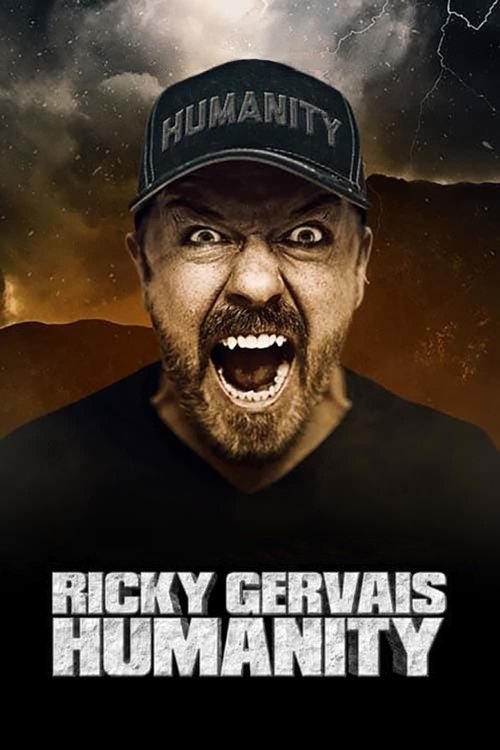
Ricky Gervais: Humanity
Overview
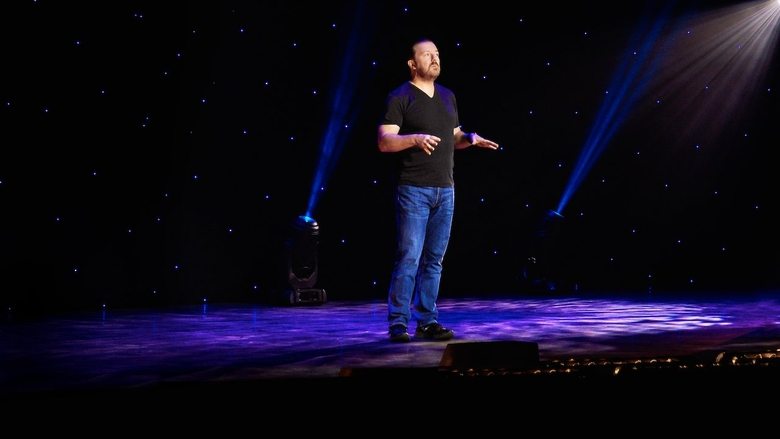
Ricky Gervais: Humanity marks the British comedian's highly anticipated return to the stand-up stage after a seven-year hiatus. Filmed at the Apollo Hammersmith in London, the special finds Gervais turning his razor-sharp wit toward the modern landscape of outrage culture, social media, and his own polarizing public persona.
Central to the performance is Gervais's extensive defense of his past controversial jokes, specifically his comments as the host of the Golden Globes. He meticulously dissects the anatomy of a joke, arguing passionately for the distinction between a joke's subject and its actual target. Along the way, he reflects on his massive wealth, the aging process, and his deliberate decision not to have children.
Beyond the provocative social commentary, the special offers unexpectedly poignant glimpses into Gervais's personal life. From his unapologetic love for animals to a darkly hilarious recounting of his mother's funeral, Gervais uses his trademark irreverent humor to explore the flawed, absurd nature of the human condition.
Core Meaning
The core meaning of Humanity lies in a vigorous defense of free speech and the artistic integrity of comedy. Gervais uses the platform to argue that humor is a vital, essential coping mechanism for life's inevitable tragedies, and that no topic should be inherently off-limits. He challenges the modern culture of taking offense, asserting that being offended is a subjective choice rather than an objective reality. Ultimately, Gervais suggests that true 'humanity' requires the resilience to laugh at the darkest and most uncomfortable aspects of our existence without losing our minds.
Thematic DNA
Free Speech and Outrage Culture
Gervais spends a significant portion of the special critiquing modern society's quickness to take offense. He uses his own Twitter spats and media controversies to highlight the performative nature of online outrage and the dangers of censorship.
The Anatomy of Comedy
He breaks down the mechanics of humor, repeatedly emphasizing the crucial difference between the subject of a joke and its target, arguing that making light of a dark subject does not equate to endorsing it or mocking its victims.
Human Flaws and Hypocrisy
Through anecdotes about his privileged, wealthy lifestyle and the absurdity of social norms, Gervais exposes the inherent narcissism, entitlement, and hypocrisy woven into human nature.
Animals vs. Humans
Contrasting his cynical view of people, Gervais expresses an unadulterated love for animals. He consistently portrays dogs as inherently superior, loyal, and more pure-hearted than humankind.
Character Analysis
Ricky Gervais
Ricky Gervais
Motivation
To entertain, to provoke critical thought, and to defend the absolute freedom of comedy against modern censorship and moral panic.
Character Arc
As a stand-up persona, Gervais begins by presenting himself as an arrogant, hyper-wealthy celebrity, but slowly peels back layers to reveal a philosophical defender of free speech and a nostalgic son using dark humor to mourn his mother.
Bob Gervais
Described by Ricky Gervais
Motivation
To find levity, comfort, and a shared bond with his brother in a deeply tragic and solemn environment.
Character Arc
Exists within the narrative of their mother's funeral, escalating the inappropriate humor to cope with grief, moving from suppressed giggles to openly winding up the vicar.
The Online Critic
Portrayed by Ricky Gervais
Motivation
To police language, enforce political correctness, and impose moral superiority over the comedian.
Character Arc
A composite, conceptual character representing the collective outrage of social media, constantly shifting goalposts to find new reasons to be offended by Gervais's jokes.
Symbols & Motifs
Twitter / Social Media
Symbolizes the hypersensitivity, mob mentality, and performative outrage of modern society.
Gervais frequently reads out real tweets and describes his interactions with online critics to mock 'cancel culture' and those who seek out things to be angry about.
The Golden Globes
Represents Gervais's unapologetic commitment to his comedic brand and his refusal to bow to elite Hollywood expectations.
He uses the massive media fallout from his controversial hosting gig as a focal point to explain the mechanics of offense and joke construction.
Dogs
Symbolize purity, innocence, and unselfish loyalty—everything Gervais feels the human race fundamentally lacks.
He uses dogs as a recurring motif, notably in an extended opening bit about God assigning them their evolutionary jobs, ultimately stating he prefers them to people.
Memorable Quotes
I'm not a god. I'm just an ordinary guy, you know, going round talking to people sort of like Jesus... in a way... but better.
— Ricky Gervais
Context:
Delivered during his opening remarks to set the unapologetic and slightly antagonistic tone of the show.
Meaning:
A satirical display of his stage persona's immense ego and a quick, irreverent jab at religion.
People mistake the subject of a joke with the actual target. They're not necessarily the same.
— Ricky Gervais
Context:
Spoken during his extensive defense of his controversial Golden Globes monologue regarding Caitlyn Jenner.
Meaning:
This is the central thesis of the entire special regarding the philosophy of comedy and the anatomy of offense.
Dogs are better people than people, aren't they?
— Ricky Gervais
Context:
Used as a transitional statement before diving into an extended comedic bit about how God assigned different dog breeds their jobs.
Meaning:
Highlights his cynical, misanthropic view of humanity, sharply contrasted with his profound love and respect for animals.
You should say you found it offensive because you've got to own the emotion.
— Ricky Gervais
Context:
Delivered during his critique of internet trolls and activists who demand apologies for jokes they personally dislike.
Meaning:
A philosophical argument about the subjective nature of being offended, rejecting the idea that any statement is universally or objectively offensive.
Philosophical Questions
Is there an objective standard for what makes a joke offensive?
Gervais argues forcefully that offense is inherently subjective and that people must 'own their emotion' rather than declaring a statement universally offensive. The film constantly asks whether words themselves hold power, or if the intent behind them is all that truly matters.
What is the ethical difference between the subject and the target of a joke?
Through meticulous breakdowns of his own material, Gervais challenges the audience to recognize that discussing a taboo subject (like a tragic accident or a marginalized group) is fundamentally different from making them the victim of the punchline.
Alternative Interpretations
While Gervais presents the special as a noble, philosophical defense of objective comedy and free speech, some critics offer an alternative interpretation: that Humanity is primarily an exercise in celebrity narcissism and score-settling. In this reading, the special is less about defending jokes and more about a wealthy, insulated celebrity attempting to retroactively control the narrative around his public controversies and mock his detractors.
Another interpretation focuses deeply on the special's title. While it initially seems ironic given his misanthropic stage persona, viewers argue that the core of Humanity is surprisingly vulnerable. By sharing the incredibly dark but genuine humor his family used to cope with his mother's death, Gervais suggests that laughing at the darkest parts of life isn't cruel—it is the ultimate expression of human resilience, survival, and connection.
Cultural Impact
Ricky Gervais: Humanity arrived at a pivotal moment in 2018, a time when the cultural conversation around political correctness, 'cancel culture', and the boundaries of comedy was reaching a boiling point. The special deeply polarized audiences and critics alike. Traditionalists, fellow comedians, and free-speech advocates hailed it as a masterclass in pushing boundaries, viewing Gervais as a necessary bulwark against the sanitization of art. Conversely, progressive critics accused him of 'punching down' and harboring a persecution complex, particularly regarding his material on transgender issues.
Despite the critical divide, the special was a massive commercial success for Netflix and cemented Gervais's status as a comedian who is utterly immune to modern cancellation. It heavily influenced a wave of subsequent stand-up specials that explicitly tackle the meta-topic of comedy itself, where comedians spend significant stage time dissecting their own controversial jokes and challenging the public's reaction to them.
Audience Reception
Audience reception to Ricky Gervais: Humanity was highly polarized, directly reflecting the ongoing cultural divide over the limits of comedy. Praised aspects included Gervais's impeccable timing, his undeniable stage presence, and his unapologetic defense of free expression. Fans loved the blend of his arrogant stage persona with deeply personal anecdotes, particularly the side-splitting story of his mother's funeral.
Main points of criticism centered around the perception that Gervais spent too much time defending his past jokes rather than writing new ones. Some viewers found his rants about Twitter trolls and his vast wealth to be repetitive and out of touch. Controversial moments predominantly involved his extended bits regarding Caitlyn Jenner and identity, which sparked intense online backlash and accusations of transphobia. Overall, the verdict was split: for his loyal fanbase, it was a triumphant return to form; for his detractors, it was a frustrating exercise in grievance-airing.
Interesting Facts
- Netflix reportedly paid a massive $40 million for the rights to stream 'Humanity' alongside Gervais's subsequent special, 'SuperNature'.
- This special marked Ricky Gervais's return to the stand-up stage after a seven-year absence; his last tour was 'Science' in 2010.
- The story about his brother Bob winding up the vicar at their mother's funeral is completely true; Bob jokingly told the vicar their mother was a 'keen racist'.
- During the tour for 'Humanity', the San Francisco Sketchfest devoted a special night in his honor, featuring an appearance by his comedic mentor Christopher Guest.
- Gervais initially prepared for the tour by doing low-key warm-up shows in London starting in May 2016, performing alongside cast members from his television show 'Derek'.
Easter Eggs
Callbacks to the Golden Globes
Gervais heavily references his 2016 Golden Globes monologue, turning the real-world media backlash from that specific event into the structural spine and philosophical foundation of this special.
The 'Joy to the world, Barney's dead' song
A nostalgic, dark playground song from childhood that Gervais uses to hilariously critique the bizarre, violent imagery often found in traditional, revered religious hymns.
⚠️ Spoiler Analysis
Click to reveal detailed analysis with spoilers
Frequently Asked Questions
Explore More About This Movie
Dive deeper into specific aspects of the movie with our detailed analysis pages
Comments (0)
No comments yet. Be the first to share your thoughts!